Émeraude de Zambie ou de Colombie ?
Bonnot Paris22/9/2026



That is the honest answer to the question in the title, and it contradicts everything we think we know about gemstones: with rubies, colour matters so much that weight becomes secondary.
Rather than a convenient range copied from one website to another, this article publishes the figures for our natural rubies — six stones, recorded in September 2026, with their weight, price and price per carat.
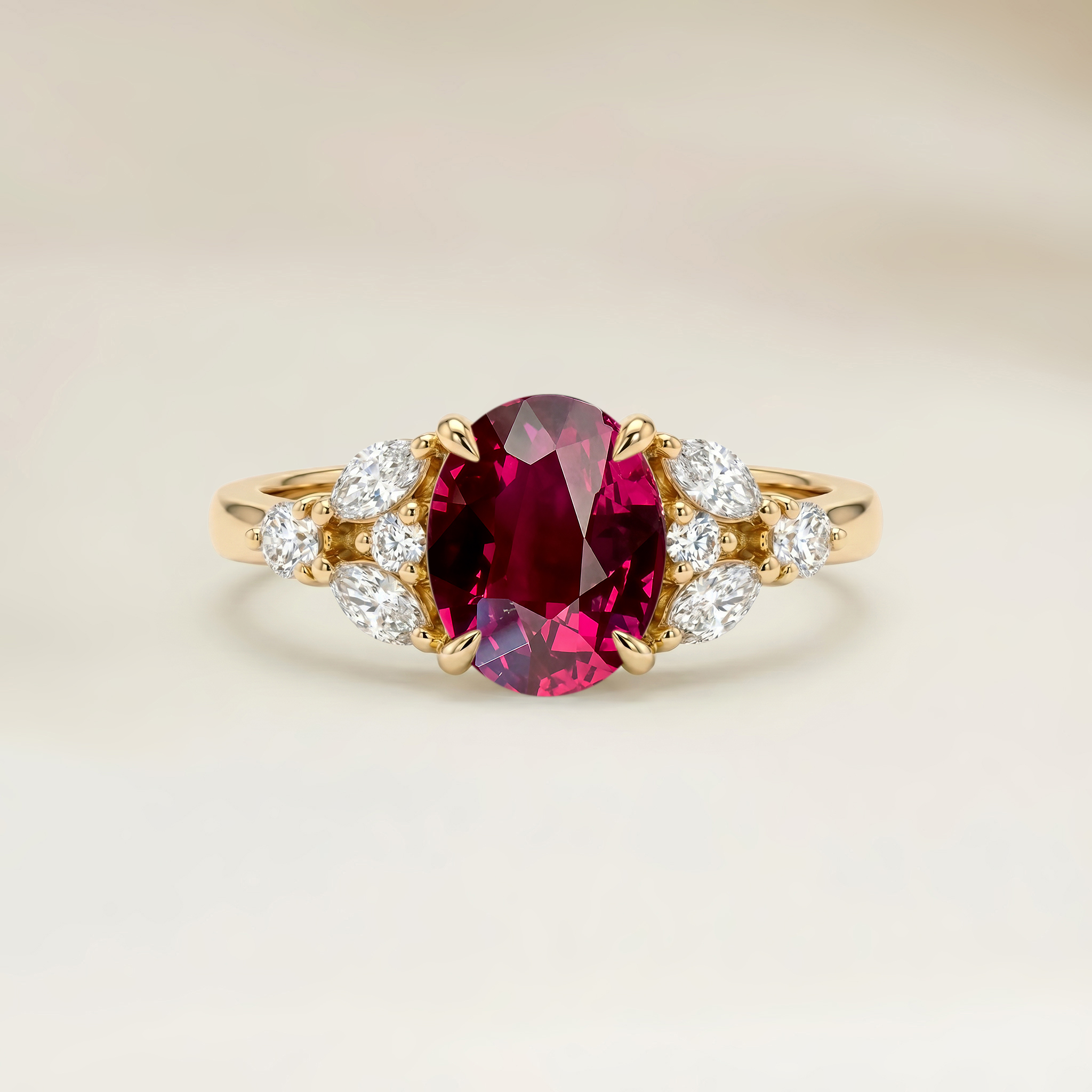
Diamonds are bought according to a standardised scale: the four Cs provide a range that anyone can verify. Rubies have no equivalent scale. Their value is based first and foremost on a visual judgement — the intensity of the red — which no one has managed to standardise.
Four factors come into play, in order of real impact: colour, by far the most important; treatments, which can divide value by ten; dimensions, in millimetres rather than carats; and origin, which influences the price without ever determining it on its own.
A word of context before the figures. Ruby is a corundum, exactly like sapphire — the same formula, the same hardness of 9 out of 10, sometimes from the same deposit, with only the concentration of chromium setting them apart. But it is significantly rarer above two carats, and that is what explains the price gap between the two.
Six Mozambican rubies, recorded in September 2026. Prices including VAT, published online.
| Weight | Cut | Price | Price per carat |
|---|---|---|---|
| 1.50 ct | Oval | 33 780 € | €22,520/ct |
| 1.53 ct | Oval | 30 060 € | €19,650/ct |
| 1.63 ct | Cushion | 30 060 € | €18,440/ct |
| 2.04 ct | Cushion | 31 500 € | €15,440/ct |
| 2.14 ct | Oval | 18 528 € | €8,660/ct |
| 2.52 ct | Oval | 14 610 € | €5,800/ct |
Six stones, Bonnot Paris stock, September 2026. Median: approximately €17,000/ct. Deliberately limited sample — we publish what we have, not a market benchmark.
To put these figures into perspective, two comparisons from our other surveys: the median for blue sapphire is around €1,780/ct for ring sizes, while that ofZambian emerald ranges from €3,200 to €6,100/ct depending on the bracket. Ruby therefore belongs in a category of its own — around nine times the price per carat of blue sapphire.
A global market benchmark. These are our purchases and our selection at a given date, from a single origin and across six stones. A dealer buying elsewhere would publish different figures. We publish ours because no one else does.
Read the last column of the table again: the price per carat falls as the weight rises. This is the opposite of what happens with almost all gemstones, where going from two to three carats costs far more than one third extra.
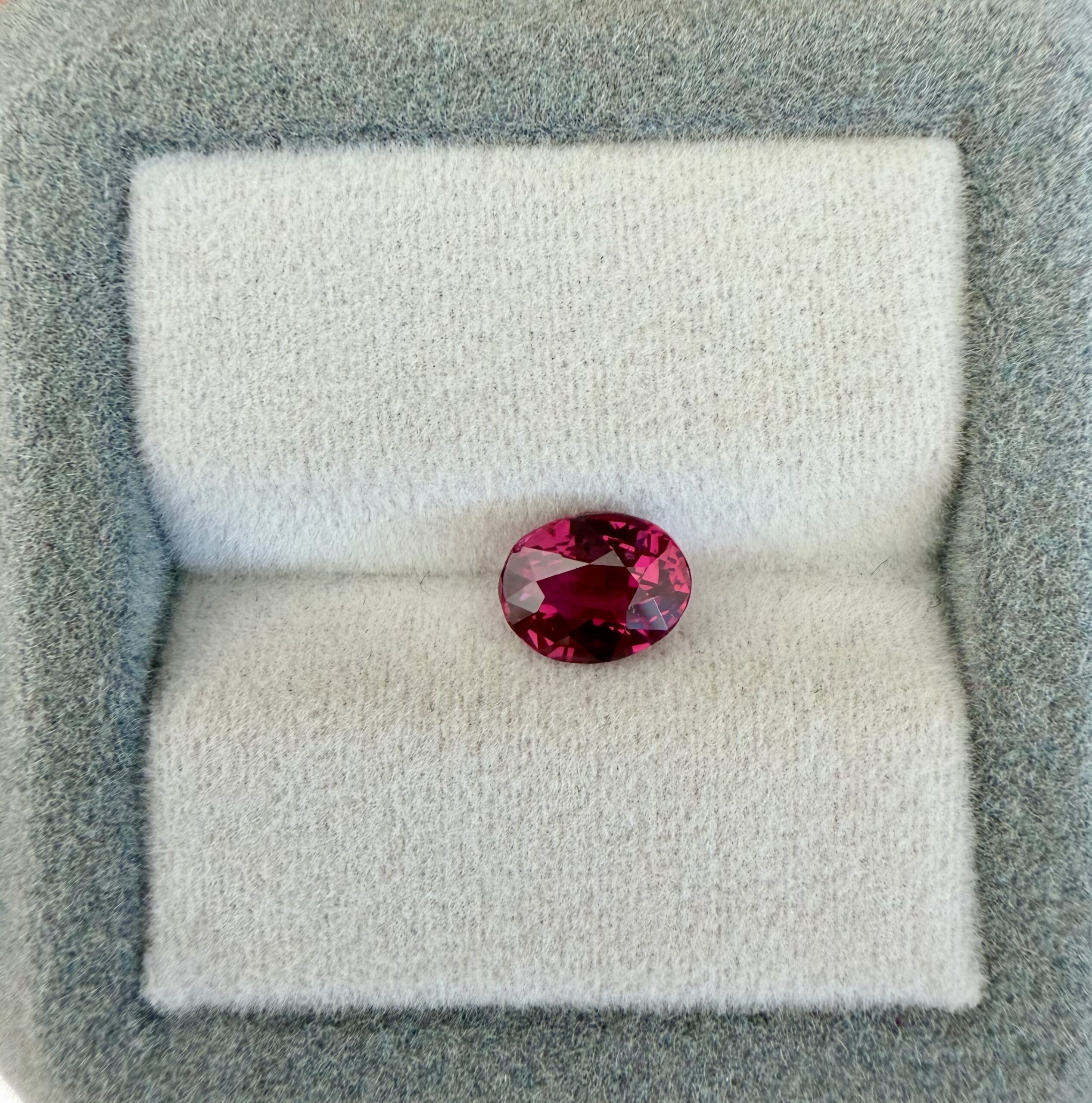
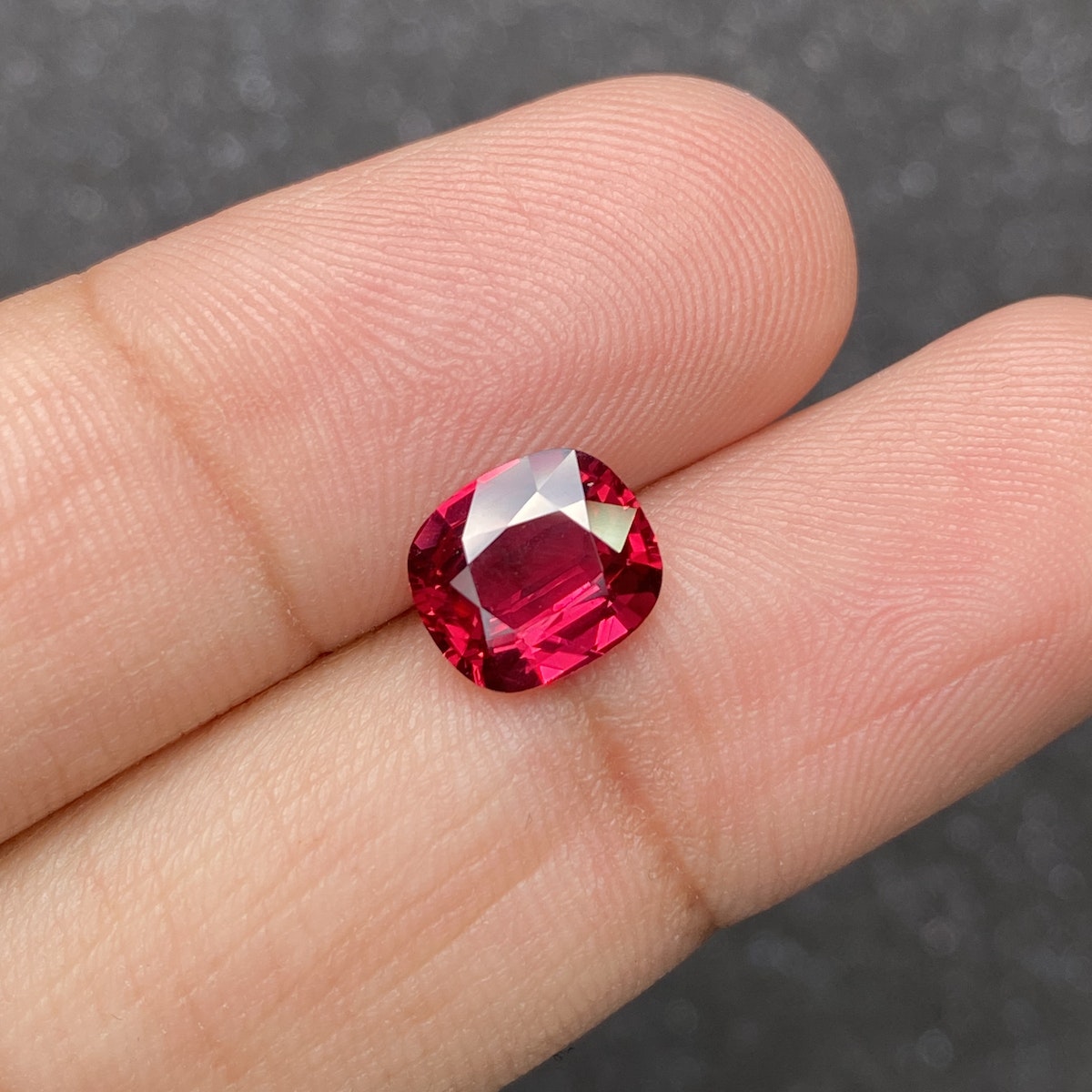
An intense red, without brown or pink, that remains clear as the light fades. The smallest stone in the selection, and by far the most expensive per carat. 33 780 €.
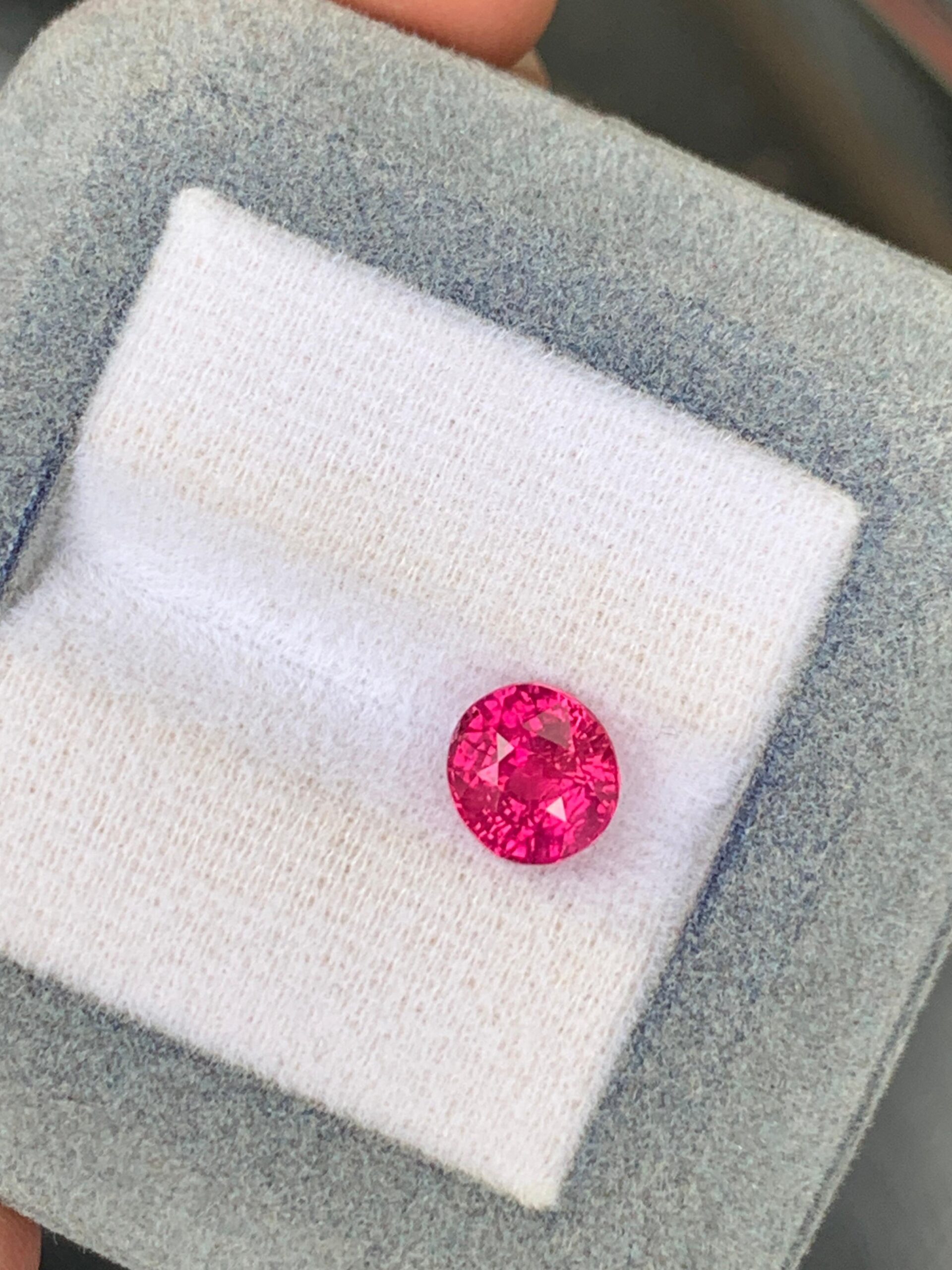
One carat more, a hue shifting towards pink — and a price per carat divided by nearly four. The same species, the same deposit. 14 610 €.
Here is what to take away from this article, if you remember only one thing: with ruby, half a carat less does not cost less if the colour is better. Weight is an adjustment variable; the saturation of the red is the price itself.
A very practical consequence when buying: be wary of a large ruby offered at a price that seems reasonable. Nine times out of ten, it is not a bargain — it is a more subdued colour, heavy treatment, or both.
Ruby geography shifted around fifteen years ago, and many buyers are still unaware of it.
Myanmar Myanmar retains its historical prestige — that of the stones from the Mogok Valley, and the commercial designation “pigeon’s blood” associated with them. These stones are rare on the market, and their sourcing is subject to constraints that complicate traceability.
Most of the fine gemstones available today come from Mozambique, particularly the Montepuez deposit. Our Mozambique rubies range from one and a half to two and a half carats, with certificates documenting their treatments.
As for price, the rule is the same as for all gem families: origin explains a character, never quality. Moreover, a laboratory only reaches a conclusion on origin when the inclusions allow it, and “origin undetermined” is not a flaw in the stone.
It is a commercial designation, not a standard. Some laboratories mention it according to their own criteria, while others refuse to do so, and it is not harmonised between them. It significantly increases the price — so caution is advised when it is claimed without supporting documentation.
Ruby is the most treated and most imitated gemstone on the market. Two situations cause value to collapse, and neither can be seen with the naked eye.
Lead-glass filling. Stones so heavily fractured that they would be unsaleable are impregnated with a glass that fills the cracks and makes them visually presentable — often with a very flattering red colour. Their value bears no relation to that of a simply heated ruby, and they are unusually fragile: no ultrasound, heat or acidic products. A jeweller retipping a claw with a blowtorch can destroy the stone.
Synthesis. Ruby was the first gemstone to be industrially synthesised, from the beginning of the 20thth century. Many antique jewels contain them, and do not always say so — not out of malice, but because it was common and accepted at the time.
By contrast, heatingdoes not diminish value: it is a traditional, stable and disclosed heat treatment, from which the vast majority of rubies on the market benefit. An unheated stone is worth more; a heated stone is in no way devalued. For the visual criteria and identifying features to look for, our guide to recognising a ruby details each case.
So far, we have discussed the stone alone. To this must be added the setting: from 1 250 € for a simple design to 10 000 € and more for extensive pavé or calibrated-stone work.
| Budget | What this allows |
|---|---|
| From €8,000 | A stone under one carat in a beautiful colour, on a simple 18-carat gold setting. |
| €15,000 to €25,000 | A 1 to 1.5 ct ruby with a pronounced red colour, in a bespoke setting. The heart of ruby projects. |
| €30,000 and above | A true red of 1.5 ct and above, or a beautiful size over two carats. |
| Price of the setting alone | Resetting an existing ruby — from €1,250 for a simple design. |
A ruby engagement ring therefore starts significantly higher than a sapphire ring, which starts at €2,500, or an emerald, at €1,700. This is not a pricing policy: it is the rarity of the raw material, as we see when purchasing in our sourcing markets.
If it is red that you are looking for rather than the word “ruby”, there is a serious answer — and it has six centuries of history behind it.
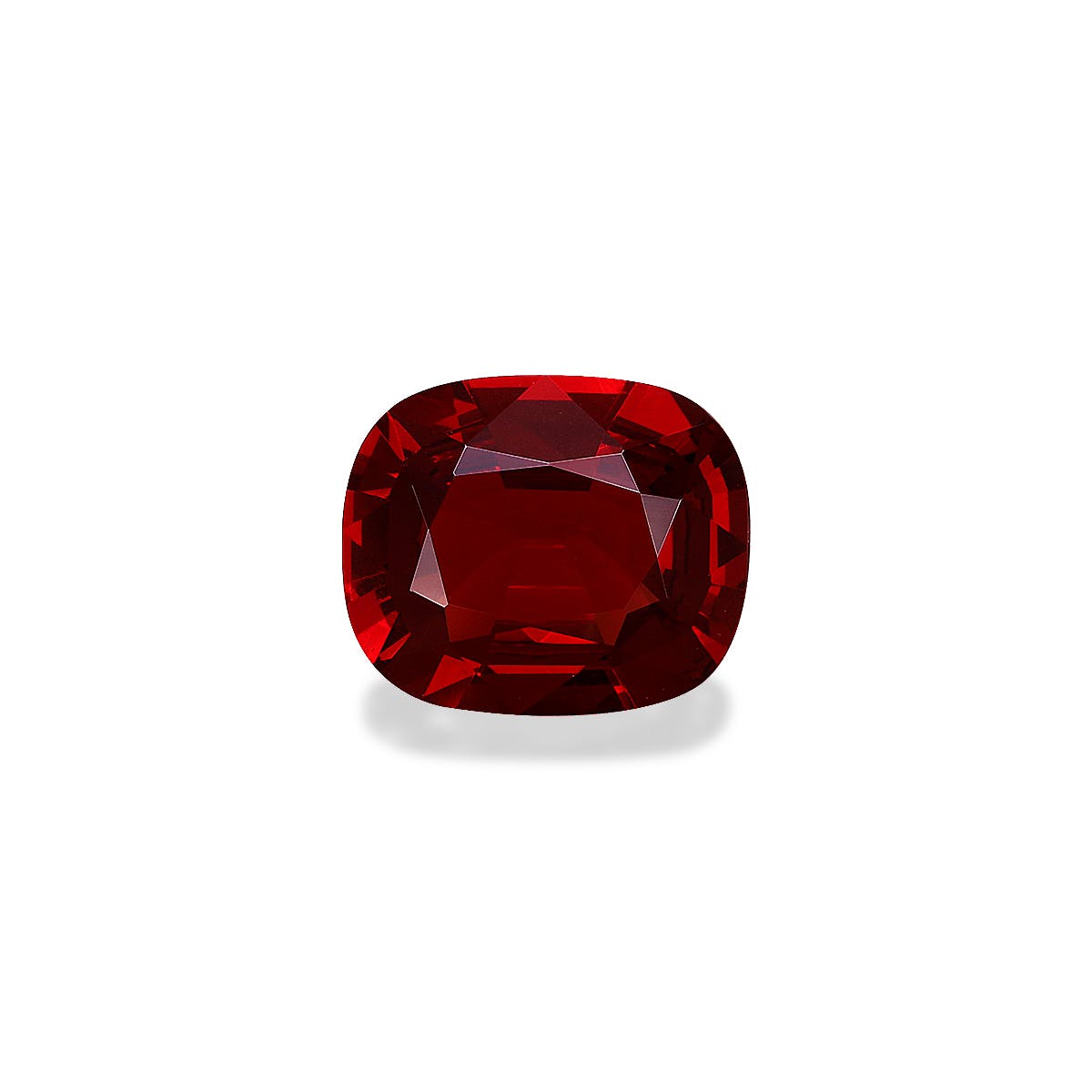
Red spinel is a distinct mineral species, long confused with ruby: several historic “rubies” in royal crowns have proved to be spinels. In our stock, its median is around €4,900/ct, compared with approximately €17,000/ct for ruby.
Its advantages are genuine. It is almost never treated — no oil, no glass, nothing to disclose or handle with care. Its hardness of 8 on the Mohs scale makes it suitable for everyday wear without reservation. And it is increasingly sought after in its own right, not as a substitute.
The caveat, plainly stated: it is not a ruby, and never will be. If it is the name, the history and the stone’s place in the hierarchy of gems that matter, no spinel will replace a red corundum. If you already own a red stone whose nature you do not know, our article on valuing your stone explains whom to contact to identify and have it appraised.
Among our six Mozambique rubies in stock in September 2026, prices range from €5,800 to €22,500/ct, with a median of around €17,000/ct. The difference does not come from weight but from colour: the purest red commands several times the price of a pinkish or slightly brownish red.
Yet it is the same mineral, separated only by the concentration of chromium. But beautifully coloured ruby is markedly rarer above two carats. In our stock, its median per-carat price is approximately nine times that of blue sapphire.
For most gems, yes. For ruby, colour is so decisive that a small, intensely red stone may cost several times more per carat than a larger but pinkish stone. This is evident in our own stock: the most expensive stone per carat is also the smallest.
Lead-glass filling first and foremost, then synthesis — rubies having been produced industrially since the beginning of the 20thth century. Heating, meanwhile, is a traditional and disclosed treatment that does not diminish the stone’s value.
Our mounted creations start at around €8,000. In addition to the stone, there is the setting, from €1,250 for a simple design to €10,000 and more for extensive pavé setting. The main cost remains the gemstone.
Red spinel, almost never treated and long confused with ruby. In our stock, its median price per carat is less than one third of that of ruby, and its hardness of 8 makes it suitable for everyday wear without reservation.
It influences it, but never on its own. Burma retains historical prestige, while Mozambique has supplied most of the finest stones for some fifteen years. A beautiful stone from Mozambique surpasses an average stone from Burma.
Share this post