Zambian or Colombian Emerald?
Bonnot Paris22/9/2026
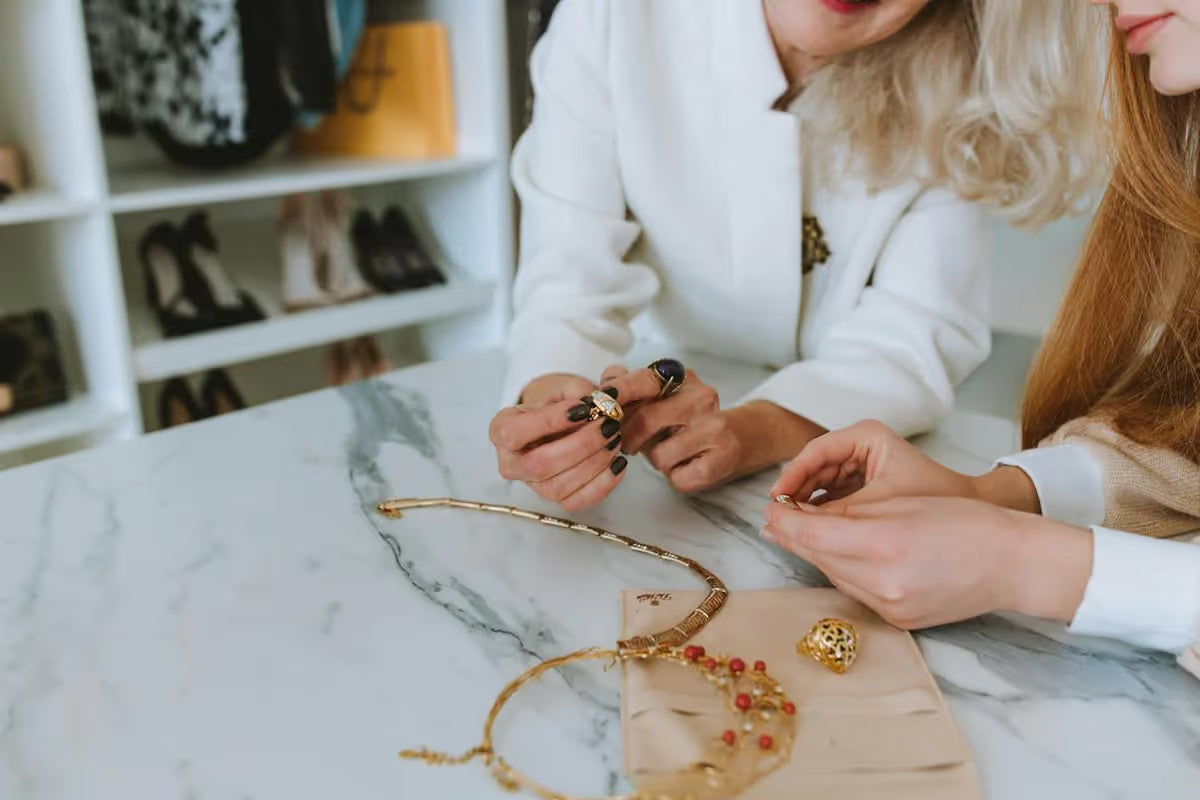



Insuring a piece of jewellery, dividing an estate, reselling it or simply finding out what one has inherited: these four situations produce four different figures for the same gemstone, and they do not fall within the remit of the same professionals.
It may as well be stated from the very first line, since you may have arrived here looking for this service: Bonnot Paris does not provide stone valuations. We are dealers and jewellers. This article explains whom to contact, in what order, and what truly determines a gemstone’s value.
They are used interchangeably, and that is the source of most misunderstandings — including appointments made with the wrong contact.
| The term | What it is | Who does it |
|---|---|---|
| Appraisal | Identifying the stone: nature, weight, dimensions, treatments, condition. | A suitably equipped gemmologist. |
| Certificate | The document attesting to these elements, verifiable by its number. | An independent laboratory. |
| Valuation | A value range, entirely dependent on the context. | A professional in the relevant market. |
| Legal valuation | A value that is legally binding for an estate, dispute or insurance policy. | An accredited expert |
The order matters, and it is not negotiable: you cannot appraise what you have not identified. A red stone without an expert assessment may be an unheated Burmese ruby or a synthetic corundum from the 1950s — the difference in value can be a factor of one hundred.
Three doors to open, in this order.
The gemmological laboratory, first. It is responsible for identification: the nature of the gemstone, weight, dimensions, treatments undergone and, where the inclusions allow, geographical origin. The report is subject to a fee, takes several days, and constitutes the reference document recognised by the entire profession. Without it, everything else is merely opinion.
The accredited expert or auctioneer, next. Only they produce an appraisal with legally binding value — for an estate, division of assets, divorce, dispute or insurance file. They rely on the laboratory’s identification and on the market results they monitor.
The dealer or jeweller, finally, but for something else: buying, selling, creating, resetting. Their opinion on a stone has professional value; it has no legal standing.
Asking for a value before an identification. A figure given for an unidentified stone is worth nothing, regardless of the expertise of the person giving it — and it can prove costly if used as the basis for a division of assets or an insurance contract.
We are asked this question every week, and the answer is always the same: we do not appraise stones. This is not a matter of affectation; it is a matter of profession and position.
We are dealers : we buy stones in our markets, sell them and set them. This gives us an in-depth knowledge of prices — but also a direct interest in the transaction. A professional who may buy your stone is not best placed to tell you what it is worth. It is a conflict of interest, even when handled in good faith.
And we are neither auctioneers, nor court-appointed experts, nor a laboratory. We therefore issue neither certificates nor appraisals : a gemmological report has value only because it comes from a third party independent of the seller.
That a stone is an investment. A gemstone is not a financial product : its future value depends on markets no one can predict, and we will never sell a stone on that promise.
Here, however, we have something to say — it is our daily work as buyers. Colour first, always, then dimensions, transparency and cut quality. But one factor carries even more weight, and it varies according to the family: treatments.
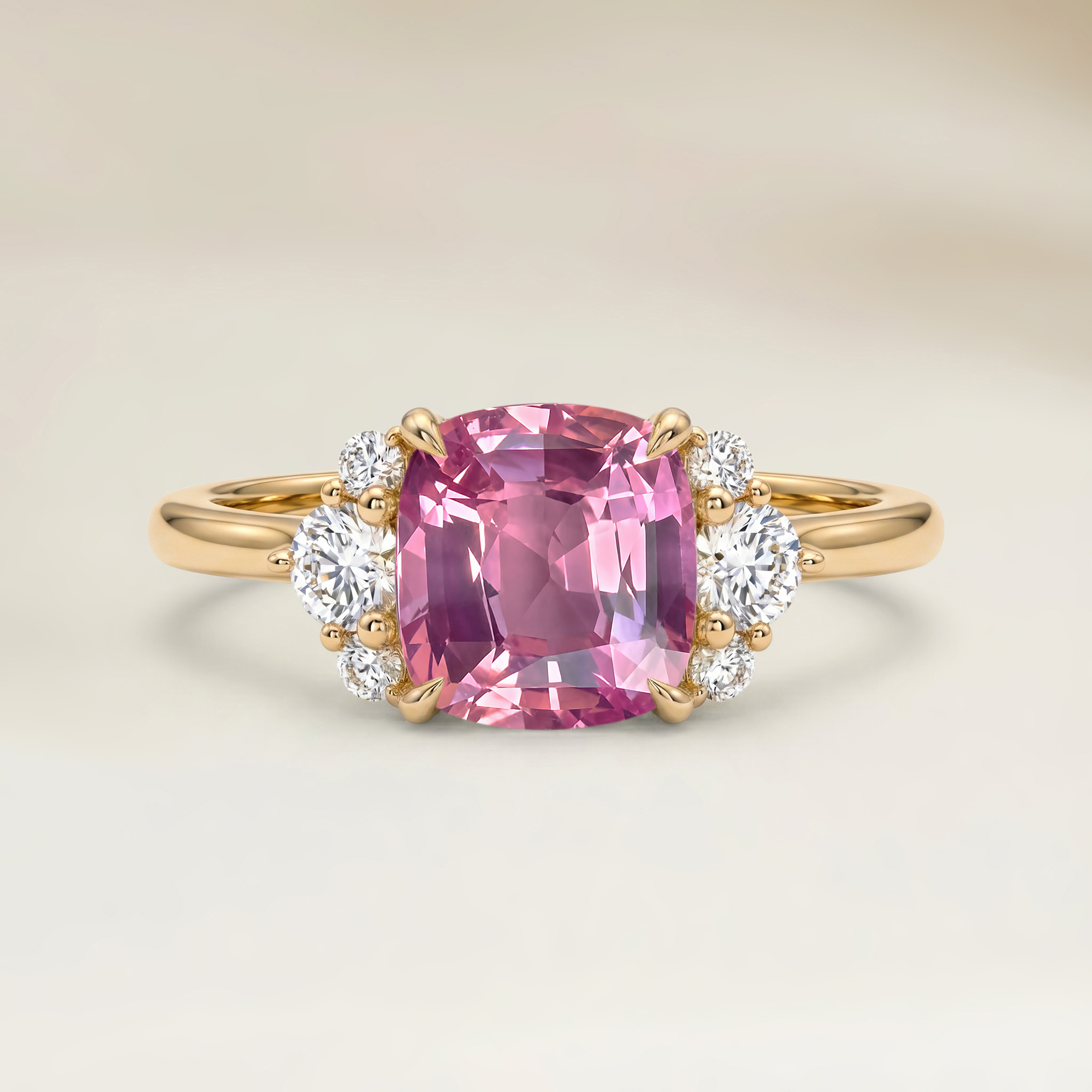
It is the only sapphire whose designation is controlled: without mention in a laboratory report, an orangey-pink stone remains a pink sapphire and is traded as such. On a padparadscha sapphire engagement ring, the paperwork accounts for a considerable share of the value. Set ring — 14 400 €.
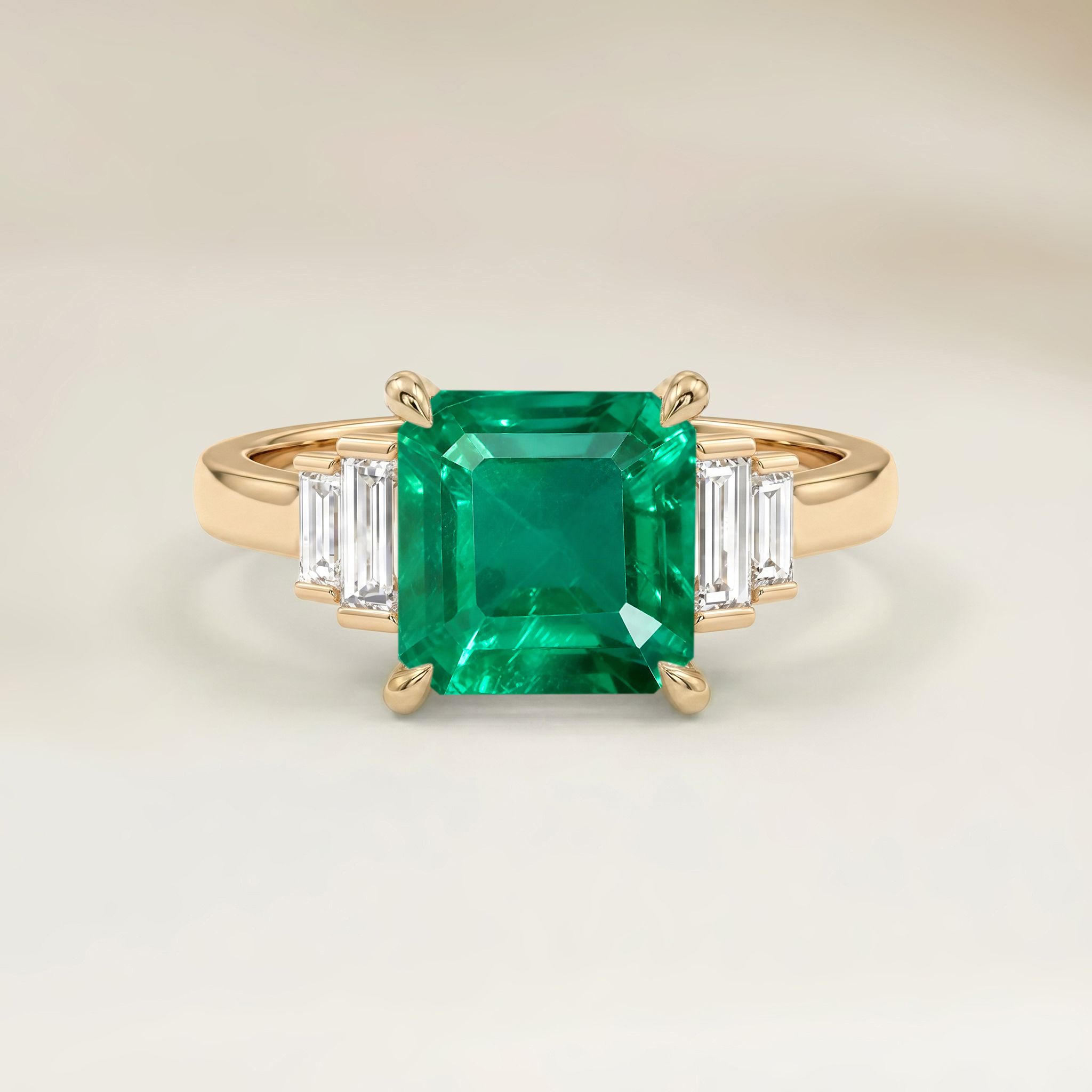
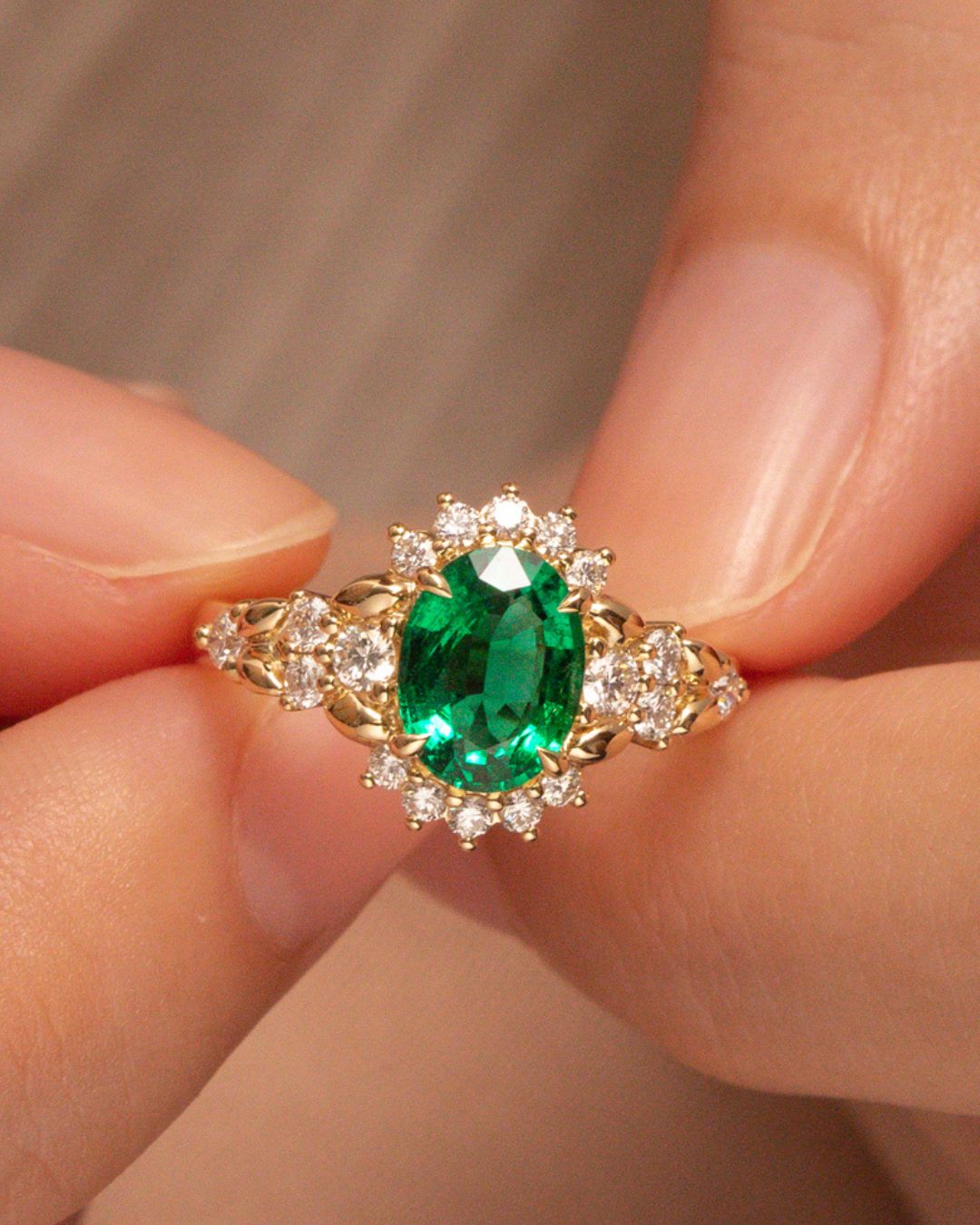
None, minor, moderate: the report always specifies it, and the difference in value is clear. On an emerald engagement ring, the presence of coloured resins — which we refuse to purchase — drastically reduces the value. Set ring — 4 680 €.
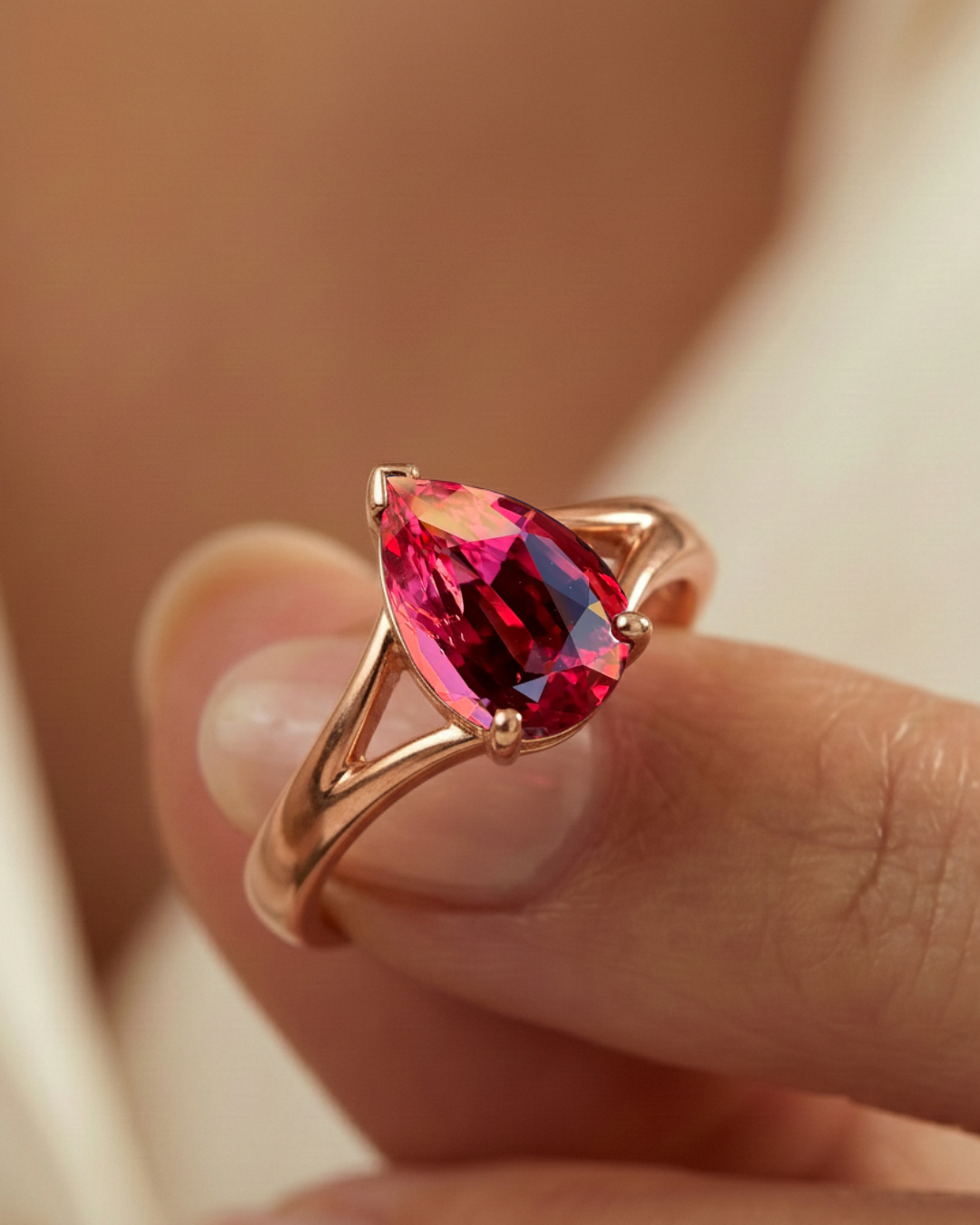
The case of ruby is the most extreme, and the one that causes the greatest disappointment. Treatment with lead glass — fractures filled with a glass that makes the stone visually presentable — has become widespread since the 2000s. Such a gemstone has nothing in common, in terms of value, with a ruby engagement ring set with a simply heated stone.
Heating, on the other hand, poses no problem: it is a traditional, stable and declared treatment, from which the vast majority of corundums on the market benefit. An unheated stone is worth more, but a heated stone is not devalued in any way.
| Your reason | What you need | Who to consult |
|---|---|---|
| To know what I have inherited | Identification of the stone | Gemological laboratory |
| To insure the jewellery | A documented replacement value | Certified expert |
| Inheritance, division of assets, dispute | A legally binding valuation | Certified expert or auctioneer |
| Resell | An identification, followed by genuine offers | Laboratory, then the market |
| Reset the stone | A bespoke creation quote | A jeweller |
The resale value of a piece of jewellery is generally far lower than its purchase price. The setting, workmanship and distribution margin cannot be recovered. Only the stone retains a market value — and even that depends on its quality and treatments.
Two practical pieces of advice, the second of which alone is worth reading this page for.
Gather the documents. Original invoice, certificate, previous valuation, old photographs, and even family memories about its provenance. If you have nothing, that is not an obstacle — it is in fact the most common case.
Do not have anything cleaned or repolished beforehand. Repollishing carried out without prior identification may remove the colour from a surface-diffused stone. Ultrasonic cleaning can worsen an existing fracture and destroy a lead-glass-treated stone. The original condition is always more informative than a refurbished piece — a gemmologist reads wear like a biography.
Many pieces of jewellery were sold at a time when treatments were neither identified nor disclosed. Discovering that a family stone is treated — or synthetic — does not mean that you were deceived : ruby has been industrially synthesised since the beginning of the 20thth century, and nobody concealed it. How to recognise a ruby →
Once the stone has been identified, a question often remains that is more interesting than its value: what should be done with it?
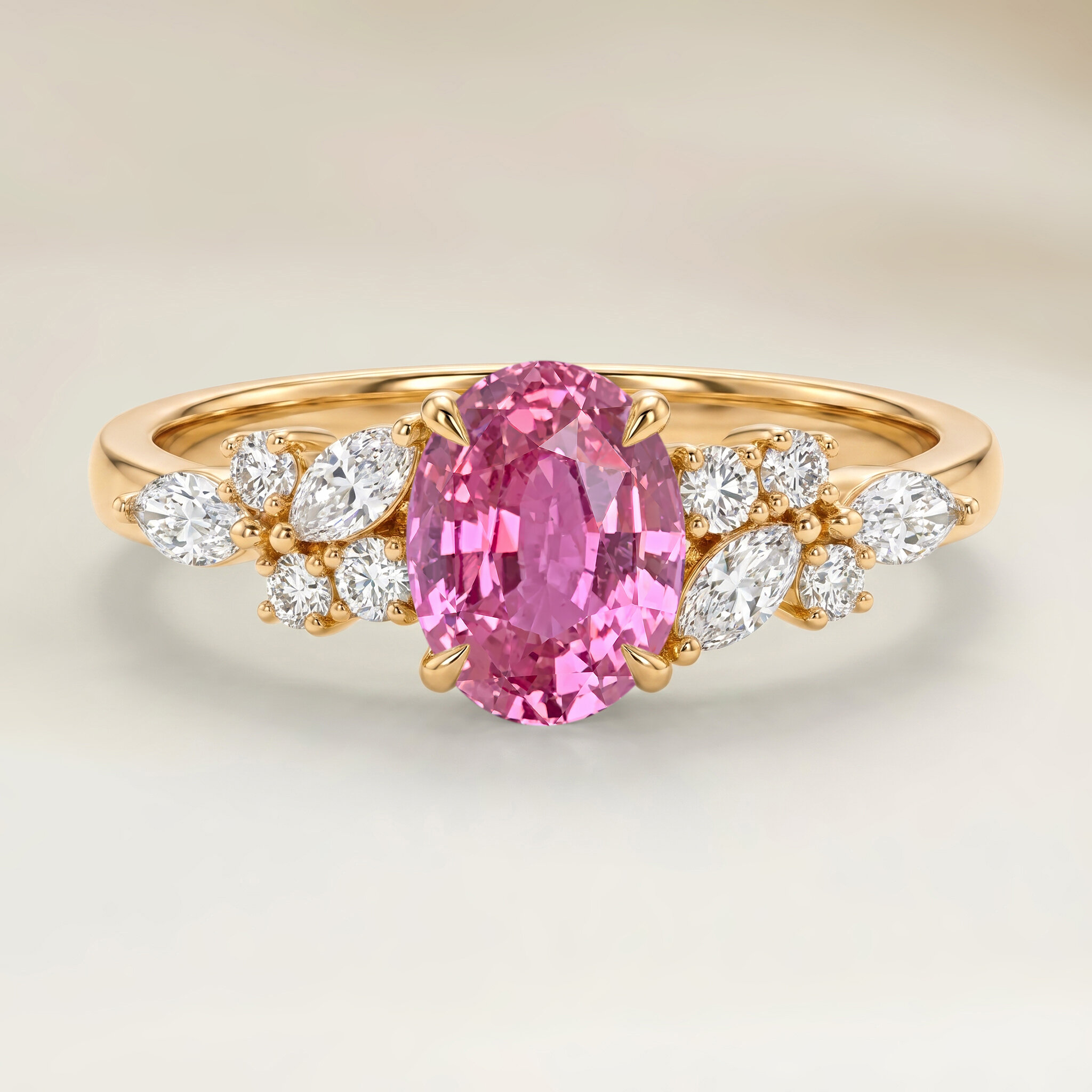
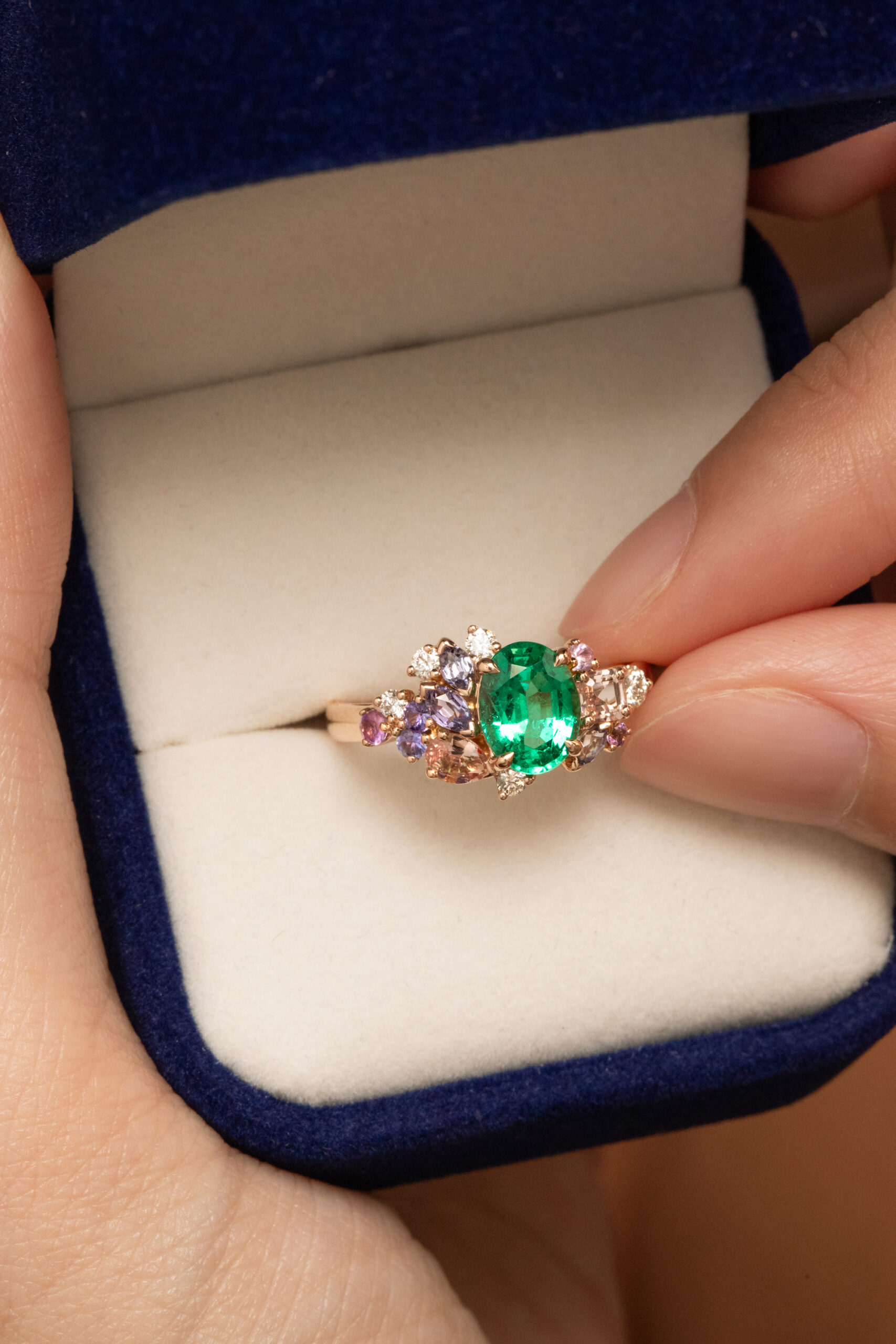
This is where our craft begins. As part of a bespoke creation project, we examine the stone to check its condition — claw play, surface-reaching fractures, wear to the setting — and to record its actual dimensions with callipers, often different from those stated by the original seller. Our designers then create a setting around it.
The cost is then limited to the setting, from 1 250 € for a simple design to several thousand for extensive stone-setting work: the principal component, the gemstone, is already there. And the gold from the former piece can be melted down and reused.
This is a jeweller’s craft, not an appraisal. But it is often what people were truly looking for when they came to ask what their grandmother’s ring was worth.
The expert assessment identifies the gemstone — nature, weight, dimensions, treatments. The certificate is the document issued by an independent laboratory attesting to these elements. The appraisal provides a value range, which depends on the context. Three distinct processes, entrusted to three different professionals.
No. We are coloured-stone dealers and jewellers: we buy, sell and create. Appraising jewellery belonging to a third party is another profession — and a dealer who may buy your gemstone is not best placed to tell you what it is worth.
An independent gemmological laboratory. It determines the nature, weight, dimensions, treatments and, where the inclusions allow, geographical origin. The report is subject to a fee and takes several days: it is the reference document for the entire profession.
A certified expert or auctioneer. Only they can produce an appraisal that is legally binding in matters of inheritance, division of assets, disputes or insurance claims. A dealer’s opinion, however knowledgeable, carries no weight in these situations.
All existing documents — invoice, certificate, previous appraisal, photographs. And above all: do not have the piece cleaned or repolished beforehand. Repolishing without prior identification may remove the colour from a surface-diffused gemstone, and ultrasound can worsen an existing fracture.
No. The resale value of a piece of jewellery is generally far lower than its purchase price: the setting, craftsmanship and retail margin cannot be recovered. Only the stone retains market value.
We reset it. As part of a bespoke creation project, we examine the stone to verify its condition and record its actual dimensions, then design a setting around it. The cost is limited to the setting, since the gemstone is already there.
We publish our entire inventory online, including prices — it is the best way to compare your stone with ours. Everything can be viewed from the precious stones.
Share this post