Zambian or Colombian Emerald?
Bonnot Paris22/9/2026



A high-set solitaire leaves an unsightly gap beneath the band. A setting with a wide basket prevents the wedding band from sitting flush. A halo setting requires a notch. None of these problems has a simple solution once the ring has been made — whereas they can be resolved in a single sentence at the design stage.
This guide explains how to choose the band, and above all when to ask each question. The good news is: there is no need to have the wedding band made straight away.
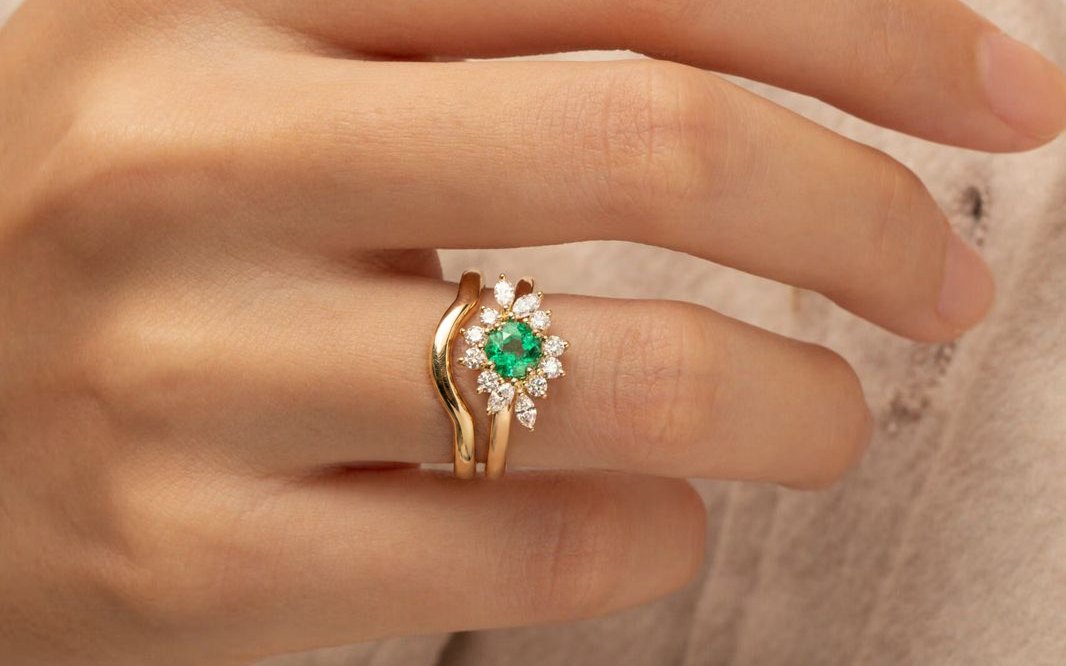
A single question, asked at the first appointment: “will a wedding band sit against this ring?” If the answer is yes, three design parameters change immediately.
The height of the setting. A high-set stone allows a straight band to pass beneath it; a low-set stone never will. The profile of the engagement ring band. A slight curve allows the wedding band to sit against it without a gap. The shape of the basket, the structure beneath the stone that can protrude and prevent any contact.
None of this requires ordering the wedding band on the same day. We are happy to design both rings together, even if the second is made only later, and the measurements remain in the workshop : a wedding band requested five years later will be fitted to the millimetre.
Not all is lost, far from it. A bespoke wedding band is designed from the actual ring, placed on the workbench: we trace its contour, adjust the notch, and check the contact. It is a longer redesign process, but entirely commonplace. Discover bespoke →
This is the first decision, and it is not a matter of taste: it is dictated by the engagement ring.
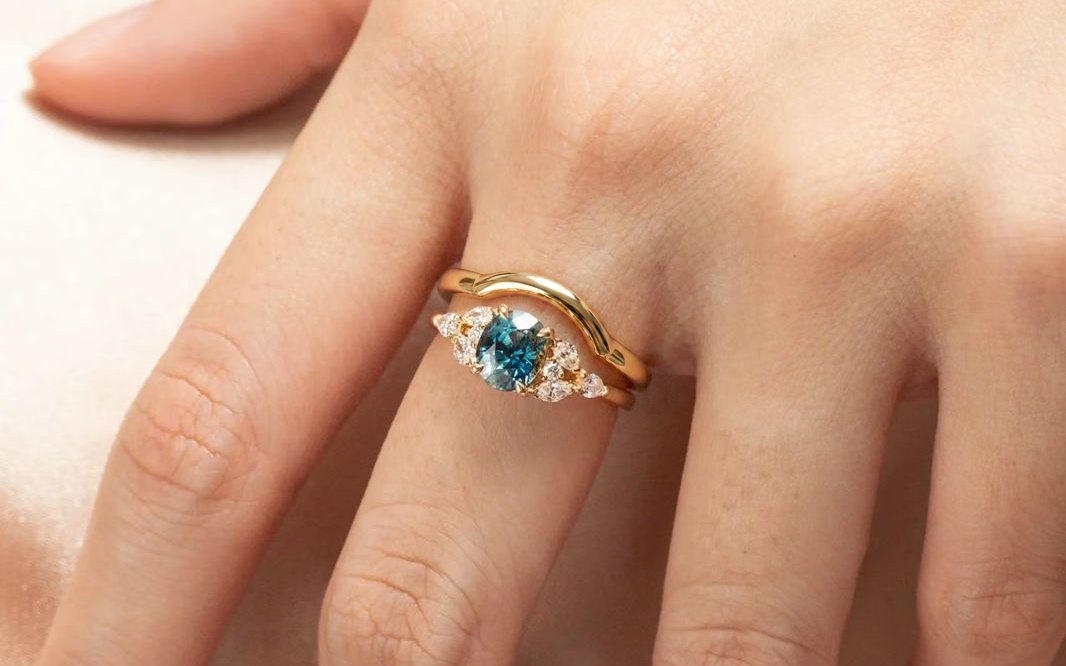
Essential beneath a halo setting, a pear cut, a low-set stone or a wide basket setting. The cut-out follows the design of the ring and eliminates any friction against the prongs — that is the real issue, far more than aesthetics.
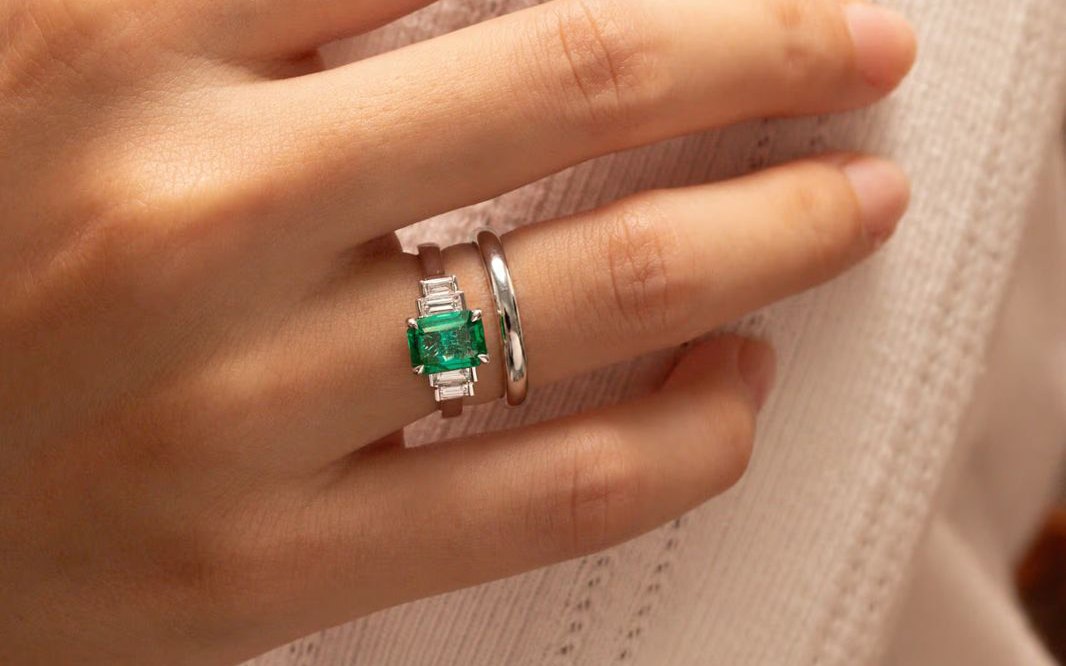
It is suitable whenever the stone is set high enough to allow it to pass, or when the engagement ring is worn on the other hand. A slight gap between the two rings is normal — and often more elegant than constant contact, which eventually wears down both.
Tradition places the wedding band first, at the base of the finger, closest to the heart. It is a convention, not an obligation: if the engagement ring is noticeably wider, it sits better underneath. Comfort takes precedence over symbolism.
Two millimetres’ difference completely changes the look of a ring — and comfort on the finger.
| Width | The result | For whom |
|---|---|---|
| 1.5 to 2 mm | A discreet thread, which almost disappears against the engagement ring. | Duo, slender fingers |
| 2 to 2.5 mm | The most common width for a duo: present without weighing down. | The safe choice |
| 3 to 4 mm | A wedding band that stands on its own and can accommodate pavé setting or engraving. | Worn alone |
| 4 to 5 mm | The classic men’s format. Requires a comfort profile on the inside. | Men’s wedding band |
One point no one mentions in the boutique: a wide ring feels tighter at the same size. It covers a larger area of the finger and behaves like a gasket. Beyond 4 mm, one generally allows for a quarter to half a size more — and a comfort fit, meaning a slightly rounded interior that allows the ring to slip on without forcing.
The question always comes in the same form: should it be the same gold as the engagement ring? No. Mixing gold colours is perfectly acceptable, and increasingly common for ring pairings.
One precaution only, and it is technical rather than aesthetic: two metals of very different hardness wear against each other. Two rings that touch all day for twenty years will eventually mark each other, and it is always the softer one that suffers. This is resolved through design, by choosing compatible alloys — not afterwards.
| Metal | What you need to know | Care |
|---|---|---|
| 18 ct yellow gold | Warm, timeless. It extends the warm tones of the centre stone. | No surface treatment. |
| 18 ct white gold | Neutral, it maximises contrast with diamonds. | Rhodium plating every 2 to 3 years. |
| Platinum | The densest, naturally white. It secures significant stones more effectively. | Nothing needs to be redone. |
| 18 ct rose gold | Softens and adds a rosy hue. Superb with warm tones; try it with others. | No surface treatment. |
All our gold is crafted in recycled, traceable 750‰ gold. And if you own old jewellery, its gold can be melted down and reused in the wedding band: the cost does not collapse — gold is not the main expense — but the continuity of material is meaningful to many people.
The rule can be summed up in one sentence: one of the two rings must remain quiet.
An elaborate engagement ring — halo, pavé on the band, calibrated stones — calls for a restrained wedding band. Otherwise, the two compete with one another and the eye no longer knows where to rest. Conversely, a pared-back solitaire works very well with a pavé wedding band, which then brings the light that the setting does not provide.
One practical point about pavé, rarely mentioned at the time of purchase: a fully pavé wedding band is difficult to resize. A plain band can be resized in a few minutes; a pavé band, much less easily. If the finger size is likely to change—pregnancy, weight fluctuations, age—a pavé set on only half the band leaves some room for adjustment.
Initials, date, short message: it is engraved inside the band, never touching the stone. Consider it before setting the stone; it is simpler—but it remains possible afterwards on a plain band.
The central gemstone does not only determine the colour: it determines what the wedding band can do. Three scenarios we encounter every day.
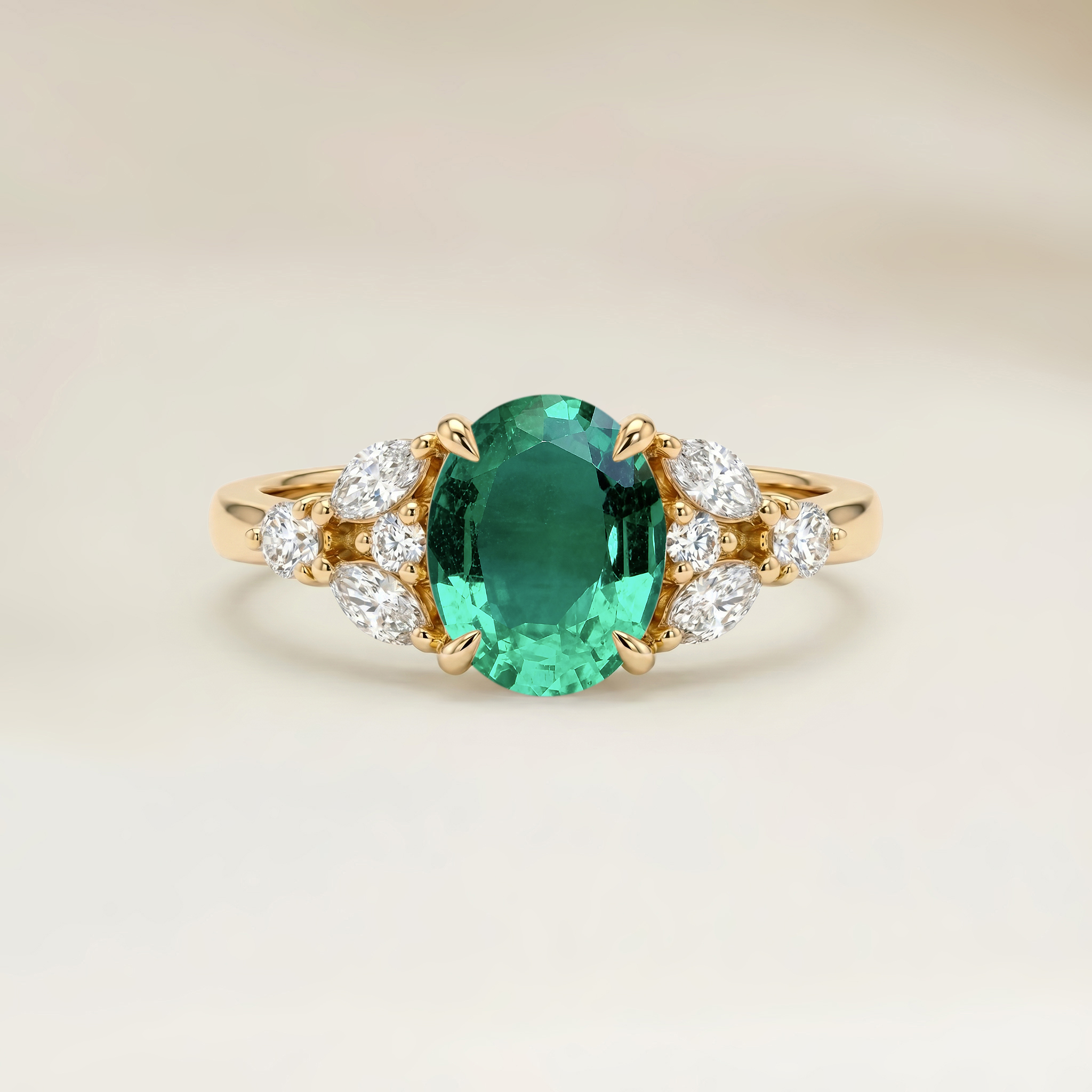
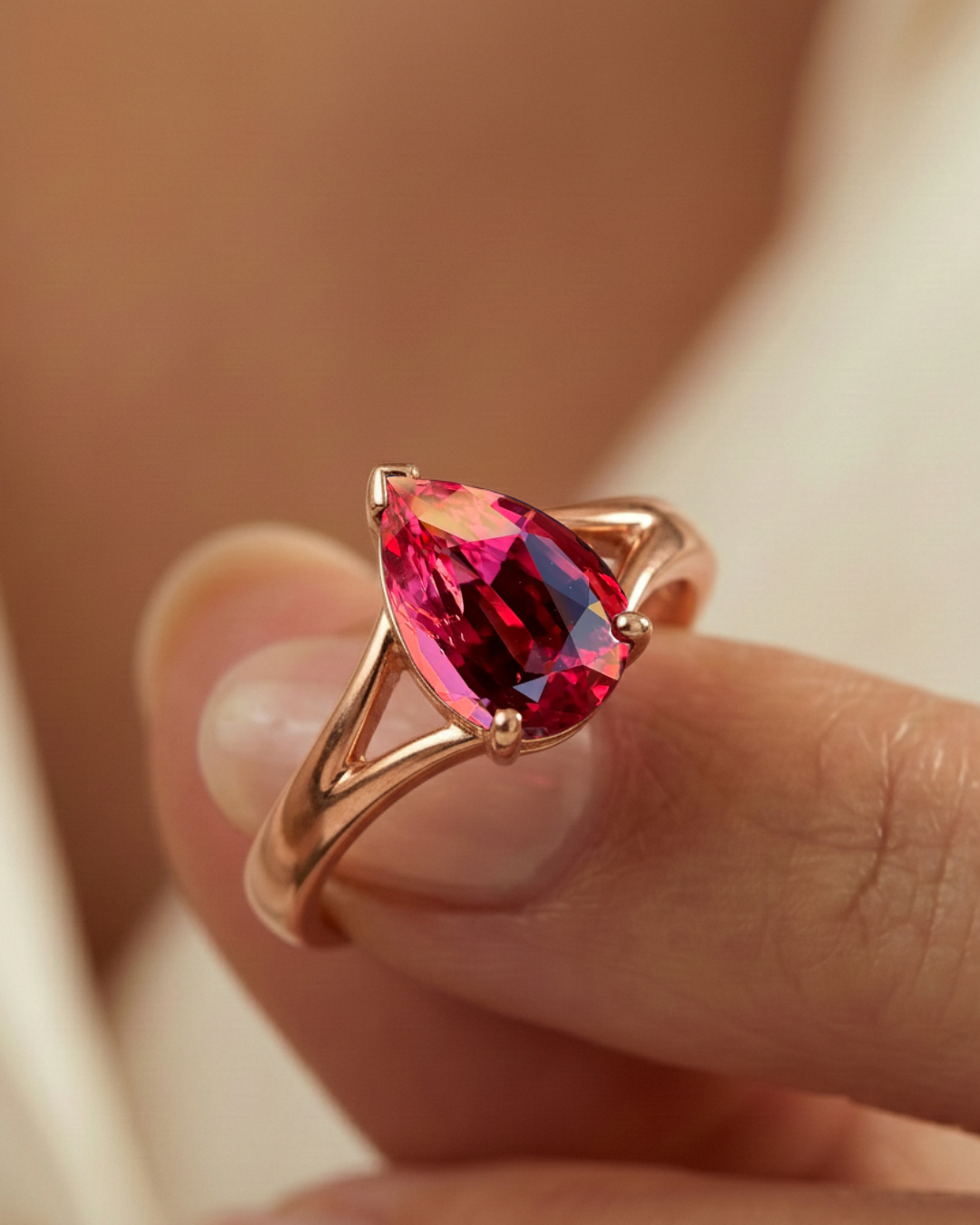
1.08 ct · €6,240
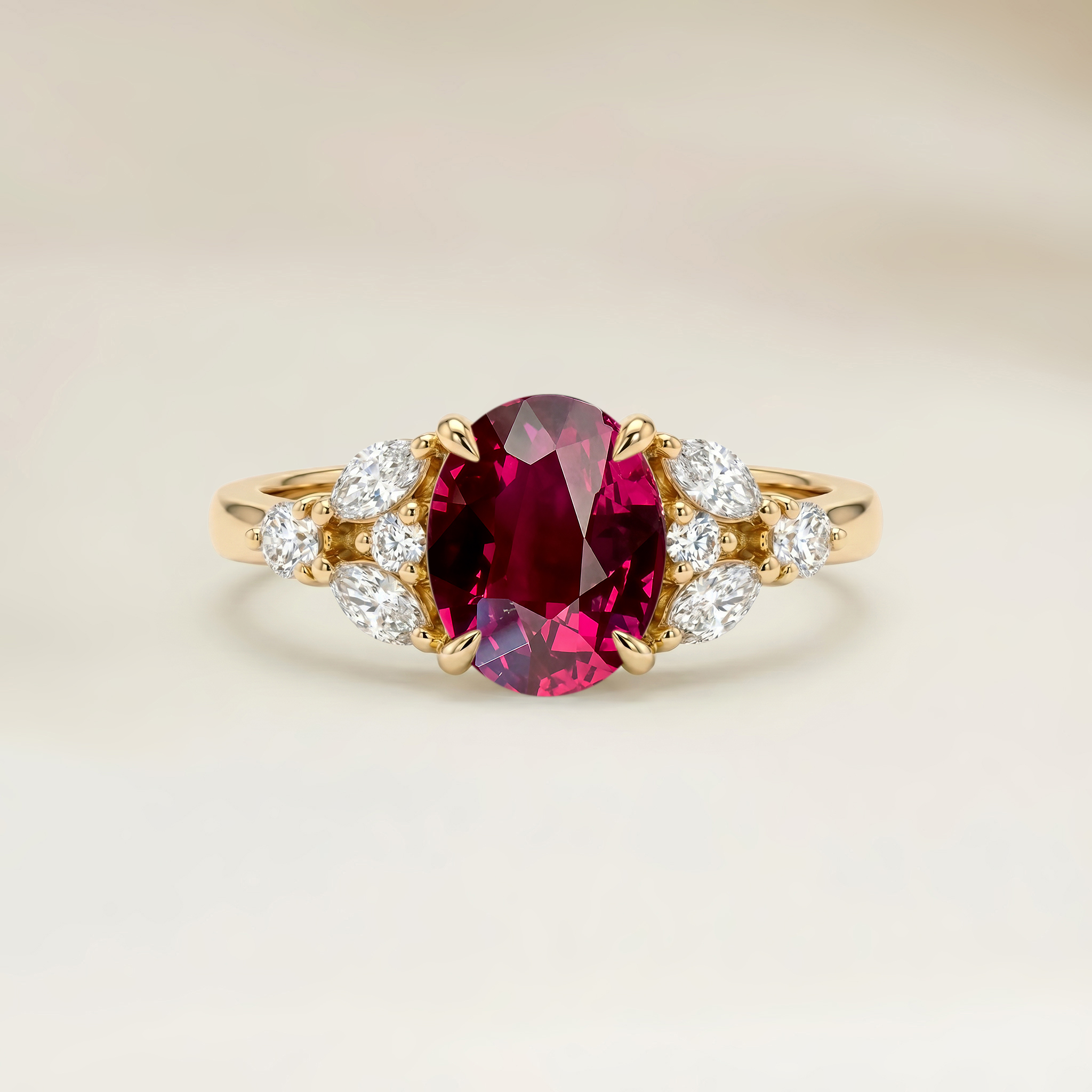
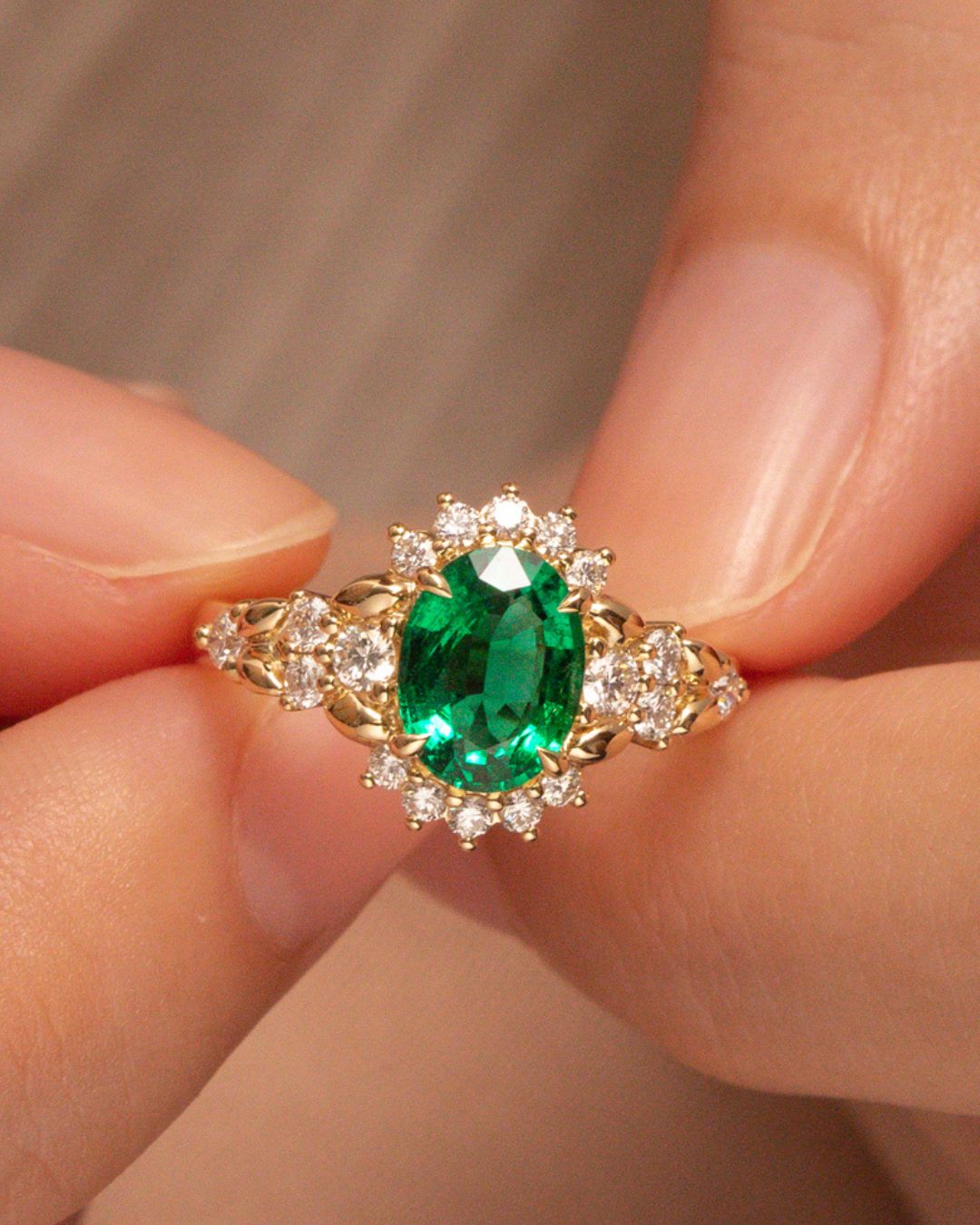
1.50 ct · €32,400
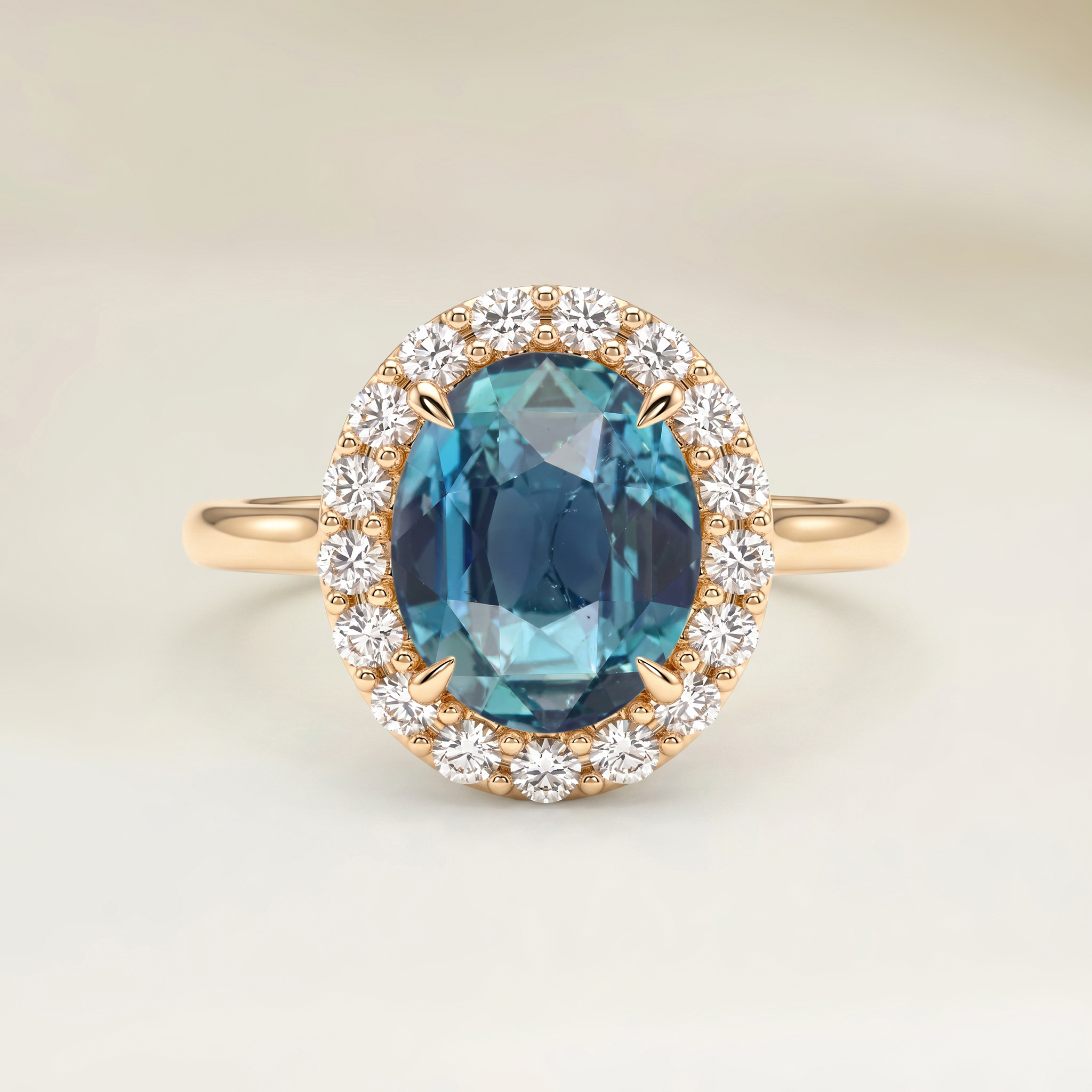
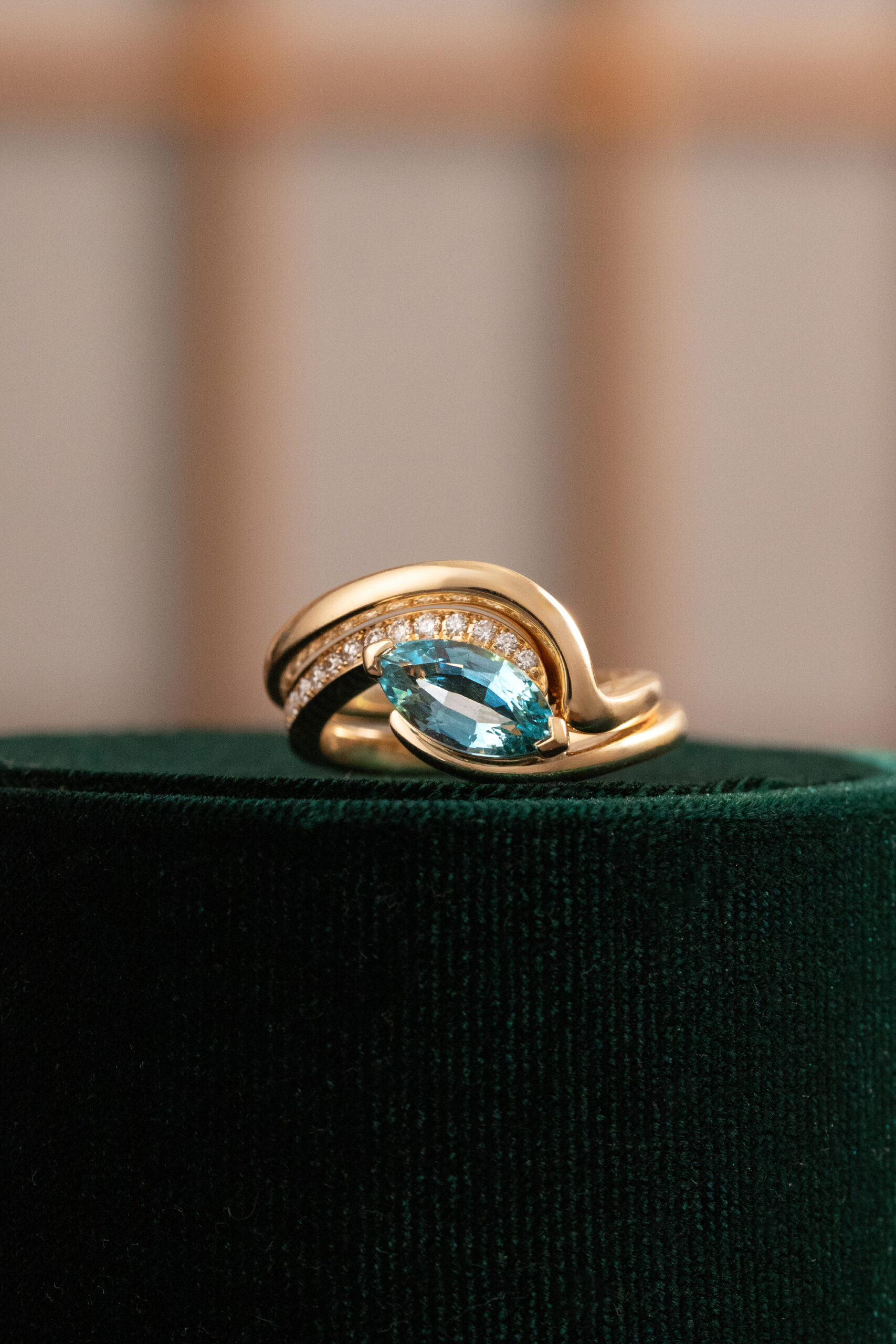
Teal sapphire 2.01 ct · €7,080
Available creations, prices observed in September 2026.
In practical terms: beneath an emerald engagement ring, we almost always design a notch, even when the geometry would allow a straight band—the stone is too sensitive to repeated impacts for us to take the risk. Beneath a ruby engagement ring, the constraint disappears: corundum can take it.
And beneath a teal sapphire engagement ring set with a surround, it is the shape that dictates the design, not hardness: the diamond halo extends beyond the ring, and only a curve can nestle against it.
It follows different constraints, and we speak of them far less. Three parameters determine everything.
Between 3 and 5 mm depending on the hand. Beyond that, the band becomes uncomfortable on a working finger.
Slightly domed interior. Essential from 4 mm onwards, and genuinely appreciable below that.
Platinum remains white without maintenance. White gold requires rhodium plating every two to three years.
A satin or sandblasted finish conceals micro-scratches far better than a mirror polish.
A coloured stone is entirely possible on a men’s wedding band, on one condition: it must be set low enough not to protrude beyond the profile. A bezel setting on a step cut is the configuration we most often create — discreet, durable, with nothing to catch on a pocket or glove.
A straight wedding band is suitable whenever the stone is set high enough to allow it to pass, or when the engagement ring is worn on the other hand. A curved band becomes necessary beneath a halo, a low-set stone or a wide basket setting: it follows the contour and eliminates any friction against the prongs.
From 1.5 to 2.5 mm for a band worn alongside an engagement ring, from 3 to 5 mm for a wedding band worn alone or for men. A wide band feels tighter at the same size: above 4 mm, allow for a quarter to half a size more and a comfort profile.
Yes, it is perfectly accepted and increasingly common. One precaution: two metals with very different hardnesses wear against one another. This should be decided at the design stage, by choosing compatible alloys — not after two years of wear.
It depends on the engagement ring: an elaborate ring calls for a restrained wedding band, while a pared-back solitaire can readily accommodate pavé. Keep in mind that a fully pavé-set band is difficult to resize — pavé on half the band leaves more room for adjustment.
Tradition places the wedding band first, at the base of the finger, with the engagement ring above it. This is a convention, not an obligation: if the engagement ring is noticeably wider, it sits better underneath.
The design is considered from the moment the engagement ring is created, even if it is made later: we keep the measurements in the workshop, and a wedding band requested five years later will fit to the millimetre. Allow six to eight weeks for its creation.
Between 3 and 5 mm, with a comfort-fit interior, and a metal chosen for ease of care — platinum remains naturally white, while white gold requires regular rhodium plating. A coloured stone is possible if it is set low enough not to extend beyond the profile.
Each ring-wedding band pairing is designed to measure around the chosen stone. The loose stone inventory can be browsed from the precious stones.
Share this post