How Much Does a Ruby Cost?
François Deprez15/9/2026
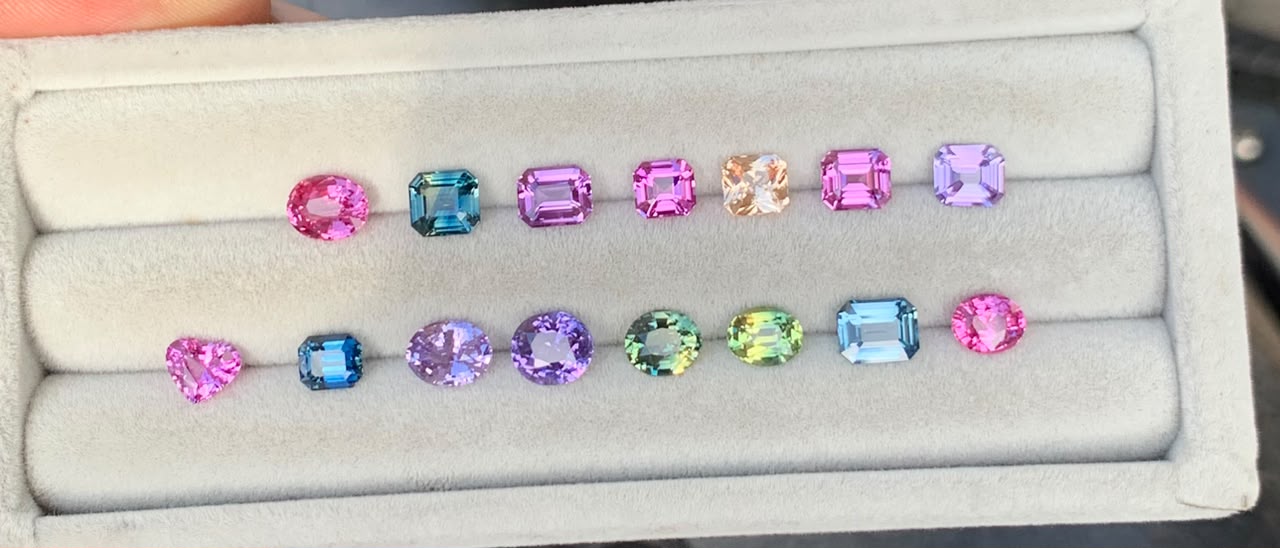



This colour chart is not a theoretical chart. Each colour code was recorded from the photograph of a stone actually in stock, in September 2026, with its weight and price. Two families have deliberately been omitted, and we explain why.
A clarification that applies to everything that follows: a screen never reproduces a gemstone. These codes offer a direction, not a truth — a stone is judged in daylight, then in low light, and never otherwise.
Corundum — crystallised aluminium oxide — reflects nothing at all in its pure state. Every colour in this chart is an accident of growth: a foreign element enters the crystal lattice and absorbs part of the light spectrum.
| Element | What it produces | Families concerned |
|---|---|---|
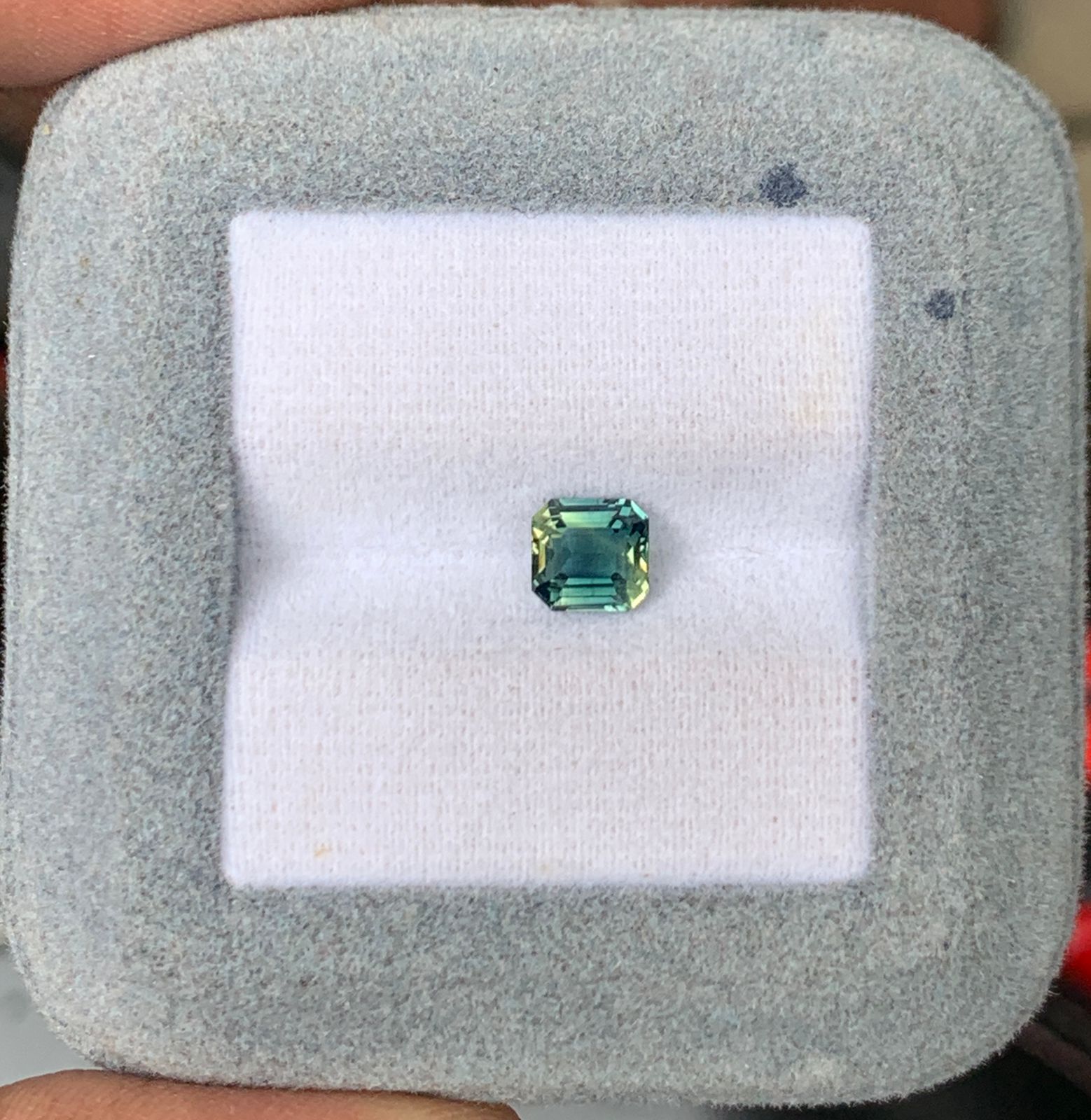
| Iron + titanium | A charge transfer between the two atoms, highly effective at absorbing light. | Blue, teal |
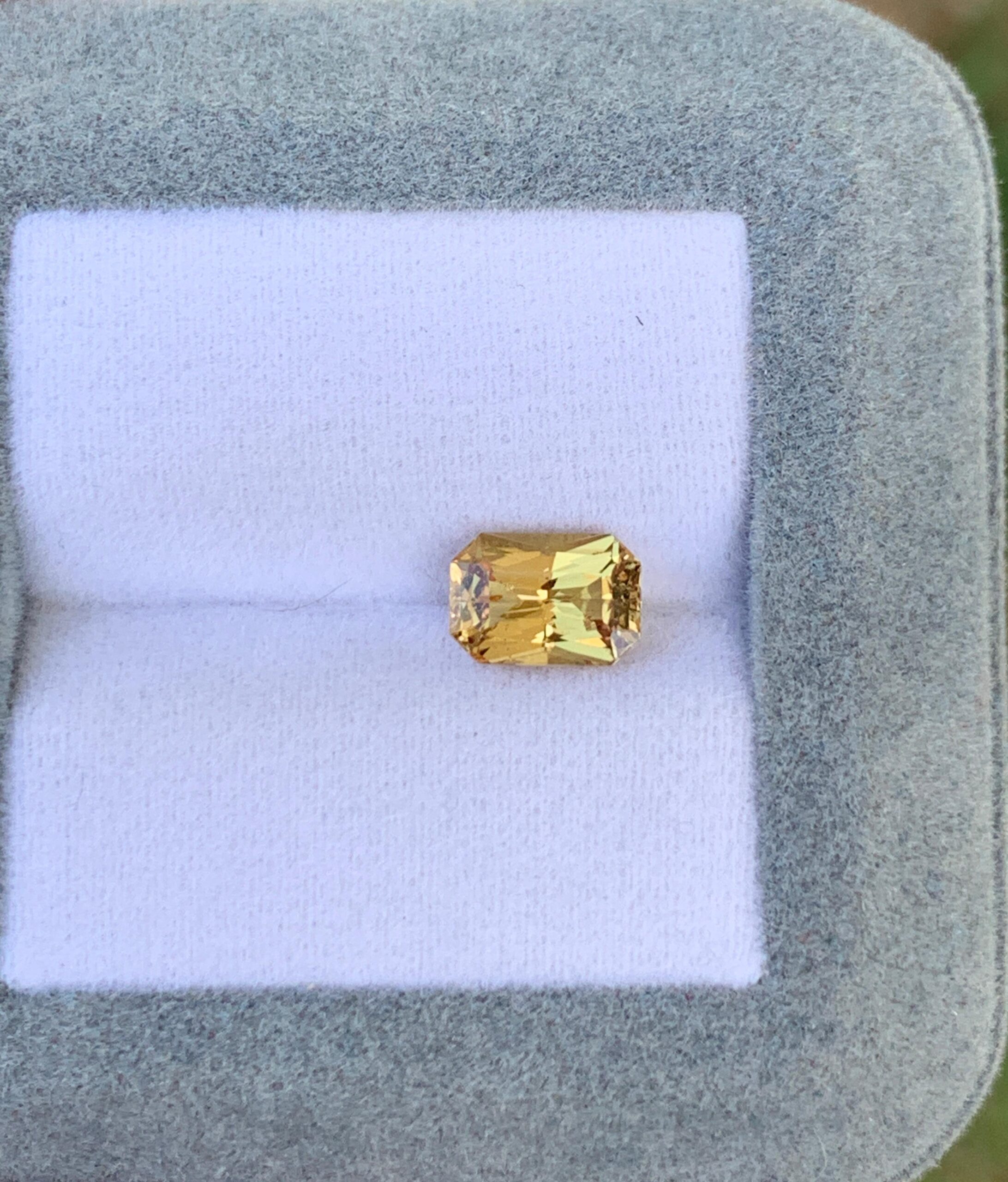
| Iron alone | Depending on its proportion, from pale lemon to forest green. | Yellow, green |
| Chromium | Pink — and, combined with orange centres, padparadscha. | Pink, padparadscha, orange |
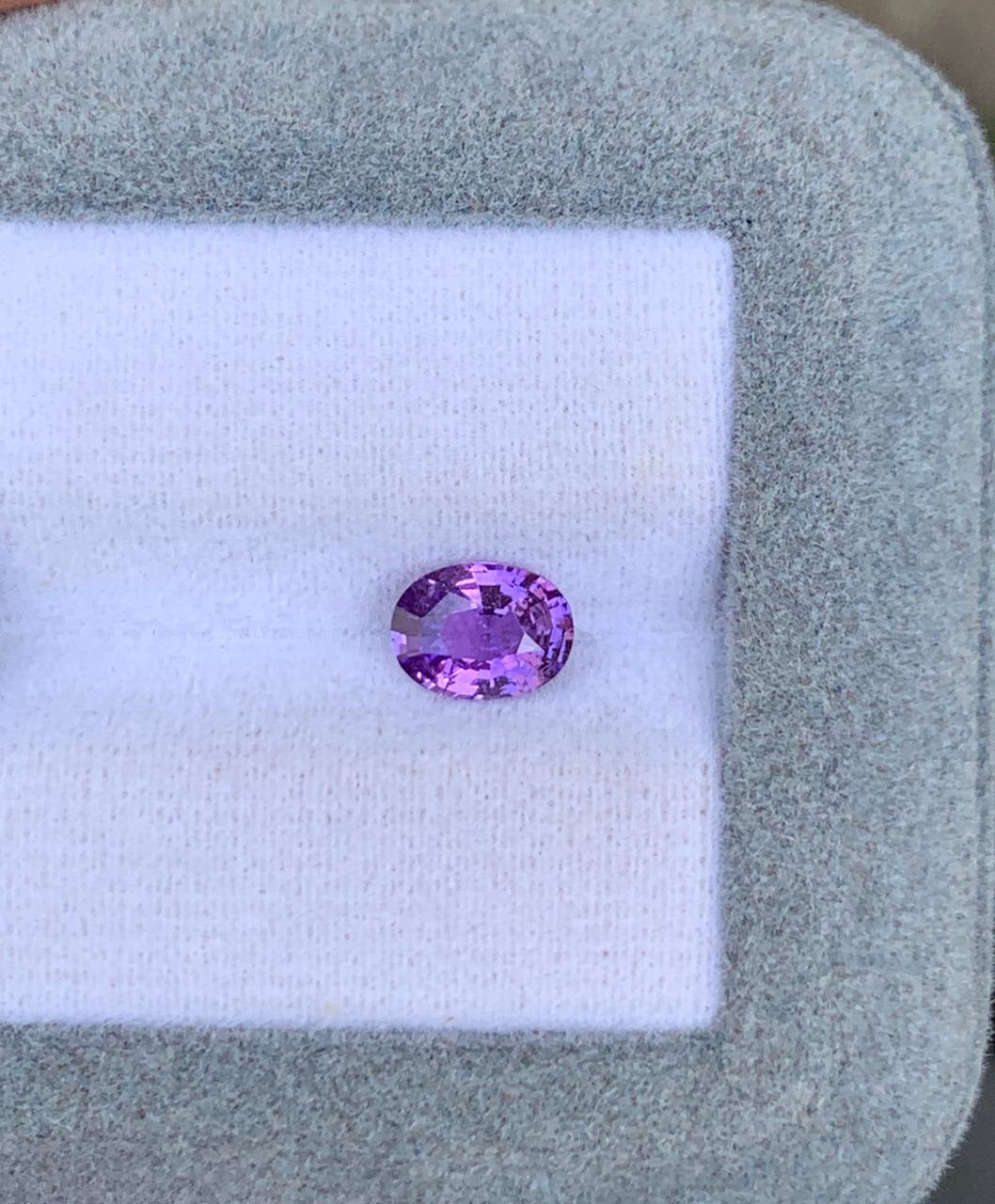
| Vanadium | Violet, sometimes accompanied by a change depending on the lighting. | Violet |
Two consequences follow, and they explain everything that comes next. No hue is reproducible : impurities are distributed at random, so no two sapphires from the same deposit are ever quite alike. And colour is never perfectly uniform — which creates, in some stones, two distinct areas within the same crystal.
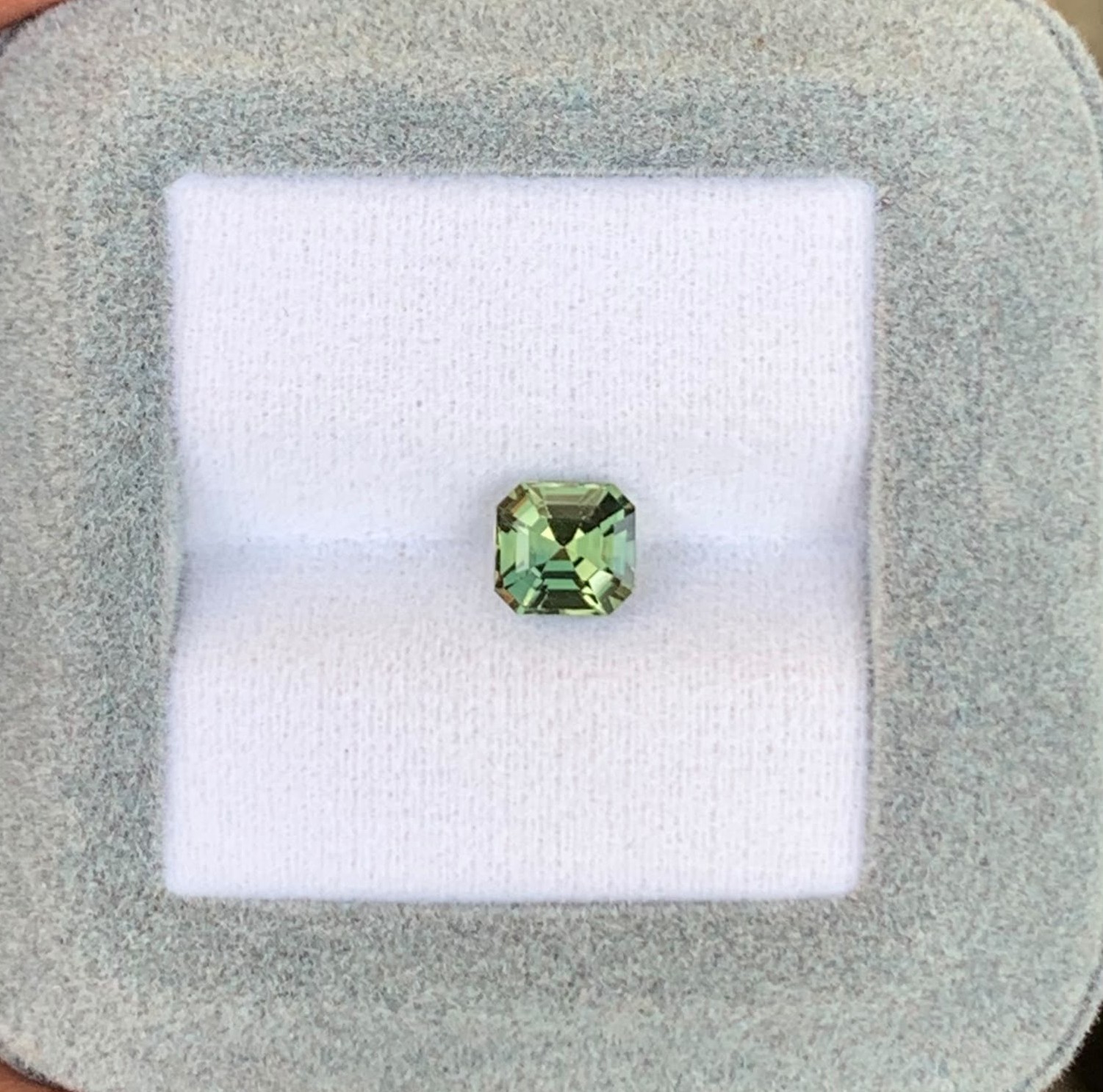
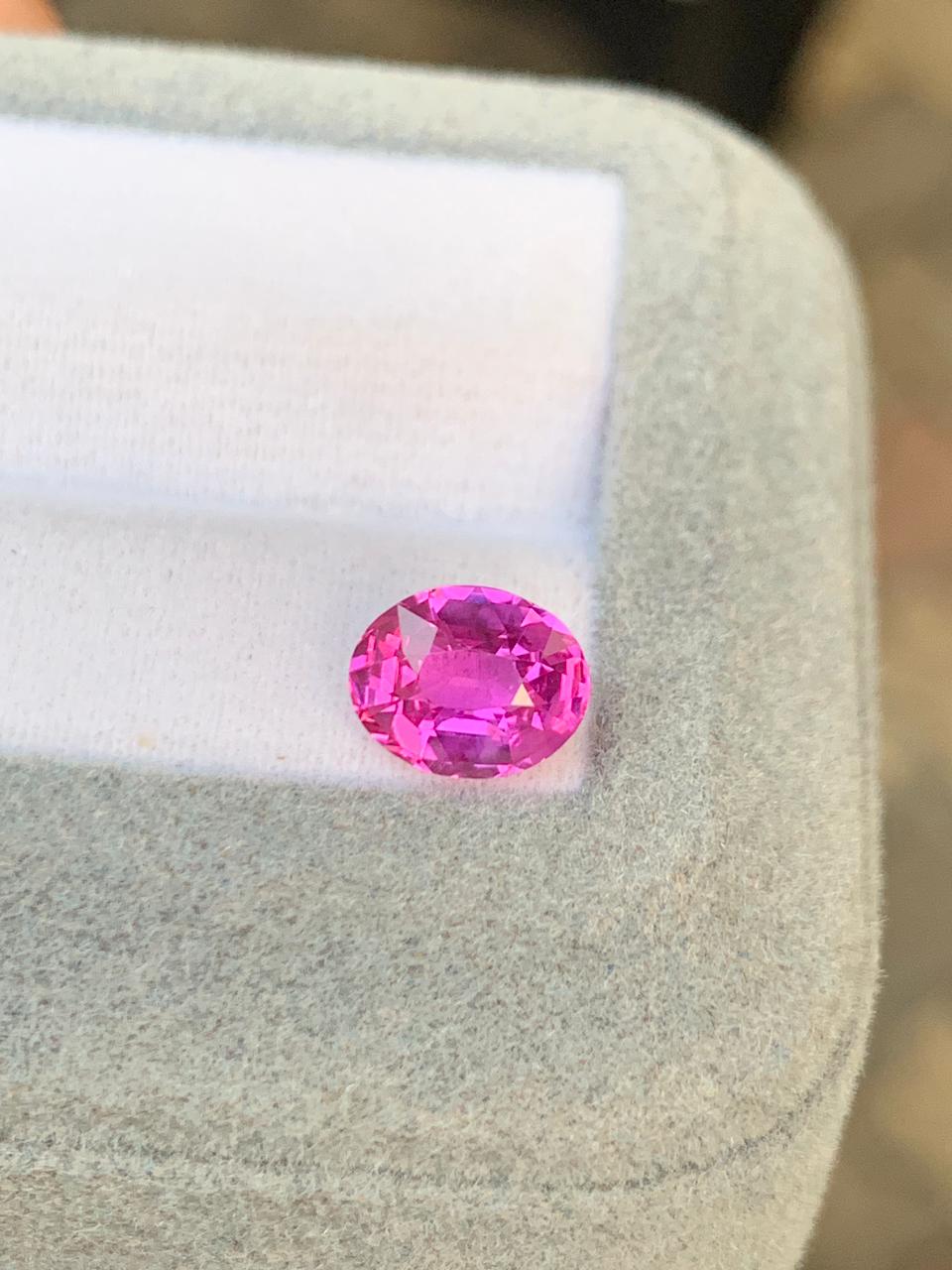
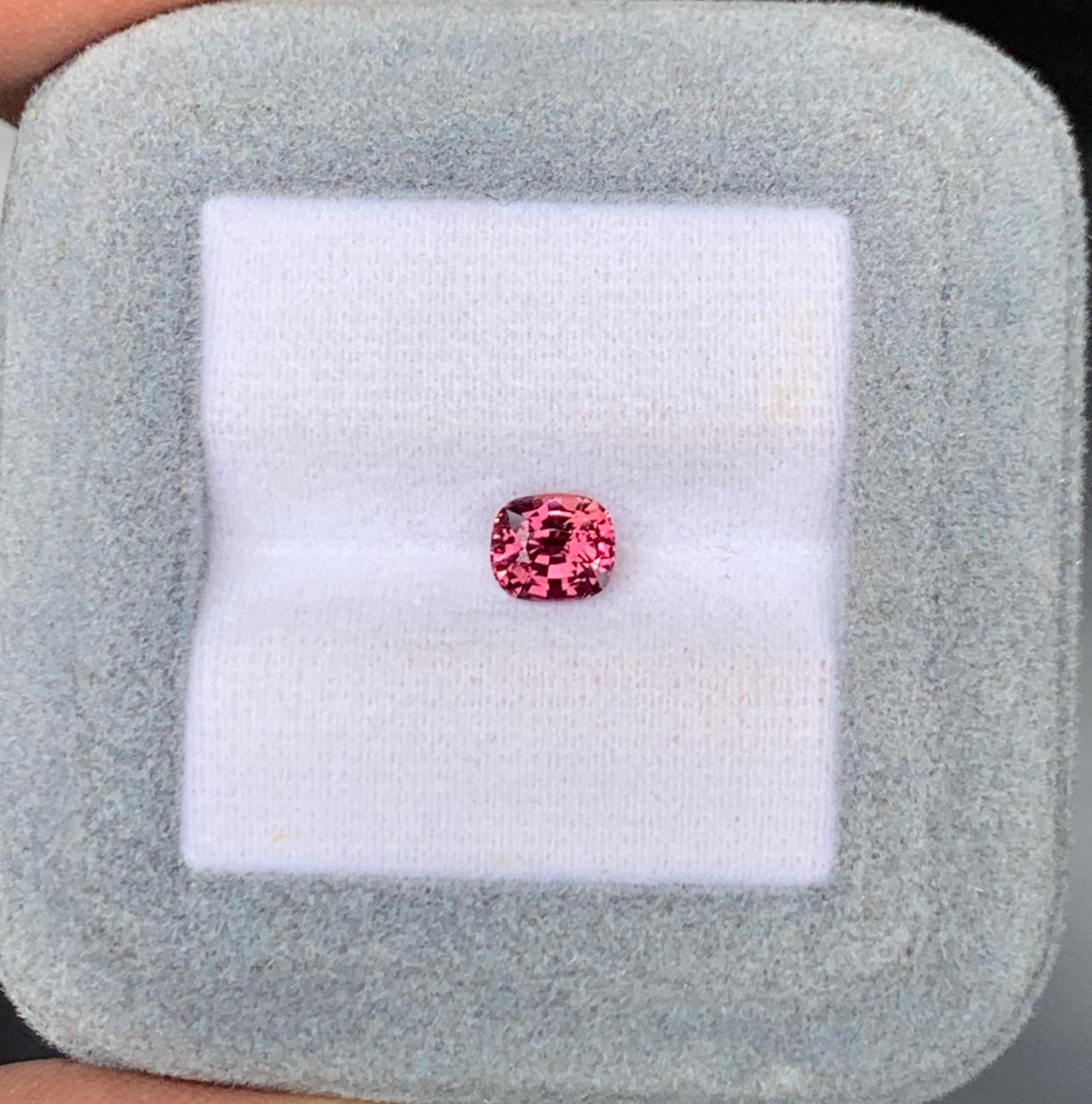
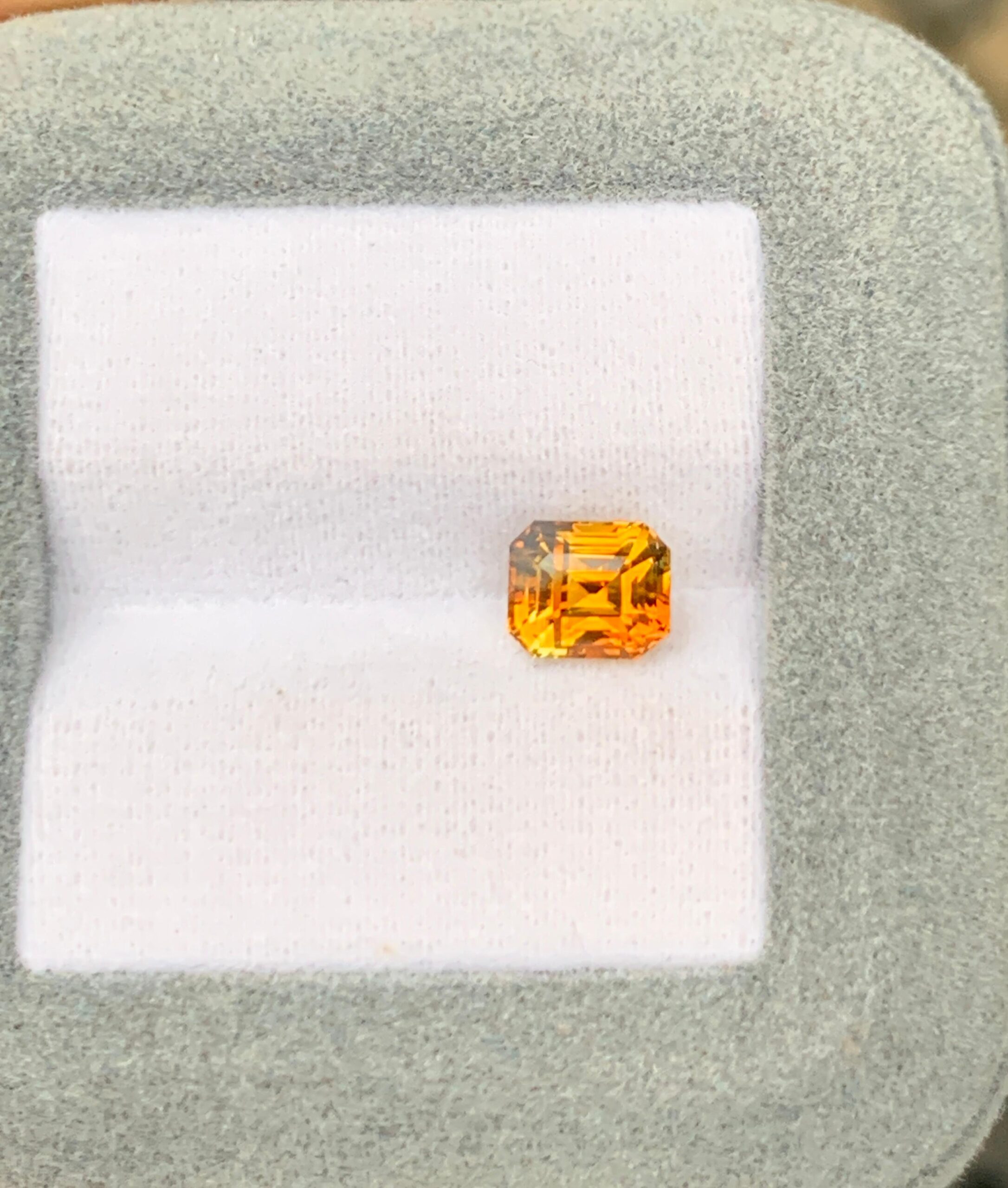
Thirty-six shades, from the coolest to the warmest. Each comes from a stone we have on display.
>
Codes taken from photographs of our stones in stock, September 2026. They indicate a direction, not a certified colour value.
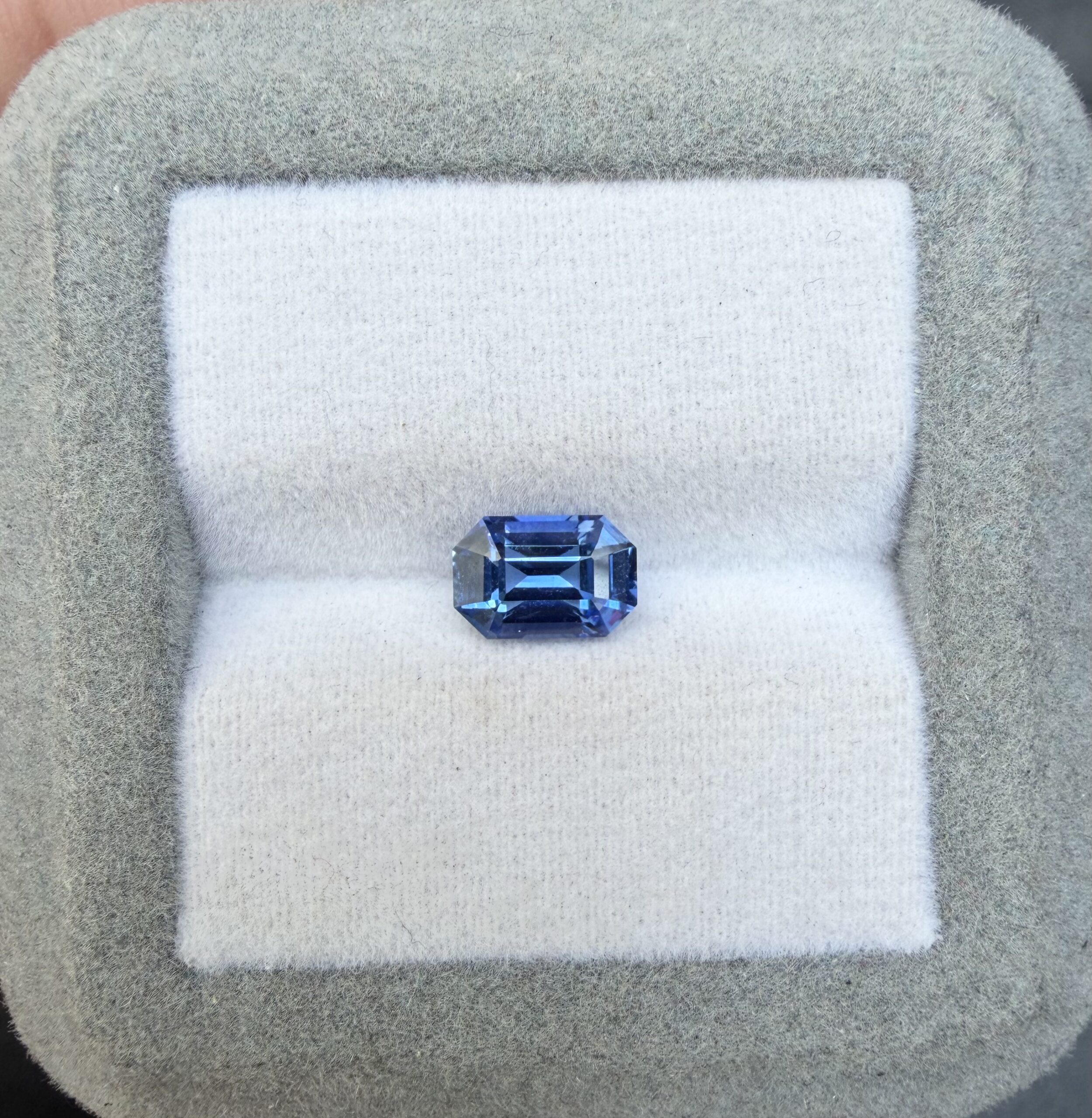
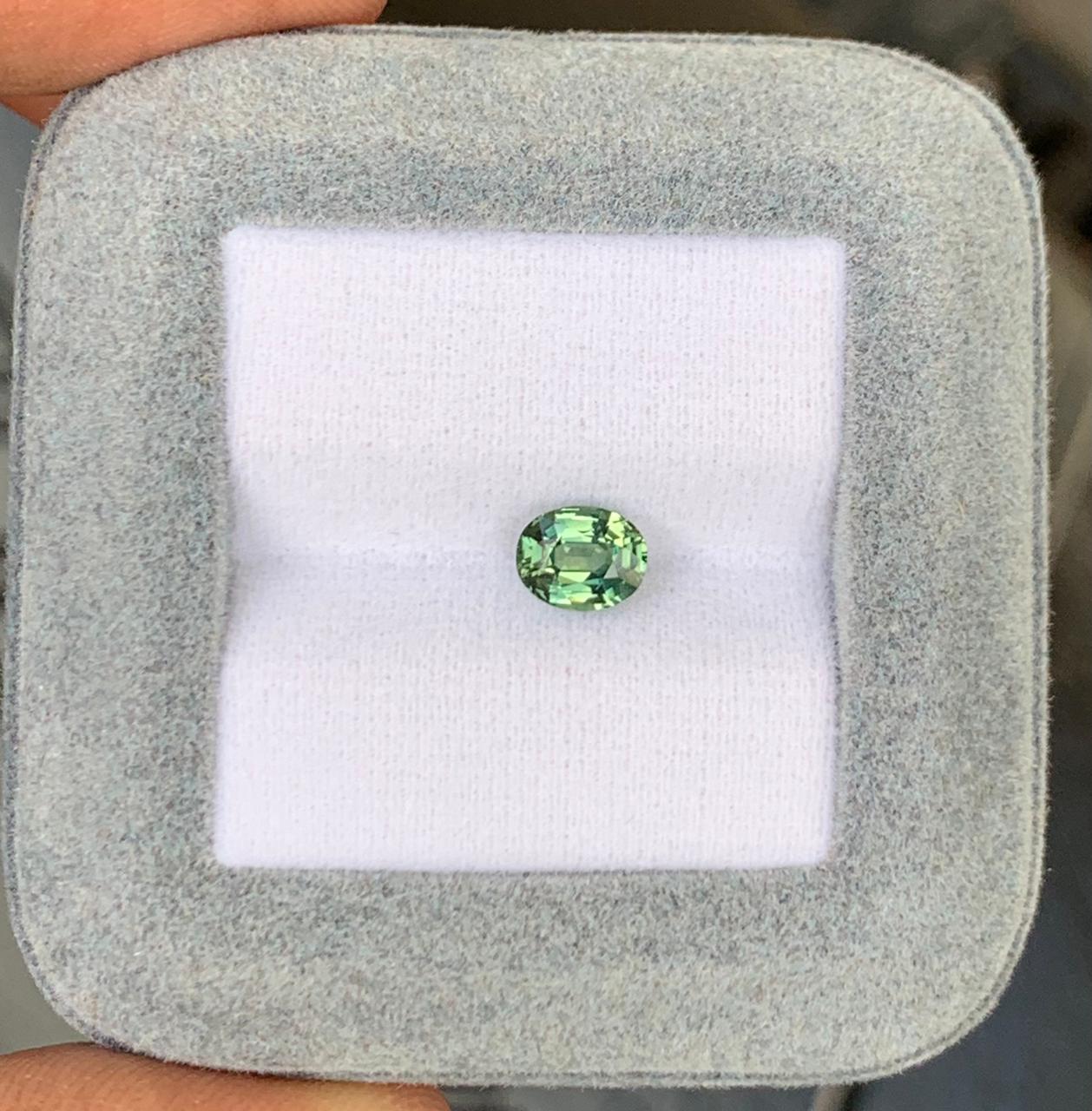
What this spectrum shows better than text: there is no break between the families. Blue shifts into teal, teal into green, green into yellow. The names are conventions applied to a continuum — and that is precisely why boundary stones are the most interesting to look at.
Each shade below was taken from the photograph of a stone actually on display. Nothing is chosen from a palette: these are the colours of our gems, extracted one by one.
Shades recorded among our in-stock stones, September 2026. Prices incl. VAT. Average per-carat prices apply to stones from 0.9 to 2.5 ct across the entire stock; the number of stones shown corresponds to ring sizes available on the date of recording.
Each swatch is an average. It works for a clear, uniform colour; it fails for a very pale shade or for a crystal containing two. And above all: a screen cannot reproduce a gemstone. These colours offer a direction, not a promise.
Three lessons can be read directly from the bands above.
There is no break between the families. Blue shades into teal, teal into green, green into yellow. The names are conventions placed on a continuum — and the boundary stones, those that refuse to be named, are often the most interesting to look at.
The price gap does not follow geological rarity. Violet is rarer than blue and costs €1,150/ct versus €1,780. Yellow, at €990/ct, is the most accessible family on the chart without being any less hard or less beautiful. What you pay extra for in blue is reputation.
Only one family plays in another league : padparadscha, at €2,850/ct, nearly three times the price of teal. As its designation is controlled by an independent laboratory, an appealing orangey-pink stone without mention in the report remains a pink sapphire — which mechanically limits supply.
| Family | Median price per carat | Position |
|---|---|---|
| Padparadscha | €2,850/ct | Controlled designation: limited supply |
| Blue | €1,780/ct | Demand, more than rarity |
| Pink | €1,500/ct | Chromium, as in ruby |
| Green | €1,200/ct | Back in fashion |
| Violet | €1,150/ct | Rarer than blue, half the price |
| Teal | €1,010/ct | The most abundant family |
| Yellow | €990/ct | The most accessible in the colour spectrum |
Medians recorded across 262 stones from 0.9 to 2.5 ct, Bonnot Paris stock, September 2026. Orange and bi-colour stones are not included in this ranking: their samples are too limited to produce a reliable median.
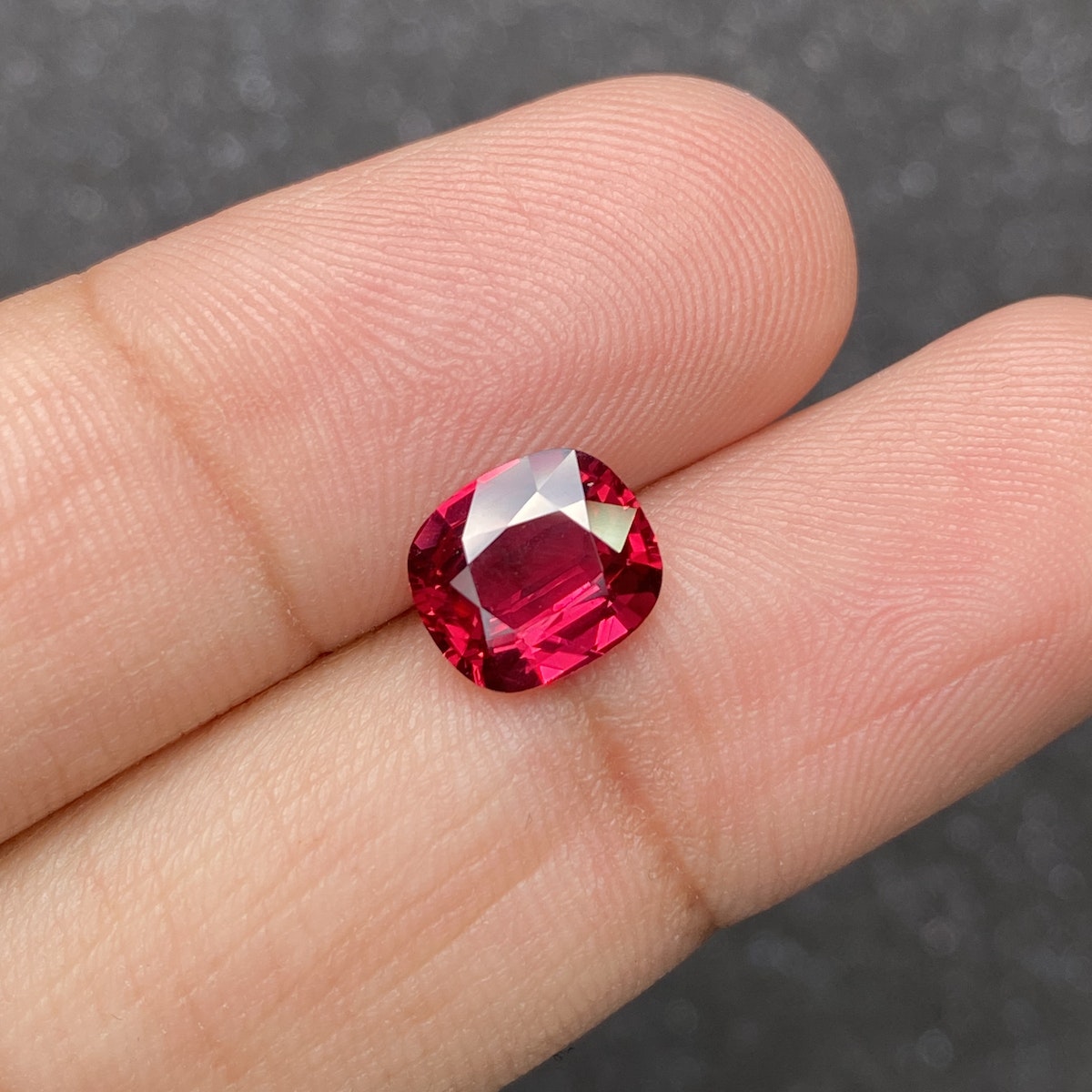
There is only one clear boundary in this entire colour spectrum: the one that changes the stone’s name. When chromium becomes concentrated enough to shift the colour into red, the sapphire becomes a ruby.
What makes this boundary fascinating is that it is not clear-cut. The tipping point is debated between laboratories : the GIA places it earlier than the SSEF. Two reports may therefore reach different conclusions about the same gem — “pink sapphire” for one, “ruby” for the other — with a considerable price difference at stake.
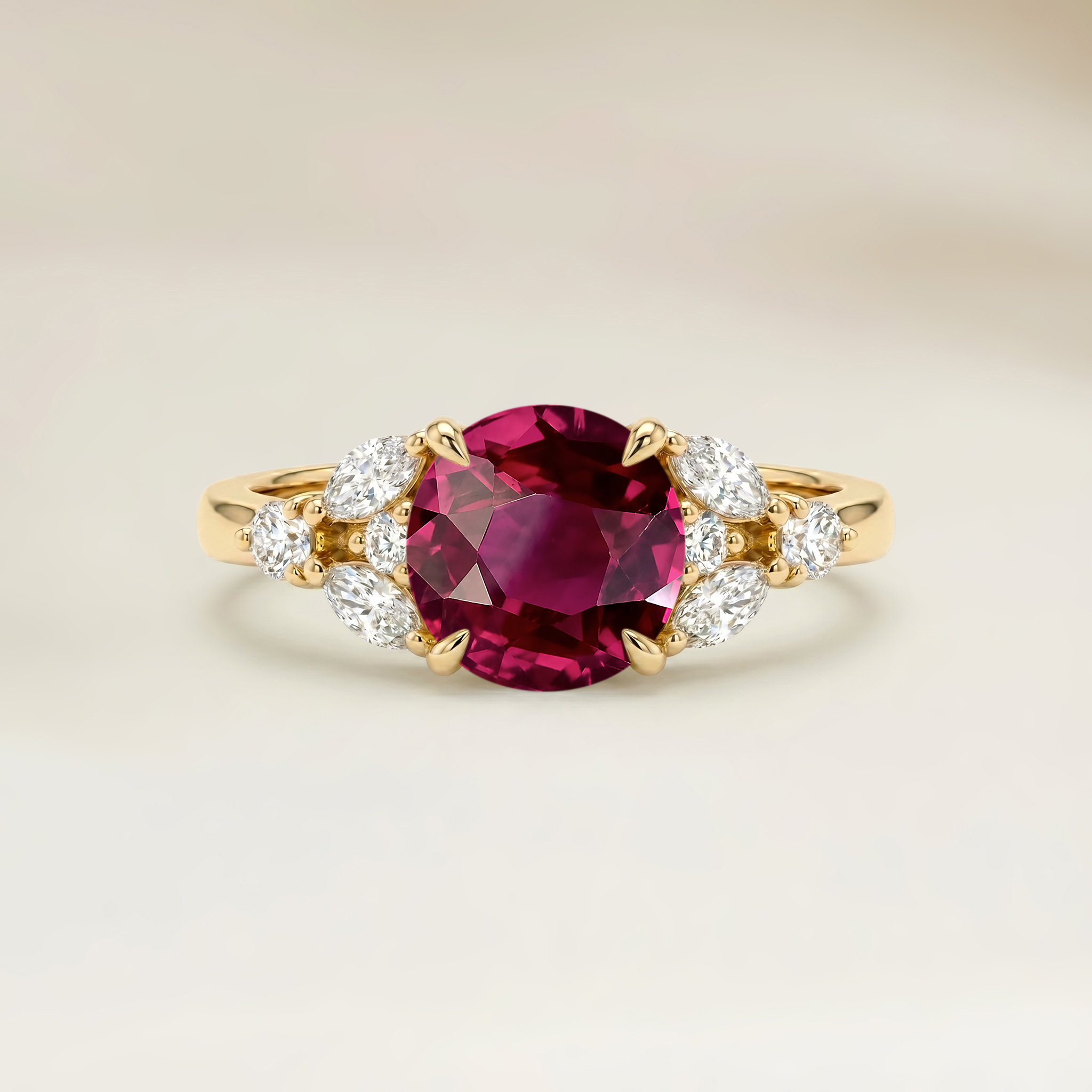
A very practical consequence, and one that works in your favour: at comparable quality, a pink sapphire remains significantly more accessible than a ruby. It is the most elegant alternative for those who love red without having the budget for it. If it is truly a pure red you are looking for, however, only a ruby engagement ring will deliver it — no pink sapphire, however saturated, will cross the line.
Look at the stone in daylight, then in the evening in a lit room. If the colour collapses as the light fades, it will not come out of the drawer — whatever its code in this colour spectrum.
All of them, except red. We work with ten families: blue, teal, pink, padparadscha, violet, yellow, green, orange, peach and bi-colour. When the concentration of chromium becomes strong enough to shift the stone into red, it changes name and becomes a ruby.
Padparadscha, by far: around €2,850/ct in median value across our stock, compared with €1,780 for blue and €1,010 for teal. Its designation is controlled by laboratories, which mechanically limits supply.
Yellow and teal, at around €1,000/ct in median value, followed by violet and green. These families are less sought-after than blue without being any less beautiful or durable: the same hardness of 9 out of 10.
A sapphire combining pink and orange in roughly equal parts. It is the only sapphire to bear a proper name, derived from the Sinhalese word padmaraga which denotes the lotus flower, and the only one whose designation is controlled by a laboratory. Without mention in the report, a pinkish-orange stone remains a pink sapphire.
A stone whose colour lies between blue and green, without clearly belonging to either. Its appearance changes with the lighting: bluer in a display case, greener by a window. It is the most abundant family in our stock.
Because a stone does not produce light: it reflects what it is given. A warm source draws tones towards red, daylight towards blue. No screen can replace holding the stone in your hand.
With the concentration of chromium, and nothing else: it is the same mineral. The tipping point is debated among laboratories — the GIA places it earlier than the SSEF — and two reports may reach different conclusions about the same gem.
Share this post