Zambian or Colombian Emerald?
Bonnot Paris22/9/2026
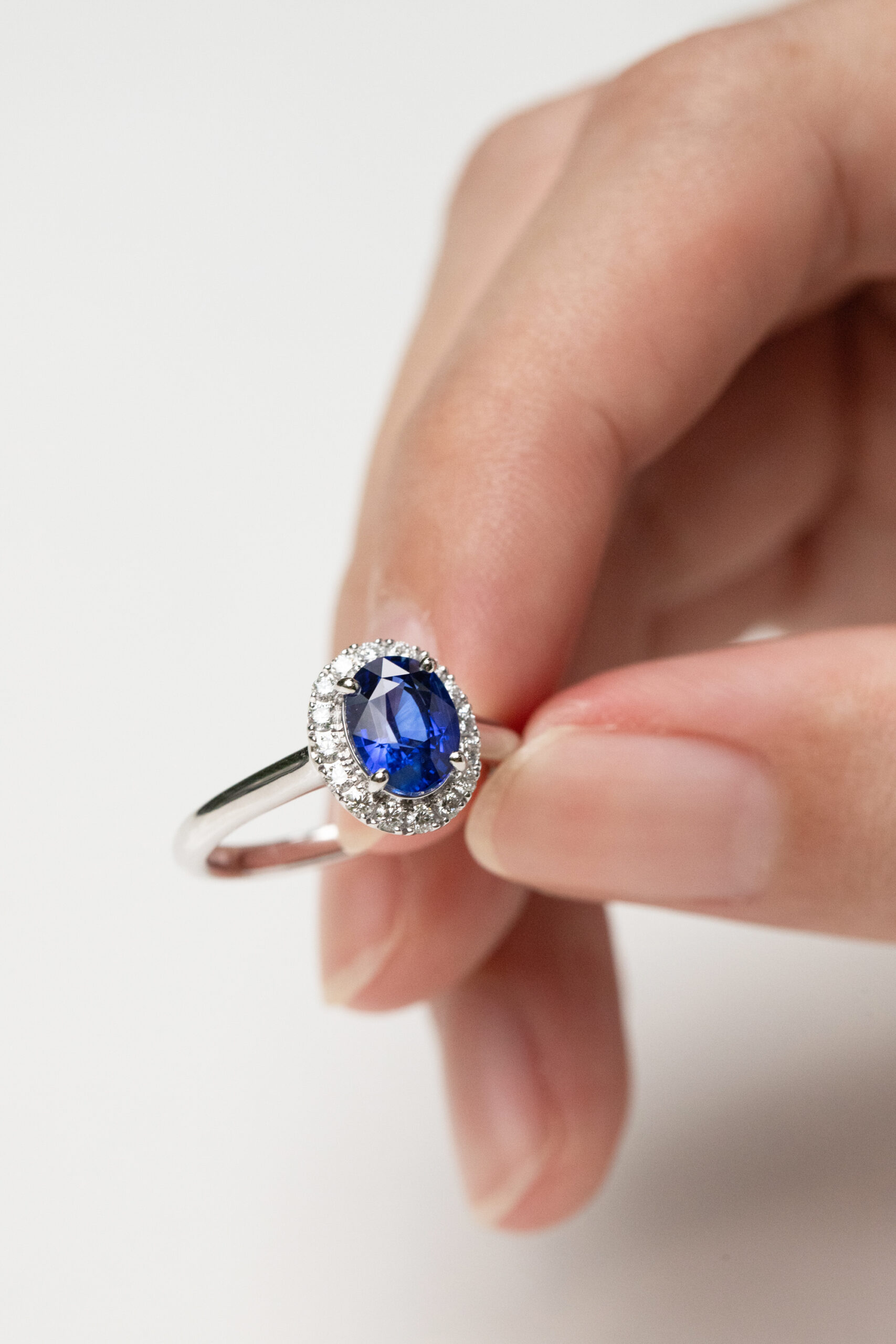



A greyish or overly dark blue loses a considerable part of its value — precisely because it fades as soon as the light diminishes. What the market pays for is an intense blue that remains alive in the evening.
This guide explains what produces this blue, what the words used to describe it are worth, where the stones come from, what they truly cost — supported by figures from our stock — and where the symbolism that has carried it for a thousand years comes from.
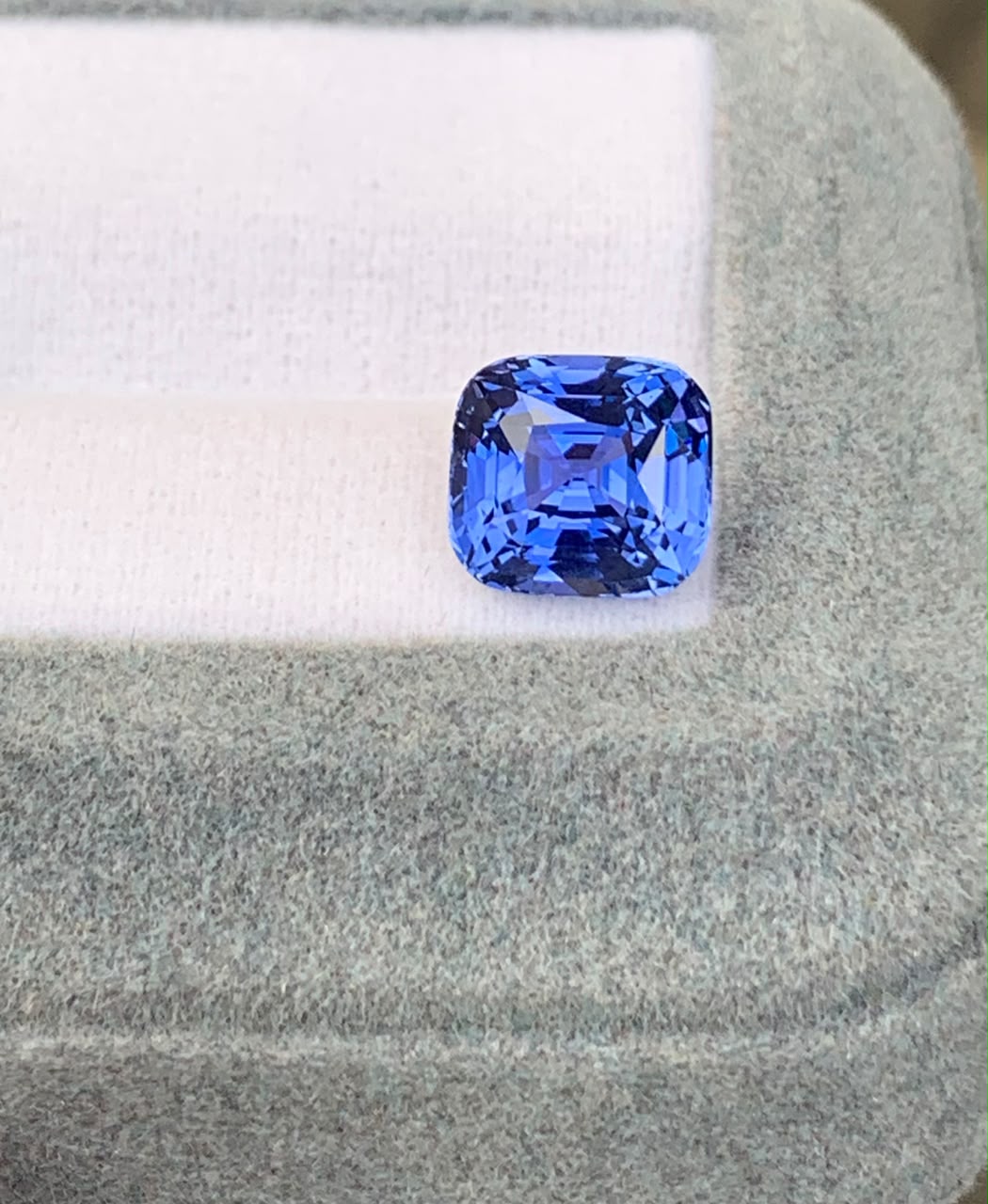
Pure corundum — crystallised aluminium oxide — is perfectly colourless. The blue comes from an accident: the simultaneous presence of iron and titanium, in trace amounts, a few atoms per million.
The mechanism has a name: a charge transfer between the two atoms, particularly effective at absorbing light. What is not absorbed emerges — and that is this blue.
Two practical consequences follow, and they explain almost everything else in this guide. First, no shade is reproducible : impurities are distributed at random during crystal growth, so two sapphires from the same deposit never look exactly alike. Second, the colour is never perfectly even, producing areas of deeper colour than others — zoning that may be a flaw or a signature.
The market has named its preferences, and these names determine the price. With one important caveat: they are commercial designations, not measurements. Some laboratories mention them on their reports according to their own criteria; others refuse to do so. None is harmonised among them.
| The term | What it denotes | What it is worth |
|---|---|---|
| Royal blue | An intense, deep, pure blue, without grey. | The most sought-after |
| Cornflower | A lighter, velvety blue, known as “cornflower blue”. | Highly prized |
| Ceylon blue | An origin — Sri Lanka — not a shade. | To be documented |
| Royal blue | Common usage, without a professional definition. | No value |
The “Ceylon blue” line deserves a closer look, because it is misleading. It is a provenance, presented as a colour : when it appears on a label, it must be documented by the stone’s report, not by the seller.
In reality, three parameters are enough to assess a blue, and none requires a commercial name. Saturation determines the price; the tone determines legibility — too dark, the stone loses its life; and performance in low light is decisive.
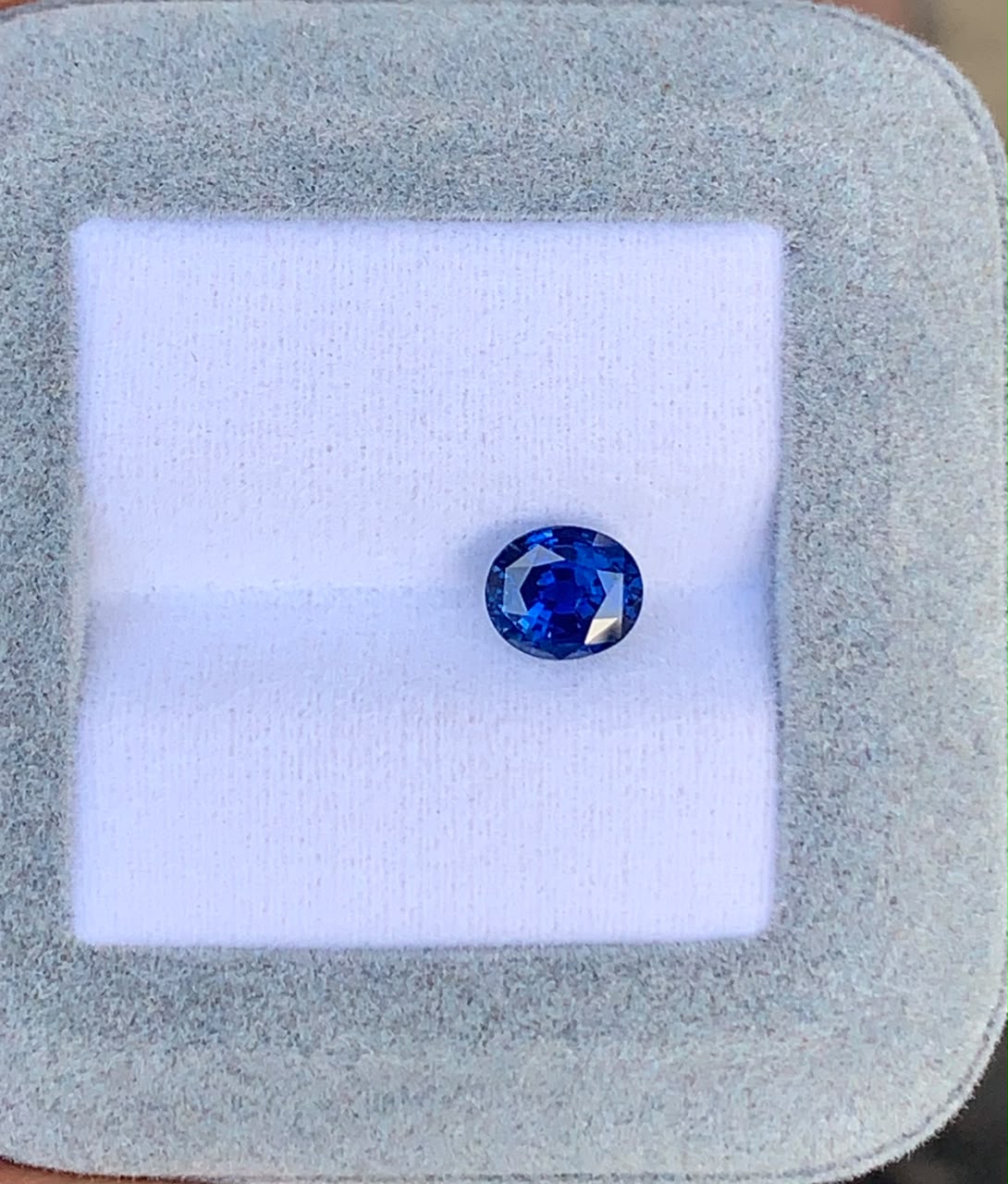
Sri Lanka, historically known as Ceylon, has been producing for more than two thousand years. Its blues have a characteristic luminous softness, often lighter and more tempered. This is where we purchase the majority of our stock, through an office based in Beruwala.
Madagascar is the major contemporary producer, with blues spanning a very broad range. Burma and Thailand complete the historic supply.
The Kashmir, finally, warrants clarification. It retains considerable prestige — the velvety quality of its blues remains a benchmark — but its deposits have been virtually exhausted for more than a century. Stones from these deposits belong to the auction market, at levels unrelated to ordinary jewellery. A stone presented as “Kashmir” without a laboratory report should be treated with great caution.
It influences the price, but never on its own. A fine stone from Madagascar surpasses an average stone from Ceylon. And a laboratory only determines origin when the inclusions allow it: “origin undetermined” is not a flaw in the gemstone.
Ninety-nine blue sapphires recorded from our stock in September 2026. Median price per carat by weight bracket, with the range in which half the stones fall.
| Weight | Median price per carat | Half the stones between | Sample |
|---|---|---|---|
| 0.9 to 1.3 ct | €1,400/ct | €1,040 to €1,980/ct | 10 stones |
| 1.3 to 1.8 ct | €1,690/ct | €1,080 to €1,990/ct | 23 stones |
| 1.8 to 2.5 ct | €2,390/ct | €1,420 to €3,550/ct | 19 stones |
| 2.5 ct and over | €3,860/ct | €2,840 to €5,790/ct | 46 stones |
Bonnot Paris stock, September 2026, prices including VAT. These are our purchases and our selection — not a market benchmark.
The increase is the sharpest in our entire catalogue : the price per carat is multiplied by 2.8 between the one-carat and three-carat formats. In other words, a 2.5 ct stone does not cost two and a half times as much as a one-carat stone, but rather seven times as much.
Also look at the third column. In the 1.8 to 2.5 ct bracket, half the stones fall between €1,420 and €3,550/ct — from one to two and a half times as much, at identical weight. What separates these extremes is neither cut nor origin: it is saturation, and the stone’s ability to remain lively in the evening.
Between 1.4 and 1.8 carats. The stone sits beautifully on a ring finger, the colour has enough substance to express itself, and the price per carat remains below the threshold at which it soars.
The question comes up at every appointment, often with misplaced concern.
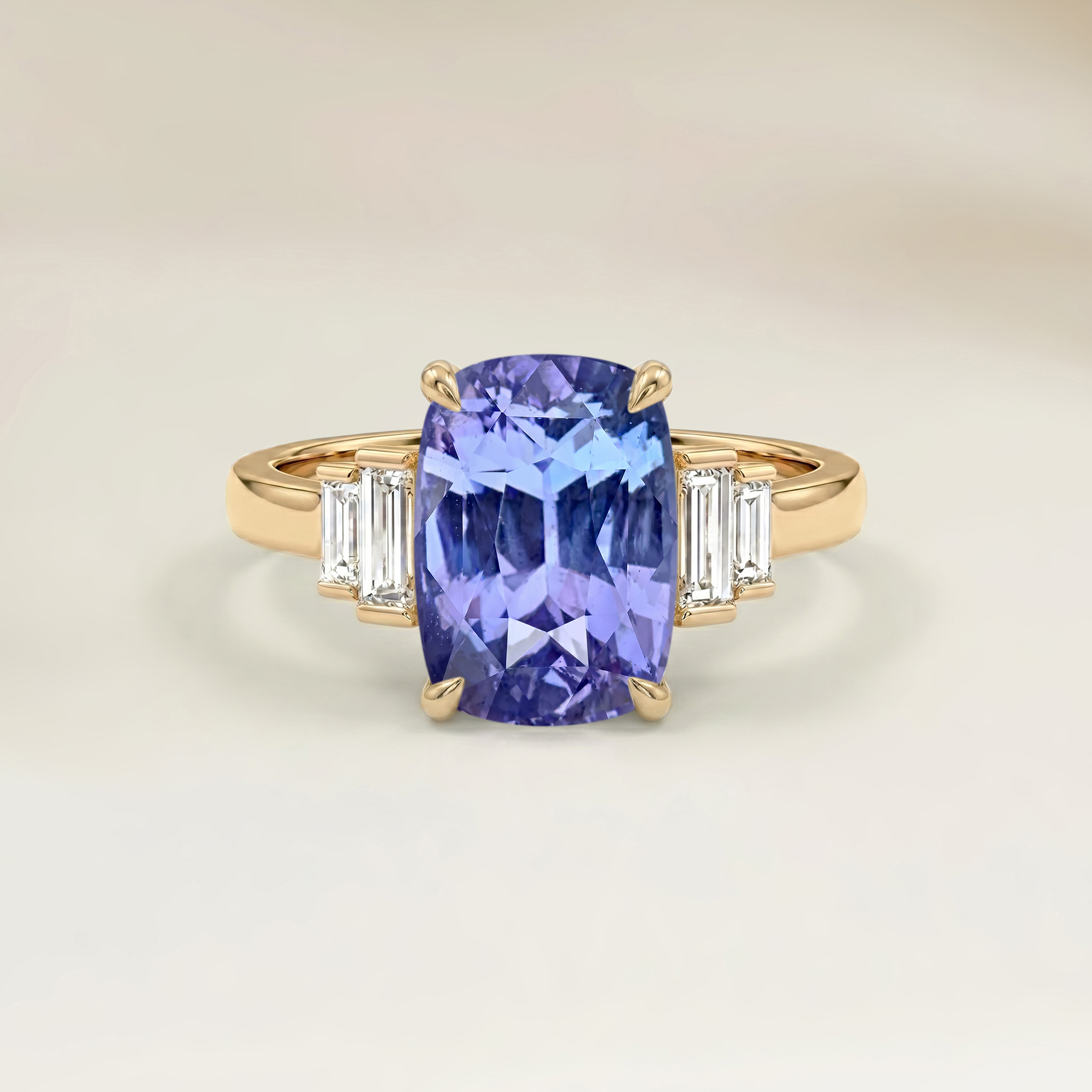
The heating is a traditional thermal treatment, practised for centuries: the stone is brought to a high temperature, which reveals a colour already present in the crystal. It is stable, permanent, stated on the certificate, and changes nothing in terms of care. The vast majority of sapphires on the market benefit from it.
An unheated sapphire is rarer and priced accordingly. At comparable visual quality, we commonly observe a premium of around twice as much at 1.5 carats and three times as much at 2.5 carats.
Our consistent advice: below €5,000, a beautiful heated stone is preferable to an inferior unheated one. Unheated stones truly come into their own from 1.5 ct in a beautiful colour, when the premium buys genuine rarity rather than a mention on a piece of paper.
Three words recur in every Western source, and they belong together: fidelity, truth, wisdom.
They come from two places. In Mediterranean Antiquity, deep blue is the colour of the sky, and therefore of the divine. Then the European Middle Ages did the rest: the clergy adopted the blue sapphire, which became a bishop’s stone — constancy, elevation, rejection of earthly passions. From there to the attire of sovereigns was a short step.
This earlier history explains something that is often forgotten: the diamond is a latecomer to engagement rings, imposed in the 20thcentury by an advertising campaign. Before it, coloured stones dominated — with the blue sapphire leading the way.
The two other great coloured stones, considered without indulgence.
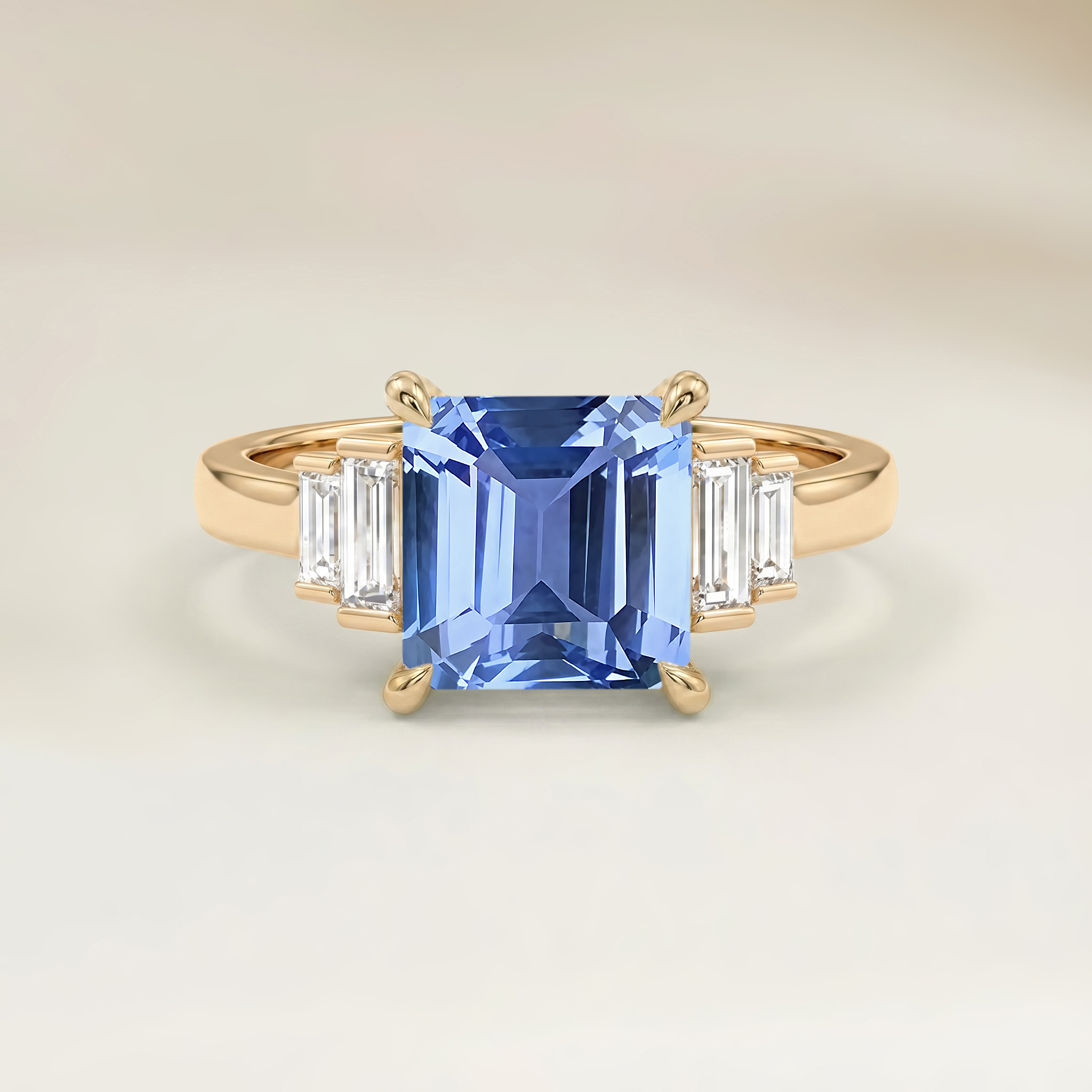
Same formula, same hardness of 9, sometimes from the same deposit: only the concentration of chromium separates them. But a ruby engagement ring starts at around €8,000, compared with €2,500 for sapphire — the median per-carat price of red is around nine times that of blue.
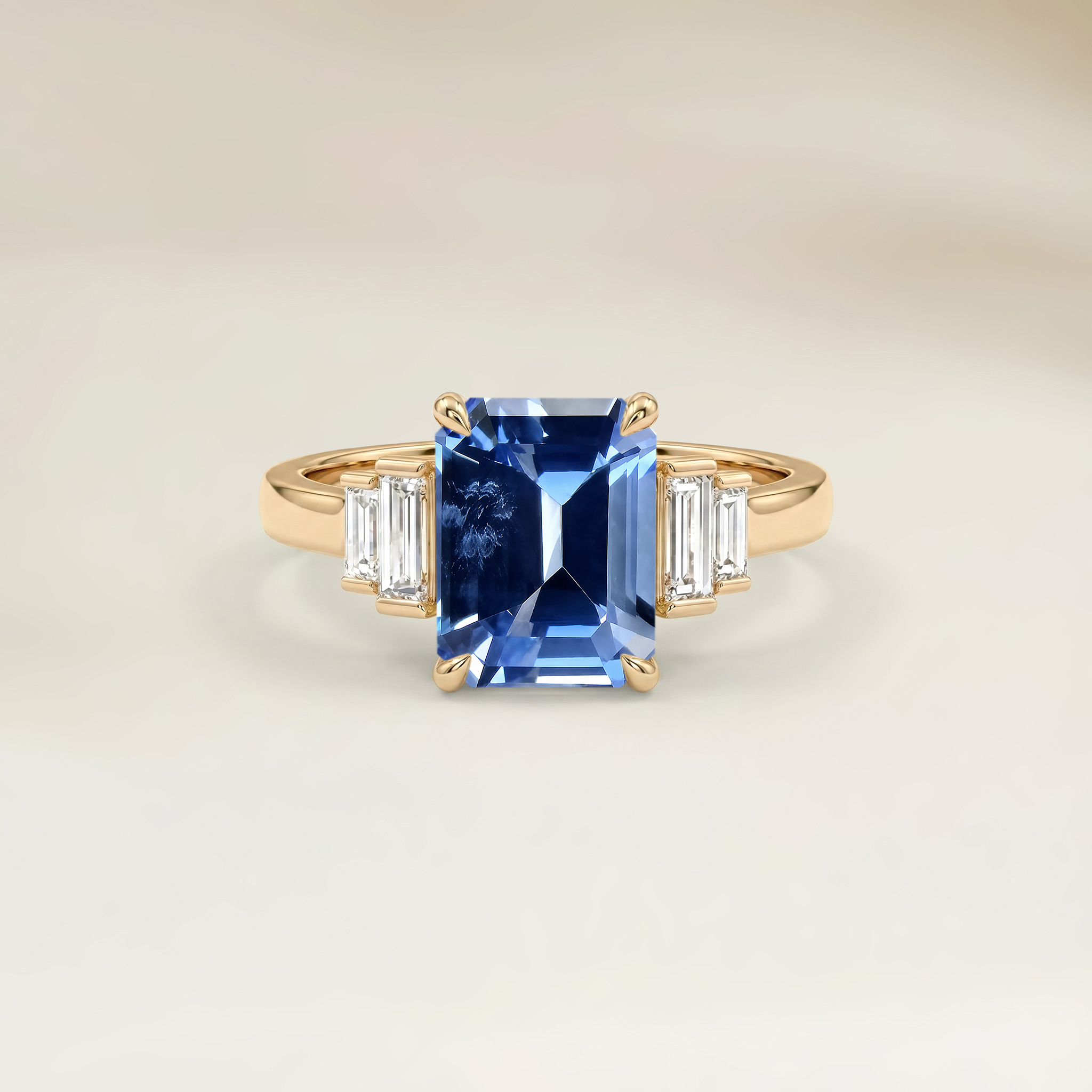
A beryl, less dense — at equal weight, it appears larger — and less expensive at entry level: an emerald engagement ring starts at €1,700. In return, it ranks 7.5 to 8 on the Mohs scale and requires a setting that protects its edges.
It is on this last point that blue sapphire retains its decisive advantage: hardness of 9, no cleavage planes, no setting constraints. All shapes are possible, including the most openwork designs, and the ring can be worn for thirty years without a second thought. Only diamond performs better on the Mohs scale — and it does have cleavage planes, which corundum does not.
A charge transfer between an iron atom and a titanium atom, present in trace amounts. Pure corundum is colourless: a few atoms per million are enough. This is also why no shade can be reproduced from one stone to another.
Commercial shade designations: royal blue for an intense, deep blue, cornflower for a lighter, velvety blue. They are not standardised between laboratories and strongly influence the price.
No. A greyish or overly dark blue loses a considerable part of its value because it fades as soon as the light dims. What the market seeks is an intense blue that remains vibrant in the evening.
In our stock in September 2026: around €1,400/ct between 0.9 and 1.3 ct, €1,690 between 1.3 and 1.8 ct, €2,390 between 1.8 and 2.5 ct, and €3,860 above 2.5 ct. The price per carat is multiplied by 2.8 between the one-carat format and the three-carat format.
Mainly from Sri Lanka and Madagascar. Kashmir retains considerable prestige, but its deposits have been virtually exhausted for more than a century: these stones belong to the auction market.
Heating is traditional, stable and disclosed: it reveals a colour already present and changes nothing in terms of care. An unheated sapphire is rarer — around twice the price at 1.5 ct. Below €5,000, a beautiful heated stone remains the best choice.
Loyalty, truth and wisdom. These meanings stem from the colour of the sky, associated with the divine in Antiquity, and from the stone’s use by the medieval clergy. This symbolism explains its presence in engagement rings long before the diamond.
Share this post