Zambian or Colombian Emerald?
Bonnot Paris22/9/2026
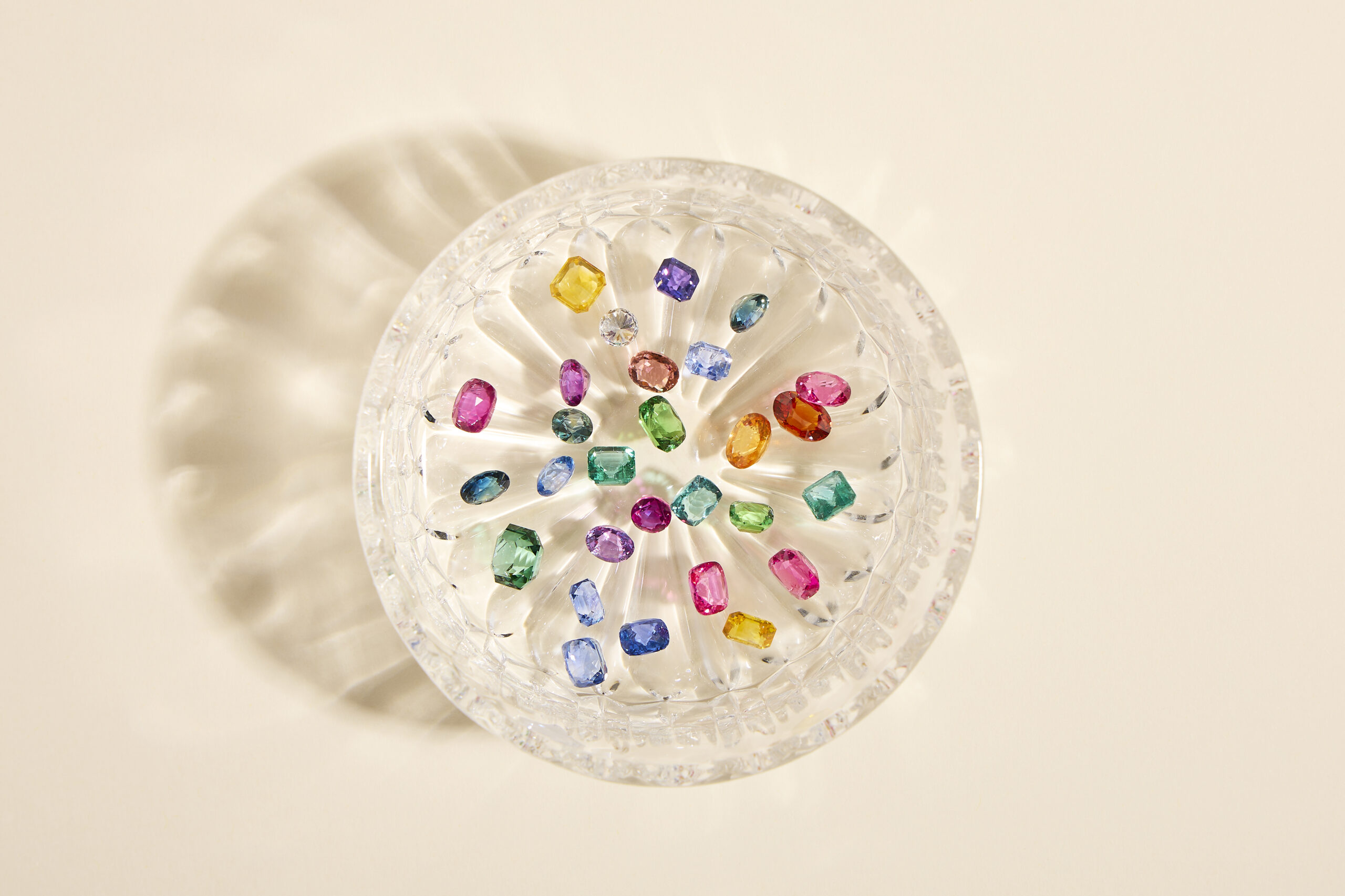



This is the first thing to know before choosing a gemstone, and it is remarkably liberating. This guide looks at the families one by one, explains what each allows and what it requires, and provides the price points we observe in our own stock.
It is written in the order of what truly matters: hardness, colour, treatments. The rest — origin, name, prestige — comes after.
In France, regulations governing the trade in gemstones reserve in practice the designation “precious stone” for four gems : diamond, ruby, sapphire and emerald. All others fall under the generic term gemstone — what were once known as semi-precious stones.
This list dates from a time when mineralogy was poorly understood and when these four stones dominated European trade. It has no gemmological value : it says nothing about actual rarity, durability or beauty.
Two examples are enough to show this. Red spinel was confused with ruby for six centuries — several “rubies” in royal crowns are in fact spinels — yet it is not classified as precious. And tsavorite, discovered fifty years ago, achieves greens that no mid-range emerald can approach.
Everything else in this guide follows from these three questions, asked in this order.
Determines whether the ring can be worn without a second thought. Above 8, no constraints; below, a protective setting.
The essence of value. What matters is not the hue, but its saturation and how well it holds when the light fades.
Some are traditional and accepted; others collapse the value. The certificate always declares them.
The carat is a unit of weight, not size. Ask for the actual dimensions, not the number on the certificate.
When it comes to treatments, one distinction is worth remembering once and for all. Heating corundum and oiling emeralds are traditional practices : stable, long-established, declared on the certificate, and with no effect on value beyond a premium for untreated stones. Lead-glass filling and coloured resins, however, are not : they fill fractures, weaken the stone and collapse its value. We exclude them from our selections.
It is the most widely set coloured stone in the world, and the one we recommend most often — for one simple reason: hardness of 9, no cleavage planes, ten colours. It can be worn for thirty years without any particular precautions.
Sapphire is a corundum, and it comes in every colour except red — which then bears another name. Two families deserve particular mention, because they represent the two extremes of the range.
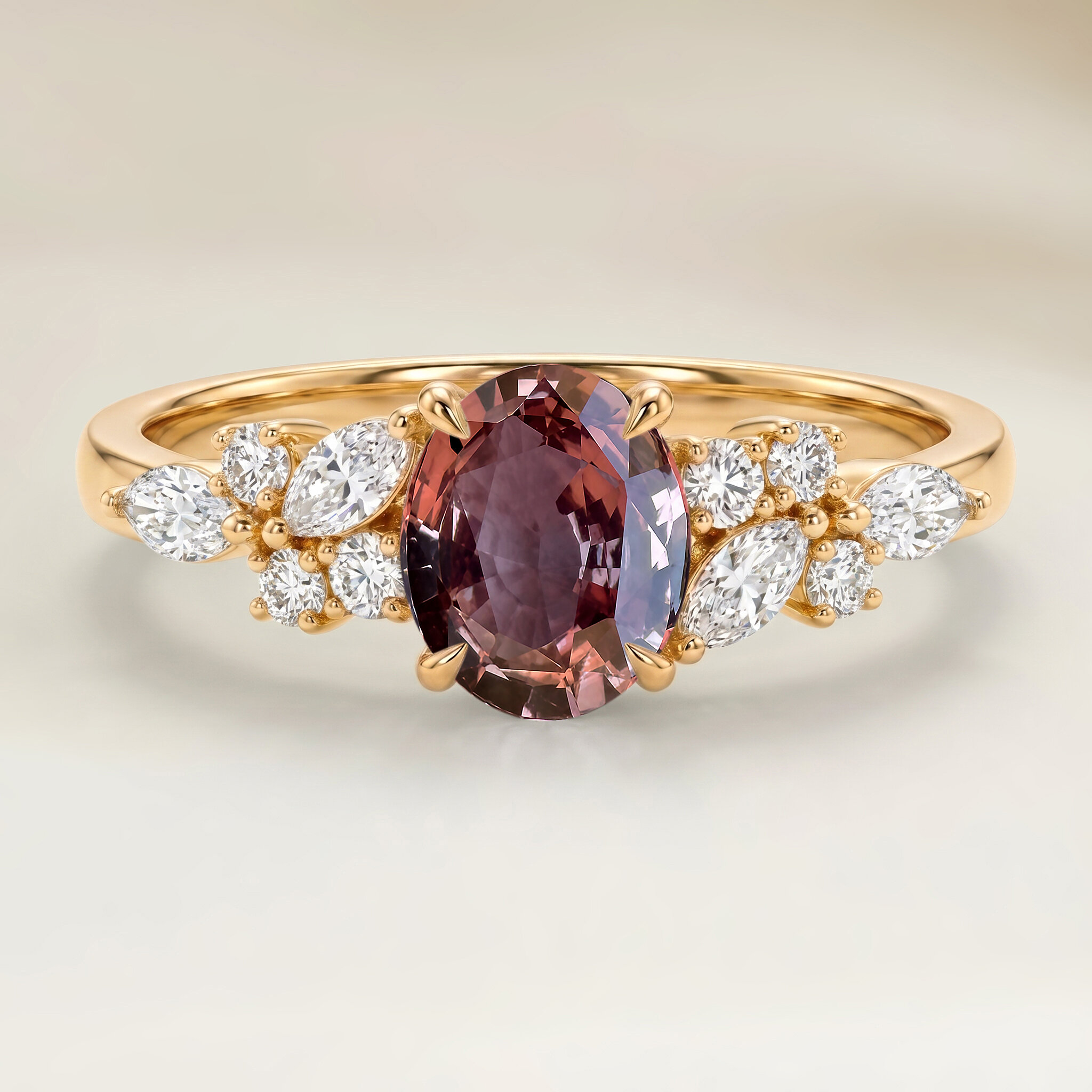
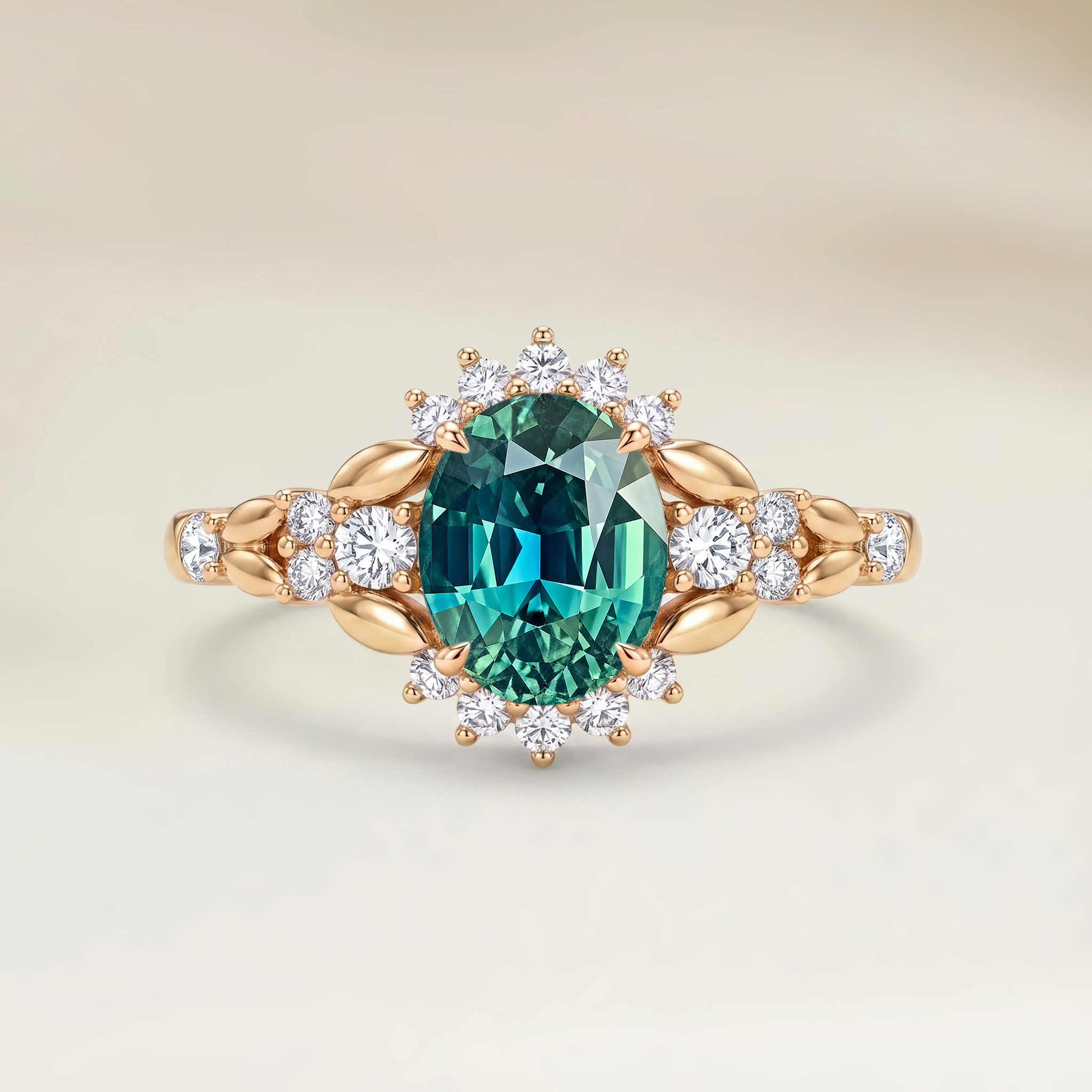
The teal, between blue and green, is the colour that has changed our commissions the most in recent years. It is also the most accessible corundum: around €1,010/ct as a median value across our stock, compared with €1,780 for blue. A teal sapphire engagement ring therefore offers a distinctive colour without the premium of classic blue.
The padparadscha occupies the other end of the spectrum: around €2,850/ct, almost three times the teal. The reason is as much administrative as geological — it is the only sapphire whose designation is controlled by an independent laboratory, which mechanically limits supply. A padparadscha sapphire engagement ring is paid for first and foremost in documented rarity.
The only major stone for which imperfections are accepted — and even expected. Its natural inclusions, what the trade calls the jardin, form part of its identity and attest to its natural origin.
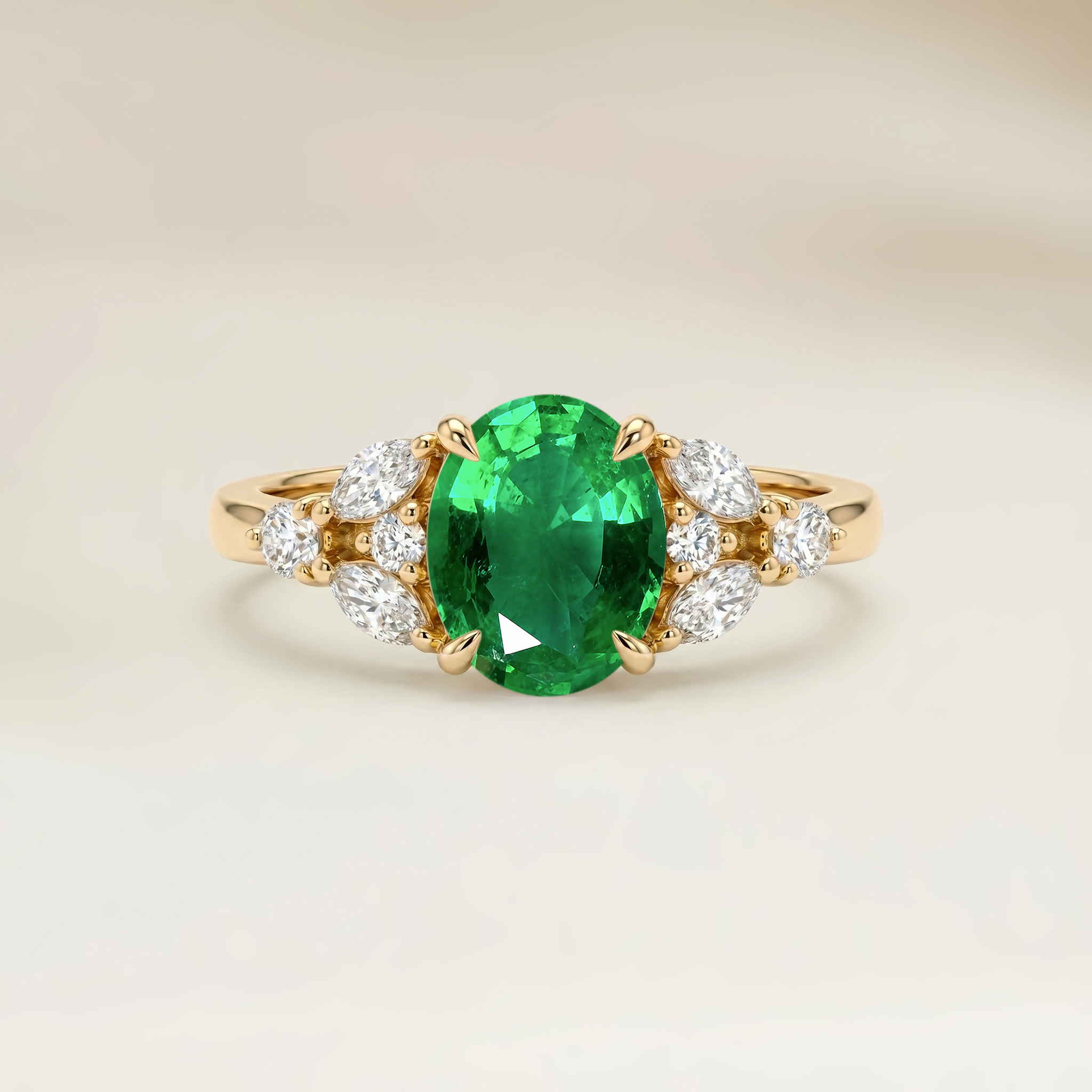
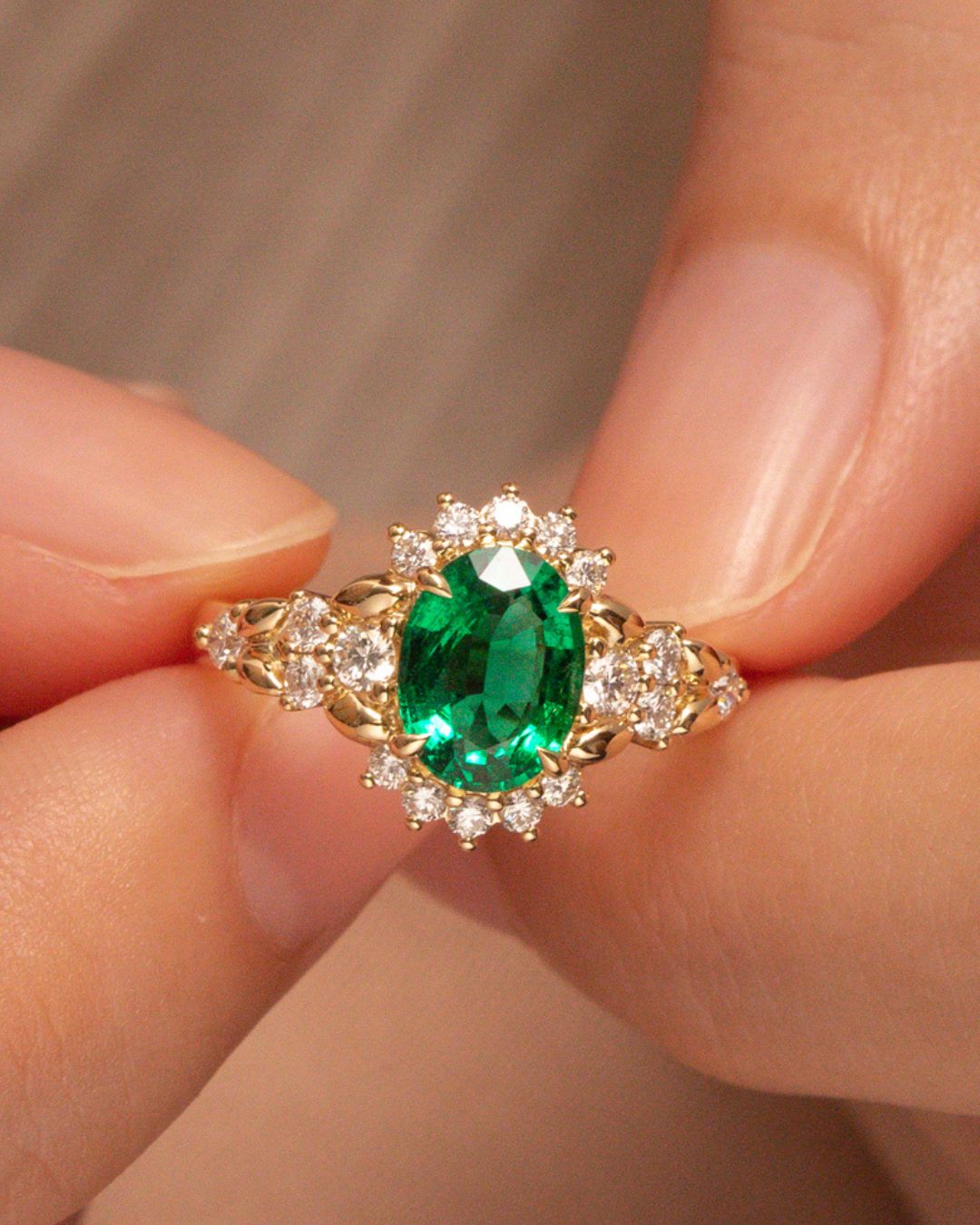
Two characteristics distinguish it from corundum, and they work in opposite directions. It is less dense : at equal weight, it offers a larger visible surface area, and starts at a lower price — our creations begin at €1,700. But it ranks between 7.5 and 8 on the Mohs scale, and its inclusions make it sensitive to sharp impacts.
The practical consequence, and the only real constraint of an emerald engagement ring : the setting must protect the stone’s corners. A bezel setting or a low setting resolves the issue — provided it is decided at the design stage, not afterwards.
Exactly the same mineral as sapphire — same formula, same hardness, sometimes from the same deposit — with only the concentration of chromium distinguishing them. Everything said about sapphire’s resistance applies word for word to it.
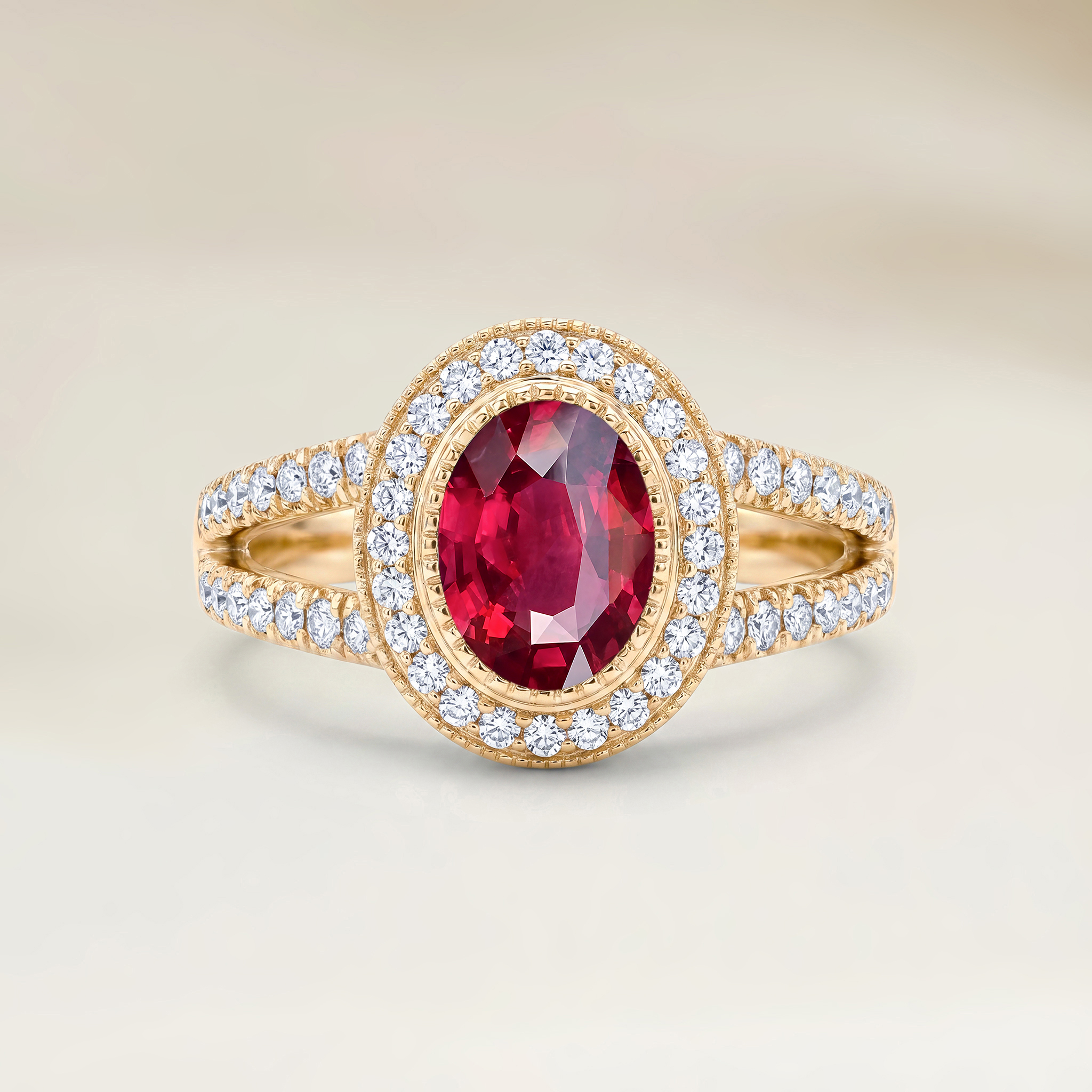
The difference lies elsewhere, and it is considerable: a finely coloured ruby is the rarest of the four great gemstones above two carats. In our stock, its median price per carat is around nine times that of blue sapphire, and a ruby engagement ring starts at around €8,000, compared with €2,500 for sapphire.
It is also the most treated gemstone on the market. Heating is accepted and disclosed; lead-glass filling, widespread since the 2000s, is not — it makes an otherwise unsellable stone visually presentable, for a value beyond comparison and unusual fragility. For a ruby, certification is not optional.
None is classified among the “precious” gemstones. Yet all three deserve consideration — and two of them have an advantage that the great stones do not.
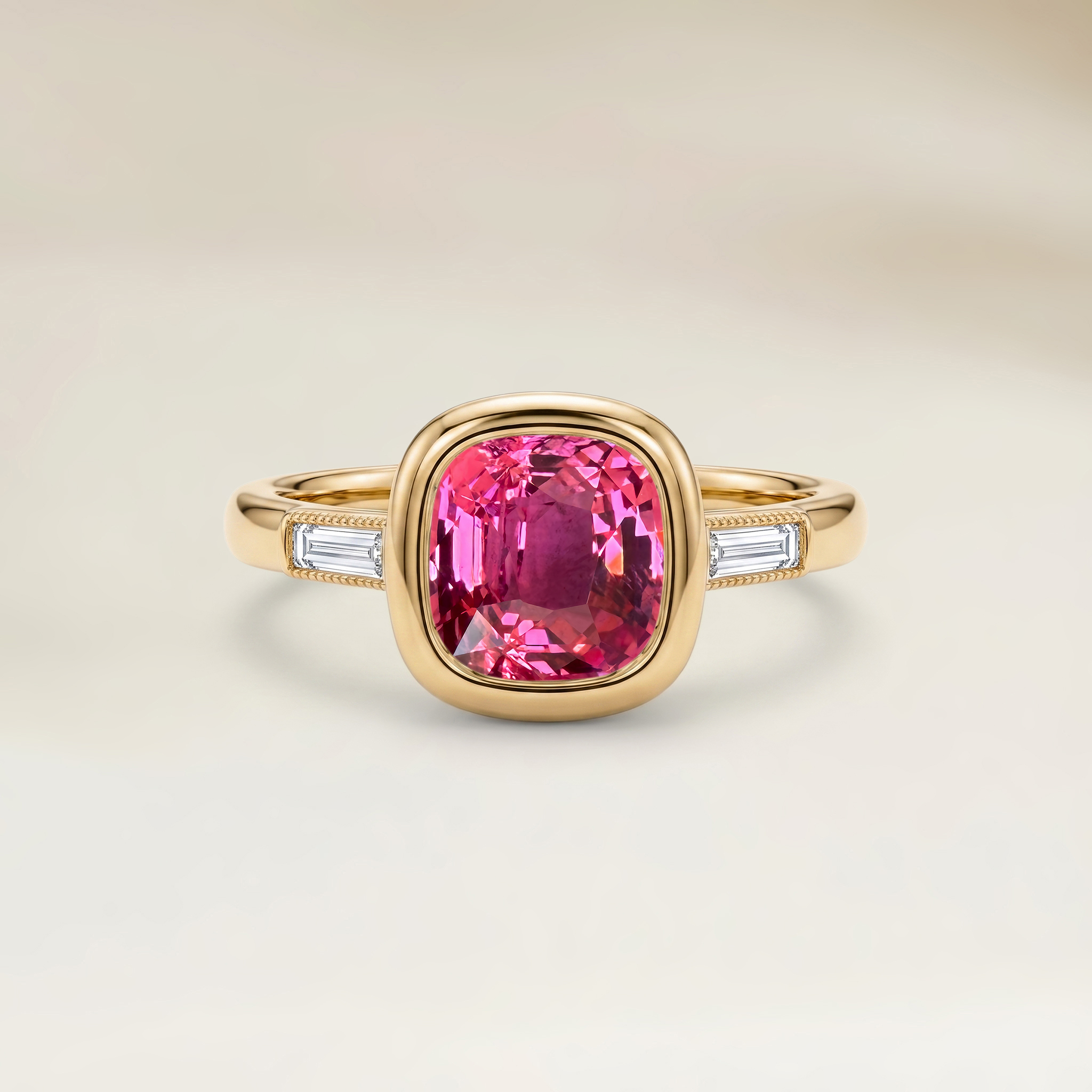
Pink 1.22 ct · €5,280
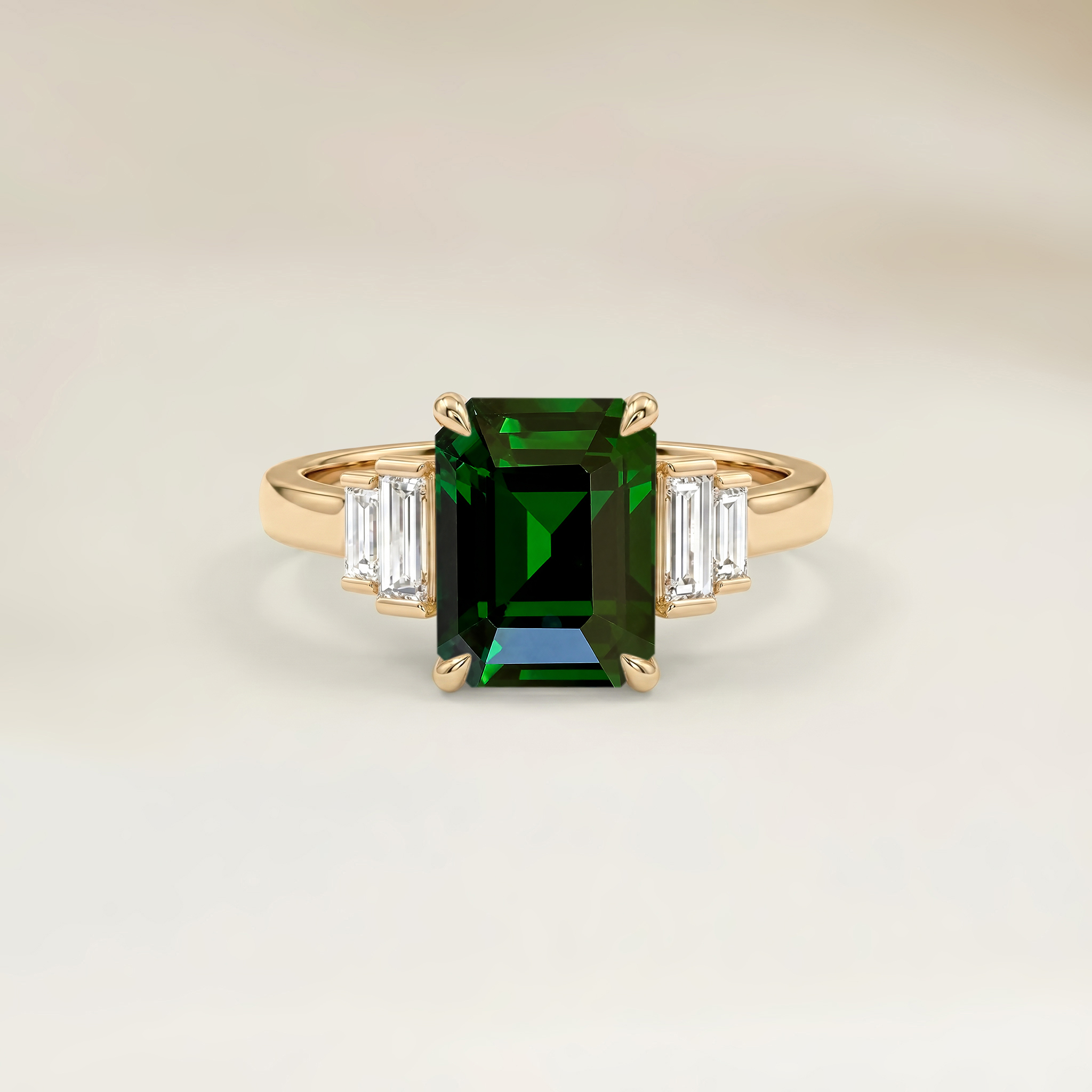
1.57 ct · €6,960
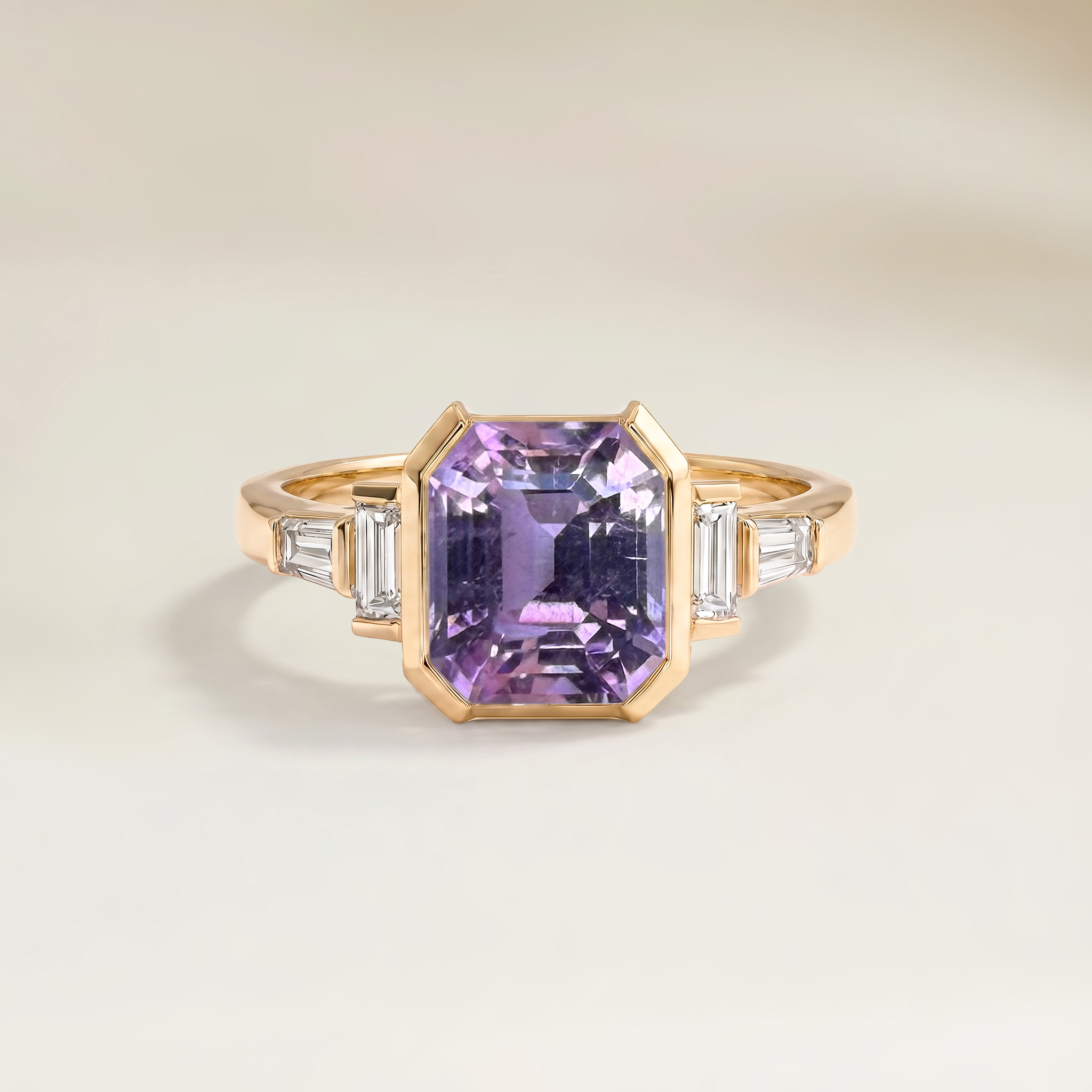
Rectangle · €3,840
Available creations, prices observed in September 2026.
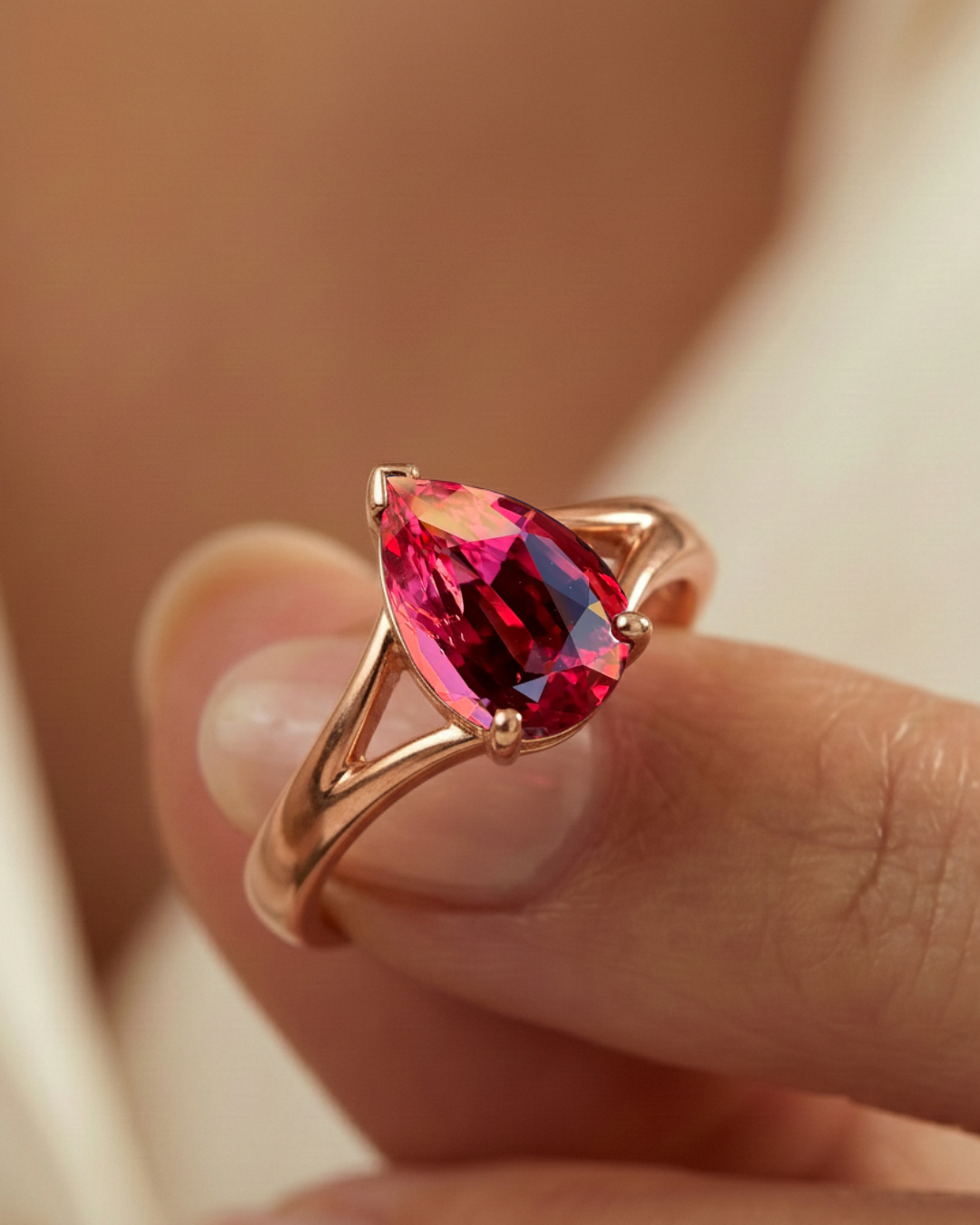
A spinel engagement ring has the strongest argument on this page for those who refuse on principle for a stone to have been altered: spinels are almost never treated. A tsavorite garnet engagement ring shares this quality — garnets are neither heated nor oiled — with the added benefit of a transparency that emerald cannot achieve.
As for a tourmaline engagement ring, it plays the card of choice and volume: no family covers as many shades, and none offers as many millimetres for the same budget. The latter two, however, require the same care as emerald — hardness 7 to 7.5, protective setting.
| Family | Hardness | Common treatment | Daily wear | Creation from |
|---|---|---|---|---|
| Sapphire | 9 | Heating, declared | Without reservation | 2 500 € |
| Ruby | 9 | Heating, declared | Without reservation | 8 000 € |
| Spinel | 8 | None | Without reservation | 2 500 € |
| Emerald | 7,5 – 8 | Colourless oil | Protective setting | 1 700 € |
| Tourmaline | 7 – 7,5 | Usually none | Protective setting | 2 760 € |
| Tsavorite | 7 – 7,5 | None | Protective setting | 6 840 € |
Starting prices for set creations, recorded in September 2026. Spinel starts at the lower end for blue and light pink colours; reds are significantly higher.
Four situations cover the majority of the projects we see.
| What you are looking for | Our answer |
|---|---|
| A ring worn every day, without giving it a thought | Sapphire. Hardness 9, ten colours, the deepest stock. |
| A colour that no one will recognise | Spinel or tourmaline. And for green, tsavorite. |
| A stone with no treatment whatsoever | Spinel or tsavorite. No heating, no oil, nothing to declare. |
| Size for a modest budget | Tourmaline. The most millimetres on the finger for a given price. |
For a given budget, always choose colour over weight. A one-and-a-half-carat stone with a vibrant hue makes a far more beautiful ring than two dull carats: the difference in surface area is measured in tenths of a millimetre, while the difference in colour can be seen from three metres away.
In France, regulations effectively reserve the designation for four gems: diamond, ruby, sapphire and emerald. The others fall under the generic term gemstone. This hierarchy is historical and commercial, not gemmological.
Three. Hardness, which determines whether the ring can be worn every day without restriction. Colour, which accounts for most of the value — its saturation and how well it holds in low light. And treatments, which determine both price and care.
Sapphire and ruby, both at 9 on the Mohs scale and with no cleavage plane: only diamond performs better. Spinel follows at 8. Emerald, tourmaline and tsavorite range between 7 and 8 and require a setting that protects their edges.
It depends which one. Heating corundum and oiling emeralds are traditional, stable practices, disclosed on the certificate. Lead-glass filling and coloured resins, on the other hand, drastically reduce value and weaken the stone: we exclude them from our selections.
Sapphires in their least sought-after colours — teal, violet, green, yellow — are priced at around €1,000 to €1,200/ct in our stock, compared with €1,780 for blue. Tourmaline offers the largest sizes for a given budget, while spinel has the advantage of being almost never treated.
For any stone intended for a valuable piece of jewellery, yes. It specifies the nature, weight, dimensions, treatments and often the origin. It says nothing about quality or value: a necessary condition, but never a sufficient one.
No, millimetres are. The carat is a unit of weight, not size: corundum is denser than emerald, so at equal weight it appears smaller. Always ask for the actual dimensions and a video on a hand.
Share this post