Zambian or Colombian Emerald?
Bonnot Paris22/9/2026



An engagement ring is not a complicated purchase. It becomes complicated when it is treated as an object to find rather than a project to lead — and the seven mistakes that follow recur with disconcerting regularity.
None of them is a matter of taste. They are mistakes of method, and they can all be corrected free of charge, provided you know them beforehand.
It is by far the most common, and the most logical: you spot a ring online, fall in love with its design, and then look for the gemstone that will fit it.
The problem is arithmetic. A design fixes dimensions; you must then find a stone that matches that exact format, in that colour, within that budget — three simultaneous constraints. Nine times out of ten, you end up accepting a gemstone chosen by default.
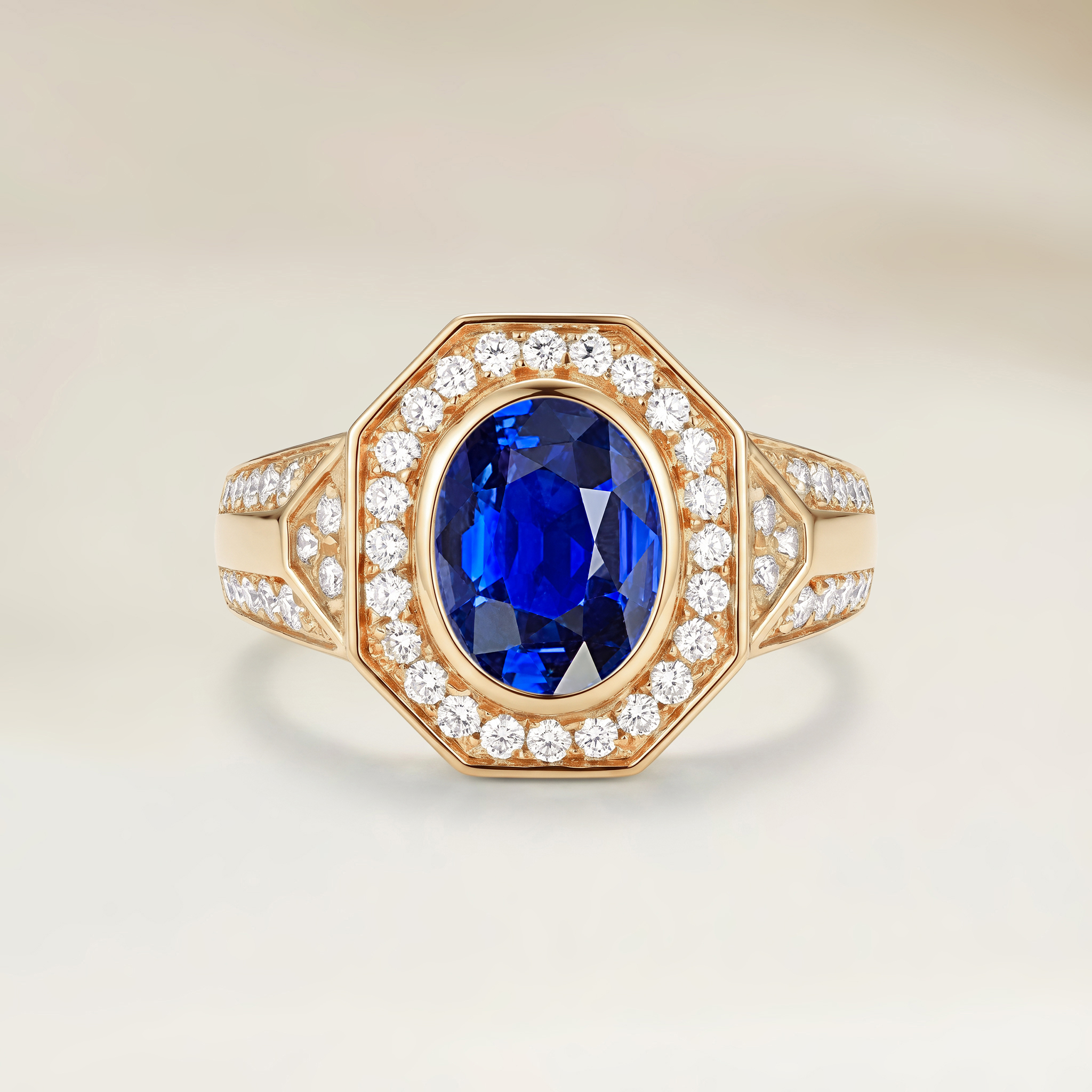
The reverse order costs less and produces a better result: you choose the stone from what actually exists, then the setting is designed around its dimensions. In this respect, a sapphire engagement ring offers the widest scope — ten colours and the deepest stock in our catalogue, hence the fewest compromises to make.
The colour, not the design. Settings go out of fashion, tastes evolve, and a setting can be reworked — the stone cannot. That is what must be chosen without compromise.
The carat measures weight, not a cut. Two stones of the same weight can differ by more than one millimetre in diameter depending on their cutting depth — and many are cut deep precisely to retain carat weight, and therefore sell for more despite having the same visible surface area.
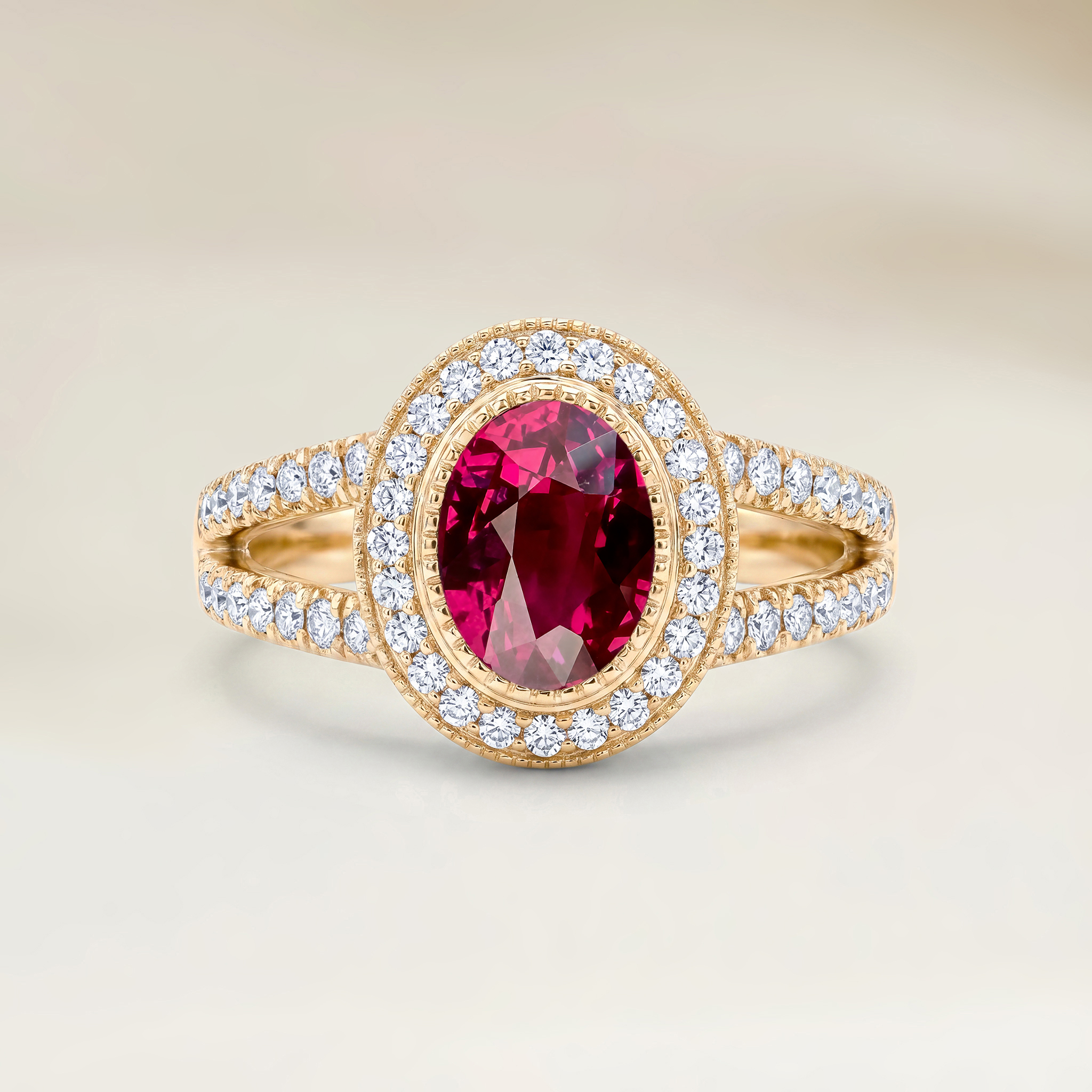
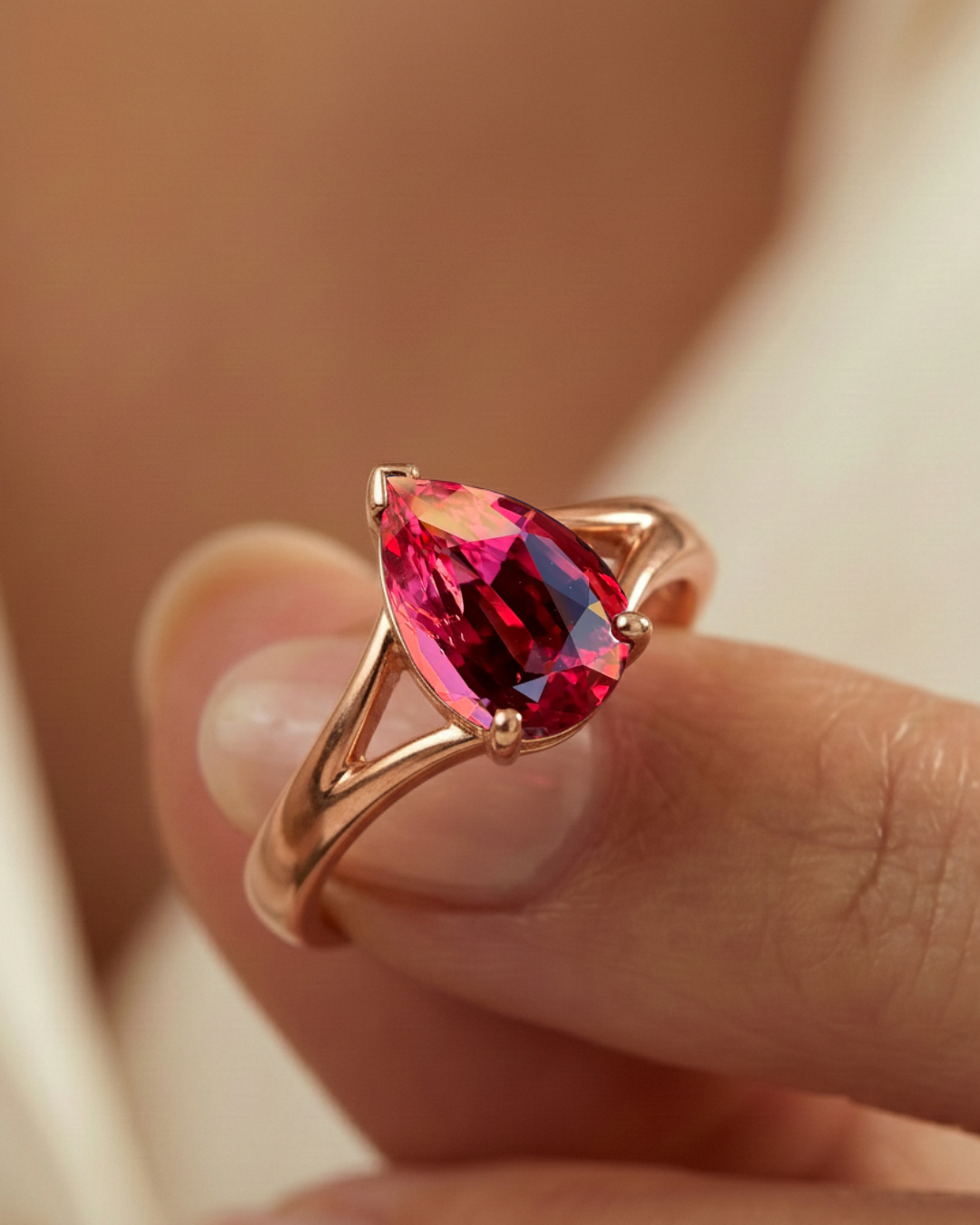
The case of red is the most striking, and it should be a lesson to everyone. Among our six rubies in stock, the price per carat decreases as the weight increases : the smallest stone, a pure red 1.50 ct ruby, costs €22,520/ct, while the largest, pinkish in tone, falls to €5,800/ct. A ruby engagement ring should therefore be judged by its saturation, never by the number on the certificate.
A practical consequence, valid across all families: be wary of a large stone offered at a price that seems reasonable. Nine times out of ten, it is not a bargain — it is a more subdued colour, heavy treatment, or both.
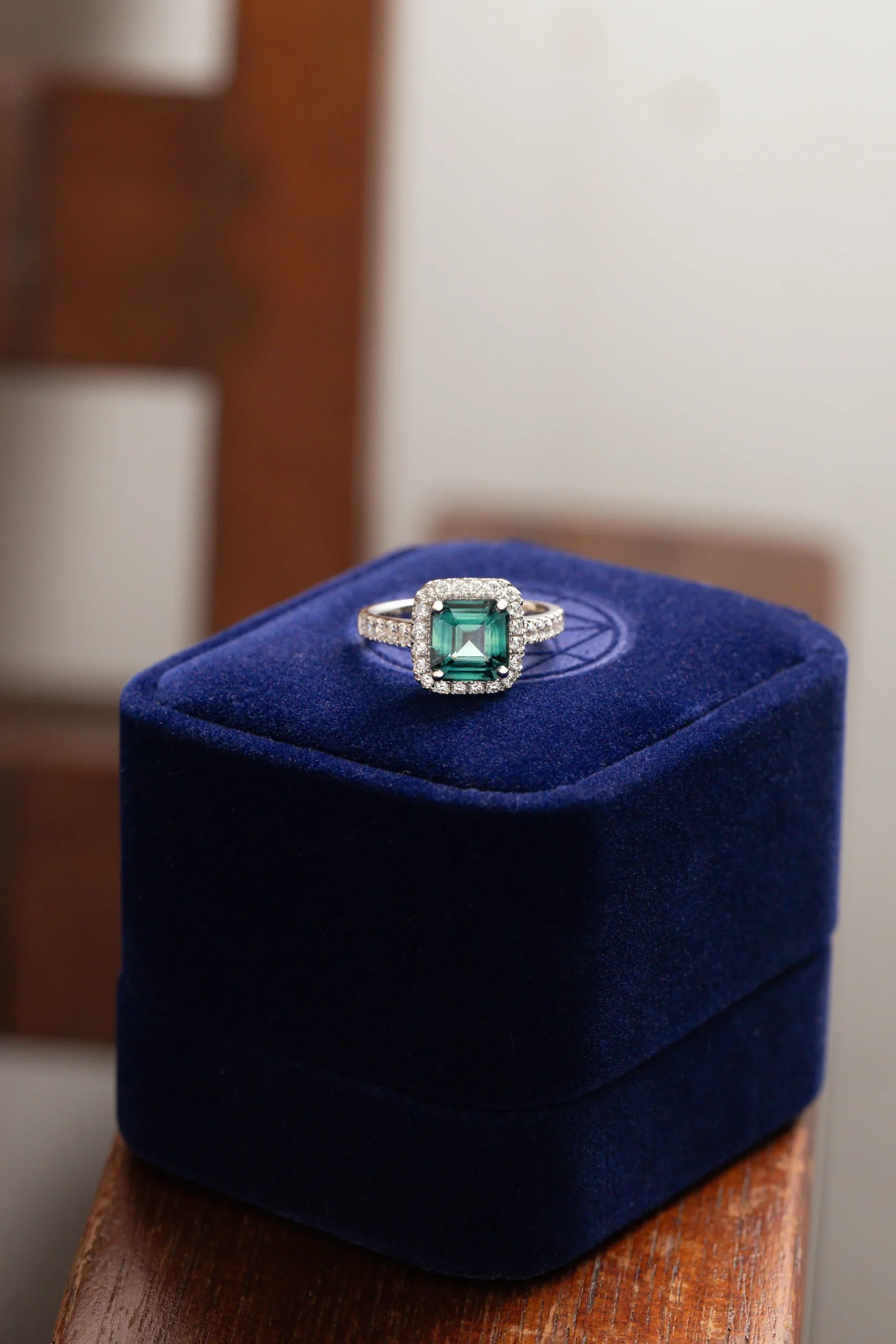
A stone does not create light: it reflects what it is given. Warm light draws tones towards red, daylight towards blue. The same teal sapphire may appear distinctly blue in a display window and noticeably green by the window.
No screen is calibrated like yours, and a studio photograph is lit to flatter. The test that matters lies elsewhere: view the stone in daylight, then in the evening in a lit room. If the colour collapses when the light fades, the ring will not leave the drawer.
At a distance, the minimum acceptable option is a video on a neutral hand, under several lighting conditions, without colour retouching. A seller who provides only retouched photographs is selling you an image, not a gemstone.
This cannot be remedied later. A wedding band sits against the engagement ring — and this question alone changes three design parameters that can no longer be altered once the ring has been made.
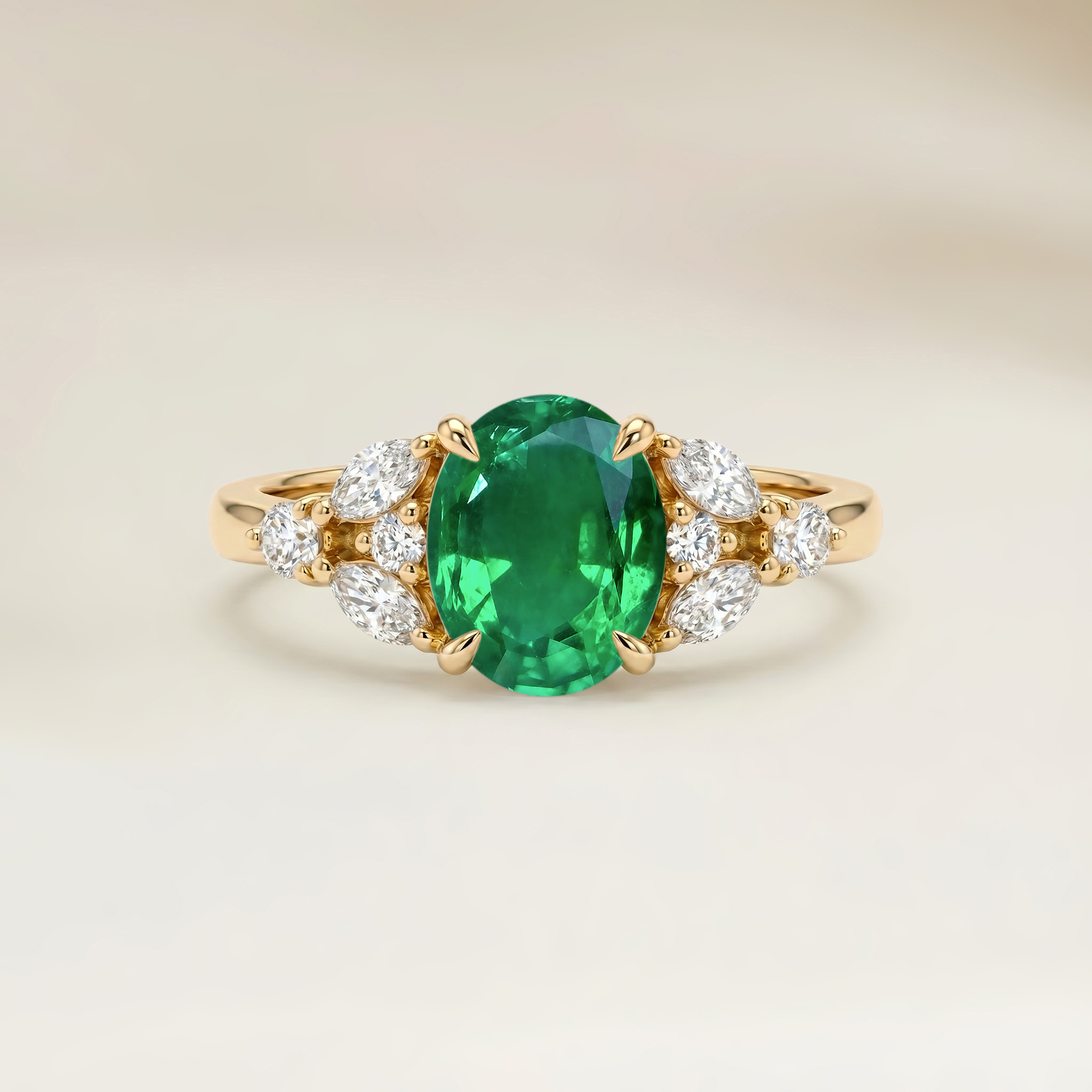
The three parameters are the setting height — a low-set stone will never allow a straight band to sit flush —, the profile of the band, and the shape of the basket beneath the stone, which may protrude and prevent any contact.
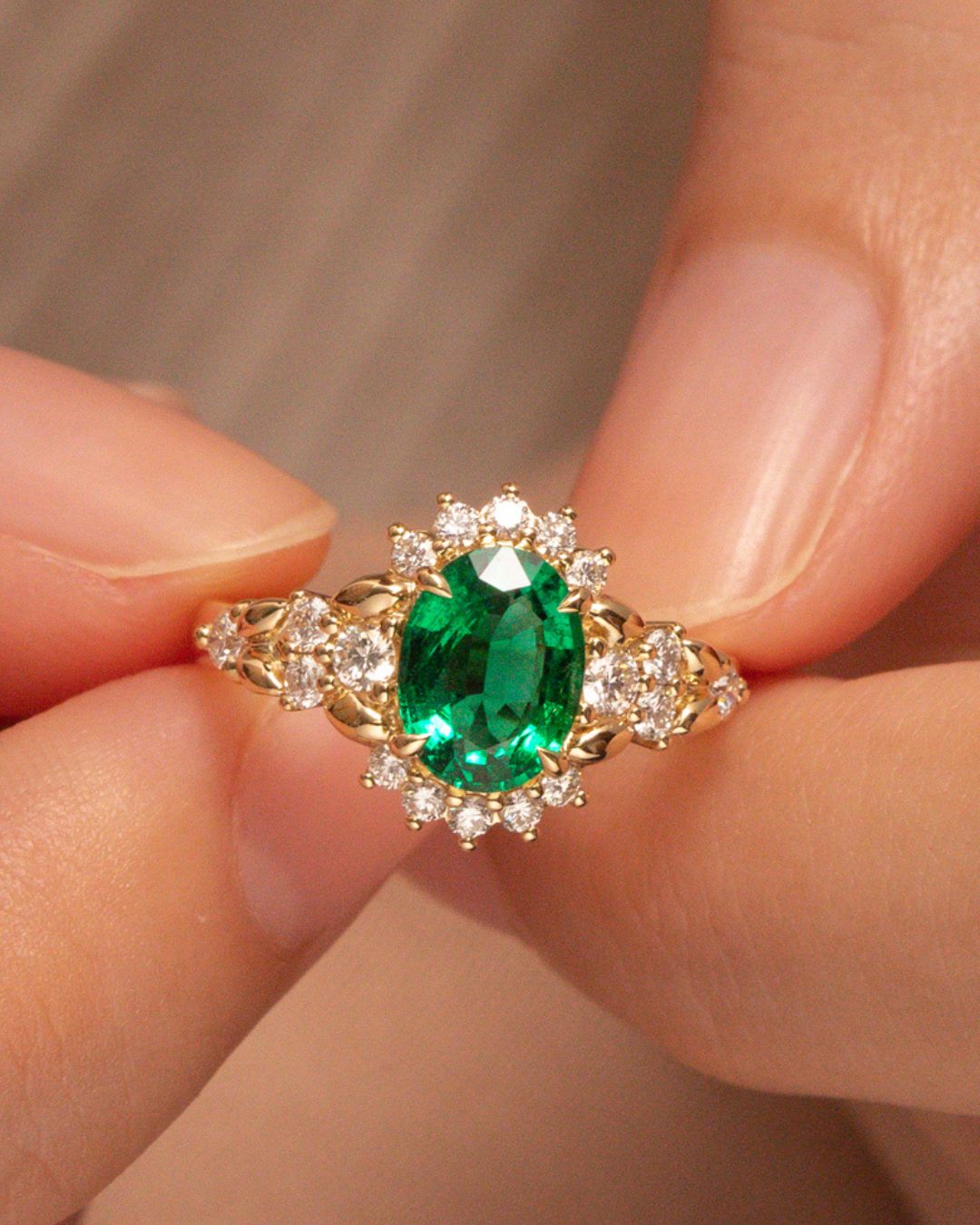
On an emerald engagement ring, the issue goes beyond aesthetics. With a hardness of 7.5 to 8, the stone does not withstand repeated friction from metal against its edges well: we almost always design a notched wedding band, even when the geometry would allow a straight band.
There is no obligation to make the wedding band straight away. We are happy to design both together and keep the measurements in the workshop : a wedding band requested five years later will fit to the millimetre.
The most reliable method remains discreetly borrowing a ring she wears on her left ring finger and having it measured. Two pitfalls account for most mistakes.
The wrong finger. A ring worn on the middle finger or right ring finger does not provide the correct measurement: the difference often reaches one and a half sizes. For right-handed people, the right ring finger is frequently half a size to one size larger than the left.
The wrong time. A finger measured in the morning, after sport or in hot weather can vary by a full size. Measure at the end of the day, at normal temperature.
The first resizing is complimentary with our creations. A ring that is slightly too large on the day of the proposal is no problem; a ring that will not fit is. A plain band can be resized in a few minutes — a fully pavé-set band, much less so.
An independent laboratory report, verifiable by its number, specifies the nature of the gemstone, its weight, dimensions, any treatments it has undergone and often its origin. Without it, no price makes sense.
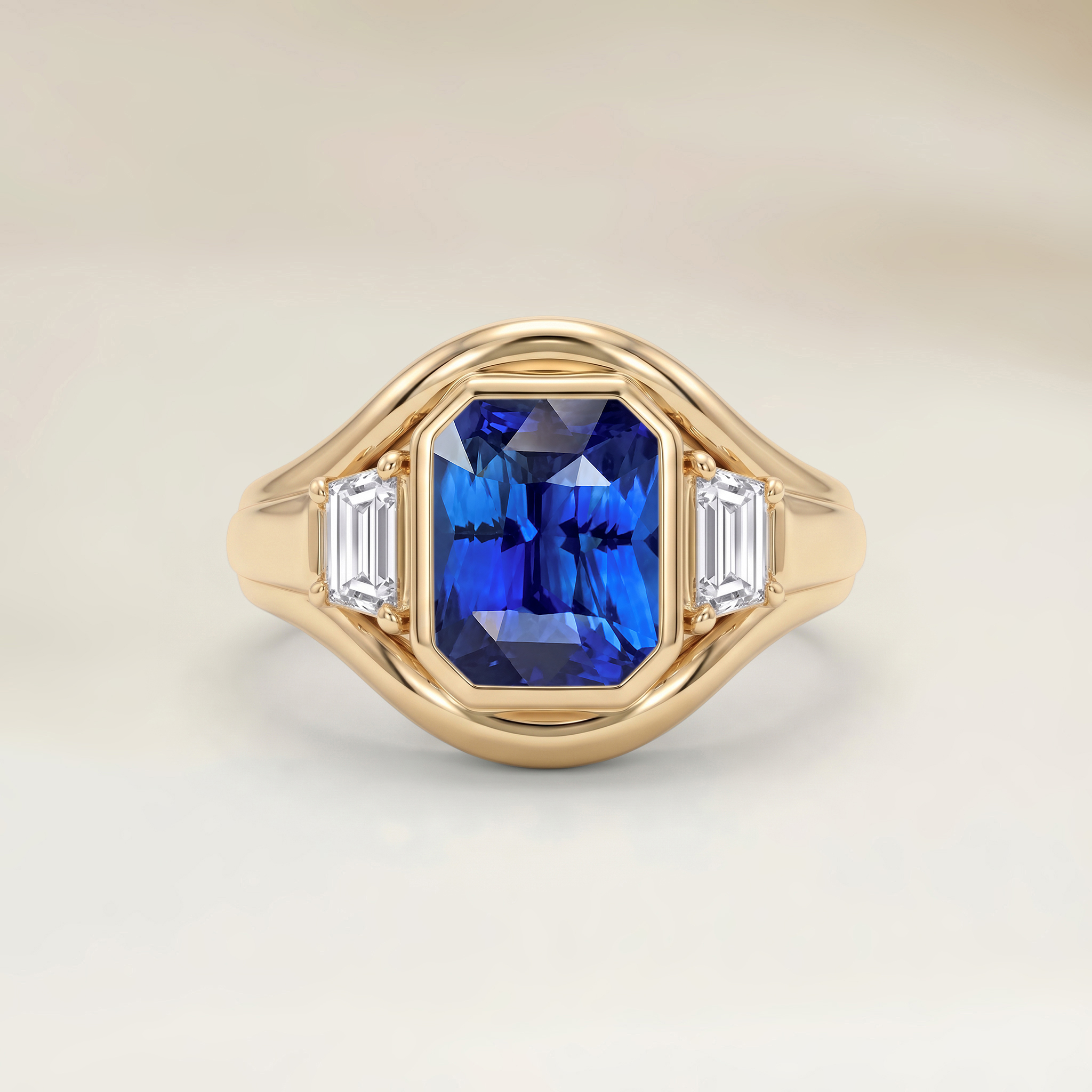
The first line to read is that concerning treatments, because they determine both value and care. Heating a corundum and oiling an emerald are traditional, stable and accepted. Lead-glass filling in a ruby, coloured resins in an emerald or surface diffusion, on the other hand, are not: they drastically reduce value and weaken the stone.
A useful point for inherited jewellery: discovering that a family stone is treated or synthetic does not mean you have been deceived. Ruby has been synthesised industrially since the beginning of the 20thth century, and no one concealed it at the time.
Allow six to eight weeks between the first appointment and the handover of the jewel: one to two weeks to choose the stone and finalise the design, followed by three to five working weeks of production once the stone has been received at the workshop.
| You have left | What is feasible |
|---|---|
| More than 3 months | Anything, including dedicated sourcing for a rare stone. |
| 2 to 3 months | A complete creation from stock, including a personalised design. |
| 1 to 2 months | A creation using a stock stone, with an existing setting. |
| Less than a month | Available ring, or loose stone |
The final line deserves a word, because it is the escape route no one considers. Proposing with the stone alone, in its presentation case and with its certificate, then designing the ring together: the commitment is there, as is the value, and it removes the main risk of a surprise ring — getting the design wrong rather than the stone.
Do not rush the design to meet the date. No one will remember the delay, everyone will remember the ring.
The stone, always. The setting is designed around its actual dimensions, never the other way around. Starting from a design spotted online means having to find a gemstone that fits it, and one ends up accepting a stone chosen by default.
No, millimetres are. Two stones of the same weight can differ by more than one millimetre in diameter depending on their cutting depth. And in certain families, colour outweighs weight to such an extent that the most expensive stone per carat is also the smallest.
No. No screen is calibrated like yours, and no studio photograph captures the behaviour of a gemstone under different lighting conditions. Ask for a video on a neutral hand, under several lights and without colour retouching.
From the very first appointment. The question changes the height of the setting, the profile of the shank and the shape of the basket — three parameters that can no longer be altered once the ring has been made.
Borrow a ring worn on the left ring finger and have it measured. A ring worn on another finger will not give the correct size — the difference often amounts to one and a half sizes. If in doubt, opt for a slightly larger size: the first resizing is complimentary.
Yes, for any stone intended for a valuable piece of jewellery. It specifies the nature, weight, dimensions, treatments and often the origin. Without it, no price is meaningful — and certain treatments radically alter both value and care requirements.
Six to eight weeks between the first appointment and delivery of the piece of jewellery. If the date is sooner, an available collection ring or a loose stone presented in its case will keep to the schedule without compromising the project.
Share this post