Zambian or Colombian Emerald?
Bonnot Paris22/9/2026



It is neither delivery nor setting: it is design approval. Before then, everything can be discussed — proportions, setting height, band profile. Afterwards, the project goes to the workshop and the metal is committed.
This article describes the six stages in order, what each one decides, and how long each one actually takes. It also explains what we do not do ourselves.
It takes place at the Paris showroom at 40 rue des Mathurins, in Angers, or by video call. Allow 45 minutes; it involves no commitment.
We begin by discussing what frames the project: budget, tastes, and wear constraints — manual work, sport, whether or not the ring is removed for housework. These three elements eliminate more options than any aesthetic discussion, and it is best to establish them from the outset.
A practical tip: identify two or three references online before coming in and let us know about them. Our entire stock is published with its characteristics and prices; we prepare the selection in advance, making the appointment far more useful.
Nothing is required. But images you like — and above all those you dislike, often more revealing —, a budget idea, and a ring in the correct size can save a week of back-and-forth.
Everything starts with the gemstone, and the order is non-negotiable: the setting is built around its actual dimensions, to the nearest tenth of a millimetre. The reverse—looking for a stone that fits a design spotted online—imposes three simultaneous constraints of size, colour and budget, and almost always leads to accepting a gem chosen by default.
Two paths open up here, depending on what you are looking for.
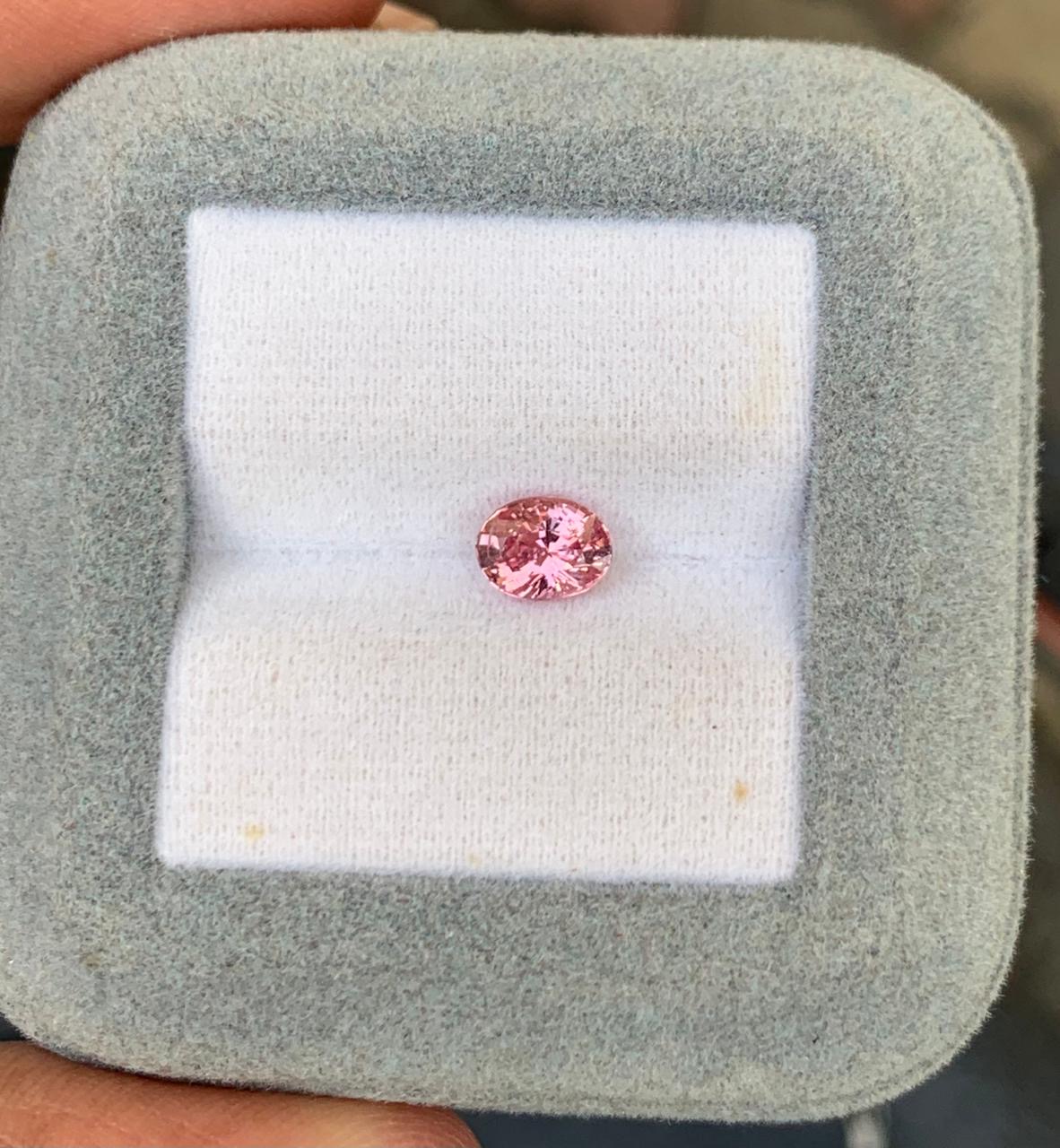
Buying directly from the Paris stock. This is the fastest route: the stone is there, you see it in your hand, compare it with others under the same light, and approval follows immediately. A teal sapphire engagement ring is almost always created this way—it is the most abundant family in our showroom, and therefore the one with the least compromise.
Bespoke sourcing. If the colour, size or shape you are looking for is not in the display case, we begin a search through our offices in Sri Lanka and Thailand. Allow a few additional weeks for proposals to come through, be filmed and submitted to you. A padparadscha sapphire engagement ring often takes this route: as the designation is controlled by a laboratory, supply is inherently limited.
Each stone is filmed under several lighting conditions, on a neutral hand and without colour retouching. You receive the videos and full specifications before making any commitment. No studio photograph can replace this test.
Once the stone has been approved, the design begins—around it. Two methods, depending on the project and on how you prefer to envision it.
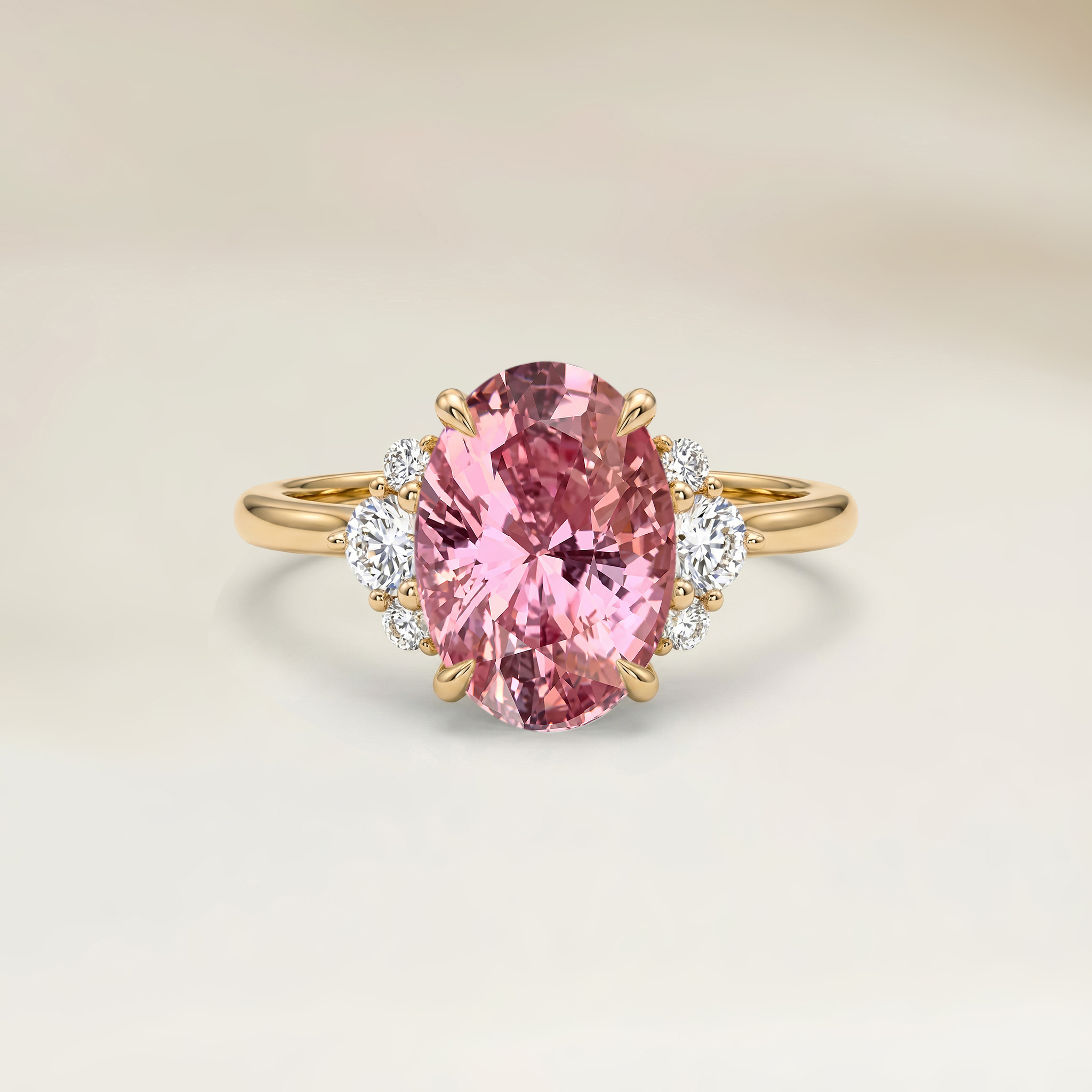
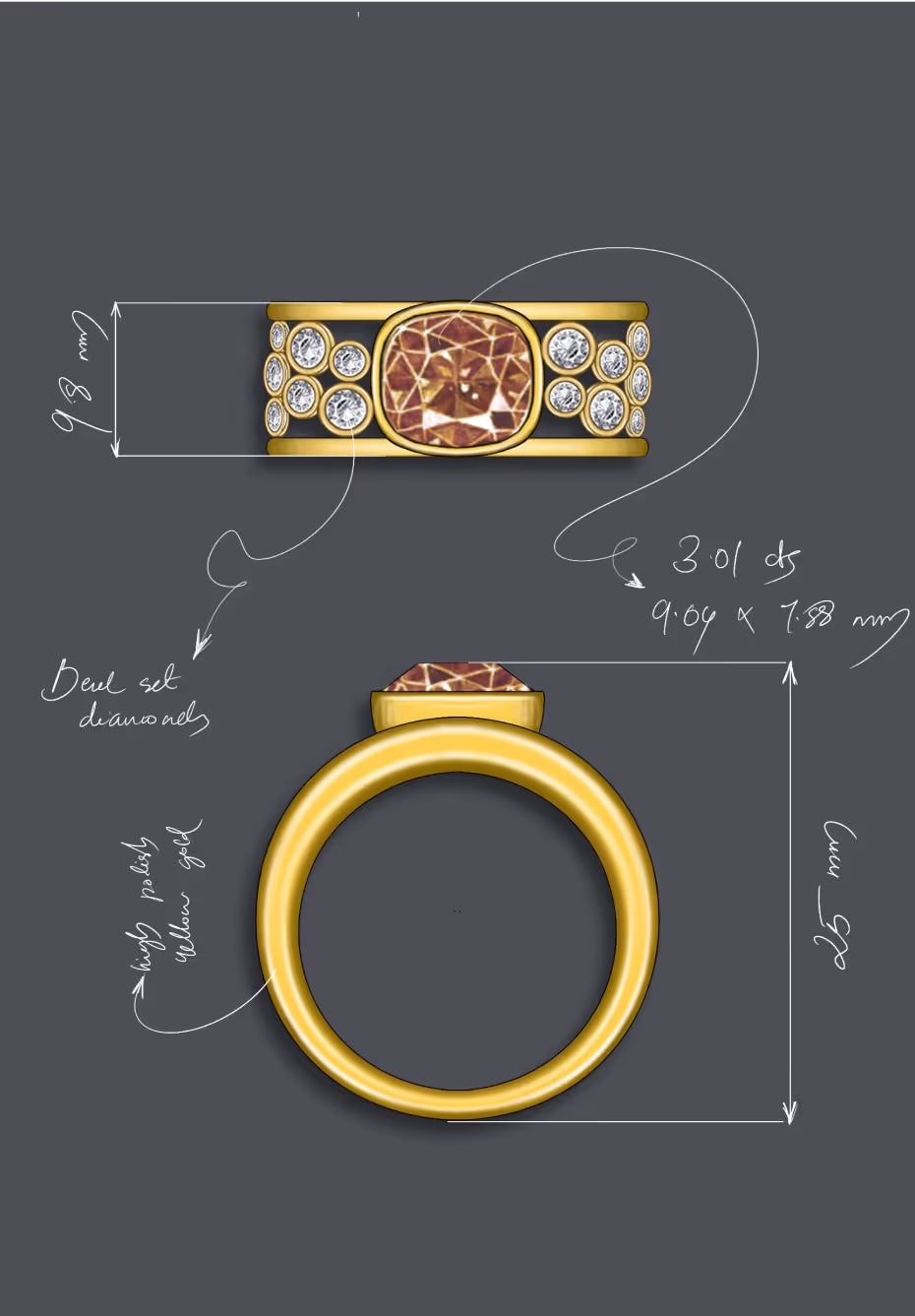
The gouache. Our designer paints the jewel by hand, at life size, from the front, side and top, with its dimensions. It is an old technique that has not been replaced for one simple reason: it compels decisions. Every proportion is determined; nothing is left to chance in the making.
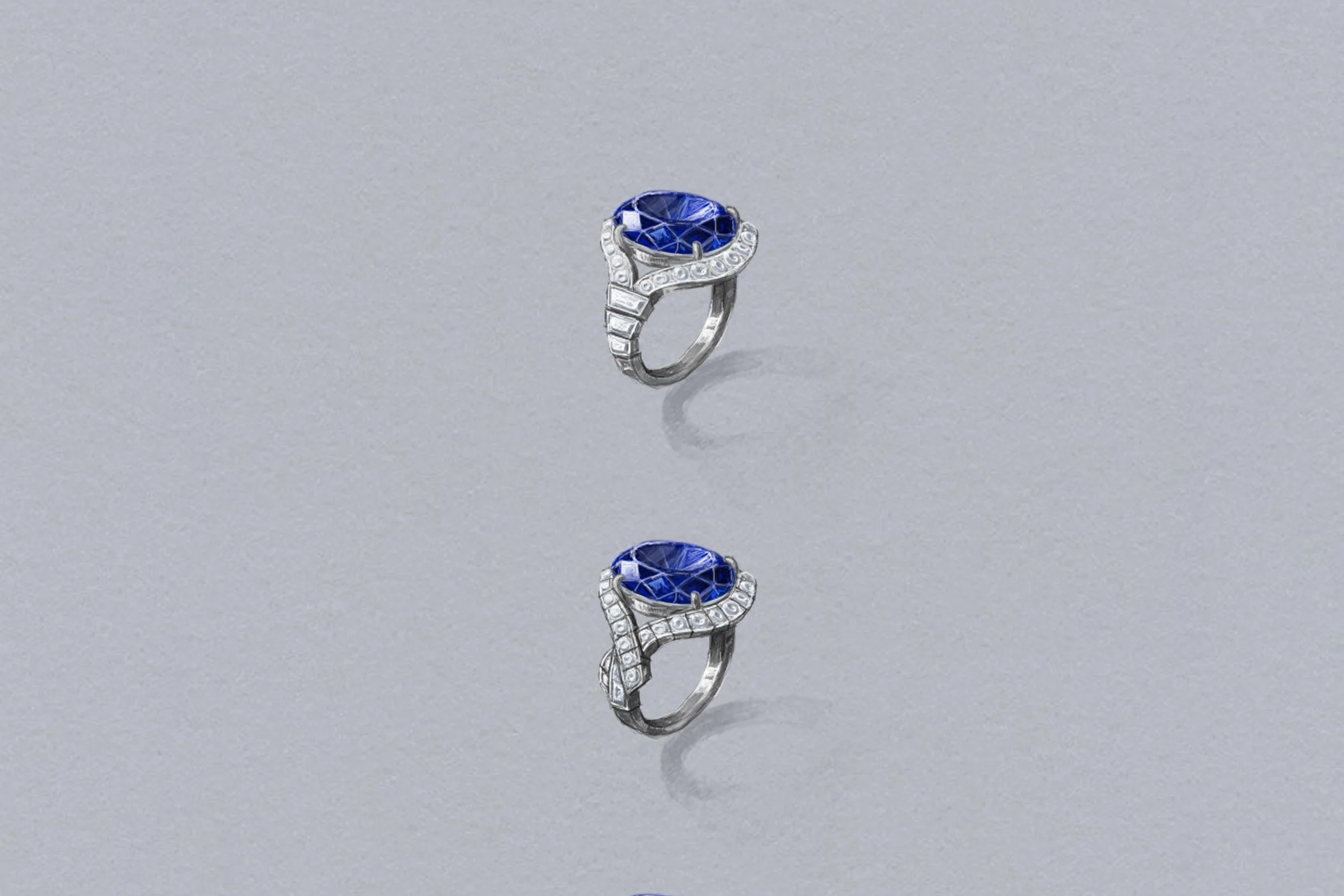
The design simulation. For other projects, we move directly to a visual simulation of the jewel. It is faster, and often clearer for those who find it difficult to visualise from a drawing — the ring can be seen as it will be, from several angles.
Whatever the method, three parameters are set at this stage — and they are precisely the ones people regret having decided too quickly: the setting height, the profile of the band and the shape of the basket beneath the stone. They determine whether a wedding band can sit flush against the ring, a question to raise at the very first appointment.
This is the most useful information in this article, and we would rather give it before than after.
Until this approval, everything can be modified at no extra cost. Widening the band, lowering the setting, changing the arrangement of the shoulder diamonds, switching from yellow gold to white gold: none of this costs anything as long as the metal has not been committed.
Afterwards, it is a different matter. A modification requested once the project has gone to the workshop means remaking the piece. Hence our insistence on taking the time, even — and especially — when the project seems obvious.
The true colour of the stone. A gouache rendering or a simulation depicts the gemstone; neither reproduces its saturation nor its behaviour in low light. The design approves a drawing, never a colour — the stone’s video is the reference.
The project goes into production. Four operations follow in sequence, entrusted to the skilled artisans for each one.
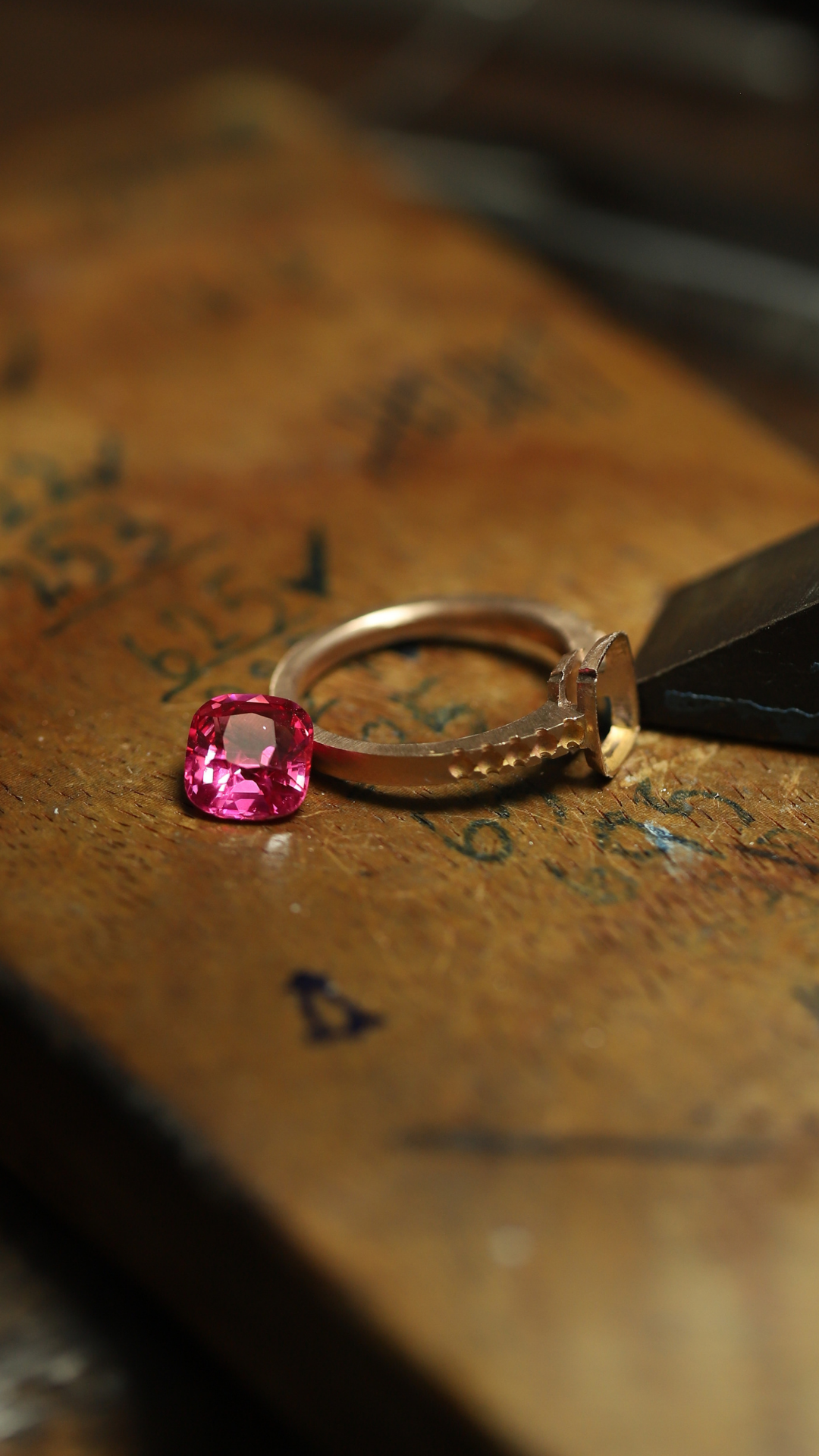
Wax and casting. A model of the ring is printed or sculpted in wax, then encased in refractory plaster. The block is fired: the wax melts and drains away, leaving a hollow impression into which the gold is poured. The plaster is then broken away. The process has a name that says it all — lost-wax casting : the model is destroyed for each piece; there is no reusable mould.
Finishing. The artisan removes the sprues, files, adjusts, and brings the piece to the correct finger size. The ring exists, but it is matte and bare: no stone has yet been set.
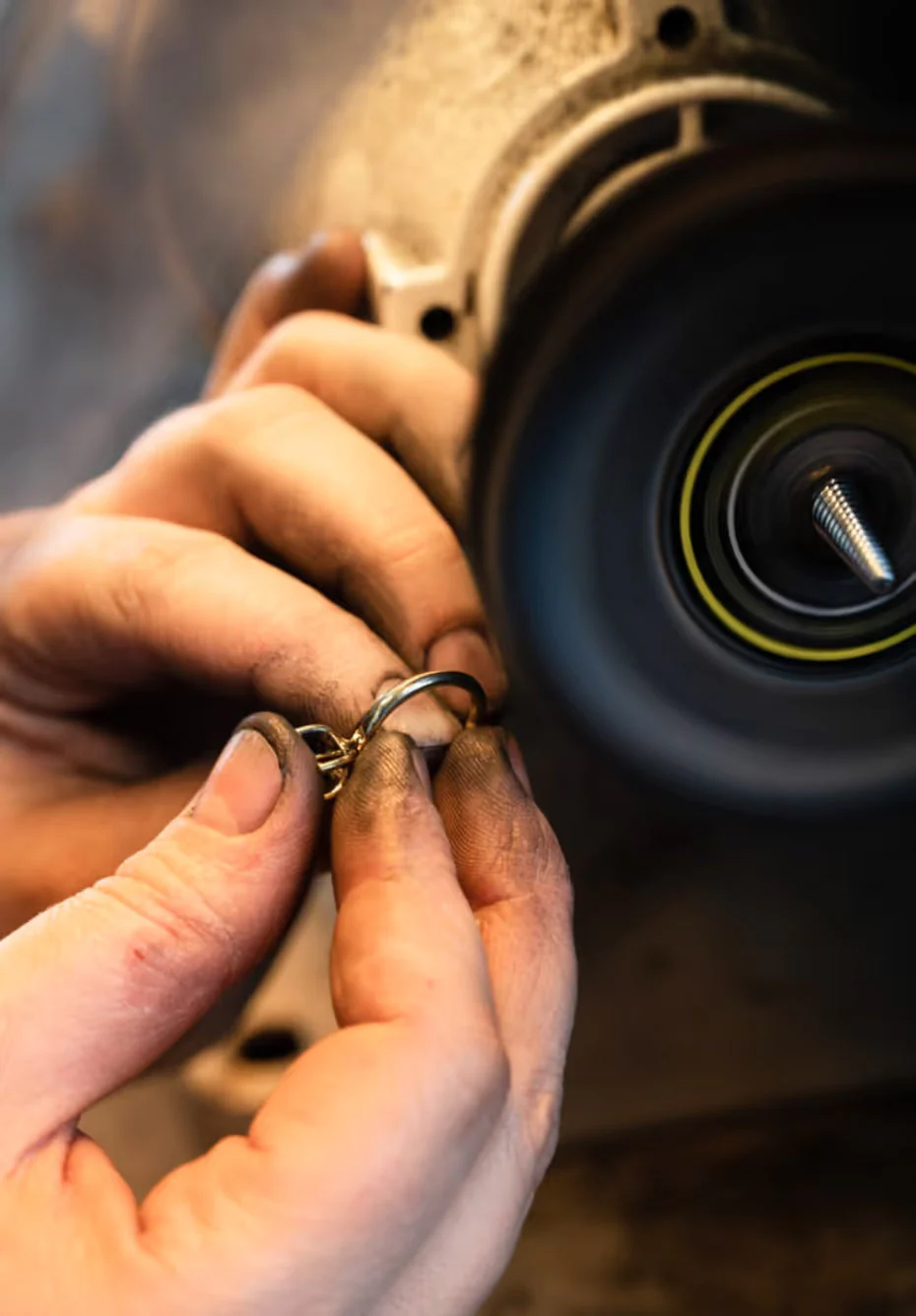
Setting. It is the most delicate stage in the entire process, and the only one where an error can damage the stone. The setter cuts the prongs or folds the metal around the gem: too tight, the stone is put under strain; too loose, it will move within six months.
The type of setting depends on the hardness of the stone, and that is where the design comes fully into its own. On an emerald engagement ring, between 7.5 and 8 on the Mohs scale and often marked by inclusions, we favour a bezel setting or a low setting that protects the corners. On a corundum at 9, all options remain open.
Polishing. In several increasingly fine passes, until mirror-like. An arduous yet decisive task: it is what makes a ring catch the light or remain dull, with an otherwise rigorously identical design.
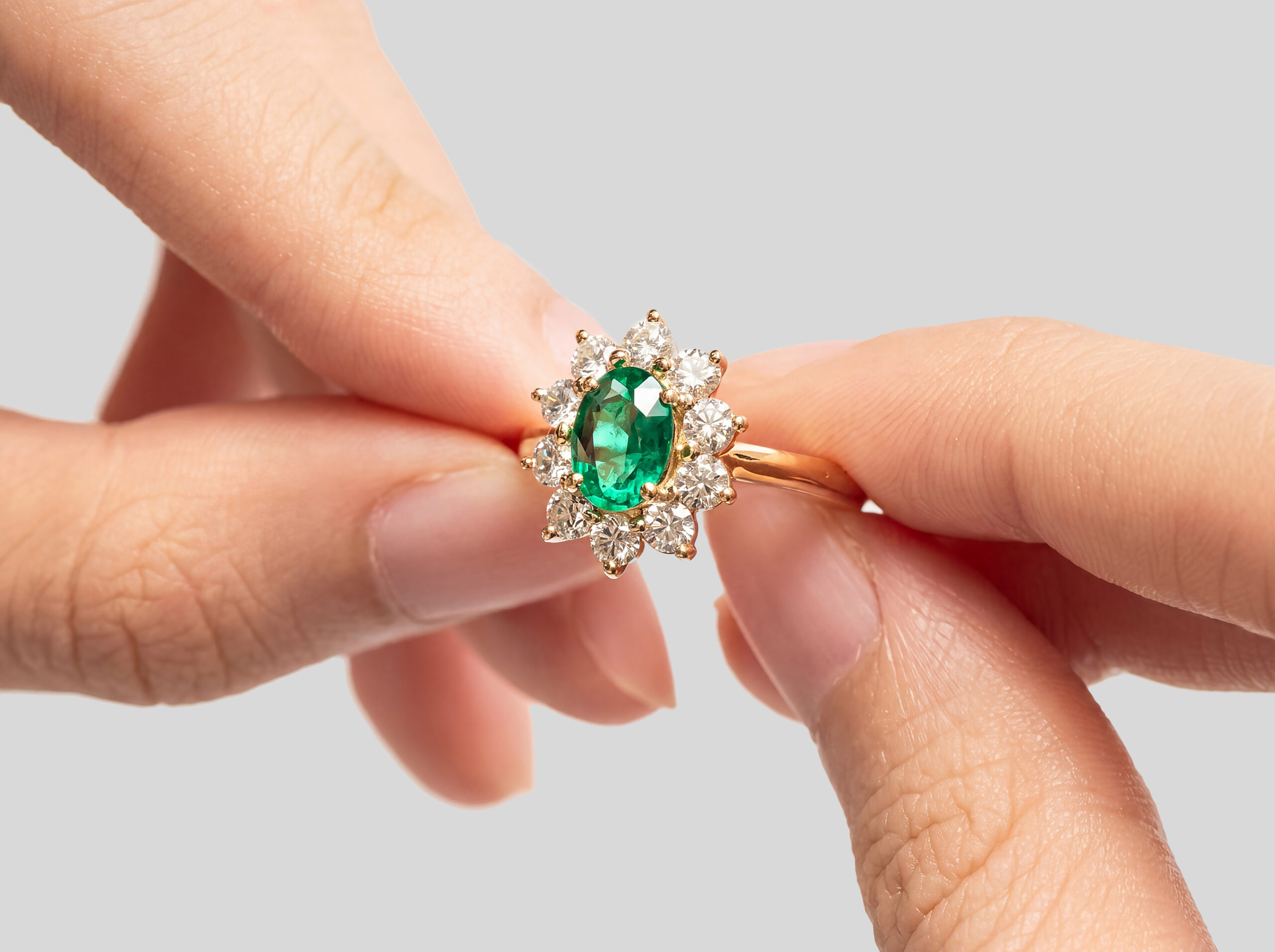
Production is entrusted to seventeen specialist artisans in France and Italy, who work according to the techniques required by the piece. We do not claim to do everything under one roof: a pavé setter and a bezel setter do not practise the same craft.
Before any dispatch, the piece undergoes an inspection: the stone’s alignment, the security of each individual prong, the absence of tool marks, ring size, and wearing comfort.
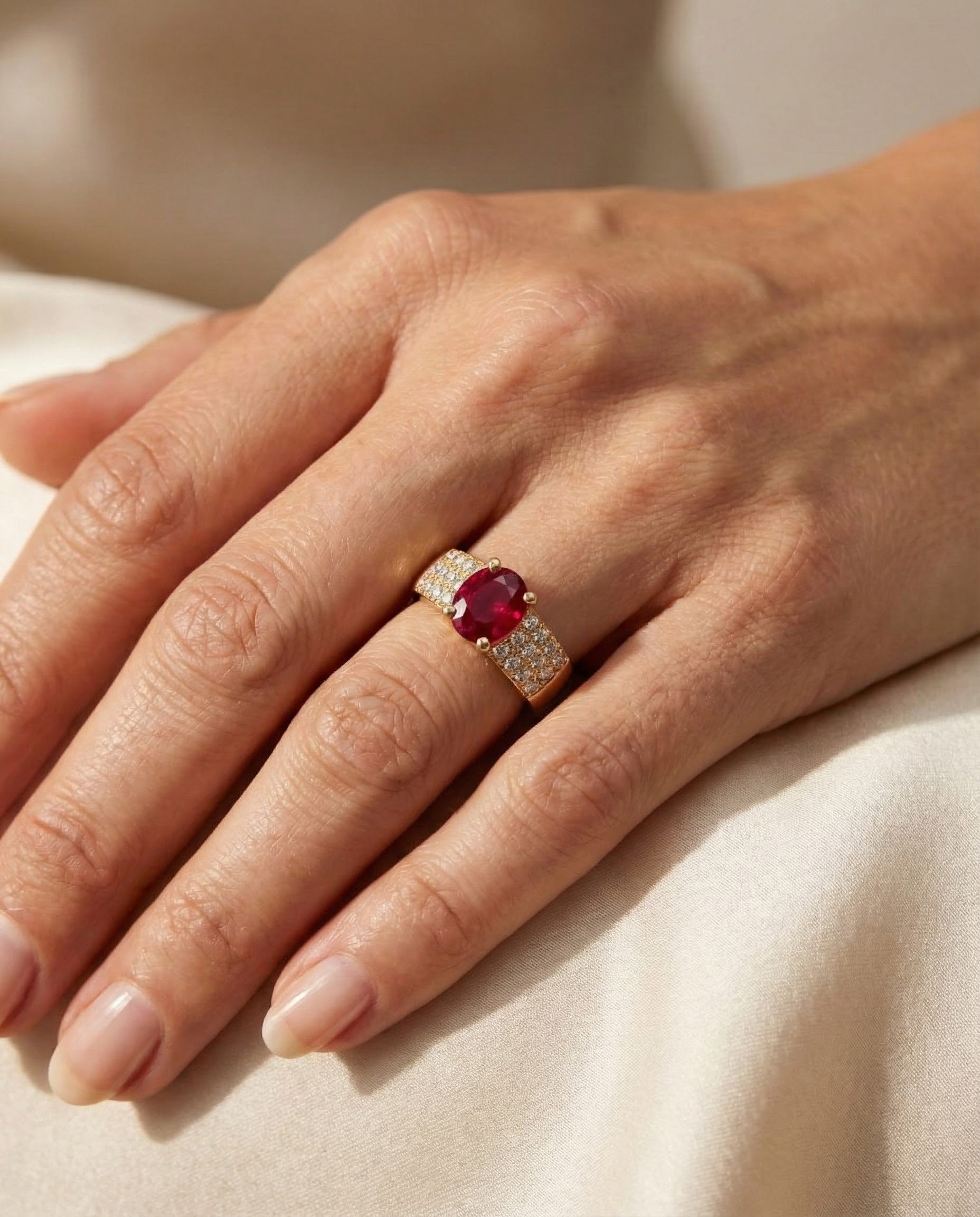
This inspection is the same regardless of the gem: a ruby engagement ring follows exactly the same protocol as a sapphire ring — the same hardness of 9, the same checks.
The jewel is then hand-delivered at the showroom, or shipped by secure, insured carrier, with its presentation box and the stone laboratory report. The first resizing is complimentary, and setting inspections are complimentary for life on our creations.
| Step | Where | Duration |
|---|---|---|
| The appointment | Paris, Angers or video consultation | 45 minutes |
| Stone approval — Paris stock | Showroom | Same day |
| Stone approval — bespoke sourcing | Sri Lanka, Thailand | A few weeks |
| Gouache or design simulation | Paris | 3 to 5 days |
| Design approval | Paris or remotely | Final adjustments |
| Workshop — wax, casting, setting, polishing | France and Italy | 3 to 5 working weeks |
| Delivery | Showroom or carrier | 6 to 8 weeks in total |
This timeline assumes a stone already in stock. Bespoke sourcing adds a few weeks — it is the only truly variable part of the project, and it is also what makes it possible to find exactly the colour sought, rather than a similar one.
A piece of advice we repeat for every delayed project: do not rush the design to meet a date. No one will remember the delay; everyone will remember the ring. If the deadline is too close, proposing with the stone alone in its case, then designing the ring together, remains the best solution.
Six to eight weeks between the first appointment and delivery: one to two weeks to approve the stone and finalise the design, then three to five working weeks in the workshop. A stone requiring bespoke sourcing extends this timeline by a few weeks.
Because the setting is built around the gemstone’s actual dimensions, to within a tenth of a millimetre. Starting with a drawing imposes three simultaneous constraints — shape, colour, budget — and leads to accepting a stone chosen by default.
If the desired stone is in the showroom, it can be approved in person, on the same day. Otherwise, we begin a search through our offices in Sri Lanka and Thailand: allow a few additional weeks for proposals to come through and be presented to you by video.
The gouache is hand-painted by our designer, at full scale, from the front, side and top, with its measurements. The design simulation is faster and often easier to read for those who find it difficult to visualise a drawing. Both establish the same parameters.
Until the design is approved, everything can be modified at no extra cost. Once the project has been sent to the workshop and the metal committed, any modification means remaking the piece.
It is the operation of securing the stones in the metal, by hand, under a binocular microscope, to within one hundredth of a millimetre. It is the most delicate stage: too tight, the stone is subjected to pressure; too loose, it will move within six months.
In France and Italy, by seventeen specialised artisans who work according to the techniques required by the piece. Sourcing and design are carried out in Paris. Each stage is entrusted to the workshop best qualified for it.
Share this post