Zambian or Colombian Emerald?
Bonnot Paris22/9/2026



Before it, engagement rings were mostly set with coloured stones. Blue sapphire, ruby and emerald had dominated since the Middle Ages, and no one would have thought a colourless stone the obvious choice.
This article recounts what has changed in the commissions we receive, colour by colour, and concludes with the one thing we have seen pass through the decades unchanged.
The rule of three months’ salary, the diamond as the obvious choice, white as the colour of commitment: all of this dates back to the post-war period, and to the campaign of a single mining group.
This is not a criticism of the diamond, which remains a magnificent stone and the hardest of all. It is a useful reminder when making a choice: the apparent obviousness of the white solitaire is a commercial construct, not a legacy. Feeling obliged to conform to it means obeying an advertisement that is three generations old.
The movement has reversed over the past ten years, driven by two forces. The first is the search for individuality : in a generation that documents everything, a ring no one else wears holds more value than a ring that conforms perfectly. The second is the arrival of laboratory-grown diamonds, chemically identical to natural diamonds and far less expensive, which has shifted the question — if white becomes accessible, rarity must be sought elsewhere.
If there were a moment to date the shift, this would be it. A colour we did not know how to name became, within a few years, the most sought-after family in our workshop.
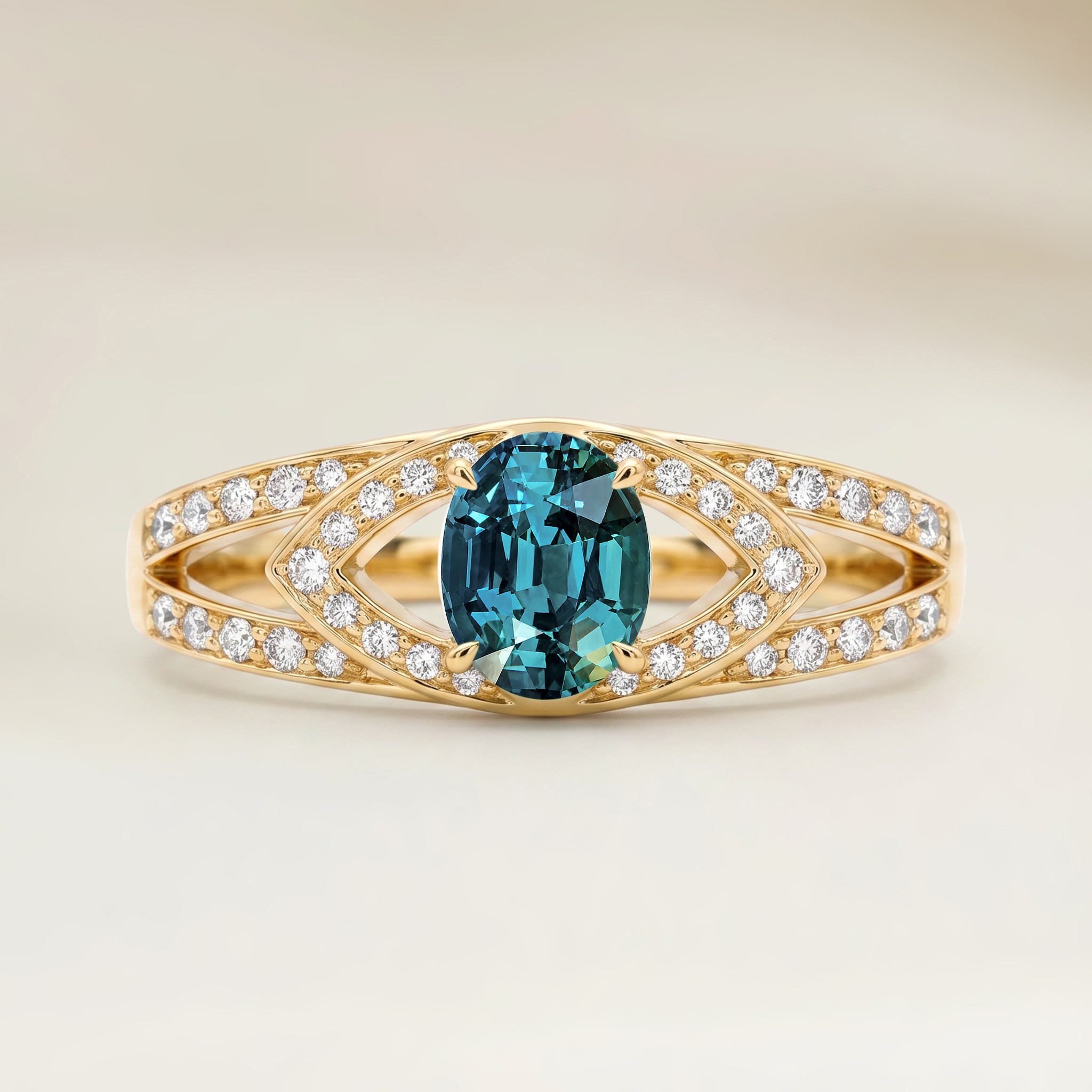
Teal lies between blue and green, without truly belonging to either, and its appearance changes with the lighting: bluer in a display case, greener by a window. That is precisely what appeals — a ring that cannot be summed up in one word.
Its success also stems from an economic reality few people know: at comparable quality and size, a teal sapphire engagement ring costs around 43% less per carat than a blue sapphire. It is not a less durable or more common stone — it is simply a less contested colour.
When people arrive naming the colour. Ten years ago, they would ask us for “a sapphire, but not blue”. Today, they ask for teal, often with a specific reference spotted online.
After teal come pinks and oranges. This is the clearest trend of the past two years, and it comes in two very different tiers.
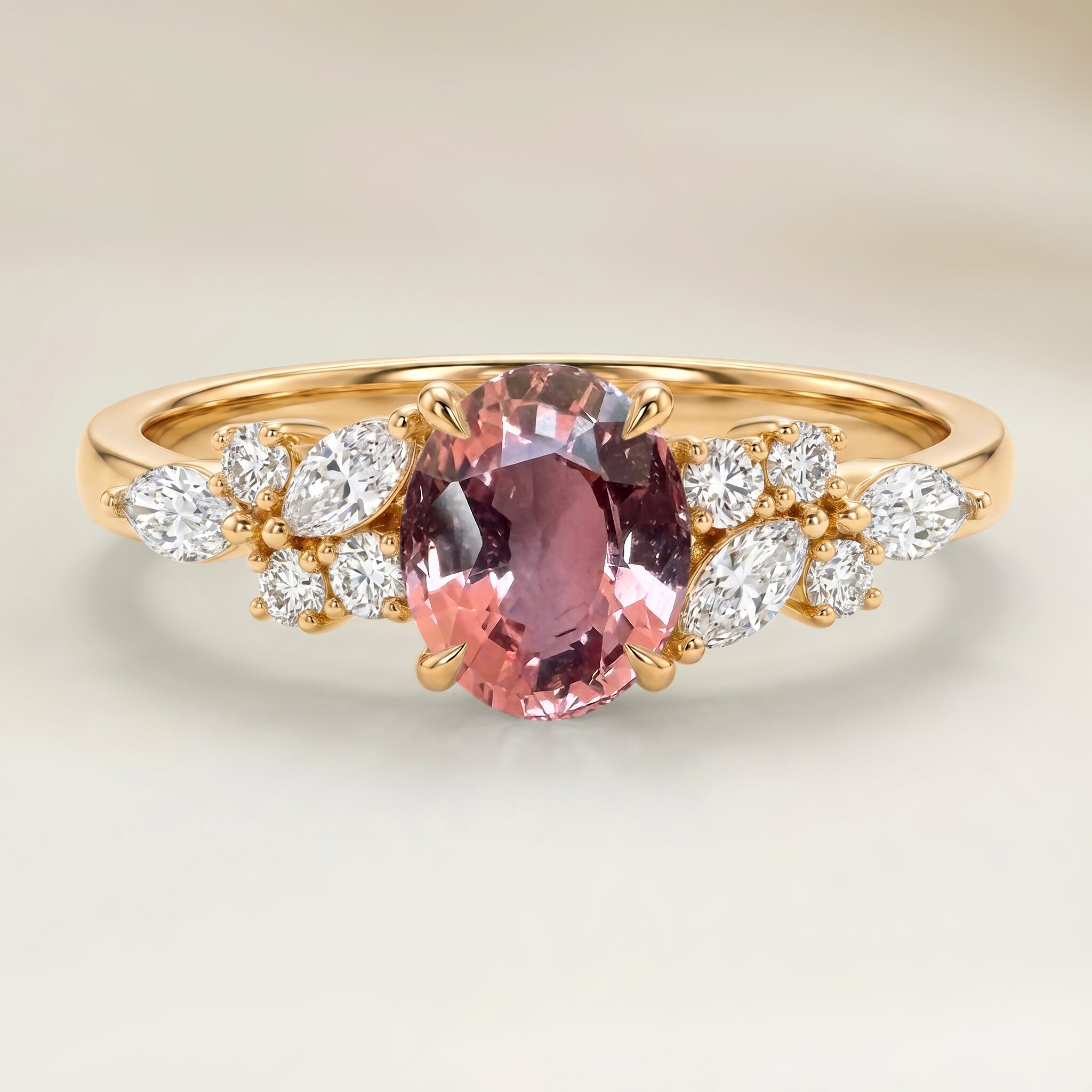
Equal parts pink and orange, and the only sapphire whose designation is controlled by a laboratory. A padparadscha sapphire engagement ring is valued first and foremost for its documented rarity. Floral setting — 8 880 €.
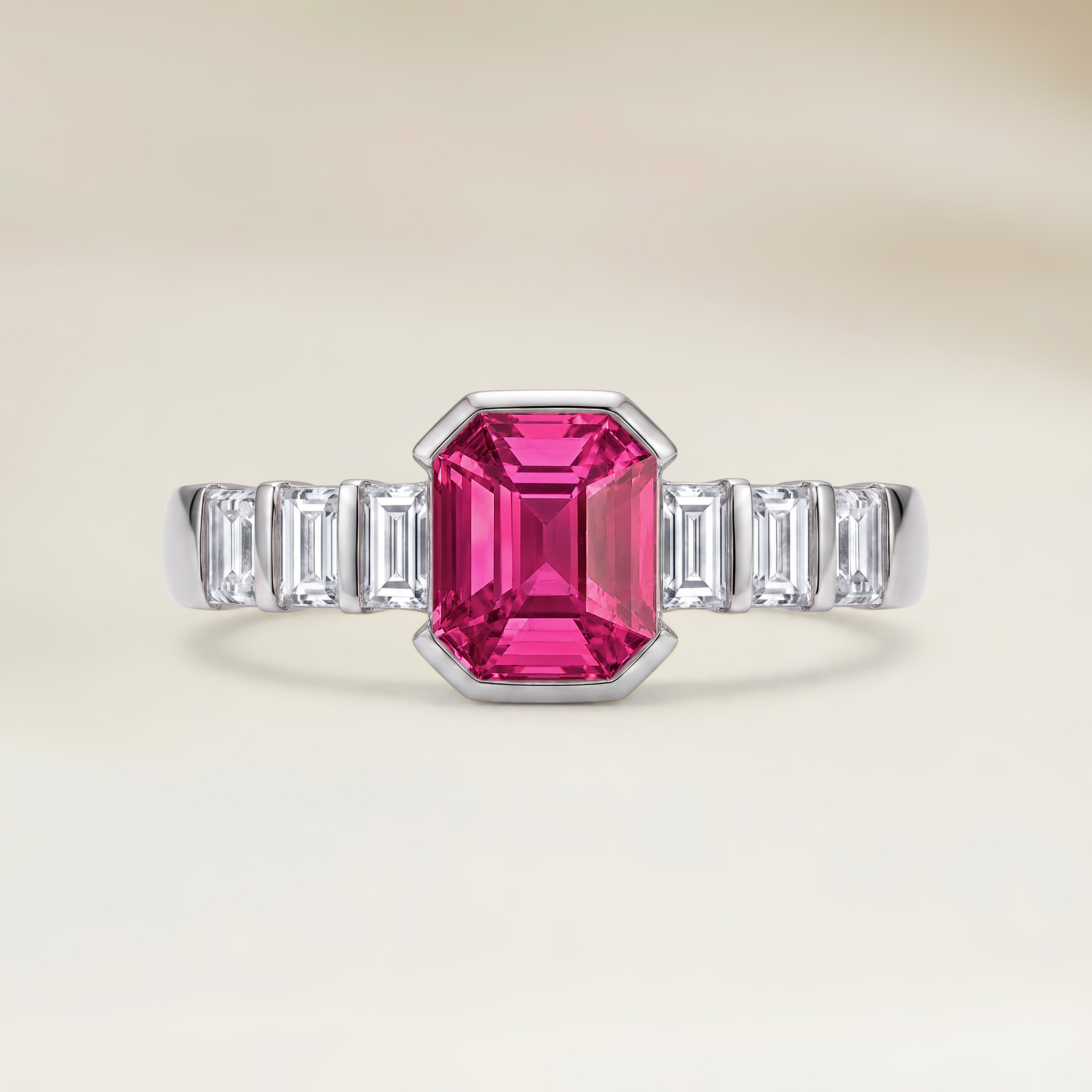
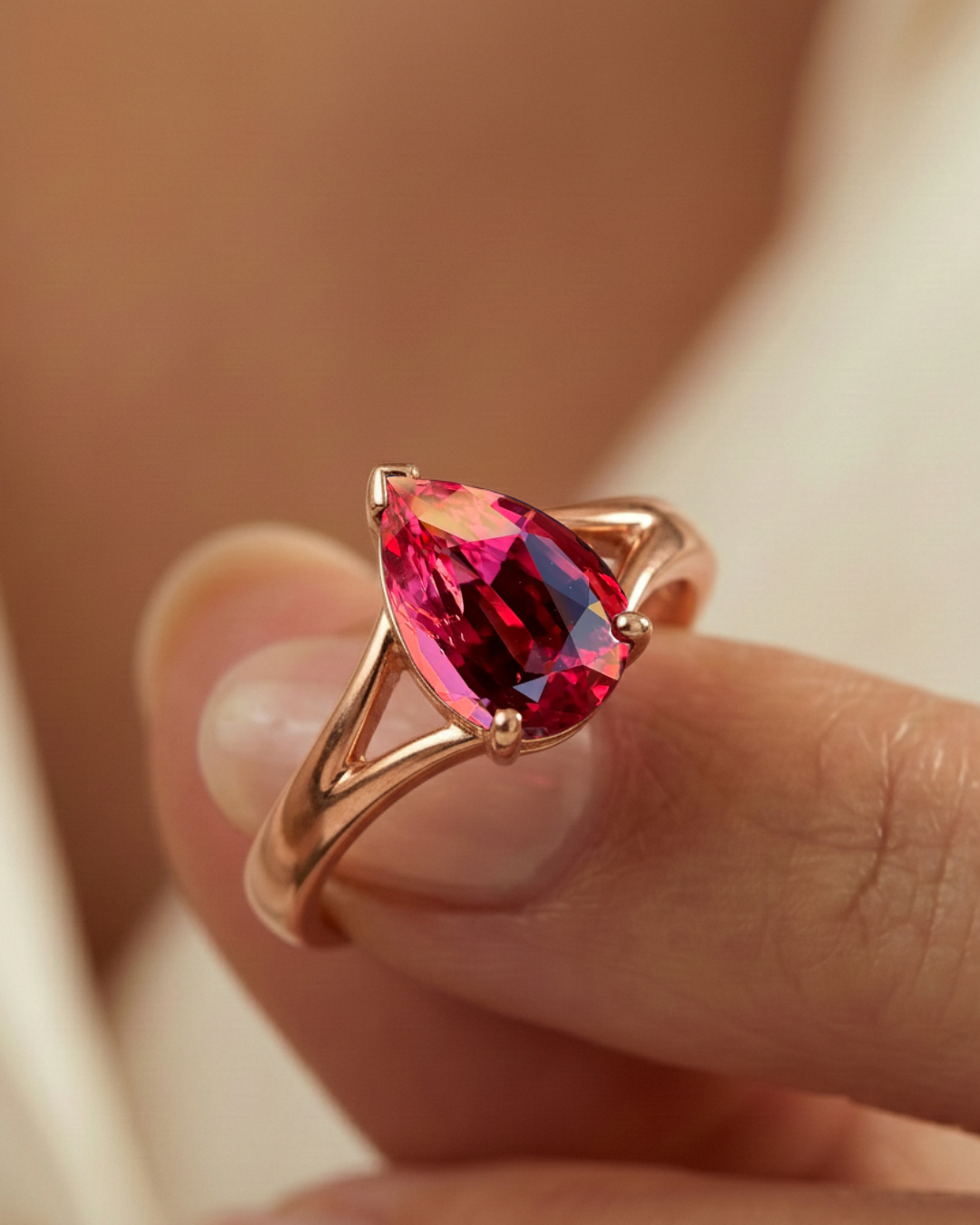
The same chromophore as ruby, simply less concentrated. A pink sapphire engagement ring offers a warm hue and a hardness of 9 for a fraction of the price of a red stone. 2.55 ct rectangle, platinum — 18 000 €.
What this contrast shows, and what rather neatly sums up the times: trend does not follow price. Pink is significantly more accessible per carat than padparadscha, yet both are advancing together. What is sought after is the warmth of the hue — not its label.
Blue has not disappeared — it has changed form. It is the most interesting phenomenon of the past five years, and it is visible in the cuts.
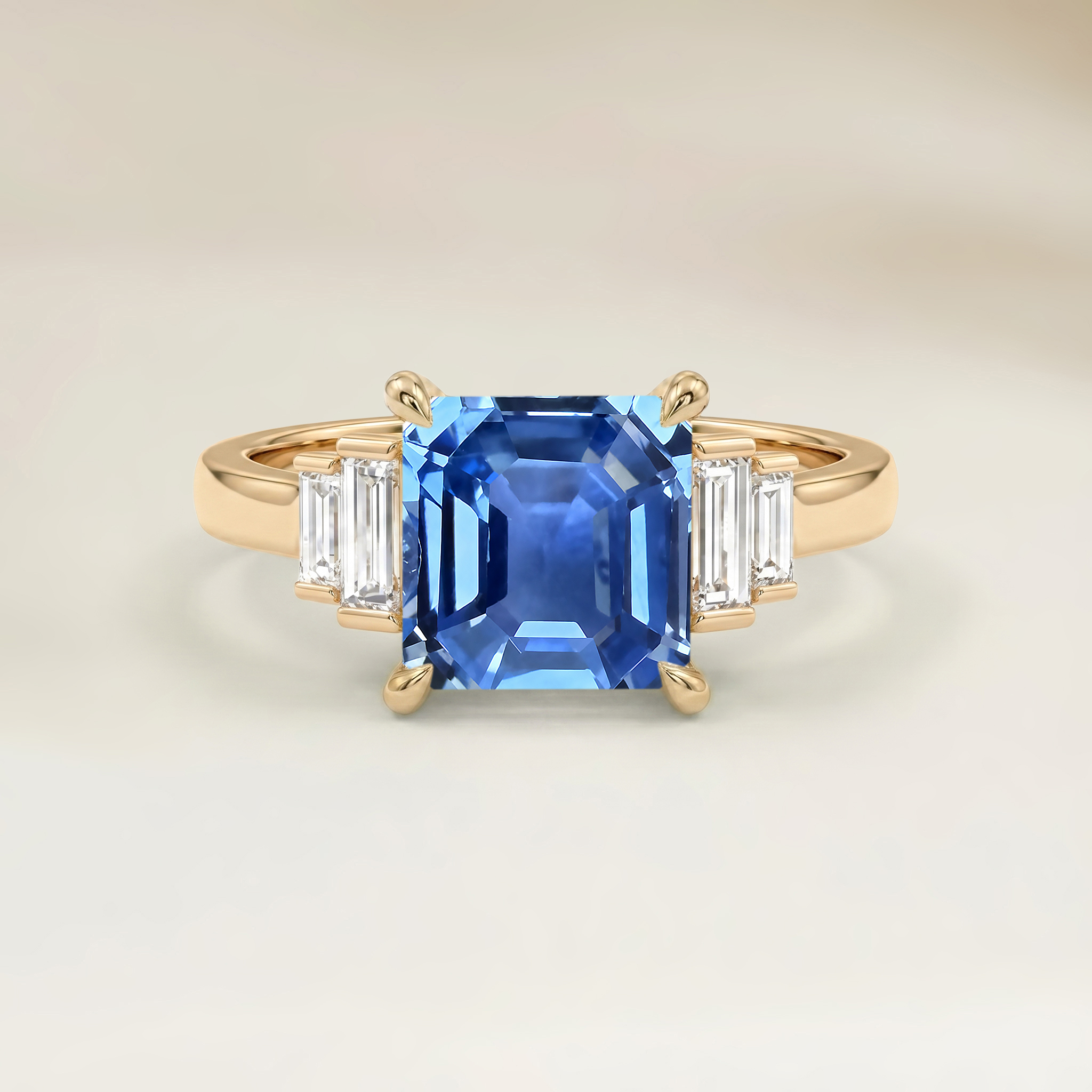
For decades, blue sapphires were set in oval or round cuts, often surrounded by diamonds, in white gold. Today, a blue sapphire engagement ring is increasingly commissioned in step cut — rectangular, square, elongated cushion — and in yellow gold.
The change is not merely aesthetic. The long step facets produce a mirror effect rather than sparkle, unfolding colour in broad planes. In other words: this cut enhances the hue, where brilliant cut enhances the light. In return, it requires impeccable transparency, as nothing can be hidden within it.
This is perhaps the most profound, and least spectacular, evolution: inclusions are no longer a flaw to be concealed.
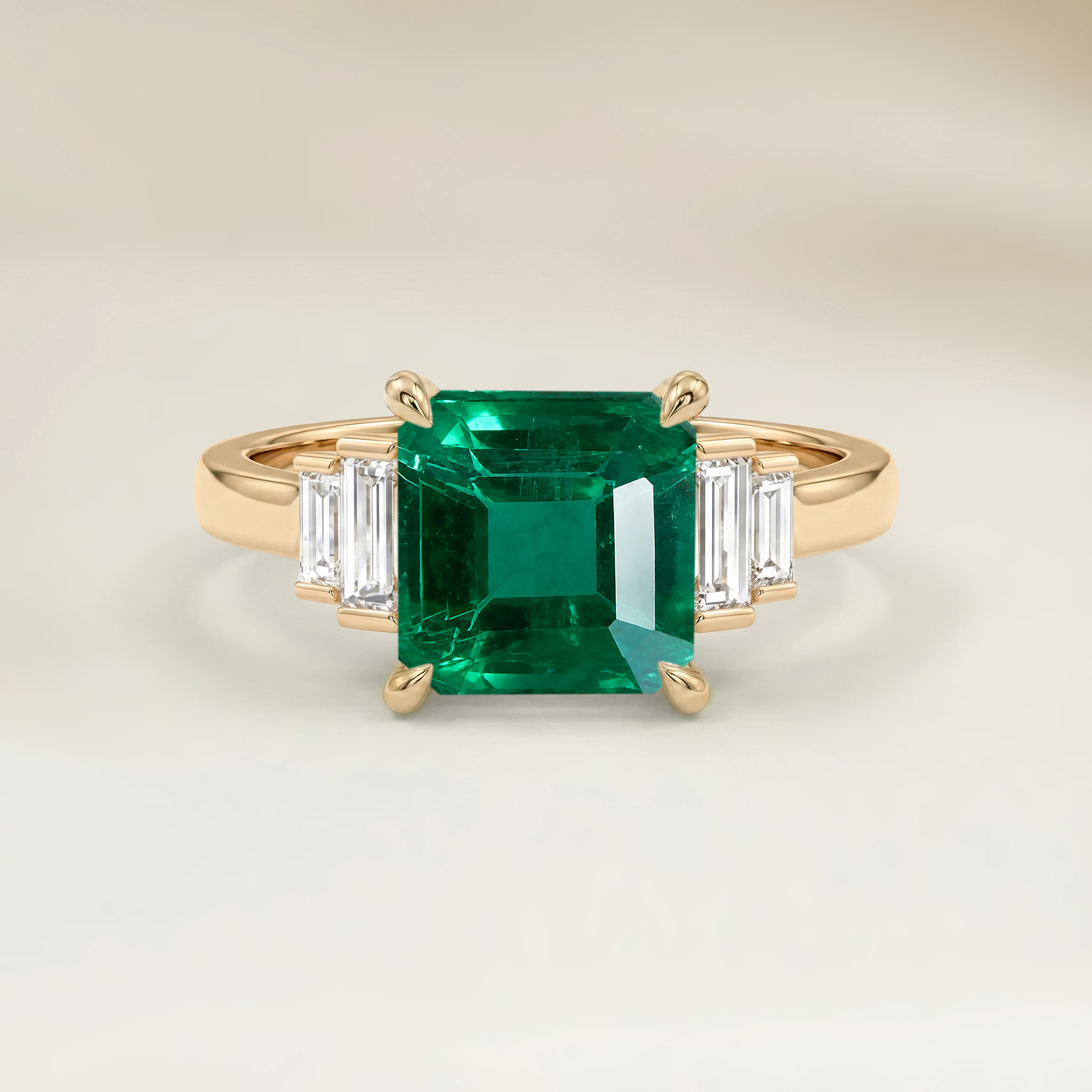
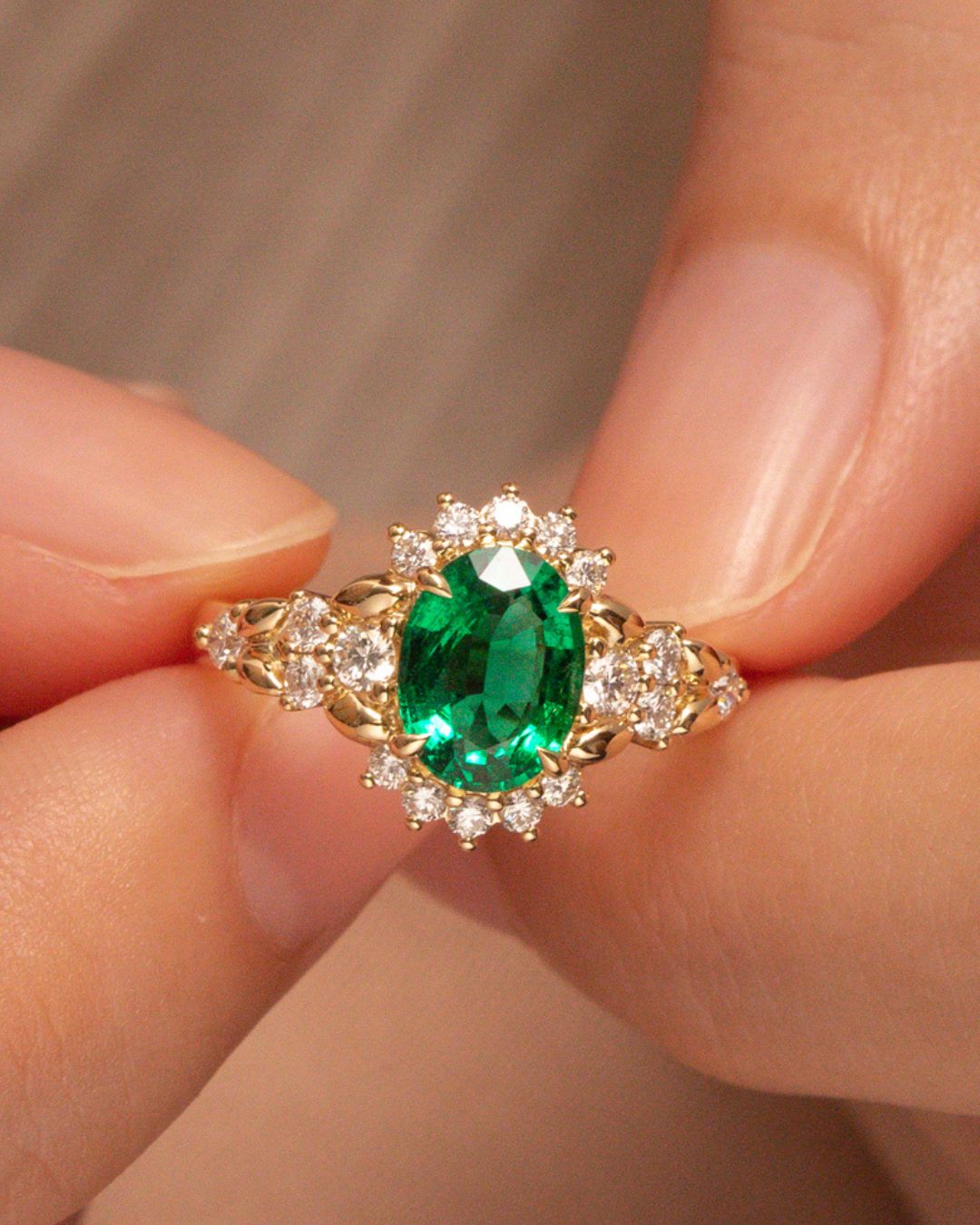
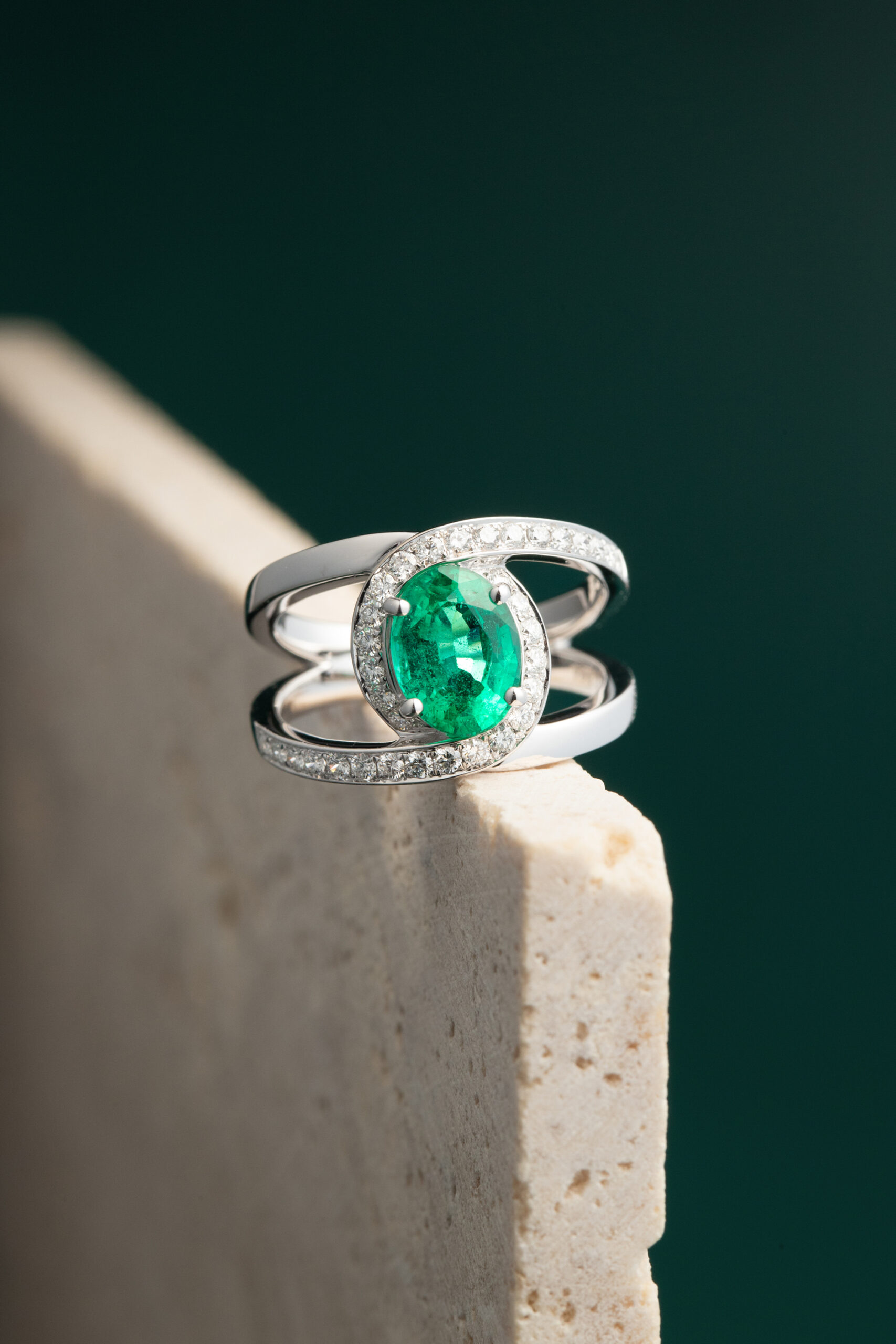
Twenty years ago, one sold an emerald while almost apologising for its garden. Today, this garden is presented for what it is: the norm for the species and proof of a natural origin. Emeralds form under turbulent geological conditions that almost always trap something — the most beautiful in the world have them.
This reversal has a practical consequence when buying. An emerald engagement ring is no longer judged by the cleanliness of its stone, but by the vibrancy of its green and the way its setting protects its edges. And a perfectly clean emerald at a low price has become, for the discerning eye, a warning sign rather than a bargain.
Beyond colours, four developments shape the commissions we receive.
| Before | Today | Why |
|---|---|---|
| White gold, platinum | 18-carat yellow gold | Warms coloured stones; no rhodium plating to renew. |
| Round, classic halo | Elongated shapes | More visible surface area for a given weight, and the finger appears longer. |
| High setting | Lowered setting | Suitable for everyday wear, does not catch, leaves room for a wedding band. |
| Solitaire ring | Toi&Moi, asymmetries | Two stones tell two trajectories rather than one. |
The return ofyellow gold deserves a mention, because it has a practical justification in addition to its aesthetic appeal: unlike white gold, it requires no rhodium plating to be redone every two or three years. A yellow gold ring ages without any surface maintenance.
One final remark, and it runs counter to the purpose of an article on trends: an engagement ring is probably the worst object to choose according to fashion.
The reason is mechanical. Settings go out of fashion—and can be reworked: we regularly take back rings from twenty or thirty years ago to redesign their setting around the original stone. The stone, on the other hand, does not change. It is therefore the stone that must be chosen without compromise, and the design that must adapt.
The only advice we have seen endure through the decades can be summed up in one sentence: with a given budget, choose colour over weight. A one-and-a-half-carat stone with a lively tone makes a far more beautiful ring than two dull carats—the difference in surface area is measured in tenths of a millimetre, while the difference in colour can be seen from three metres away.
“Would I still love this colour if no one else wore it?” If the answer is yes, the trend does not matter at all. If it is no, you need to look elsewhere —because fashions change, while the ring remains.
Since 1947, and an advertising campaign. Before then, engagement rings were predominantly set with coloured stones: blue sapphire, ruby and emerald had held sway since the Middle Ages. The white solitaire is a recent convention, not a tradition.
Teal sapphire, between blue and green: it is the most abundant family in our stock and the one that has most changed our orders. Blue remains the classic reference, but it is no longer the default choice.
Very much so. After two decades of white gold and platinum, 18-carat yellow gold once again dominates orders: it warms coloured stones, and requires no rhodium plating to be redone every two or three years.
Elongated shapes — oval, rectangle, elongated cushion — because they offer the greatest visible surface area for a given weight. Step cuts, long reserved for emeralds, have become established across all gemstone families: they unfold colour in broad planes.
No — in fact, the opposite proves true. Settings go out of fashion and can be reworked; the stone itself does not change. Choose colour without compromise and let the design adapt.
It is an old design, recently brought back into the spotlight. It has a practical advantage: two stones tell two stories rather than one, and the jewel does not compete with an engagement ring already being worn.
Increasingly so, and this may be the most profound change. The garden of inclusions in an emerald, once presented as a flaw to be concealed, is now embraced as the stone’s signature and proof of its natural origin.
Share this post