Zambian or Colombian Emerald?
Bonnot Paris22/9/2026
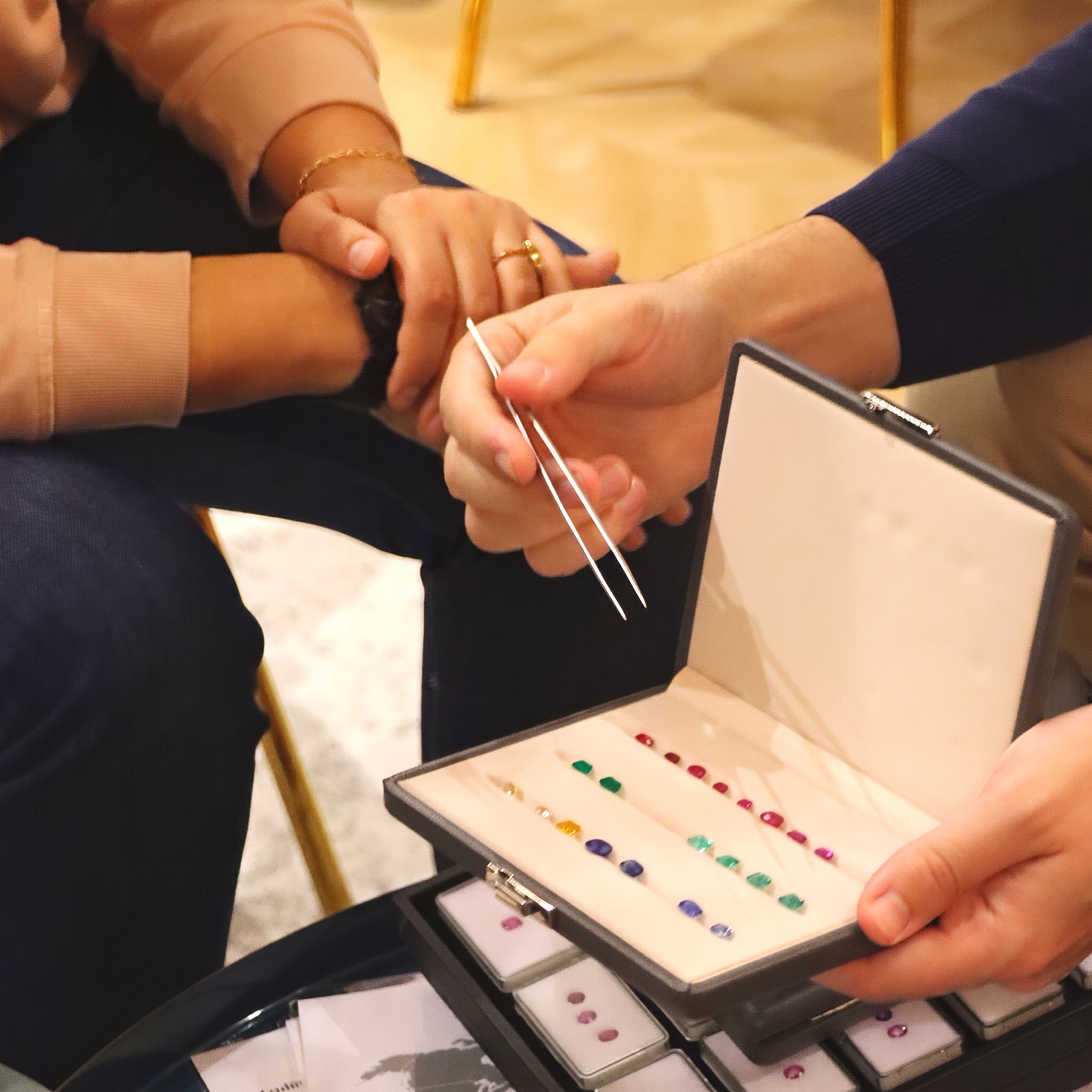



Someone arrives with an image of a ring found online, falls in love with a design, then looks for the gemstone that will fit inside it. Six weeks later, they have a stone chosen by default in a setting they no longer look at.
This guide sets out the reverse method — the one we follow in appointments. Six decisions, in a precise order. It does not describe the families one by one: our precious stones guide covers that, and is usefully read before this one.
Each decision narrows the scope of the next. Made in this order, they converge in forty-five minutes; made in reverse, they go in circles for weeks.
| Order | The decision | What it eliminates |
|---|---|---|
| 1 | Budget | Unaffordable families and sizes. |
| 2 | Daily wear | Hardness levels incompatible with one’s life. |
| 3 | Colour | Almost everything else. |
| 4 | Millimetres | Deep-cut stones, which carry invisible weight. |
| 5 | Treatments | What resells poorly and is difficult to maintain. |
| 6 | Shape and setting | Nothing — they adapt to what comes before. |
We start there because it is the constraint that eliminates options most quickly — and because discussing it openly from the outset avoids three unnecessary appointments.
| Creation starting from | Family | What this opens up |
|---|---|---|
| 1 700 € | Emerald | Less dense: at the same weight, it appears larger. |
| 2 500 € | Sapphire | Ten colours, hardness 9, the deepest stock. |
| 2 760 € | Tourmaline | The most millimetres on the finger for the price. |
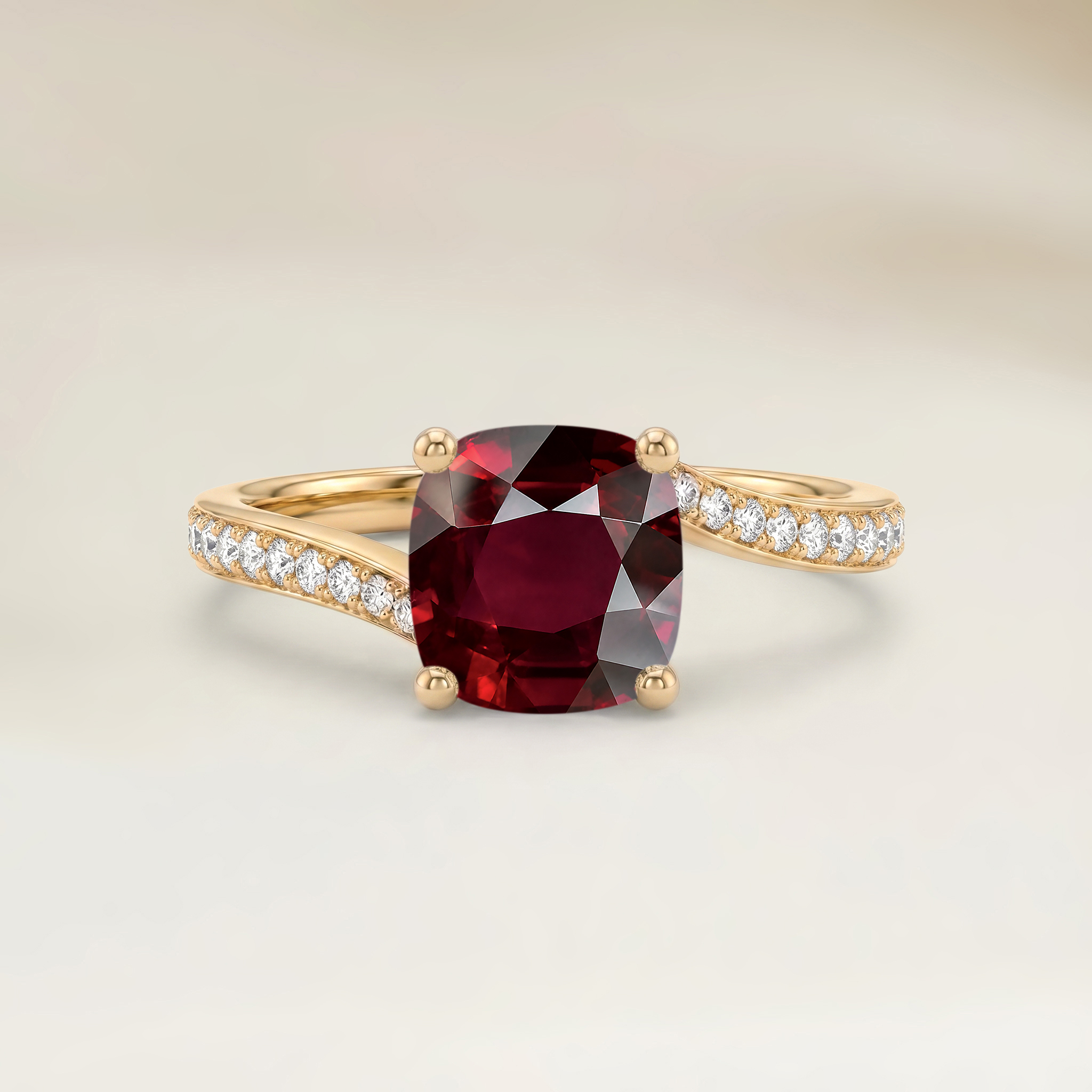
| 8 000 € | Ruby | The rarest of the four great gemstones beyond two carats. |
The case of red deserves to be addressed from the outset, because it often comes as a surprise: a ruby engagement ring starts at more than three times the price of a sapphire ring. This is not a commercial policy — in our stock, the median ruby price per carat is around nine times that of blue sapphire. If the budget is fixed and red is imperative, it is best to know this at the first appointment.
It comes from no tradition: it is an advertising invention from the 1930s, revived after the war to sell diamonds. The right budget is the one that does not put you in difficulty the following month.
The second question is more decisive than colour: how does the person who will wear this ring live? Manual work, sport, gardening, whether or not the ring is removed for housework.
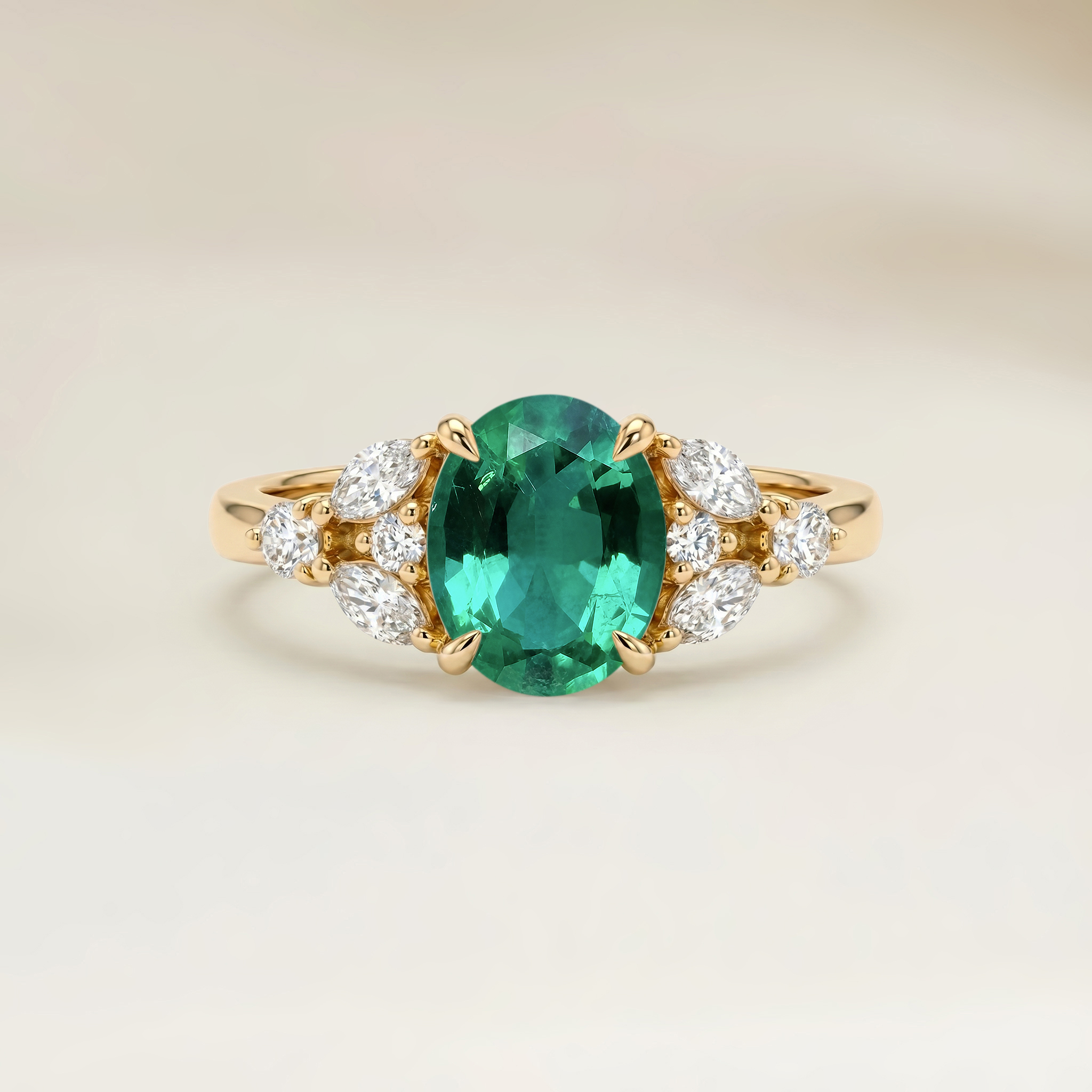
Above 8 on the Mohs scale — sapphire, ruby, spinel —, no constraints : the ring can be worn for thirty years without a thought. Below that, the setting must protect the stone’s edges, and it should be removed for gardening, sport and housework.
This does not disqualify anyone. An emerald engagement ring can be worn perfectly every day, provided that the bezel setting or low setting is decided at the design stage. The problem is never hardness: it is discovering it afterwards.
“Am I prepared to remove my ring to do the housework?” If the answer is no, stay above 8. This is not a judgment on softer stones, only on a way of life.
This is the decision that matters most and, paradoxically, the quickest: two stones placed side by side under the same light settle in three minutes what no photograph could have resolved in three weeks.
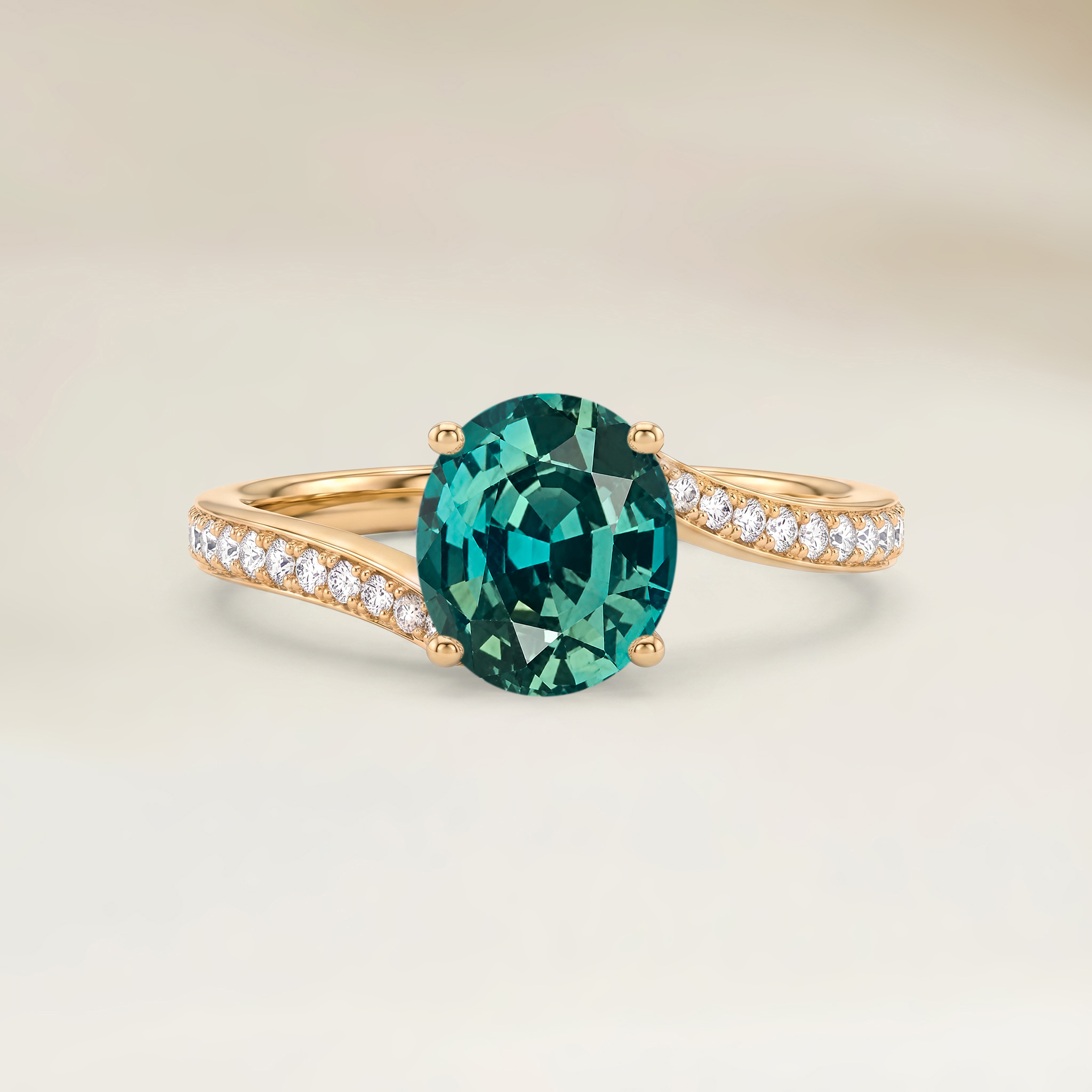
Between blue and green, its appearance changes with the lighting. A teal sapphire engagement ring offers a distinctive colour without the premium of classic blue — it is the most abundant family in our stock. 1.65 ct solitaire — 4 680 €.
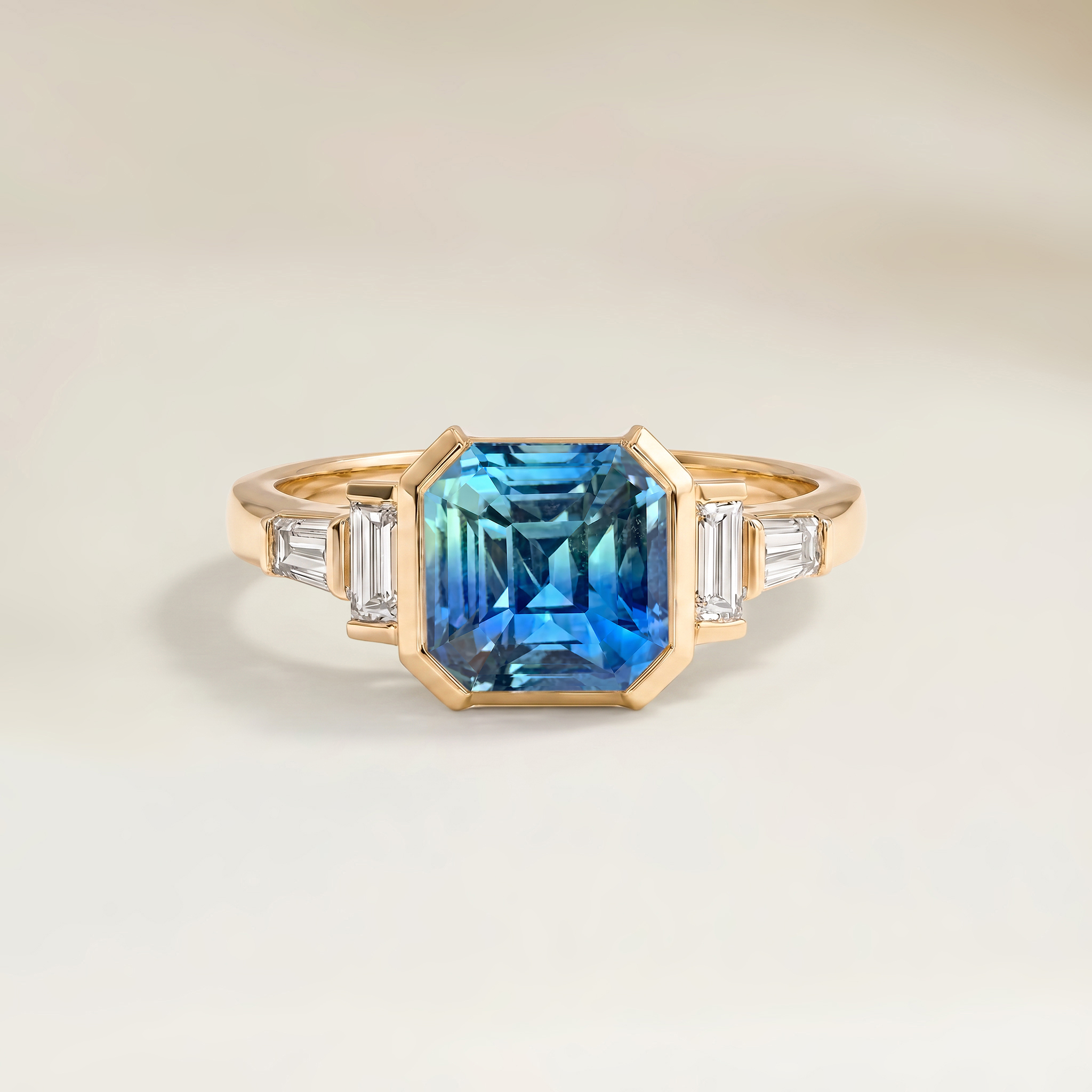
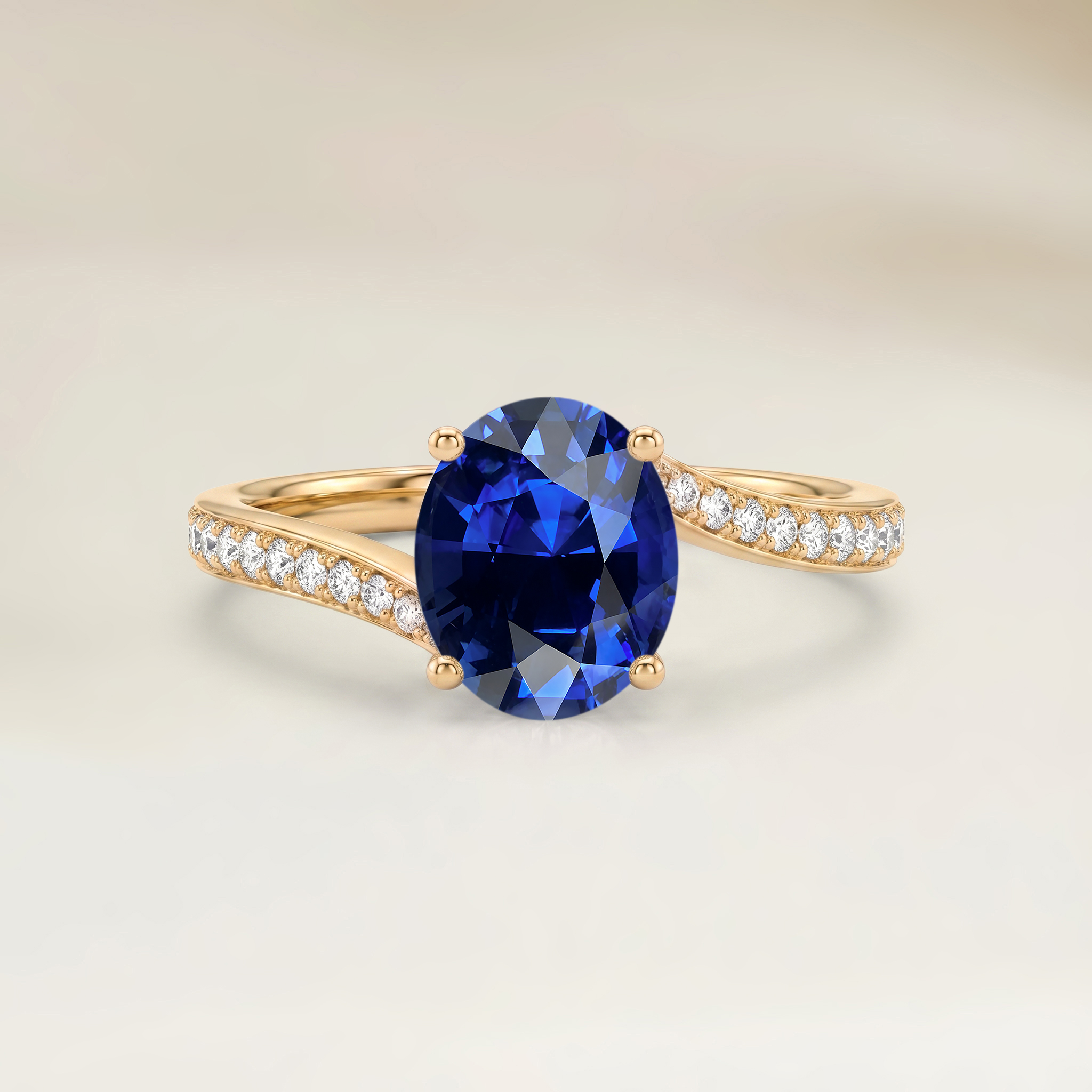
The most sought-after colour, and the one whose price rises fastest with weight. A blue sapphire engagement ring is priced partly for its reputation: at comparable quality, it costs nearly twice as much as a teal.
Three points of reference are enough to assess a colour, whatever the family. Saturation drives the price, long before weight. Tone determines readability: too dark, the stone loses its brilliance in the evening; too light, it loses its character. And performance in low light is decisive: a gem that collapses when daylight fades will not leave the drawer.
One misconception to discard: “the darker, the more expensive” is false. A greyish or overly dark blue loses a considerable share of its value, precisely because it loses its brilliance indoors.
No screen is calibrated like yours, and no studio photograph can reproduce how a stone behaves under different lighting conditions. Ask for a video, on a neutral hand, under several lights and without colour retouching.
The carat is a unit of weight, not size. This is the most costly misconception in the entire process of buying gemstones.
Two practical consequences. First, families cannot be compared in carats : corundum is denser than beryl, so at equal weight a sapphire appears smaller than an emerald. Then, two stones of the same weight can differ by more than one millimetre in diameter depending on their cutting depth — many are cut deep to retain carat weight, and therefore sell for more despite having the same visible surface area.
A few reference points taken from our own stock rather than a theoretical chart: a round stone of approximately 1 ct measures 5.6 to 6.7 mm in diameter; an 1.5 ct oval, from 6.7 × 5.1 to 8.4 × 6.6 mm; a 2 ct cushion, from 6.6 × 5.6 to 8.1 × 6.5 mm.
“What are the dimensions in millimetres?” A seller who does not provide them is selling you a number, not a gemstone. And the best presence-to-budget ratio lies, for most colours, between 1.4 and 1.8 carats — beyond that, the price per carat soars.
Almost all gemstones on the market have undergone some form of treatment. The question is therefore not “treated or not”, but which one.
| Treatment | Status | Consequence |
|---|---|---|
| Heating of corundum | Traditional, disclosed | Stable, with no effect on care. |
| Oiling of emerald | Traditional, disclosed | No ultrasound or steam; can be refreshed in the workshop. |
| Lead glass in ruby | To be avoided | Value collapses; the stone is fragile when exposed to acids and heat. |
| Coloured resins | To be avoided | They conceal fractures and age poorly. |
| Surface diffusion | To be avoided | Repolishing can remove the colour. |
Hence the only truly non-negotiable rule in this guide: an independent laboratory report, verifiable by its number. It says nothing about quality or value — it is a necessary condition, never a sufficient one — but without it, no price makes sense.
It comes last because it adapts to everything that precedes it. The setting is designed around the gemstone’s actual dimensions, never the other way around.
A few useful comparisons. Theoval offers the largest visible surface area for a given weight and elongates the finger. The cushion has presence but appears more compact. Step cuts — rectangular, square — create a mirror effect rather than sparkle, and require impeccable transparency: nothing can be hidden in them.
One question must be asked from the very first appointment, and it is a defining one: “will a wedding band sit against this ring?” If so, the setting height, the band profile and the shape of the basket change immediately. It is the decision people most regret making too late.
Budget, everyday wear, colour, millimetres, treatments, shape. Reversing this order is the most common mistake: choosing a setting before the stone means having to look for a gemstone that fits a design, instead of designing around a gemstone.
Our set creations start at €1,700 for emerald, €2,500 for sapphire and around €8,000 for ruby. Most projects fall between €5,000 and €8,000, for a 1 to 2 ct stone in a beautiful colour with a personalised setting.
Colour, always. With a given budget, a one-and-a-half-carat stone with a lively hue makes a far more beautiful ring than two dull carats: the difference in surface area is measured in tenths of a millimetre, while the difference in colour can be seen from three metres away.
Because the carat is a unit of weight. Corundum is denser than emerald: at equal weight, it appears smaller. And two stones of the same weight can differ by more than one millimetre depending on their cutting depth.
In daylight, then in the evening in a lit room. If the colour collapses when the light fades, the stone will never leave the drawer. Ask for a video under several lighting conditions, never a studio photograph.
Not if it is traditional and disclosed — corundum heating, emerald oiling. Lead-glass filling and coloured resins, on the other hand, drastically reduce the value and weaken the stone.
Last, once the stone has been chosen. Only one question should be asked from the very first appointment: will a wedding band sit alongside this ring? It changes the height of the setting and the profile of the band.
Share this post