Zambian or Colombian Emerald?
Bonnot Paris22/9/2026



As coloured-stone dealer-jewellers — and the only French house to be a member of the ICA —, each year we see hundreds of sapphires, both heated and unheated, from our offices in Sri Lanka and Bangkok. Here is what you truly need to know, without dogma or sales talk.
Sapphire heating is an extremely common process, carried out in a high-temperature furnace (up to approximately 1,800°C) or by traditional methods. It was already practised in Antiquity: Ceylonese merchants heated their stones long before the age of laboratories.
The aim is to improve what nature has left unfinished: inclusions, a lack of intensity or evenness of colour. Many blue sapphires are naturally too light or too dark to be set in jewellery — heating gives them the saturation they lacked. And this applies to the different colours of sapphire: purple sapphire, yellow and pink sapphires are also frequently heated.
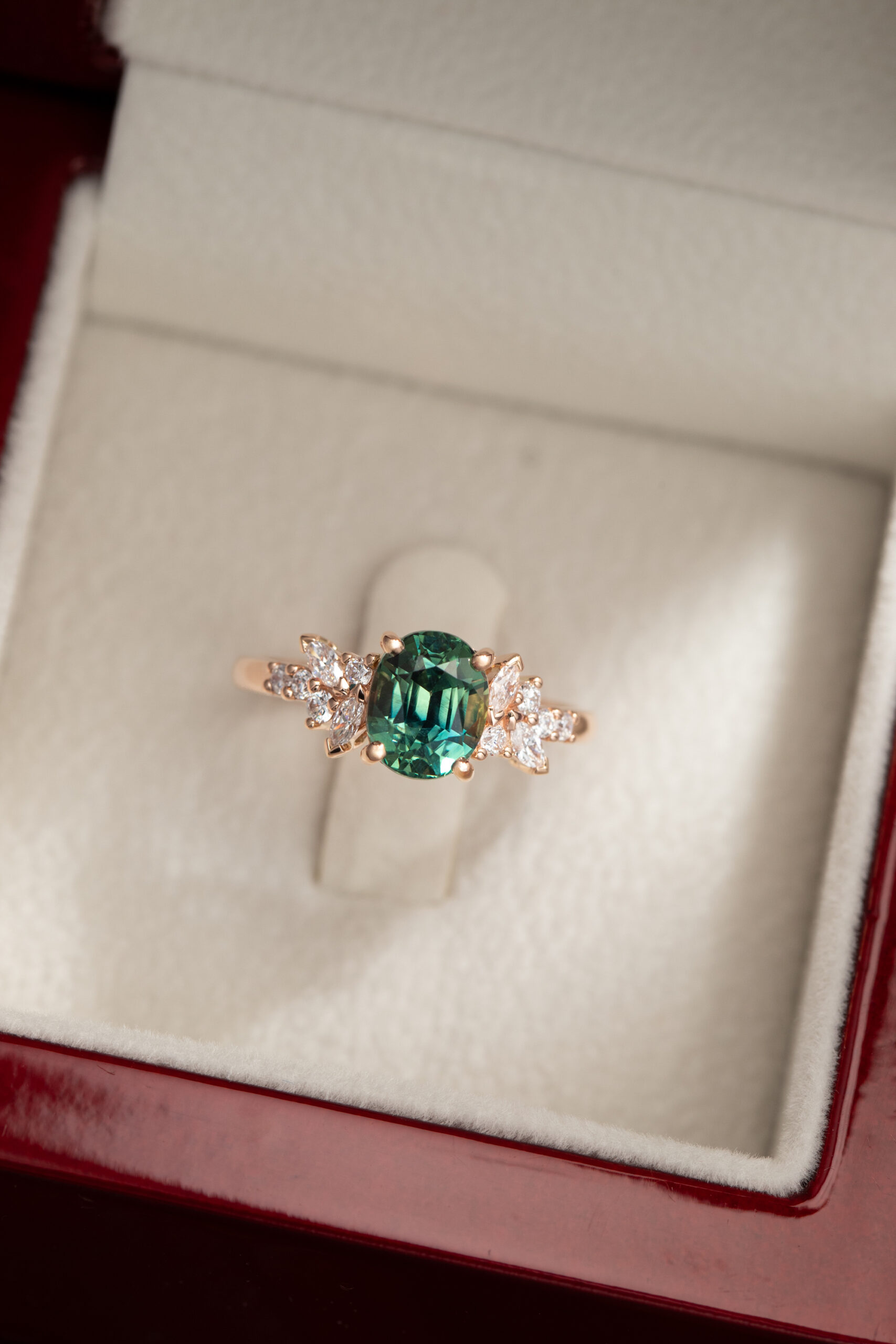
The vast majority of sapphires on the market are heated, whatever their origin. The unheated sapphire is the exception, not the rule — which is precisely what makes it rare and valuable. Certain origins are more often exempt, such as Montana or part of the production from Ceylon and Madagascar, including among our teal sapphires.
At equivalent quality, an unheated sapphire commands a premium of around 30 to 50% compared with its heated equivalent — it is rarer, and the market values this rarity. Some stones combine rare qualities: the unheated Burmese sapphire, of remarkable clarity and brilliance, or the unheated Ceylon sapphire, renowned for its quality and diversity of hues, command far higher premiums.
However, the price of a sapphire does not depend solely on heating: colour, clarity, weight and origin carry greater weight. A high-quality heated sapphire may very well be worth more than a less exceptional unheated sapphire.
An age-old, stable and declared treatment. A wider choice of shapes, sizes and colours, at more accessible prices. The pragmatic choice for a beautiful stone worn every day — with no compromise whatsoever on hardness or care.
The stone as the earth made it, certified “no heat”. Rarer, with a 30 to 50% premium and value better sustained over time. The choice of lovers of authenticity — provided you accept a longer search.
“Treatment” is an umbrella term covering very different realities. Simple heating is accepted everywhere; other processes alter the very nature of the stone. This is THE distinction to know before buying:
| Process | What it is | Status |
|---|---|---|
| Simple heating | Heat treatment without additives, stable and permanent. Intensifies colour and reduces the appearance of certain inclusions. Practised since Antiquity, including for prestigious Burmese rubies. | Accepted if declared |
| Diffusion (beryllium, titanium) | Heating with additives that penetrate the stone and create an artificial colour, sometimes only at the surface. The colour is no longer nature's own. | Not accepted at Bonnot |
| Filling (lead glass) | Injection of glass into fractures to conceal flaws and “strengthen” the stone. Improves its appearance but alters its physical properties — the stone is no longer intact. | Not accepted at Bonnot |
In all cases, the rule is the same: the treatment must be stated on the gemmological certificate — as required by French law. When declared, a treatment is not deception; when concealed, it is. Note: among the great precious stones, theemerald is the exception — it is not heated (its traditional treatments involve oiling, another subject).
Bonnot Paris offers heated and unheated sapphires with complete transparency, each stone accompanied by its independent laboratory certificate (SSEF, GRS, GIA, ICA…). However, we do not sell any stones treated by diffusion (beryllium, titanium) or lead glass filling : these processes have no place in an exceptional creation.
With the naked eye, it is impossible — even for a professional. Only a gemmological laboratory, by analysing the stone’s internal inclusions under a microscope, can distinguish a heated sapphire from an unheated sapphire : heat subtly alters certain inclusions (rutile “silk”, in particular), and these signs do not deceive a trained eye.
Colour, however, can reveal the journey taken: consider a pink sapphire that tended towards brown before treatment — after heating, the difference is spectacular. That is the whole point of the process… and why the mention on the certificate is essential. To explore authentication further: our guide to recognising a sapphire.
A seller announces “unheated” without an independent laboratory certificate? The claim has no value. The 30 to 50% premium for unheated stones should only be paid with supporting proof — “no heat” or “NH” in black and white on the report.
Buying an unheated sapphire has genuine advantages — provided the stone is naturally beautiful, of course. Lovers of authenticity prefer a gem untouched by the hand of man; collectors seek rarity and value that is better sustained over time. But an unheated sapphire ring may require a long search to find THE stone.
For creating rings and jewellery, many turn to heated sapphires, for their price or simply because they offer far more choice in shapes, sizes and colours. And there is no compromise involved: the same hardness of 9/10, the same brilliance, the same jewellery care — heating makes no difference to the everyday wear of your ring.
To see the result once the stone has been set, explore our sapphire engagement rings : each model specifies whether the stone is heated or not, with certificate to support it — and our workshop can set the stone of your choice in a bespoke ring.
Do not start with “heated or unheated”: start with the colour that moves you, in natural light. If you like two stones equally, the question of treatment — and the premium — becomes a simple budget decision. A beautiful heated stone will always be worth more than an unremarkable unheated one.
A sapphire natural sapphire whose colour and clarity have been improved through high-temperature heat treatment (up to approximately 1,800°C). An ancient practice, stable and permanent, already used in Antiquity. The vast majority of sapphires on the market are heated.
Yes — simple heating, without additives, is internationally accepted provided it is declared on the certificate (a legal requirement in France). It should be distinguished from diffusion (beryllium, titanium) and lead-glass filling, which alter the nature of the stone: we refuse to sell any stone that has undergone these treatments.
At equivalent quality, yes: expect a premium of around 30 to 50%, more for rare origins (Burma, Ceylon). But colour, clarity, weight and origin matter more than heating: an exceptional heated sapphire surpasses an average unheated one. Find all the benchmarks in our guide to sapphire prices.
It is impossible to tell with the naked eye: only a gemmological laboratory can determine this by examining the internal inclusions. Request an independent certificate (SSEF, GRS, GIA, ICA, etc.) — the mention “no heat”/“NH” is definitive. Without a certificate, “unheated” is merely a sales argument.
Both are excellent choices: heated stones offer more choice at gentler prices, while unheated stones offer rarity and authenticity. Hardness and care are identical. Compare both in our sapphire engagement rings — each model states its stone’s treatment, with certificate to support it.
Share this post