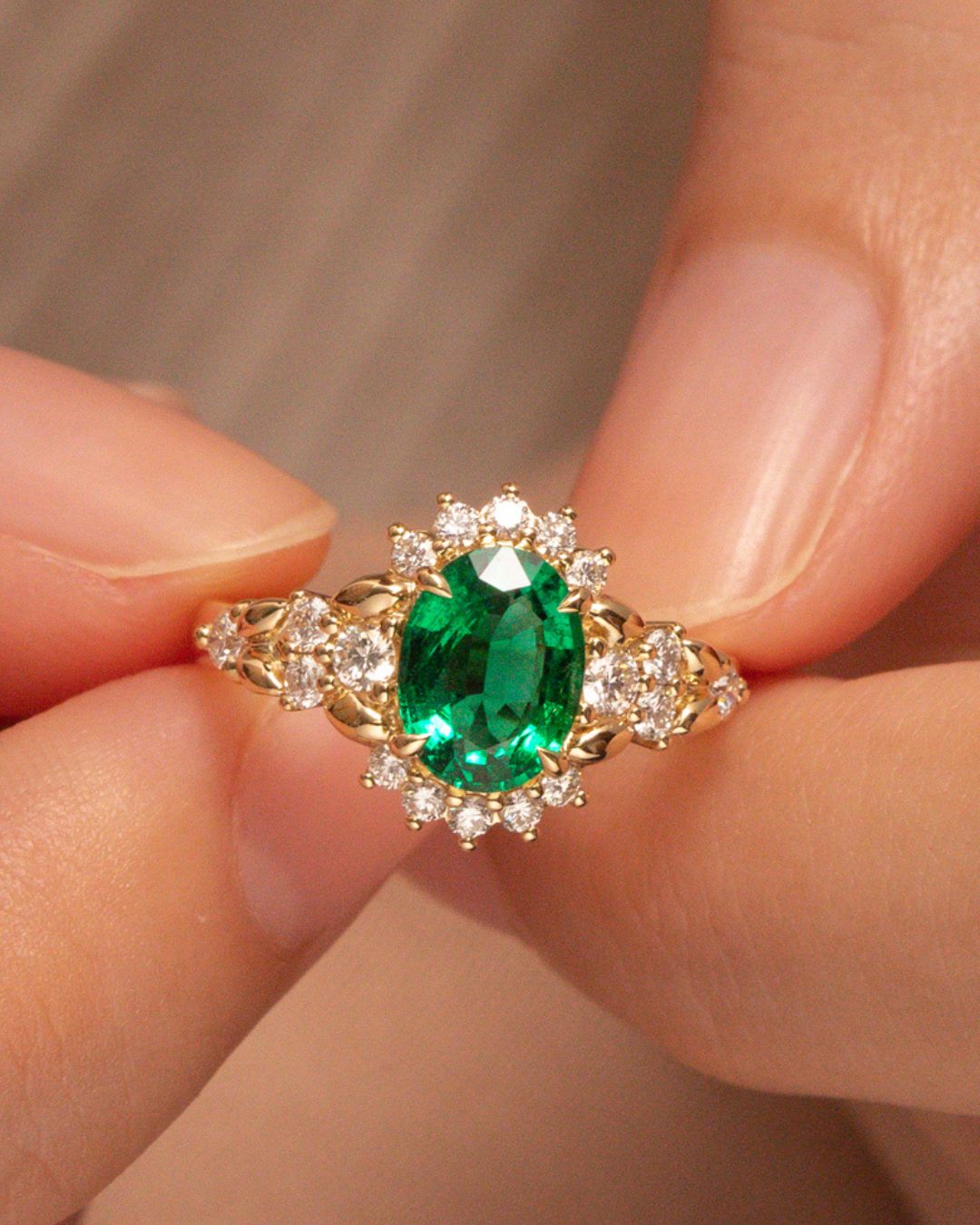
Zambian or Colombian Emerald?
Bonnot Paris22/9/2026



The traditional jewellery chain involves three to five intermediaries between the lapidary who cuts the gemstone and the person who wears it. Each takes a margin, and each has good reasons for doing so. In the end, the stone you pay for is smaller than your budget would have allowed.
We built the maison the other way around: buying the stone where it is traded, without intermediaries, then designing and having the ring made around it. This article explains how it really works, step by step — including what we do not do ourselves.
A jewellery brand sells a design, available in a few stone sizes. The design exists before the gemstone, and it is the gemstone that must conform to it. The process is efficient and entirely legitimate — it produces very well-made jewellery.
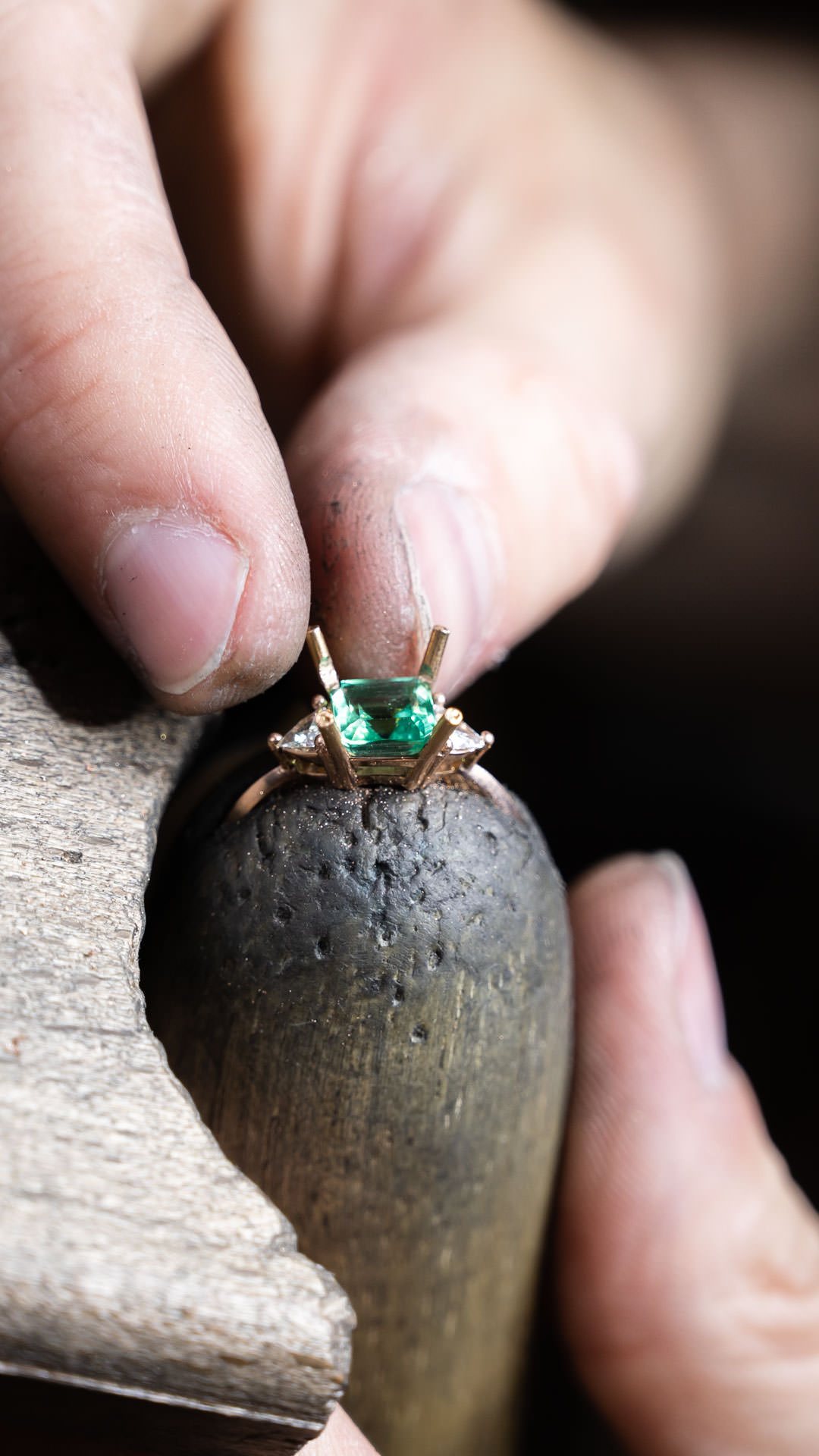
An artisan works in the reverse order. The stone comes first, with its dimensions, proportions and character. The design comes afterwards, and is tailored to it. This requires access to a real stock of gemstones rather than a catalogue of settings — precisely what the dealer's profession provides.
Several hundred natural stones available, with the possibility of sourcing one according to your criteria.
Purchased directly from lapidaries, without intermediaries. This short supply chain explains the stone sizes available for a given budget.
The measurements of each ring remain in the workshop. A wedding band designed five years later will fit to the millimetre.
Resizing, setting inspection, polishing: a handmade piece can be repaired, transformed and passed on.
We buy where each stone family is best traded: sapphires and East African stones in Sri Lanka, rubies and tourmalines in Bangkok, Zambian emeralds in Jaipur. Our Beruwala office overlooks the main street of the gemstone market.
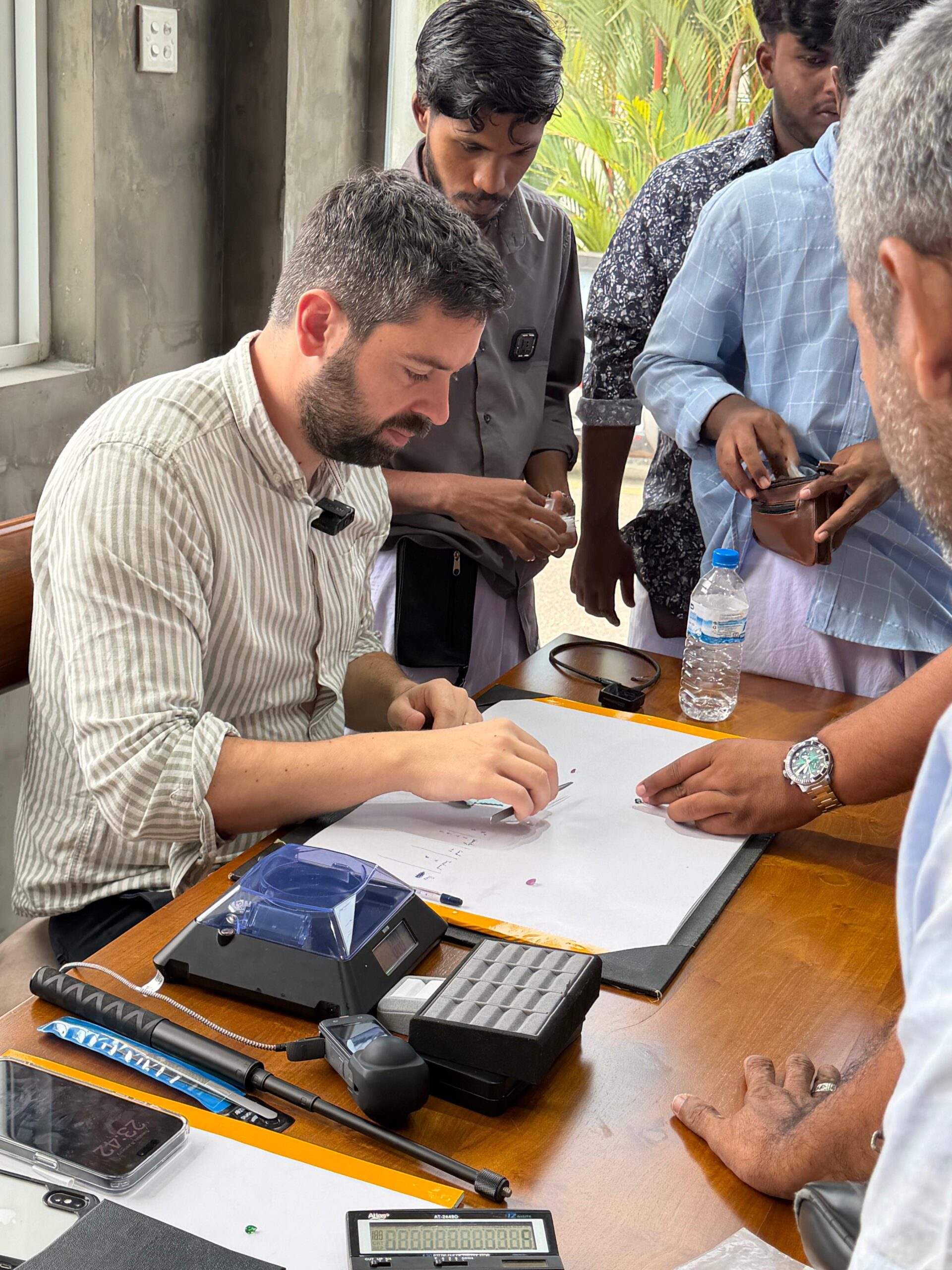
The sorting happens quickly, and often without opening the packet : a stone that does not deserve a second look can be recognised through its packaging. This is what makes it possible to see thousands without spending the week on it. Those that remain are checked with callipers and scales — we never rely on the figures quoted.
One distinctive feature of the way we buy is worth mentioning, because it is unusual: the agreement concerns the certificate. We agree on a price and on what the laboratory report must state. The seller bears the cost. If the laboratory does not confirm it, the sale is void — and payment is made only afterwards.
Bonnot Paris is the only French jeweller to be a member of theInternational Colored Gemstone Association, the international association of coloured-stone dealers. It is not a quality label: it signifies membership of the purchasing chain, upstream from jewellery-making. See our sourcing live →
Once the stone has been chosen, our designers propose several directions. First, hand-drawn gouaches — the traditional jeweller’s technique, a scale painting that shows the ring as it will be worn. Then a 3D rendering, which makes it possible to check the volumes, the height of the setting and the fit of the wedding band.
The two stages complement one another. The gouache provides the intention and emotion; the 3D provides the measurements and constraints. The back-and-forth continues until the final quote is approved — there is no limit to the number of proposals, and nothing is committed before your approval.

Let us be frank, because many houses keep things vague: we do not make everything ourselves. Sourcing and design are done in Paris. Manufacturing is entrusted to specialised craftspeople in France and Italy — seventeen artisans are involved at the various stages, according to the techniques required by the piece.
This is how high jewellery has always worked, and it is what guarantees the standard: a calibrated-stone setter, a polisher and a caster do not do the same job. Trying to do everything under one roof means accepting mediocrity everywhere.
| Stage | What happens there |
|---|---|
| The wax | The model is sculpted or printed, then refined by hand. This is where the volumes are properly assessed. |
| Casting | Recycled and traceable 750‰ gold replaces the wax. Each ring is cast individually. |
| Setting | The most delicate stage. Prongs, bezel, grain or channel settings: the stone is secured in the metal without play or tension. |
| Polishing | The finish that determines the metal’s lustre — and the only moment when an edge can still be corrected. |
The setting inspection is offered for life — we recommend it every two years, or after a significant impact. The first resizing is also complimentary. Polishing and restoration are carried out on request, depending on the condition of the piece.
Three requests come up time and again, and none has an answer in a catalogue.
Transform a family jewel. It is one of our most frequent, and most moving, projects. We examine the stone, check its condition — the prongs, surface cracks, wear to the setting — and propose a design suited to its actual dimensions. A 1950s cluster ring becomes a contemporary ring without the stone ever leaving the family.
Reuse your gold. The gold from your existing pieces can be melted down and reused in the new creation. This does not dramatically reduce the bill — gold is not the main cost — but continuity of material is meaningful to many people.
Engrave. Initials, date, short message: engraving is done on the band, on the inside, without ever touching the stone.
Our creations are there for that. Tell us which piece has stayed with you, and we will build on its codes — the shape of the setting, the type of setting, the choice of stone. We never reproduce identically : we transpose the spirit of the design into a piece that is uniquely yours. View all our creations →
Our direct sourcing explains what we do best. Sri Lanka gives us sapphires, Jaipur and Colombia emeralds: these are the two families in which we have the greatest depth of stock, and therefore the most freedom for a bespoke project.
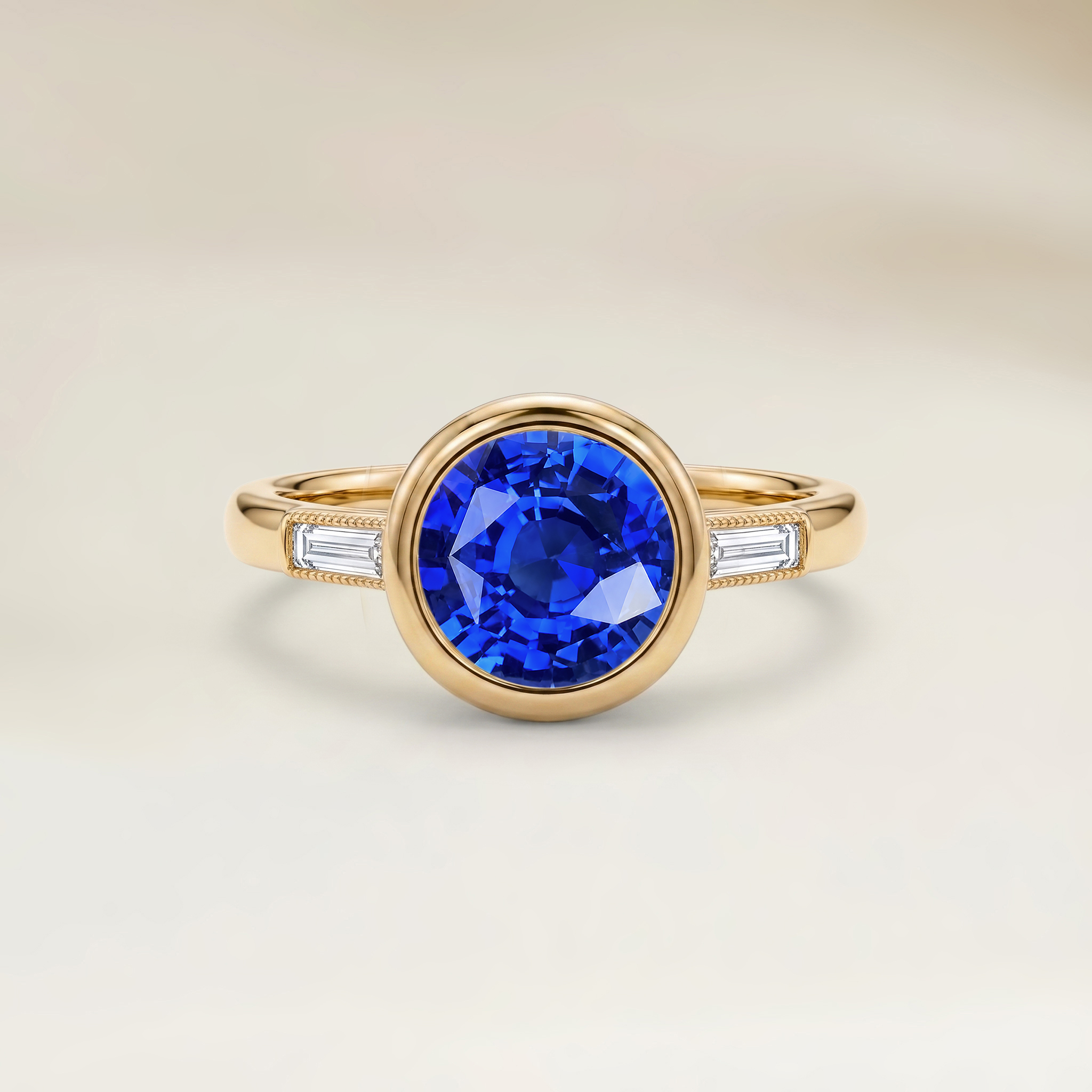
458 stones in stock
Blue sapphire 1.20 ct · €5,640
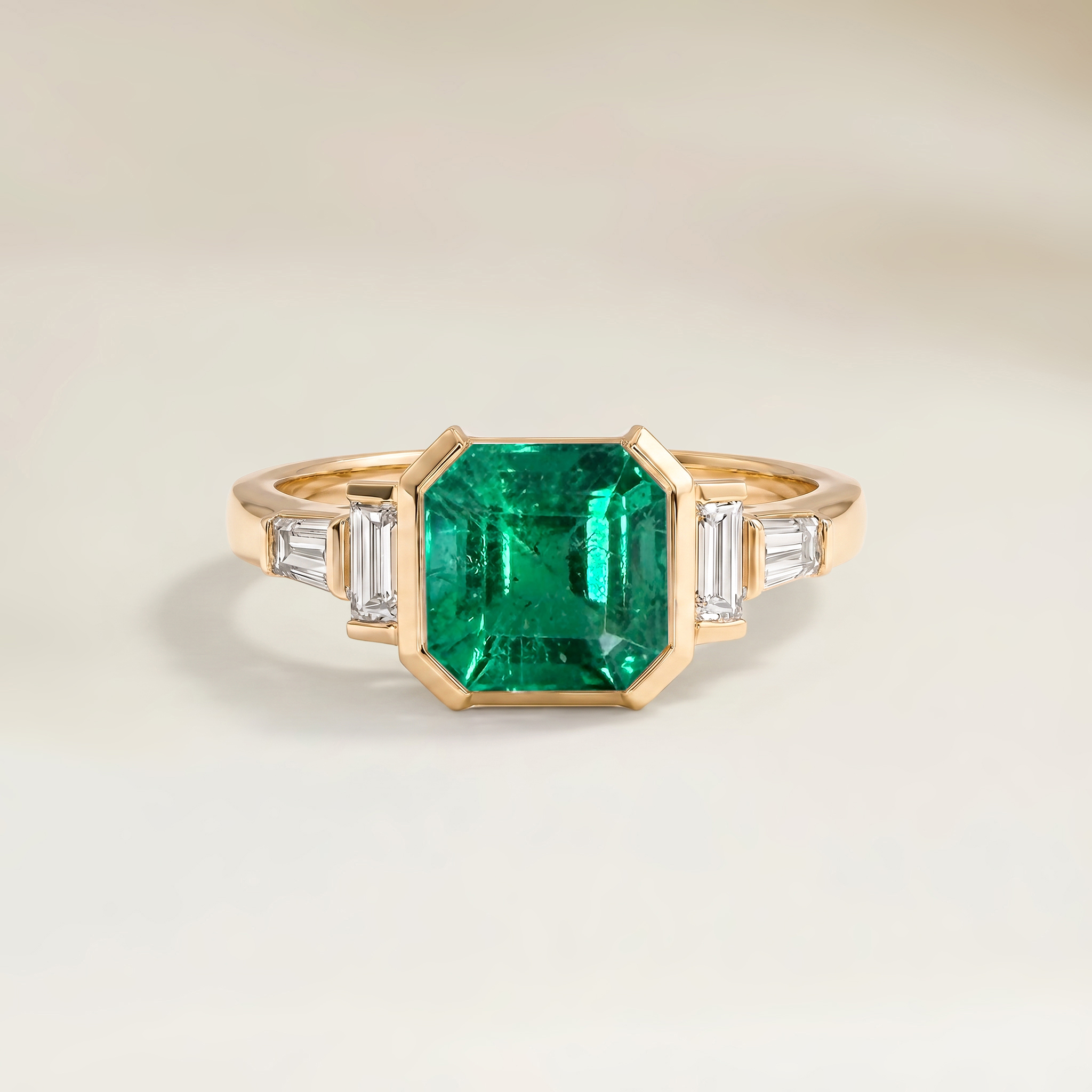
Zambia and Colombia
Emerald 0.96 ct · €5,160
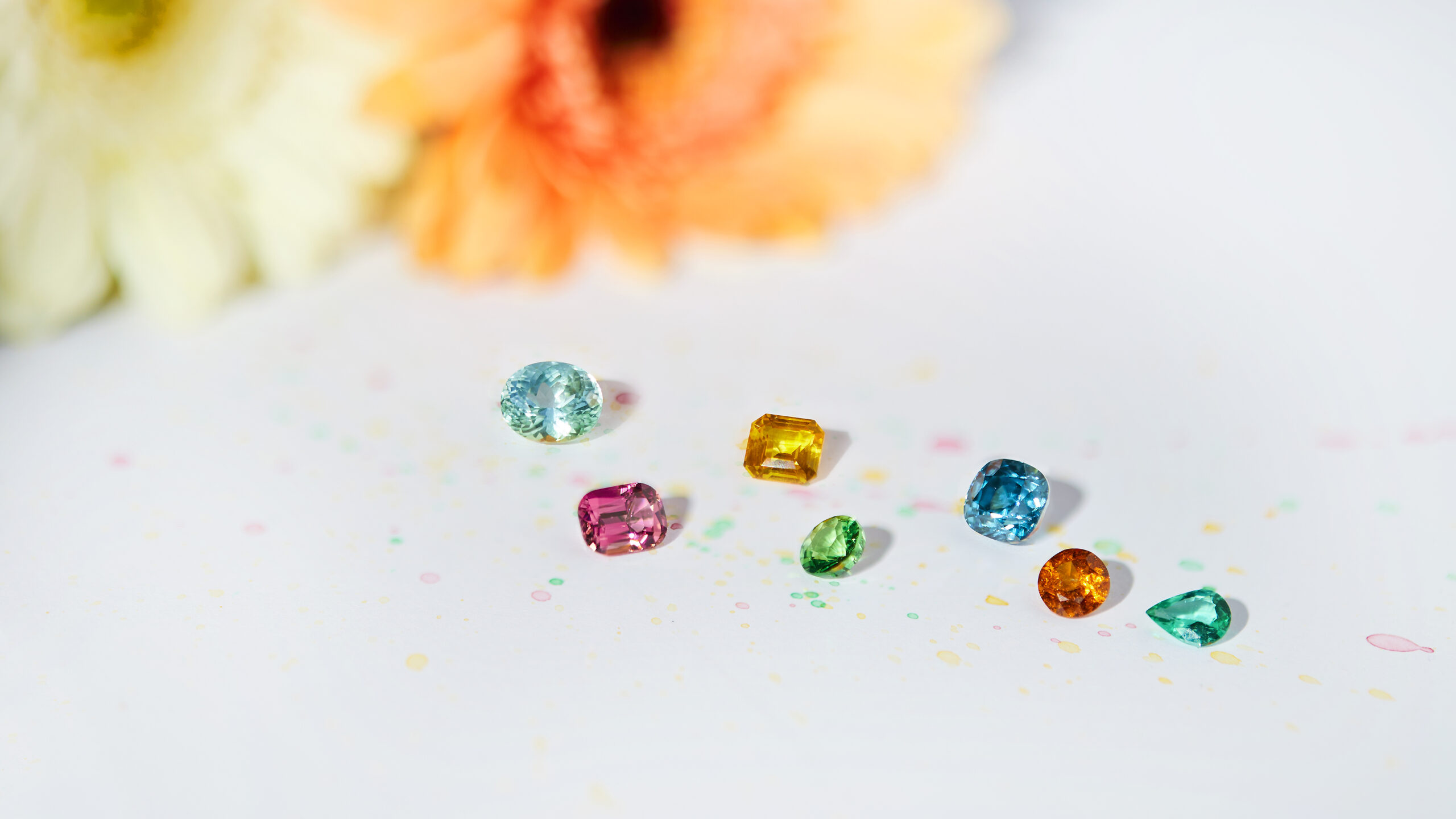
Around 590 stones
View the catalogue →
Available creations, prices recorded in September 2026. Catalogue figures recorded in August 2026.
In practical terms, this means that a sapphire engagement ring can be created from several hundred genuinely available stones, compared side by side during an appointment. And that an emerald engagement ring is designed at the same time as its setting: more than with any other stone, the mounting is part of the jewellery's security.
An appointment lasts around forty-five minutes and comes with no obligation. We discuss budget, tastes and wearing requirements — then we bring out the stones, because that is the only moment when colour becomes self-evident.
| Where | How | For whom |
|---|---|---|
| Paris 8e | Showroom, 40 rue des Mathurins. By appointment. | See the stones in person |
| Angers | Second showroom, also by appointment. | Greater West |
| By video call | Video consultation, followed by WhatsApp or email. | France and international |
Remotely, the process is well established: each stone is filmed under several lighting conditions, against a neutral hand, with no colour retouching whatsoever. You receive the videos and complete specifications before making any commitment. The ring is then handed over in person in Paris or shipped worldwide by secure, insured carrier.
Nothing is required. But if you have a budget in mind, images you like — including those you dislike, often more useful — or a ring in the right size, the appointment moves much faster. Book an appointment in Paris →
A retailer sells a model offered in a few stone sizes. An artisan starts with the stone and designs the setting around it. The difference can be seen in three ways: the choice of gemstone is not dictated by a catalogue, the measurements remain in the workshop for future alterations, and it remains possible to transform an existing piece of jewellery rather than buying a new one.
Stone sourcing and design are carried out in Paris. Production — wax work, casting, stone setting, polishing — is entrusted to specialised artisans in France and Italy: seventeen artisans are involved at different stages, according to the techniques required by the piece.
The stone accounts for most of the price. Our sapphire creations start at €2,500, emerald at around €1,700, ruby at around €8,000. The setting ranges from €1,250 for a simple design to €10,000 and more for extensive pavé or calibrated-stone work. Prices observed in September 2026.
Yes, and it is one of our most frequent projects. We examine the stone, check its condition and propose a design suited to its actual dimensions. The gold from your existing pieces can also be melted down and reused in the new creation.
Six to eight weeks between the first appointment and the delivery of the piece of jewellery. Once the stone and design have been approved and the stone has arrived at the workshop, production takes three to five working weeks. A rare stone may require additional sourcing time — in that case, we present several gems as they arrive.
No. The appointment can take place at the showroom at 40 rue des Mathurins in the 8tharrondissement, in Angers, or by video call. Remotely, we send detailed photos and videos of each stone, filmed under several types of lighting and without colour retouching. Book a video appointment →
Primarily sapphire and emerald, our two deepest stock categories — a sapphire engagement ring or an emerald engagement ring is created from among several hundred available gems. Ruby, spinel, garnet, tourmaline, aquamarine and tanzanite follow.
Each family has its own collection and published stock. To begin with the loose stone rather than the ring, everything can be explored from the precious stones.
Share this post