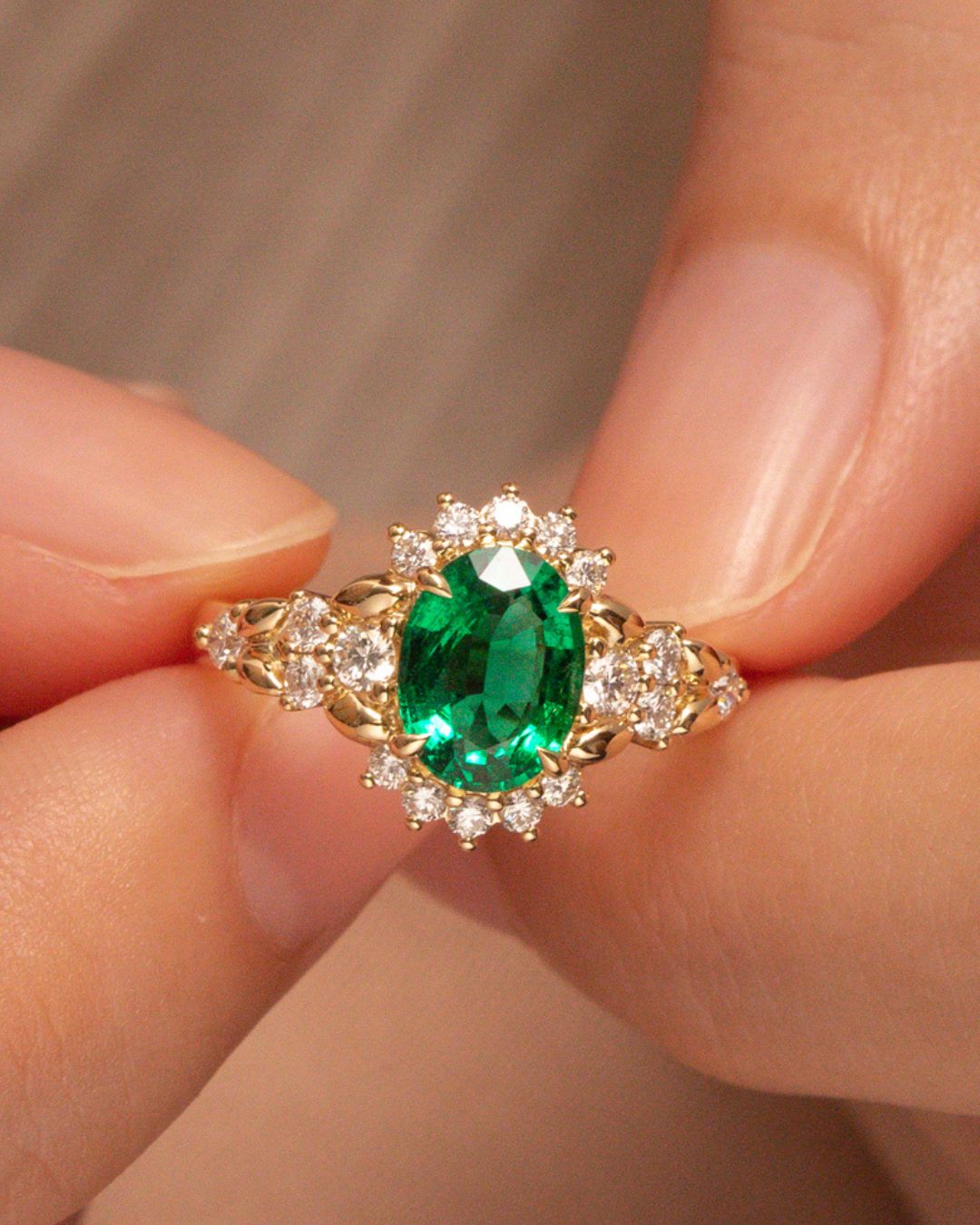
Zambian or Colombian Emerald?
Bonnot Paris22/9/2026
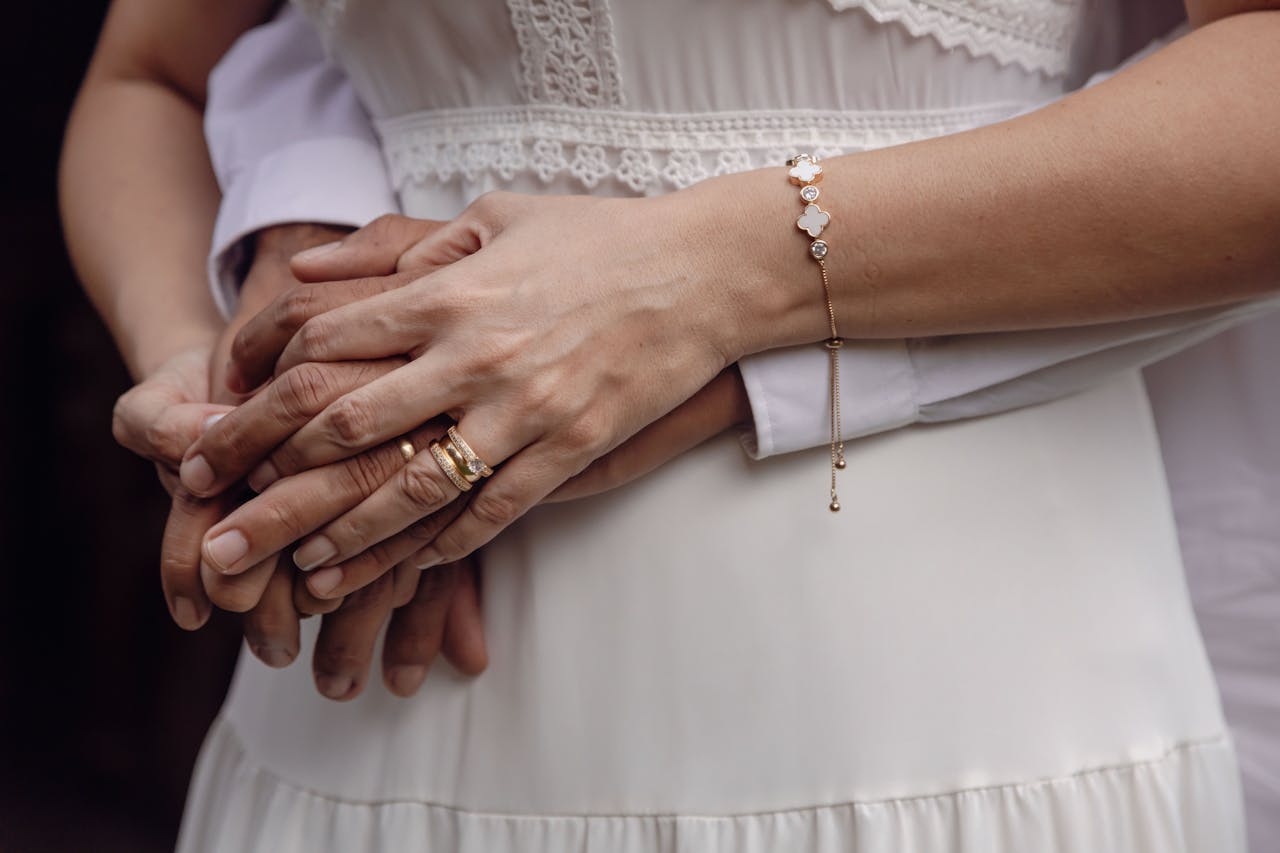



Four approaches coexist, each with its own reasons. Here is what they really entail, including technically: because wearing an engagement ring and a wedding band together raises practical questions that no one anticipates.
| Approach | For whom | What to plan for |
|---|---|---|
| Both stacked on the left ring finger | The most common Those who want to wear everything, all the time. | That the two rings fit together—that is the real issue. |
| The ring on the right hand | When the two rings do not work together, or for comfort. | Resizing: the right ring finger is not the same size as the left. |
| On another finger of the left hand | Those who are keen to keep both on the same side. | Resizing, and a setting that is not too high. |
| Reserved for occasions | Manual professions, sports, or simply preference. | Separate storage, and regular checks of the prongs. |
In the past, the wedding band was worn alone: it was considered the only piece of jewellery needed, for reasons of simplicity as much as convenience. Practices have changed, and today no one would find any one of these four options unusual.
This is the question we are asked most often, and it has a traditional answer: the wedding band first, at the base of the finger, closest to the heart — with the engagement ring on top. The idea is that nothing should come between you and the wedding ring.
It is a convention, not an obligation. Many reverse them, and for good reason: a wide engagement ring sits better at the base of the finger, where it is more stable. If the engagement ring is noticeably thicker than the wedding band, place it underneath — comfort takes precedence over symbolism.
Another practice is also becoming common on the wedding day: moving the engagement ring to the right hand during the ceremony, so that the wedding band is placed on a bare finger, then putting it back on top afterwards. It has no official significance, but it is a lovely gesture.
This is the most common issue, and the only one that articles on the subject never address. It stems from the setting: a high-set solitaire leaves a V-shaped gap beneath a straight wedding band. The two rings touch at only one point, the set gapes, and the engagement ring tilts.
Three solutions, from the most elegant to the simplest:
If you already know that the two rings will be worn together, say so when designing the engagement ring. A lower setting or a curved band solves the problem from the outset, and costs infinitely less than reworking it. The choice of profile and metal is detailed in our guide to choosing a wedding band, and our wedding bands are designed to complement the ring that comes before them.
If the wedding band occupies the left ring finger, moving the engagement ring to the right hand is a simple and very common solution — especially when the two rings do not match, or when you do not wish to have them reworked.
The ring finger remains the most suitable finger: for fit, and because it is where the stone is best showcased. And this practice is far from a compromise — in several countries, it is the right ring finger that has worn the engagement ring from the outset : Germany, Poland, Russia, Spain, Greece. Our guide on which finger to wear an engagement ring explores these traditions, and which hand to wear your wedding band on covers its counterpart.
For a right-handed person, the right ring finger is generally half a size to one size larger than the left. A ring that fit perfectly on the left will spin on the right, or refuse to go on. Allow for resizing — it is a standard workshop procedure.
No longer wearing it every day is a perfectly common choice, and often the most sensible one: manual work, sport, gardening, care work. The ring then comes out for a wedding, anniversary, family celebration or dinner — and gains a certain rarity that suits it well.
Two precautions if you choose this approach:
Our guide toprecious stone care sets out the cleaning steps, stone by stone.
Aesthetically, yes — the combination of yellow gold and white gold has become commonplace and often looks better than a perfect match. Technically, two rings that rub against each other wear each other down, and the softer metal wears first. Platinum and 18-carat gold do not age at the same rate. This is not an obstacle, but it does warrant an inspection every few years.
Yes, as soon as you move the ring permanently. Each finger has its own size, and a ring that spins gets damaged — or lost. The procedure is standard for most settings; it becomes delicate, or even impossible, on a band entirely pavé-set with stones.
A valuable ring should be declared to your insurer, along with the invoice and the stone certificate. It takes ten minutes and makes all the difference in the event of loss. Many comprehensive insurance policies cap jewellery cover at an amount far below its true value.
And if the ring no longer suits you as it is — too high, too fragile, or simply from another period in your life —, the stone can be reset in a new creation. Our creations show several examples, and our engagement rings present the possible settings — in sapphire (including teal sapphires), in emerald or in diamond.
Tradition places the wedding band first, at the base of the finger, closest to the heart — with the engagement ring above it. This is a convention, not an obligation: if the engagement ring is wider, it sits more securely underneath.
It comes from a high setting. Three solutions: a curved wedding band designed to match the setting (the most elegant option), a thinner wedding band, or having the profile of the engagement ring reworked. The best approach is to plan for it when the ring is created.
Yes, it is very common. The right ring finger is the most suitable finger — and in several countries (Germany, Poland, Russia, Spain, Greece), it has been worn there from the outset. Allow for resizing: the right ring finger is often wider.
Aesthetically, yes, and it has become common. Technically, two rings that rub against each other wear each other down, and the softer metal wears away first. A check-up every few years is sufficient.
Of course, and it is common. Store it separately, away from light and humidity — and have it checked every two or three years: the prongs also loosen inside a jewellery box.
Yes, as soon as the change is permanent. A ring that spins can become damaged or be lost. The procedure is common, except for fully pavé-set bands, where it is sometimes impossible.
Share this post