Zambian or Colombian Emerald?
Bonnot Paris22/9/2026



This anecdote says it all: identifying a coloured stone with the naked eye is far more difficult than one might imagine, and Europe’s finest courts were mistaken about it for generations.
This article explains what you can usefully observe, what requires an equipped gemmologist, and the four confusions we encounter most often — along with what truly distinguishes them in each case.
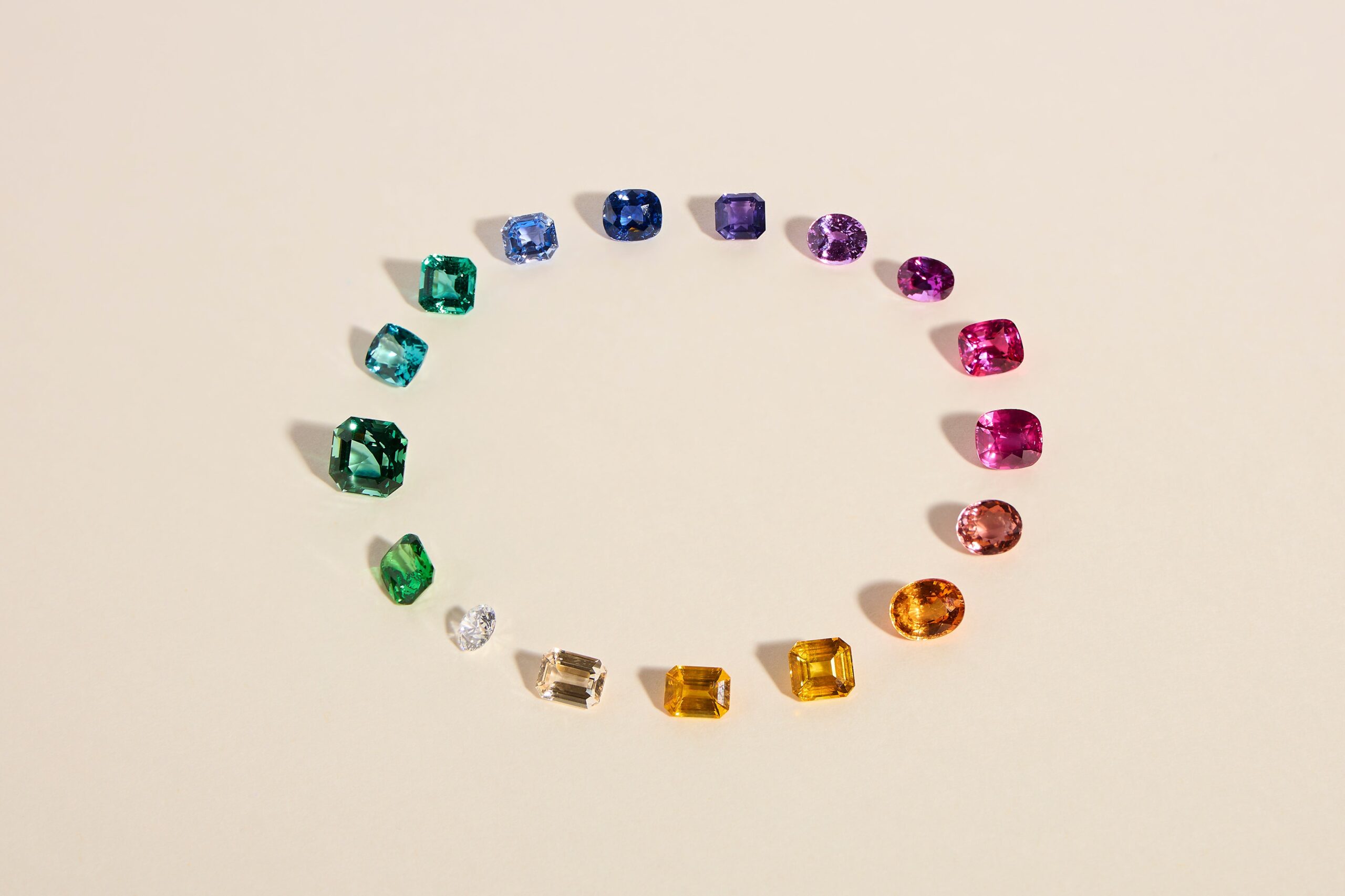
Let us begin with the word, because it is misleading. In France, regulations governing the trade in gemstones reserve in practice the designation “precious stone” for four gems : diamond, ruby, sapphire and emerald. All others fall under the generic term gemstone — what were once called semi-precious stones.
This hierarchy is historical and commercial, not gemmological. It says nothing about beauty, rarity or durability. An exceptional tourmaline far surpasses an inferior sapphire, and a finely coloured red spinel is worth more than a dull ruby.
What truly matters for a jewel comes down to three criteria, none of which appears in the word “precious”: hardness, which determines everyday wear, colour, which accounts for most of the value, and treatments undergone, which determine both price and care.
With a 10× loupe and a little method, four clues are within reach. They do not identify a mineral species—they point the way.
A natural stone almost always contains something. A perfectly clean gemstone at a low price should raise questions.
A soft stone becomes worn and chipped along the girdle. A hard gemstone retains sharp edges after decades.
Look at the stone in daylight, then in the evening. A change in appearance is already information.
Some gemstones double the edges of the pavilion facets. Visible through the table with a loupe.
For the rest, let us be frank: identifying a mineral species requires measurements — refractive index, density, absorption spectrum, fluorescence — which fall within the remit of an equipped gemmologist. The at-home tests found online, blowing on the stone or immersing it in water, prove nothing.
Scratching the stone. It is irreversible, it damages the gemstone or the setting, and it proves nothing useful—many materials scratch glass without being what one thinks.
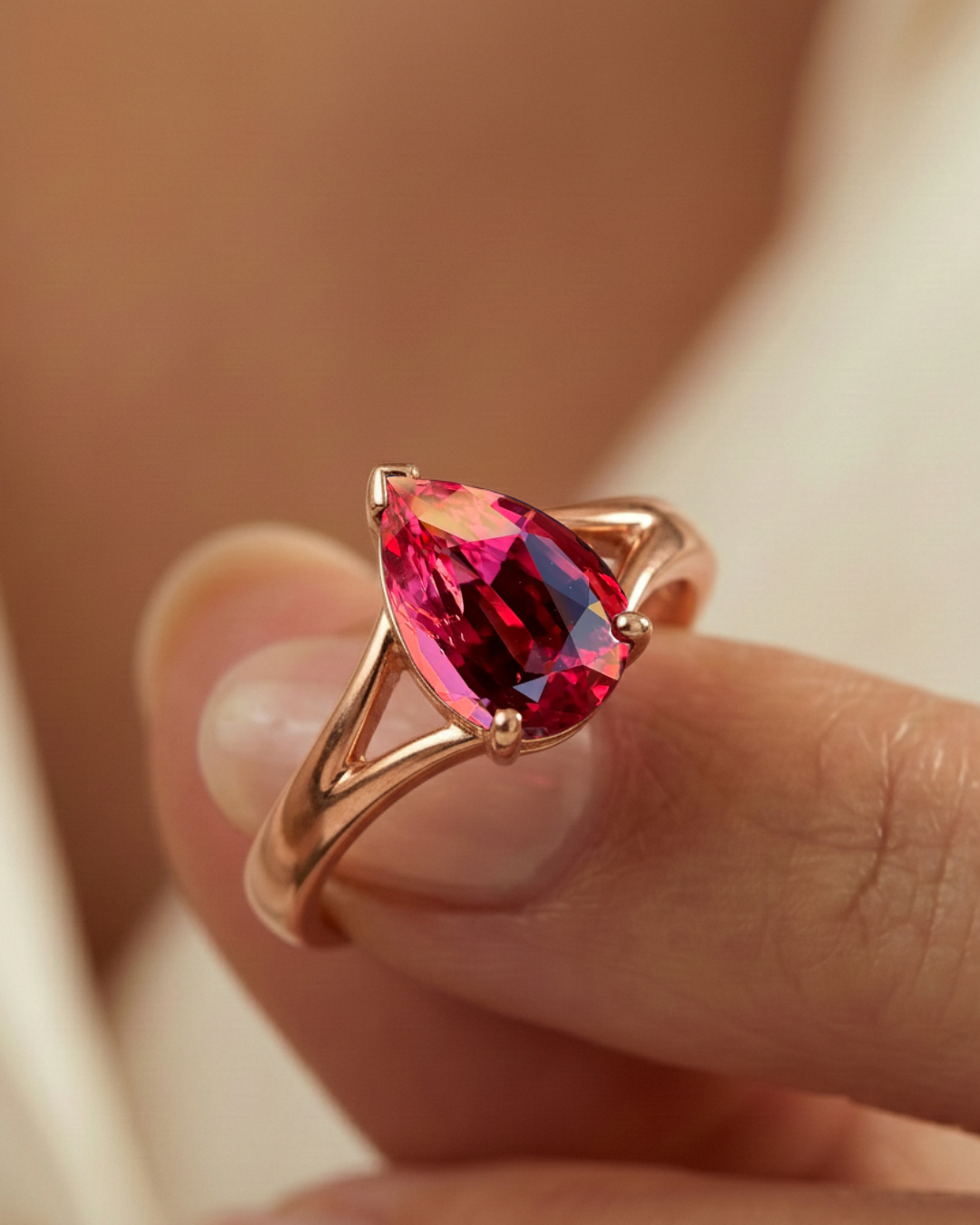
The most famous, and the oldest. Until the 18thth century, they were not distinguished: several historic “rubies” in royal crowns turned out to be spinels. Look at the two stones below and you will understand why.
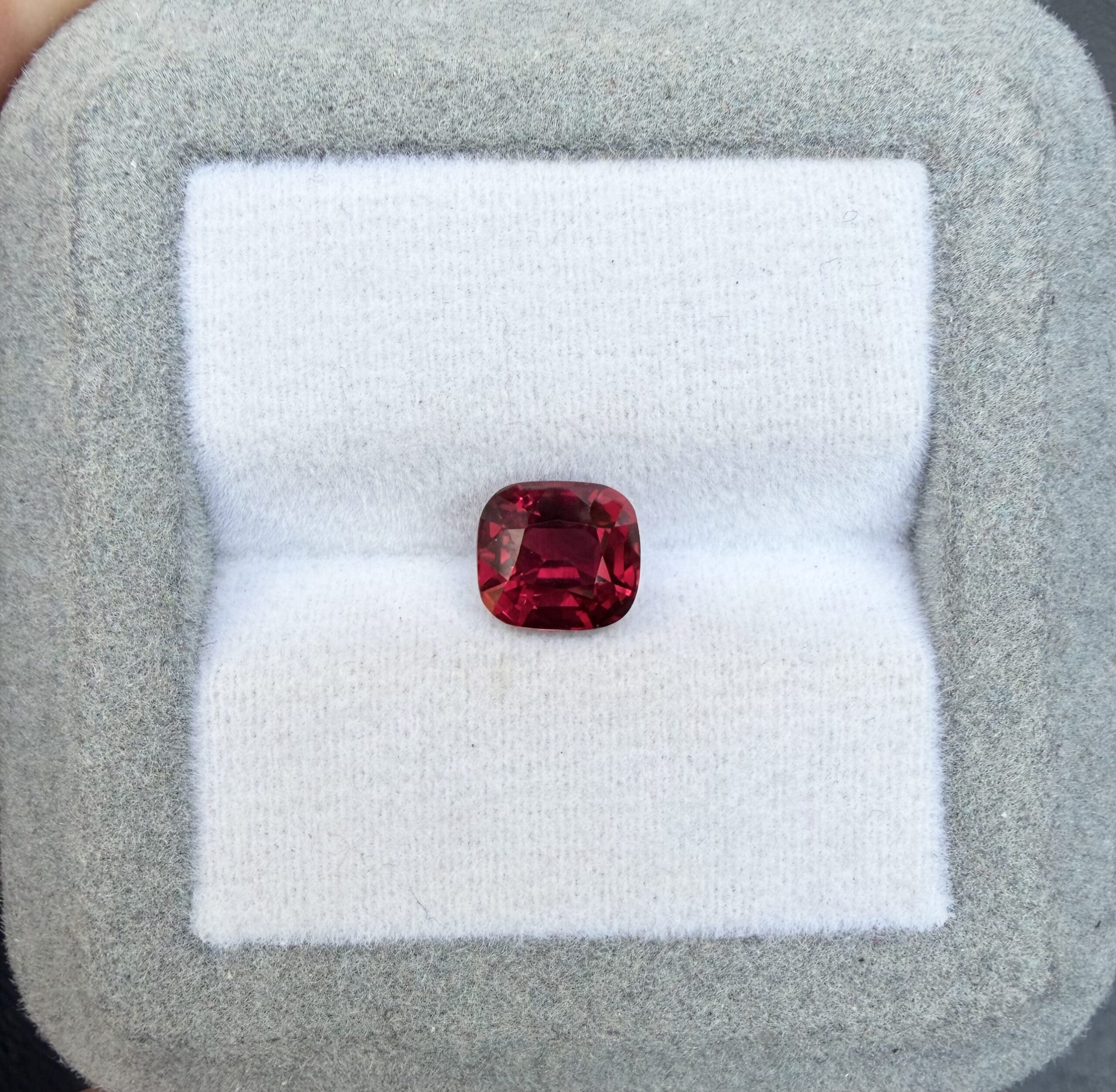
Birefringent, fluorescent under ultraviolet light, and coloured by chromium. A 2.04 ct cushion-cut stone from Mozambique — 31 500 €. It is the rarest of the four major gemstones above two carats.
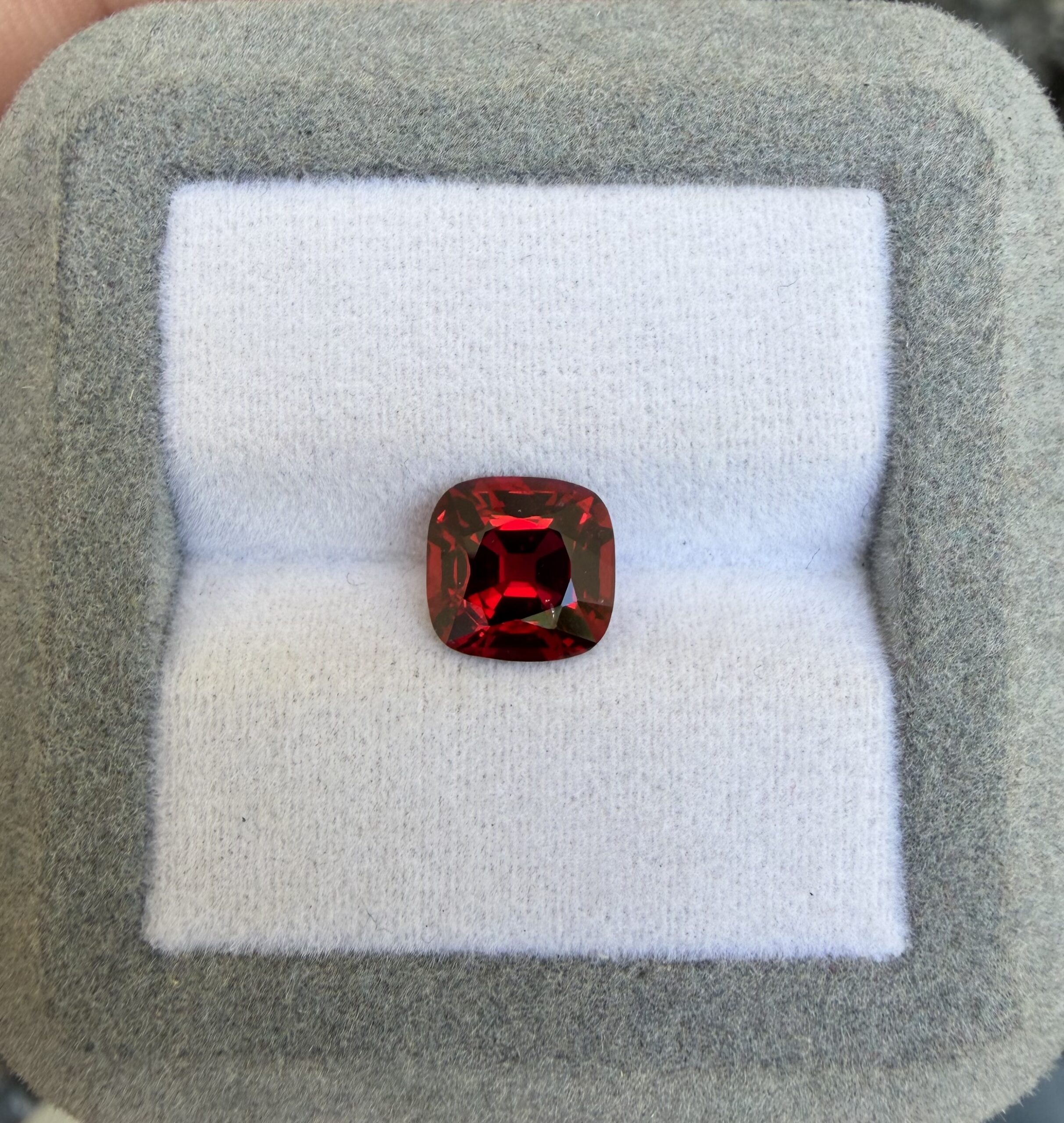
Isotropic, with a different spectrum, and almost never treated. A 2.39 ct cushion-cut stone — 11 700 €. Larger than the ruby opposite, for one third of the price.
What truly separates them cannot be seen: ruby is a birefringent corundum and generally fluorescent under ultraviolet light; spinel is isotropic and displays a different absorption spectrum. These measurements are carried out by an equipped gemmologist in just a few minutes.
The practical consequence: if you inherit an antique piece of jewellery presented as a ruby, have it checked. And if it is a spinel, that is not bad news — it is a superb, untreated gemstone that is increasingly sought after. A true ruby engagement ring, on the other hand, is recognised above all by its certificate.
Two greens, two mineral families, and one clue that is almost never misleading: the clarity of the stone.
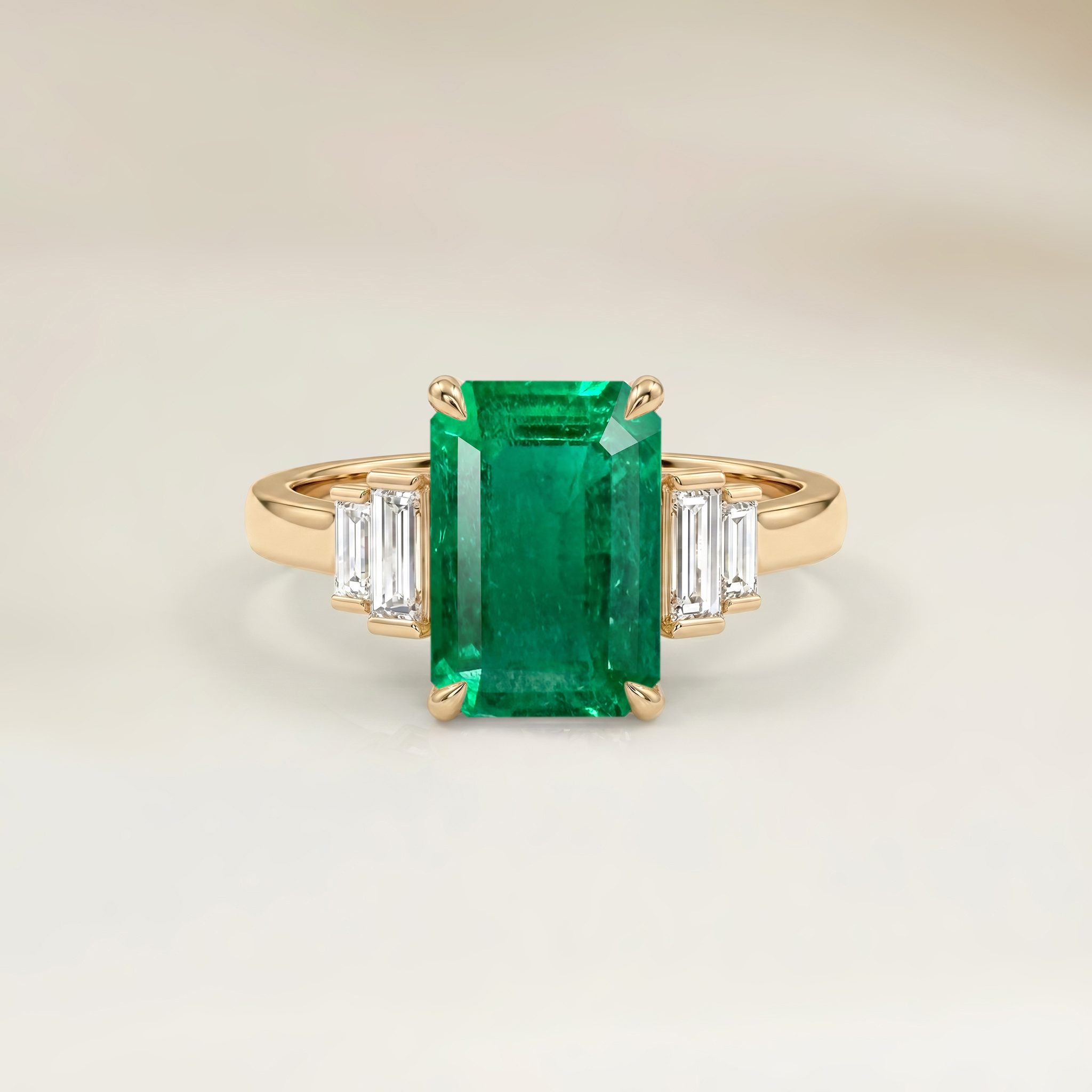
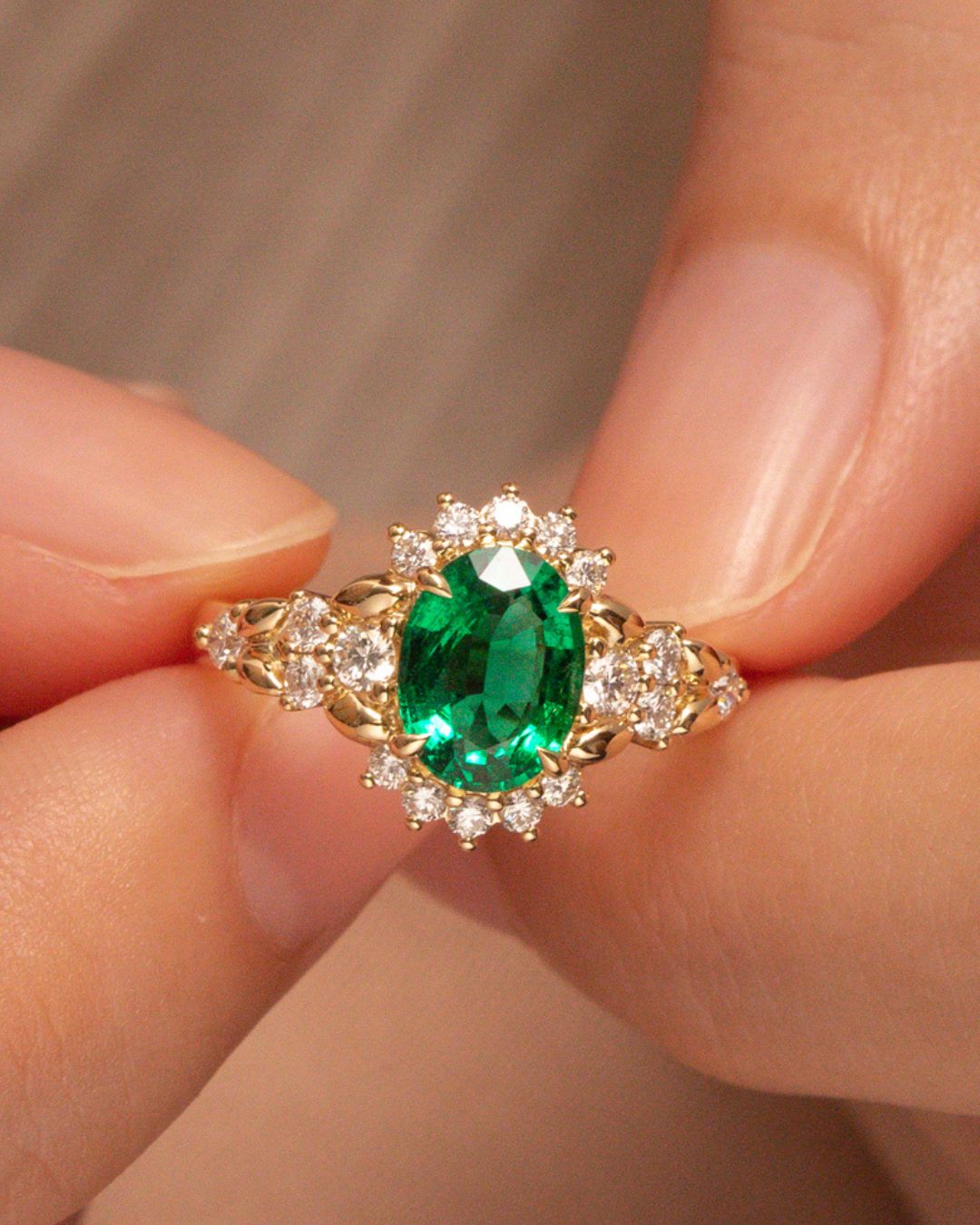
Almost always traversed by a garden of inclusions, and oiled in almost every case. This garden is not a flaw: it is its identity card, and attests to its natural origin. Set ring — 9 960 €.
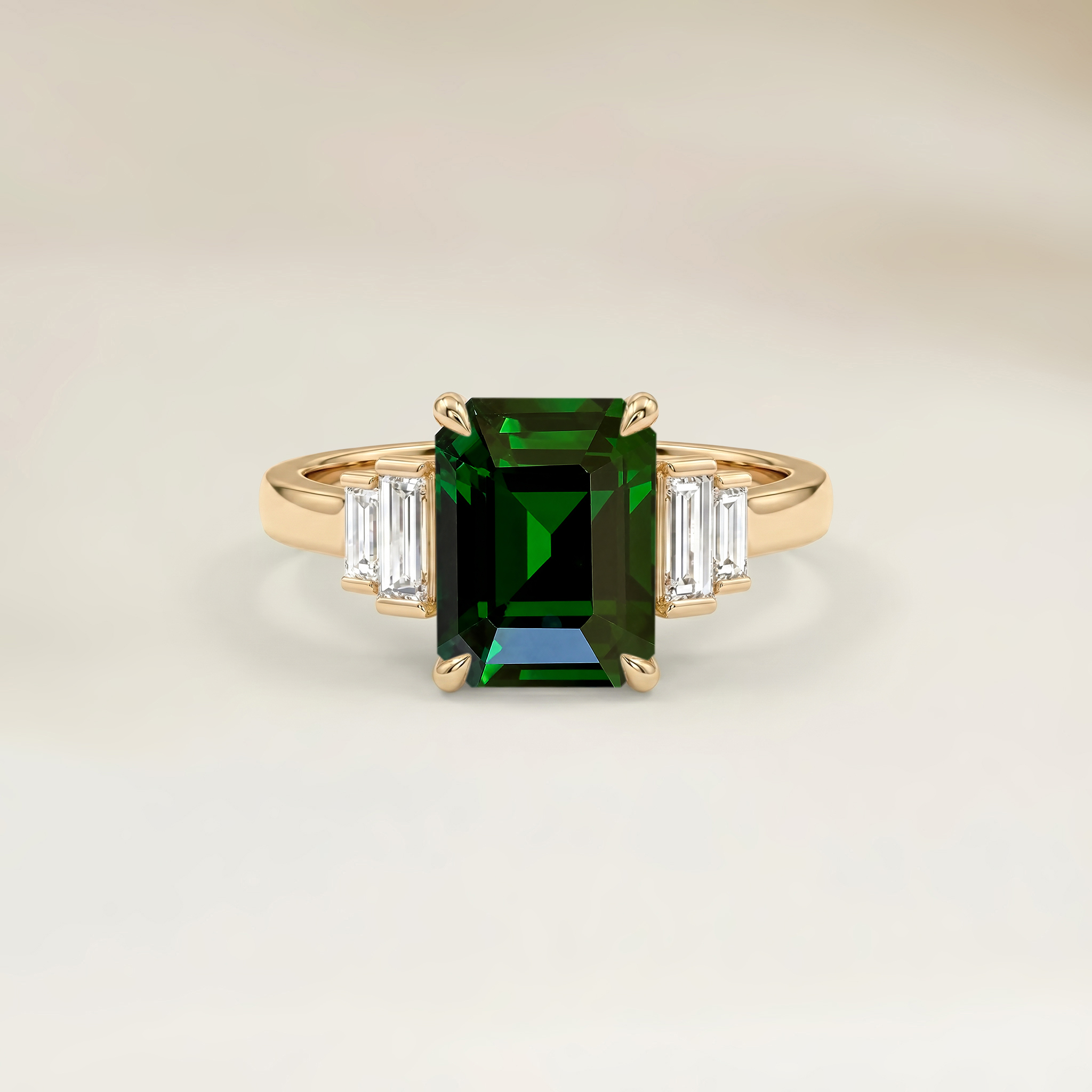
Generally more transparent, with a green that is often more vivid, and never treated — garnets are neither heated nor oiled. Set ring of 1.57 ct — 6 960 €.
The rule of thumb can be summed up in one sentence: a very transparent, very vivid green stone with no trace of oiling is highly likely to be a tsavorite rather than an emerald. The reverse is also true — a visible garden of inclusions points strongly towards beryl.
Be careful, however, not to infer a hierarchy from this. An emerald engagement ring is not worth less because its stone has inclusions: this is the norm for the species, and the world's finest emeralds do as well.
This one is of a particular kind, because the two stones are exactly the same mineral. There can be no identification error: there is a tipping point, and it is open to debate.
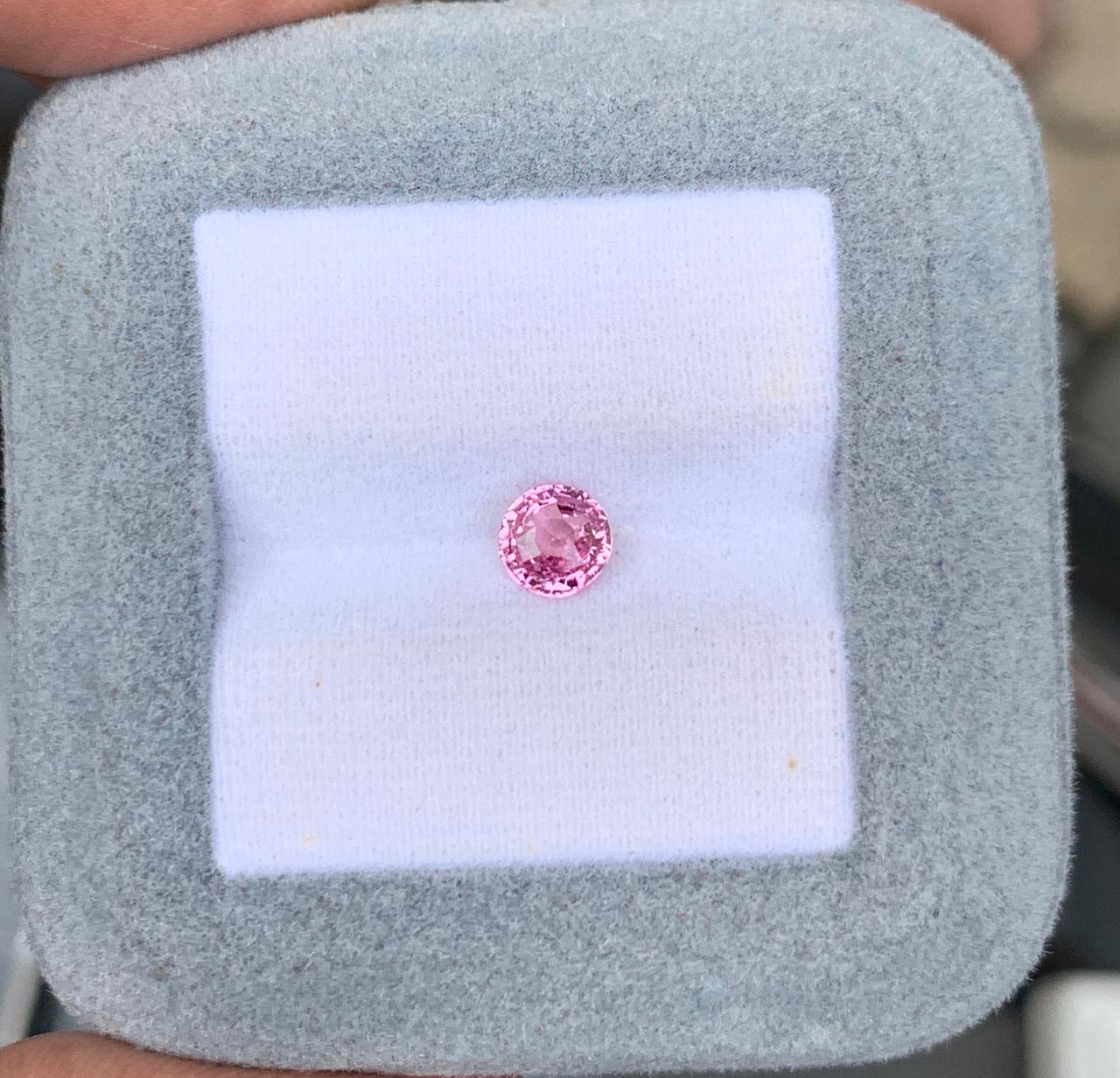
Chromium colours corundum pink. The higher its concentration, the more the colour shifts towards red — until the point at which the gem ceases to be a pink sapphire and becomes a ruby. This point is debated among laboratories : the GIA assigns it earlier than the SSEF, and two reports may therefore reach different conclusions about the same stone.
The stakes are not academic: the price difference between the two designations is considerable. It is also good news for the buyer — a pink sapphire engagement ring offers a warm hue and a hardness of 9 out of 10 for a fraction of the price of a ruby of comparable quality.
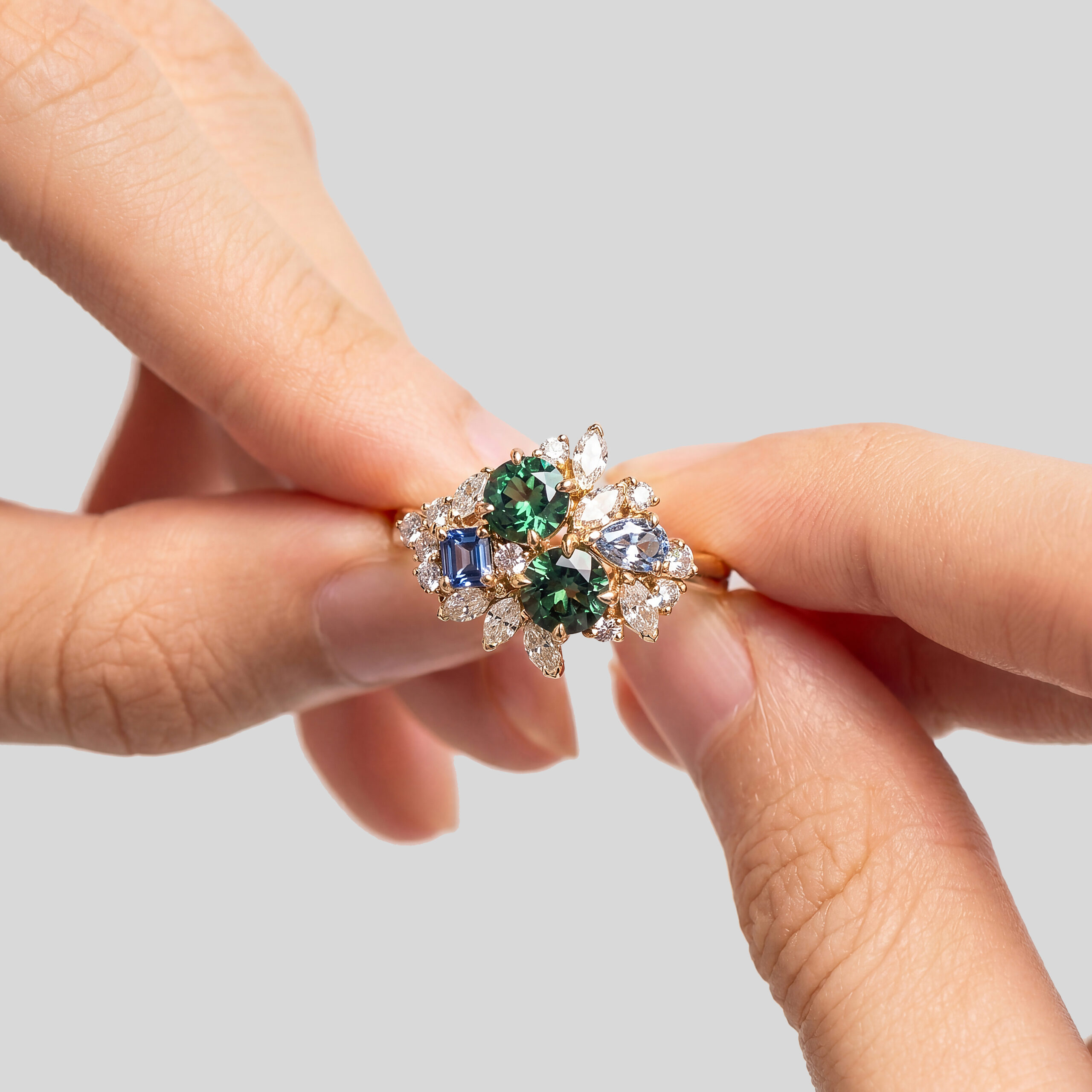
The final confusion does not pit two stones against one another: it pits one stone against all the others. Tourmaline spans the broadest palette in gemmology — from green to pink, blue to yellow, right through to bi-coloured stones that layer two hues within the same crystal.
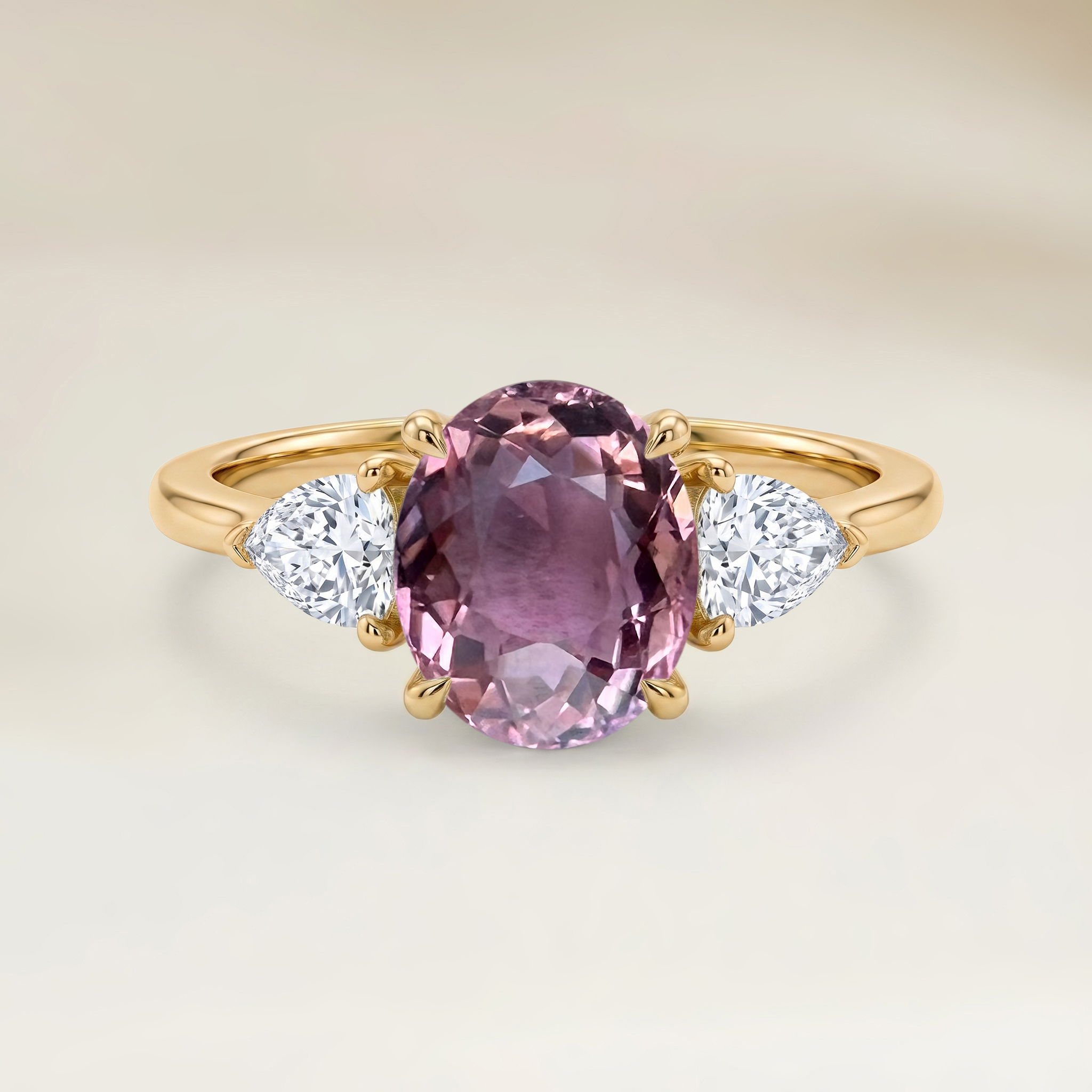
The direct consequence is that a green tourmaline may be mistaken for an emerald, a pink one for a pink sapphire or spinel, and a blue one for an aquamarine. Historically, it was indeed long confused with almost everything — and rubellite, its vivid pink variety, was sold as ruby for centuries.
What identifies it: tourmaline is strongly pleochroic, meaning that it does not display the same colour intensity depending on the axis from which it is viewed. As the stone is rotated, the hue becomes distinctly darker or lighter — behaviour that corundum does not exhibit to the same degree. A tourmaline engagement ring requires the same precautions as an emerald, however: a hardness of 7 to 7.5, and a protective setting.
There remain synthetic stones — chemically identical to their natural counterparts, produced in laboratories. Corundum, hydrothermal emerald, spinel: all major families have long been synthesised.
Here is the good news, and it contrasts with diamonds. In coloured stones, synthetics leave signatures that gemmology knows how to read : curved growth lines, gas bubbles, flux residues. Whereas a laboratory-grown diamond is virtually indistinguishable from a natural diamond without sophisticated equipment, a synthetic corundum can often be identified under a loupe by an experienced professional.
For any stone intended for a valuable piece of jewellery, the reliable answer remains an independent laboratory report. It specifies the nature of the gemstone, its weight, dimensions, treatments undergone and often its origin. It says nothing, however, about quality or value: it is a necessary condition, never a sufficient one.
Have it identified before any aggressive cleaning, repolishing or alteration — by a gemmologist or independent laboratory. Repolishing without prior identification can remove the colour from a surface-diffused stone. Where to have a stone valued →
In France, regulations governing the trade in gemstones effectively reserve this designation for four gems: diamond, ruby, sapphire and emerald. Others fall under the generic term gemstone. This hierarchy is historical and commercial, not gemmological — an exceptional tourmaline far surpasses a mediocre sapphire.
Certain clues can be observed: the nature of inclusions, the condition of the edges, the behaviour of colour under different lighting. But identifying a mineral species with certainty requires measurements — refractive index, density, spectrum — which call for a properly equipped gemmologist.
With the naked eye, with difficulty: the confusion has lasted for centuries, and several “rubies” in royal crowns are in fact spinels. Ruby is a birefringent and generally fluorescent corundum; spinel is isotropic and has a different spectrum. These measurements are carried out by a gemmologist.
By transparency and inclusions. Emerald is a beryl almost always crossed by a garden of inclusions and treated with oil; tsavorite is a garnet, generally cleaner, more vivid, and never treated. A highly transparent green stone with no oil treatment is more likely to be a tsavorite.
At the concentration of chromium, and nothing else: it is the same mineral as ruby. The tipping point is debated among laboratories, and two reports may reach different conclusions on the same gem — with a considerable difference in price.
By their inclusions: curved growth lines, gas bubbles, flux residues. This is good news compared with laboratory-grown diamonds—when it comes to coloured stones, identification remains accessible to a properly equipped professional.
For any stone intended for a valuable piece of jewellery, yes. It specifies the nature, weight, dimensions, treatments and often the origin. It says nothing about quality or value: a necessary condition, never a sufficient one.
Every stone we sell comes with its laboratory report. Our stock can be browsed from the precious stones.
Share this post