Zambian or Colombian Emerald?
Bonnot Paris22/9/2026
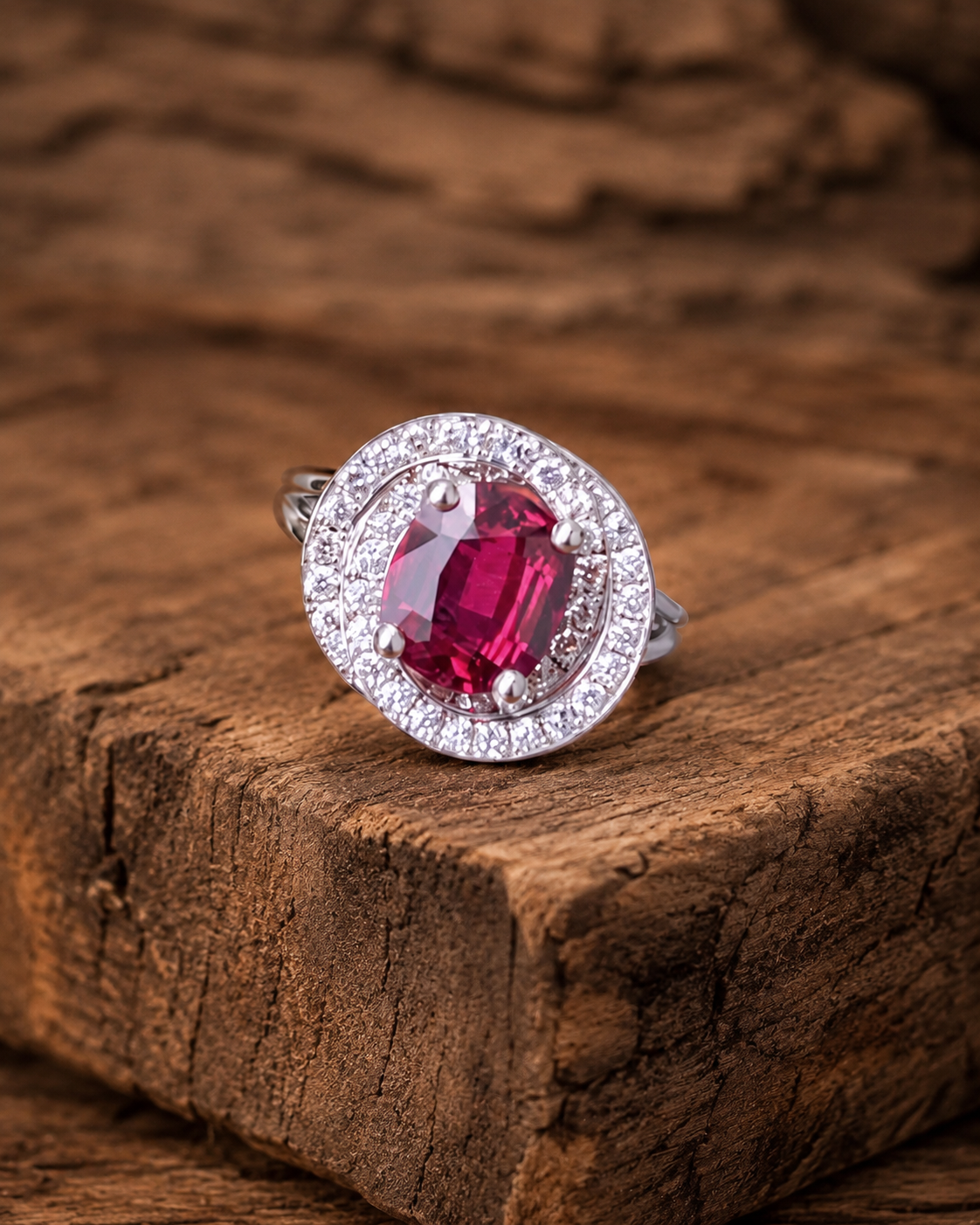



Three natural stones resemble it so closely as to be mistaken for it, a fourth has been produced industrially for more than a century, and a very widespread treatment transforms worthless stones into rubies of respectable appearance.
This article explains what sets them apart, what you can observe for yourself, and — most importantly — what cannot be seen and costs the most.
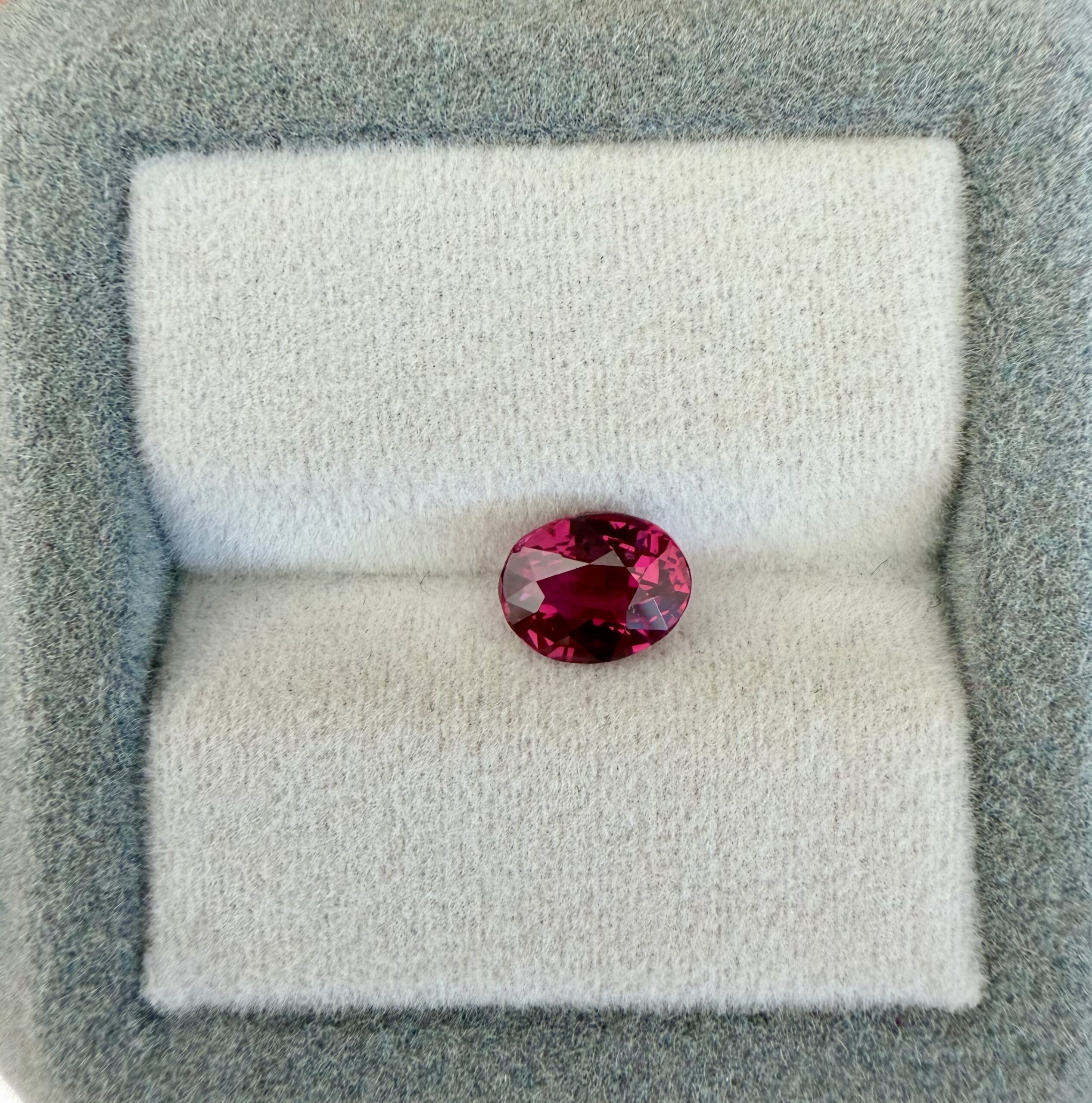
A ruby is a corundum coloured red by chromium. Exactly the same mineral as a sapphire: same formula, same hardness of 9 out of 10, same absence of cleavage planes, sometimes from the same deposit. Only the concentration of chromium distinguishes them.
This has one reassuring consequence and one awkward consequence. The reassuring one: everything said about a sapphire’s resilience applies word for word to a ruby. The awkward one: there is no clear boundary between a highly saturated pink sapphire and a pale ruby — we return to this.
| Characteristic | Ruby | What this means |
|---|---|---|
| Species | Corundum | Identical to sapphire; only the chromium changes. |
| Mohs hardness | 9 | Unreservedly suitable for daily wear, with no cleavage. |
| Optics | Birefringent, therefore dichroic | The criterion that distinguishes it from spinel. |
| Common treatment | Heating, disclosed | Stable, with no effect on care. |
| Treatment to avoid | Lead-glass filling | Very low value, fragile stone. |
Three natural gems are regularly mistaken for rubies. None is a counterfeit: they are genuine stones, often superb — the problem arises only when they are sold under the wrong name.
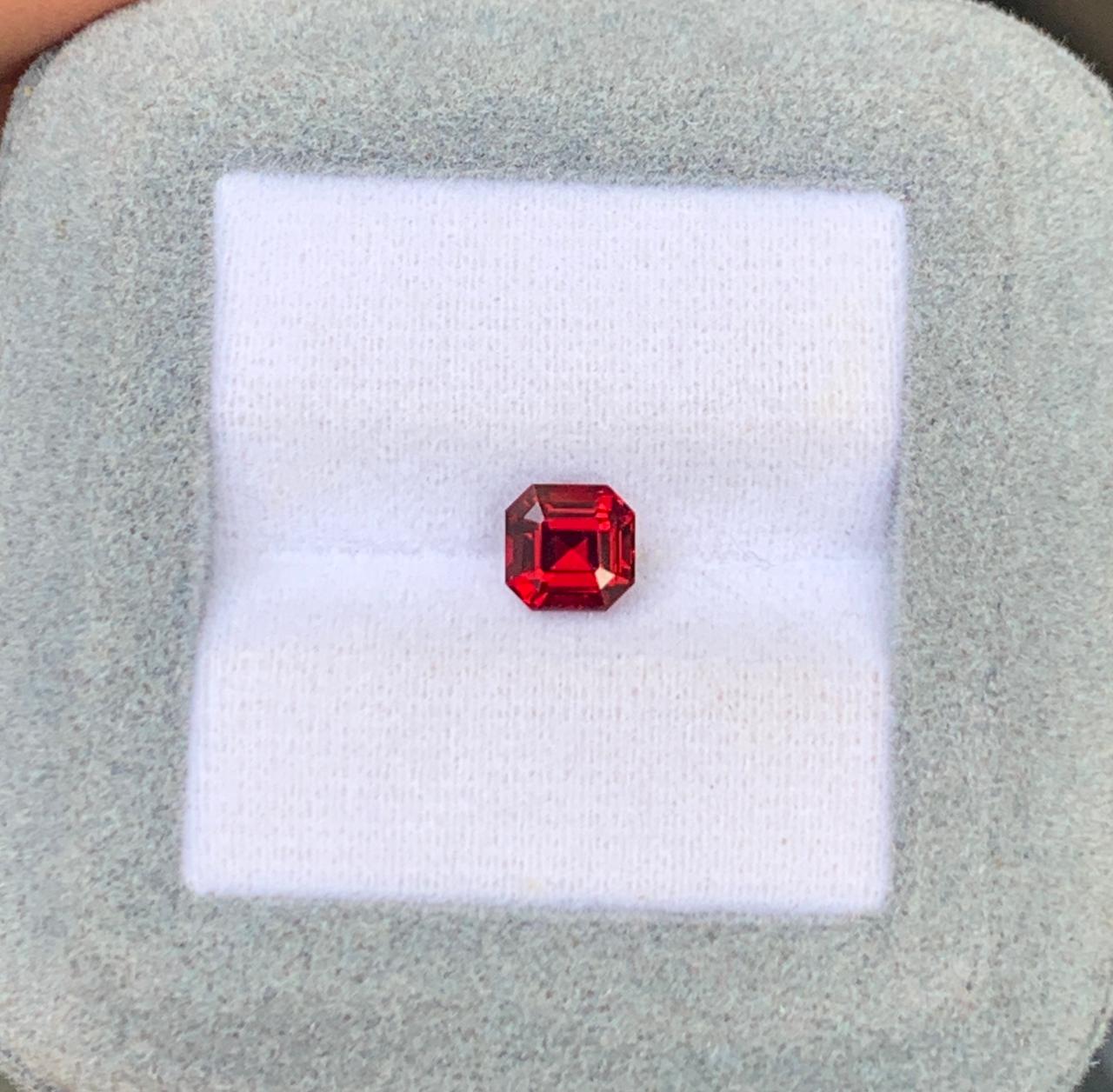
A distinct species, hardness 8, isotropic. Several “rubies” in royal crowns have proved to be spinels. Almost never treated.
2 940 €
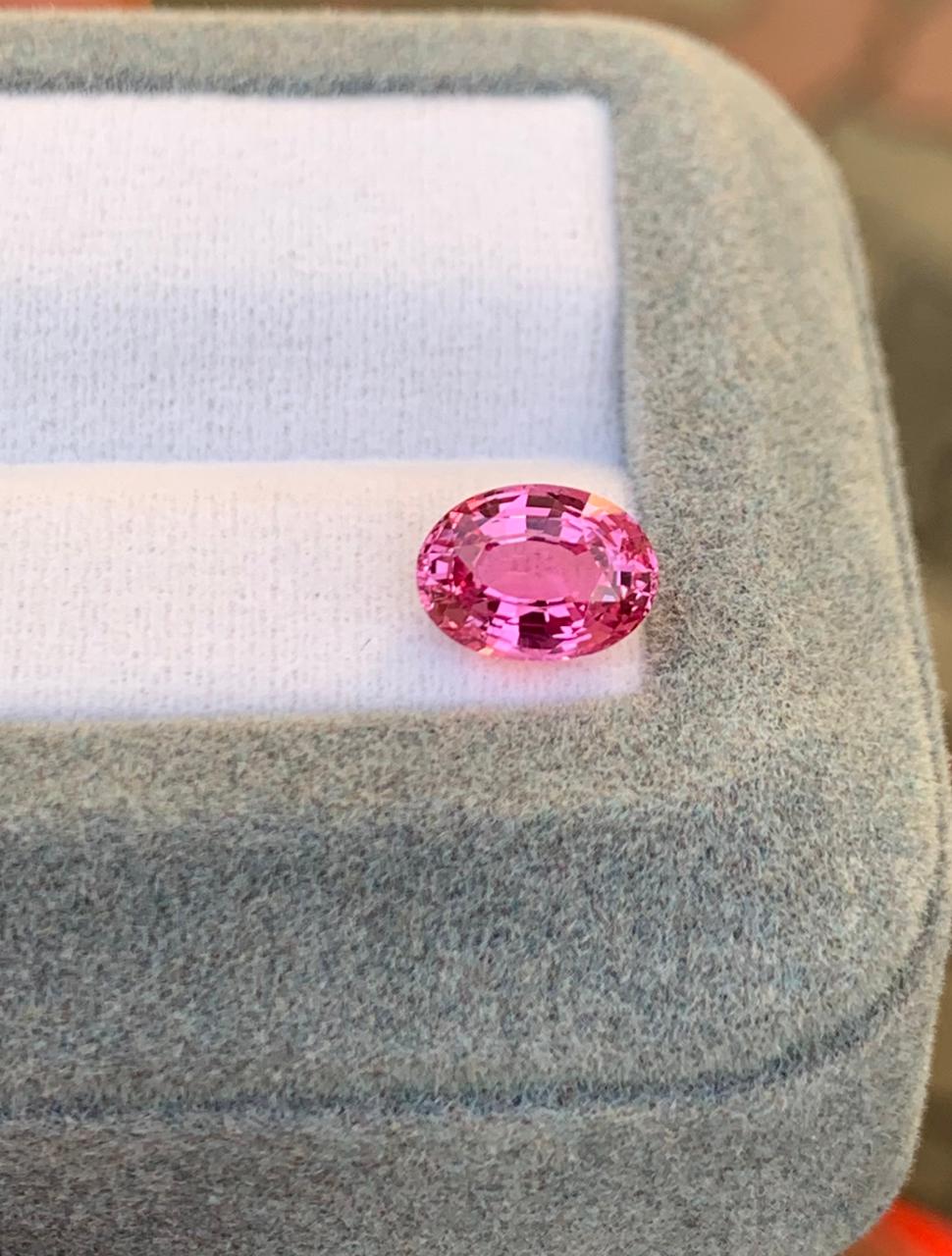
Also corundum, coloured by the same chromium — simply in a lower concentration. The boundary between the two is a convention, not a matter of nature.
5 208 €
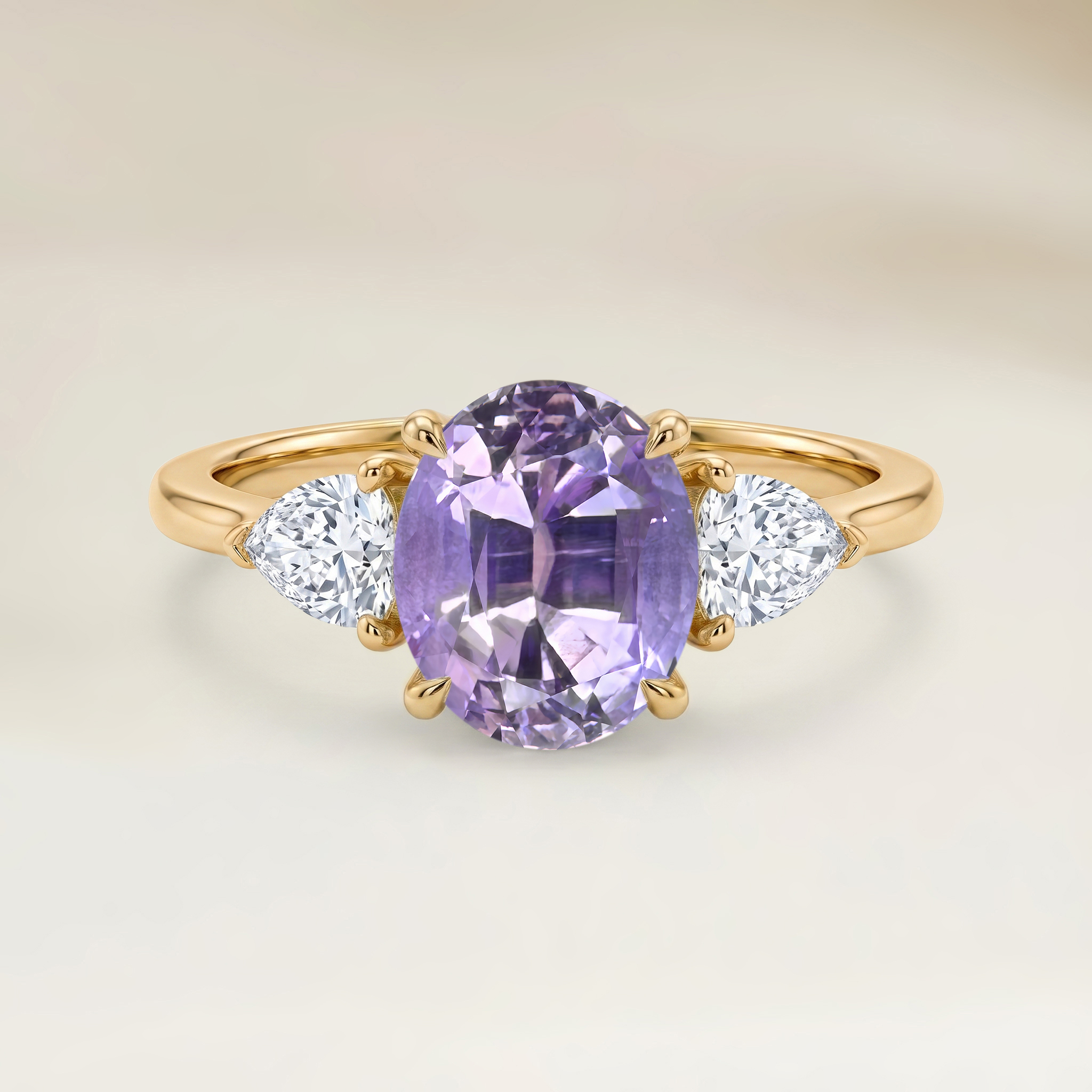
No family encompasses so many shades — from green to pink by way of lilac. This is what led it to be mistaken for almost every gem, including ruby.
3 480 €
Availability and VAT-inclusive prices observed in September 2026.
Spinel spinel is the most formidable. What sets it apart from ruby cannot be seen with the naked eye: ruby is birefringent, therefore dichroic — it displays two slightly different shades depending on the axis from which it is viewed. Spinel is isotropic and produces no dichroism. A dichroscope settles the matter in seconds. That said, a spinel engagement ring is not a consolation prize: the stone is superb, untreated, and increasingly sought after in its own right.
Tourmaline tourmaline, for its part, is distinguished by its marked pleochroism: as the stone is rotated, its colour noticeably deepens and lightens. A tourmaline engagement ring requires the same precautions as an emerald, however — hardness 7 to 7.5, a setting that protects the edges.
Everywhere, one reads that ruby can be recognised by its red fluorescence under ultraviolet light. This is true — but red spinel also fluoresces, while some iron-rich rubies fluoresce very little. Fluorescence is not conclusive : it provides guidance, but never a conclusion.
Here is the case where identification poses no problem, but naming poses a major one. Between a highly saturated pink sapphire and a pale ruby, there is no difference in nature — there is a chromium threshold.
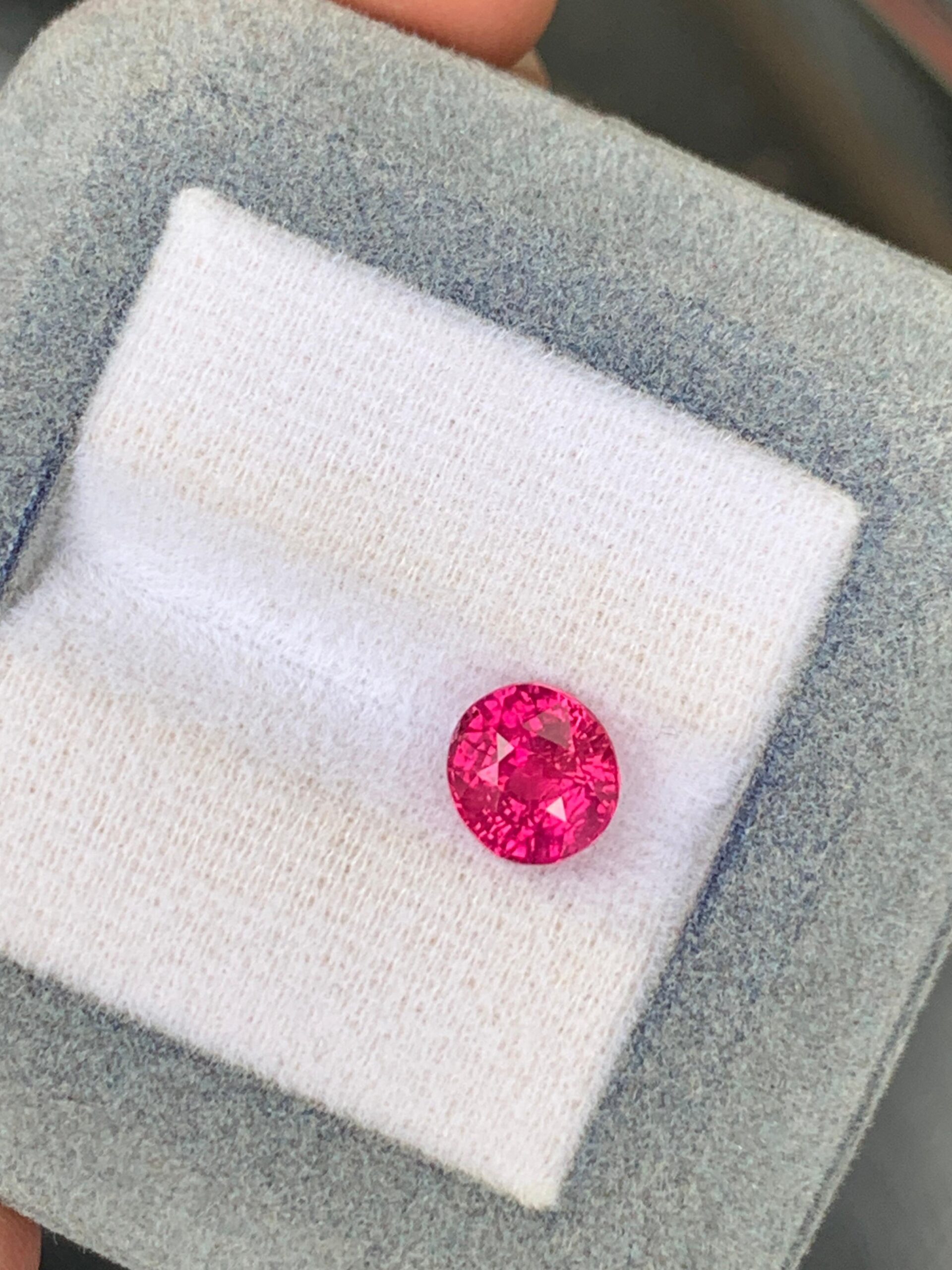
This tipping point is debated between laboratories : the GIA places it earlier than the SSEF. Two reports may therefore classify the same gem differently — “pink sapphire” for one, “ruby” for the other — with a considerable price difference at stake.
A practical consequence, and one that works in your favour: at comparable quality, a pink sapphire engagement ring remains markedly more accessible than a ruby — for the same hardness of 9 out of 10 and an equally assertive warm hue. It is one of the best values in corundum.
Ruby has the distinction of being the first gemstone to be synthesised industrially, as early as the beginning of the 20thth century, by flame fusion. In other words: many antique pieces of jewellery contain them, without always saying so.
This is useful information if you inherit a red family ring. A stone that is perfectly clean, with a very even red colour, in a piece of jewellery from the 1920s to the 1970s, warrants verification — not out of suspicion, but because synthetic stones were then common and perfectly accepted.
The good news is that these stones can be identified. Flame fusion leaves curved growth lines and sometimes spherical gas bubbles — two signatures that no natural crystal produces, as nature forms straight, angular growth lines. An experienced gemmologist can see them with a loupe.
If there is just one thing you should take away from this article, it is this. Treatment with lead glass is, by far, the main problem in today’s ruby market.
The principle: a stone so heavily fractured that it would be unsaleable is impregnated with lead glass that fills the fissures. The result is visually presentable — often in a very flattering red. Its value bears no comparison with that of a classic heated ruby, and many are sold, sometimes in complete good faith.
The issue goes beyond price. These stones are unusually fragile : the glass withstands neither ultrasound nor acidic products — lemon juice alone is enough to attack it — nor heat. A jeweller who repairs a prong with a blowtorch, unaware of this, can destroy the stone in a matter of seconds.
No lead-glass-filled, beryllium-treated or irradiated rubies are included in our selections. Traditional heating, however, is accepted and declared: it is a stable treatment that reveals colour already present, and the vast majority of rubies on the market undergo it. Heated or unheated →
With a 10x loupe, three clues are accessible. They provide guidance — they are not conclusive.
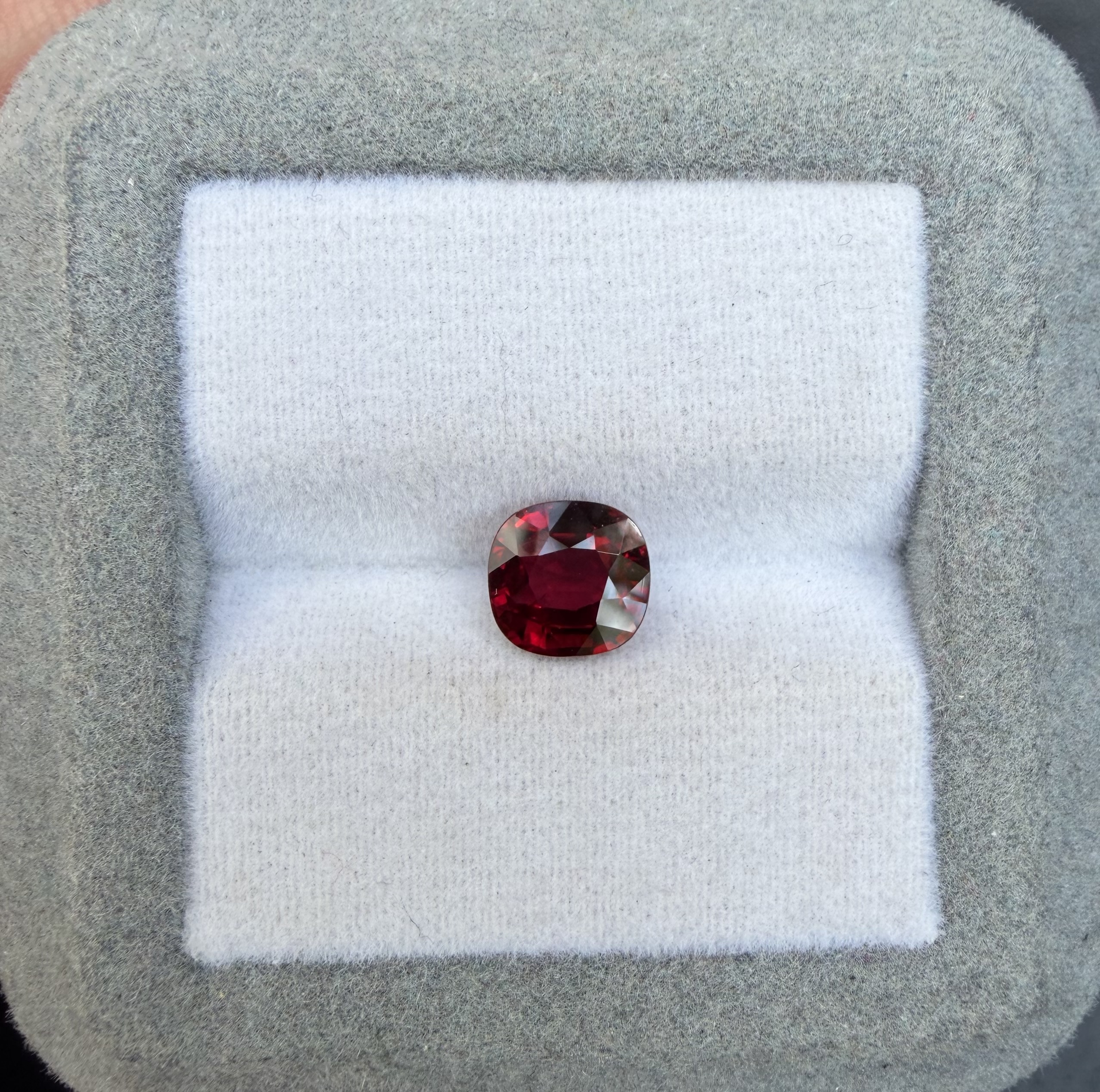
Silk. Fine, interlaced rutile needles create a silky appearance characteristic of certain natural corundums. Their presence is an excellent indication of natural origin — their absence proves nothing.
Growth lines. Straight and angular in a natural stone, curved in a flame-fusion synthetic. This is the clearest criterion for identifying older synthetics.
Bluish reflections. In a lead-glass-treated stone, blue-orange flashes may sometimes be seen along filled fractures, as well as bubbles trapped in the glass. Visible under a loupe, in immersion, to a trained eye.
Blowing on the stone, immersing it in water, rubbing it against a surface to see whether it “bleeds colour”: none of these tests proves anything. And scratching a stone to test it is irreversible. Recognising a gemstone →
Two words influence the price of a ruby as much as its colour, and both deserve to be understood.
“Pigeon’s blood” refers to the most intense reds, historically associated with Burmese rubies. It is a commercial designation: some laboratories mention it on their reports according to their own criteria, while others refuse to do so, and it is not standardised between them. It has a major influence on price — so caution is advised when it is claimed without documentation.
Geographical origin. Burma retains its historical prestige, while Mozambique now supplies most of the fine stones on the market. A laboratory only reaches a conclusion on origin when the inclusions allow it, and “origin undetermined” is not a flaw in the gemstone. Let us say it once again: a fine Mozambican stone surpasses an average Burmese stone.
More so for a ruby than for any other gemstone: natural or synthetic, treatments undergone — particularly the absence of lead-glass filling — and origin, if the laboratory gives an opinion. Without these three pieces of information, a ruby price means nothing.
It is corundum coloured red by chromium — exactly the same mineral as a sapphire. Below a certain chromium threshold, the stone remains a pink sapphire; above it, it becomes a ruby. This threshold is debated among laboratories.
Not with the naked eye: the confusion lasted for centuries. The reliable criterion is optical — ruby is birefringent and therefore dichroic, while spinel is isotropic and shows no dichroism. A dichroscope settles the question in a matter of seconds. Fluorescence, however, is not a distinguishing factor.
A highly fractured stone whose fissures have been filled with lead glass. Its value bears no comparison with that of a conventionally heated ruby, and it is fragile: no ultrasound, heat or acidic products. We exclude these stones from our selections.
By its inclusions: curved growth lines and spherical gas bubbles, two signatures that no natural crystal produces. As ruby has been synthesised industrially since the beginning of the 20thcentury, many antique jewels contain them.
A trade designation for the most intense reds, historically associated with Burma. Some laboratories mention it according to their own criteria; it is not standardised between them, and it has a significant impact on price.
The vast majority are: it is a traditional, stable and disclosed heat treatment that reveals colour already present. An unheated ruby is considerably rarer, and its certificate states this. Heating makes no difference to care.
More so than for any other coloured stone. It should reach a conclusion on three points: whether it is natural or synthetic, any treatments it has undergone—particularly the absence of lead glass—and its origin, if the laboratory is able to determine it.
Every stone we sell comes with its laboratory report. The stock can be browsed from the ruby.
Share this post