Zambian or Colombian Emerald?
Bonnot Paris22/9/2026
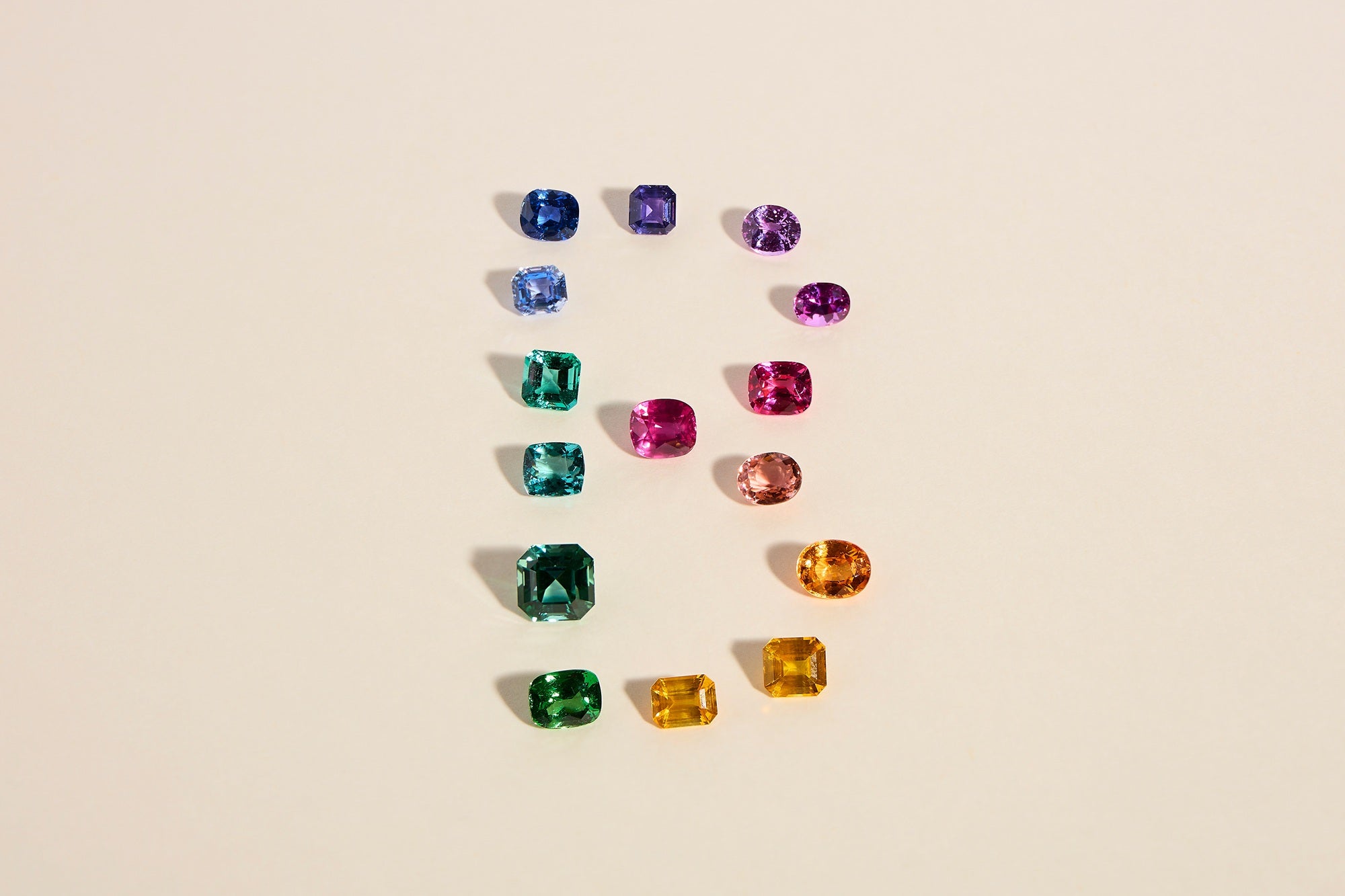



Light enters through the top of a cut stone, reflects off the pavilion facets and exits through the table. If a film of soap, cream and dust forms beneath the setting, some of this light no longer escapes. The stone appears lifeless even though it is intact.
Hence this principle, which can be summed up in one line: a ring is cleaned from underneath. The rest of this guide explains what to use, how often, and above all what you should never attempt — because when it comes to care, damage almost always comes from excessive zeal.
It is suitable for all families without exception, including the most delicate. Once a month is enough for a ring worn every day.
For a few minutes in lukewarm water — never hot — with a drop of mild soap.
Use a soft-bristled brush, paying particular attention beneath the setting and between the prongs. Do not press.
With clear lukewarm water. Plug the sink before you begin — it is the most useful advice in this article.
On a lint-free cloth, without rubbing. Allow to dry completely before storing.
It is neither dust nor soap, but creams and body oils. They form a film that traps everything else. A ring removed before applying hand cream stays clean three times longer.
Beyond the basic method, gemstones fall into three groups. The dividing line is not hardness, but the presence or absence of a fragile treatment and fractures reaching the surface.
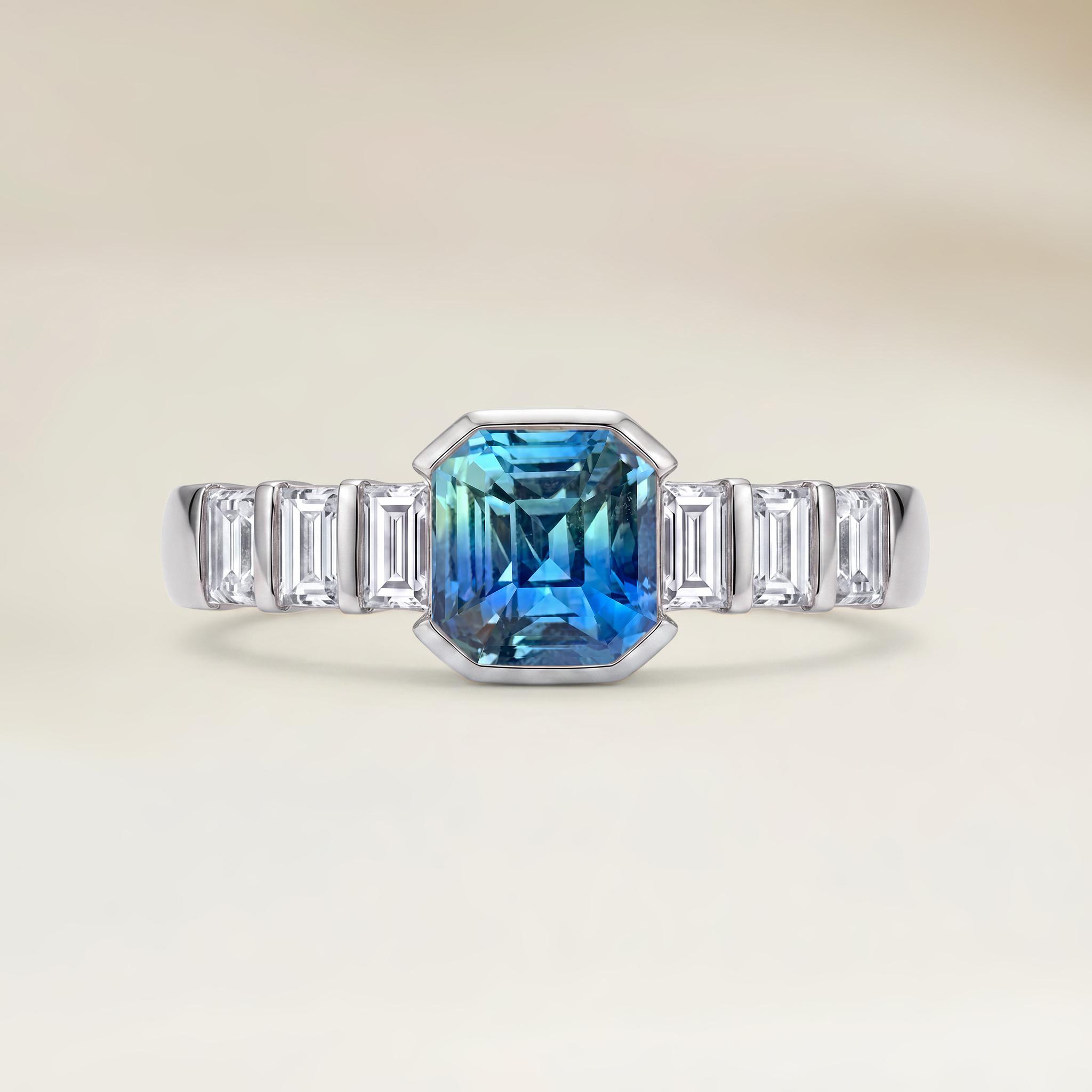
View sapphire rings →
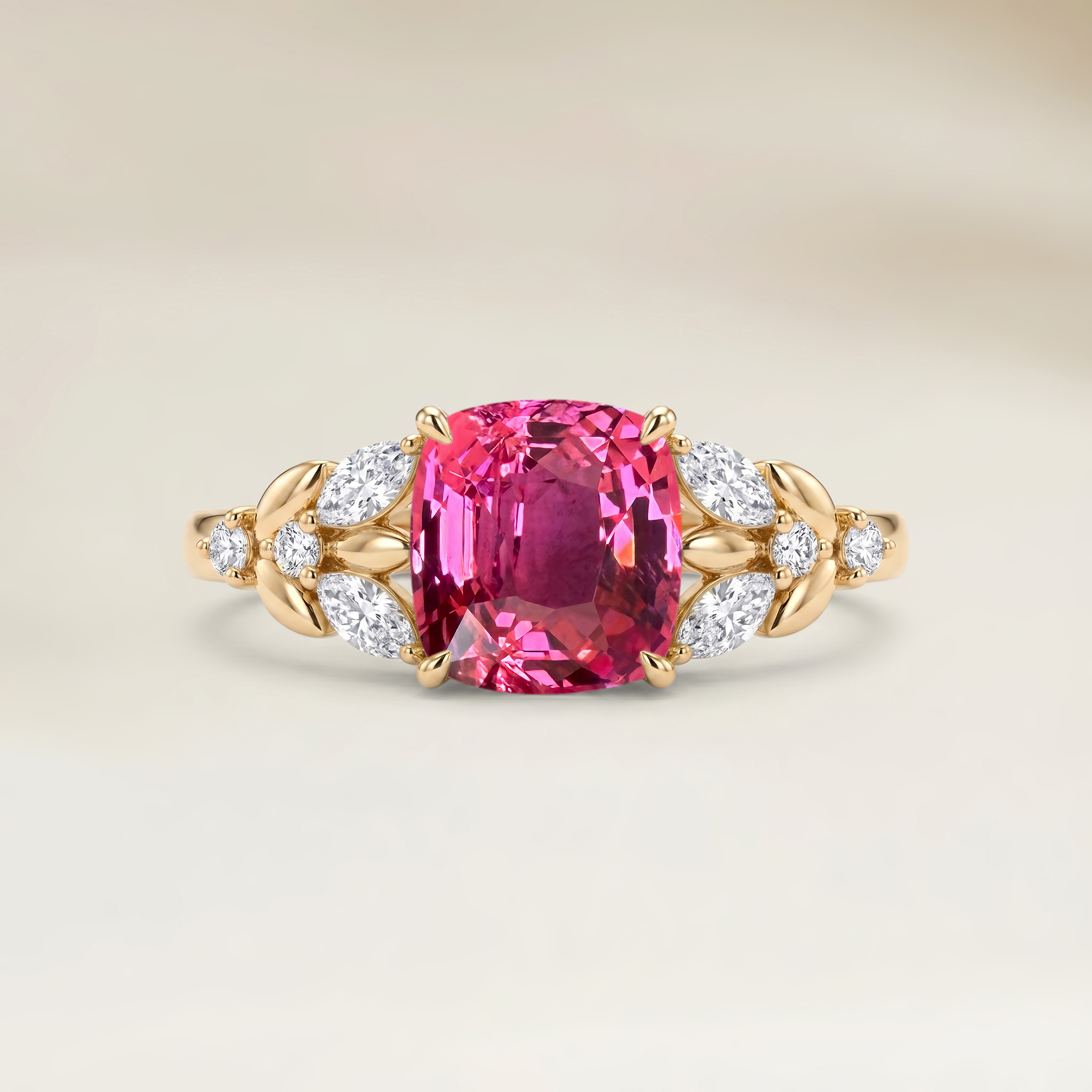
View spinel rings →
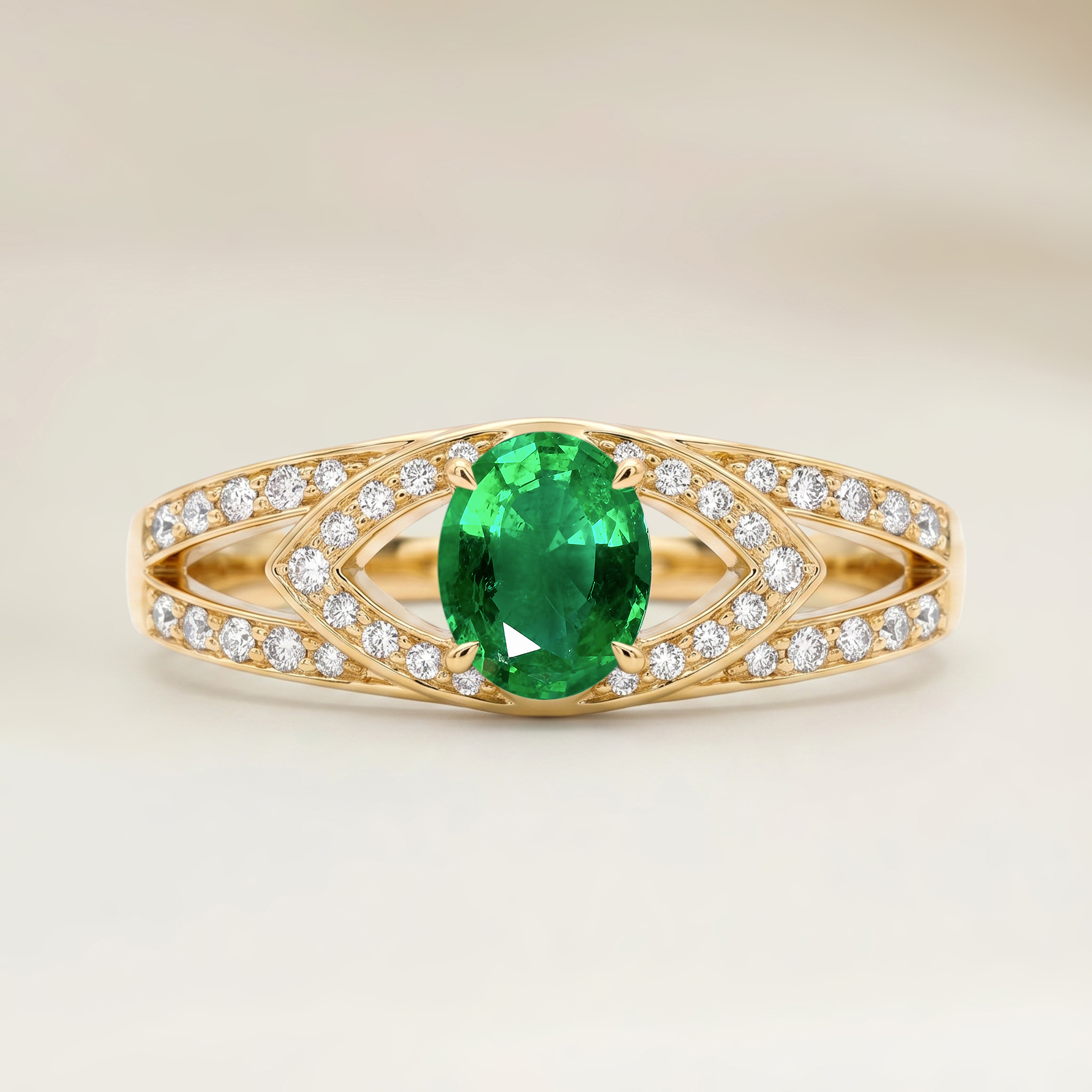
View emerald rings →
Regime 2 includes sound but softer stones — tourmaline, garnet — detailed in the table below.
| Family | Hardness | Care | Ultrasonic cleaning |
|---|---|---|---|
| Sapphire, ruby | 9 | Lukewarm water, mild soap, soft brush. | Possible in the workshop |
| Spinel | 8 | Same as corundum. Generally no treatment to spare. | Possible in the workshop |
| Emerald | 7,5 – 8 | Lukewarm water and mild soap only, gentle cleaning. | Never |
| Aquamarine | 7,5 – 8 | Lukewarm water and a soft brush. Same mineral family as emerald, but rarely oiled. | To be avoided |
| Tourmaline, garnet | 7 – 7,5 | Lukewarm water and a soft brush. Avoid thermal shock. | Avoid |
| Tanzanite | 6,5 | Sensitive stone: gentle cleaning only, and a protective setting. | Never |
An important distinction regarding corundums. A sapphire engagement ring or a ruby engagement ring can withstand ultrasound — but only on a sound stone, meaning without any surface-reaching inclusion or crack. This is exactly what we check before putting them through the machine in the workshop, and why we advise against domestic devices: nothing tells you what condition your gemstone is in.
At the other end of the spectrum, an emerald engagement ring must never go near one. And in between, a spinel engagement ring behaves like a corundum: since spinel is almost never treated, there is no oil or filling to preserve.
We see a few care-related accidents every year. They all look alike.
| To avoid | Why |
|---|---|
| Steam | Heat and pressure: it drives the oil out of an emerald and weakens any included stone. |
| Domestic ultrasonic cleaners | Without first checking the condition of the gemstone, they widen existing cracks. |
| Bleach and chlorine | They attack gold alloys and can alter certain stones. So can the swimming pool. |
| Household cleaning products | Too harsh for metal, and often abrasive. Mild soap is enough. |
| Abrasive pastes | Toothpaste, bicarbonate of soda, powders: they irreversibly scratch polished metal. |
| Boiling water | Thermal shock can shatter an included stone. Lukewarm means lukewarm. |
Remove your ring for sport, gardening, housework and swimming. The main risk is not scratching: it is impact on a prong, which loosens the setting without anything being visible. The stone still holds for a few weeks, then it falls out.
This is the least-known and most useful rule: each piece of jewellery in its own pouch or compartment. The reason can be summed up in one sentence — hardness varies from one family to another, and corundum scratches all other stones.
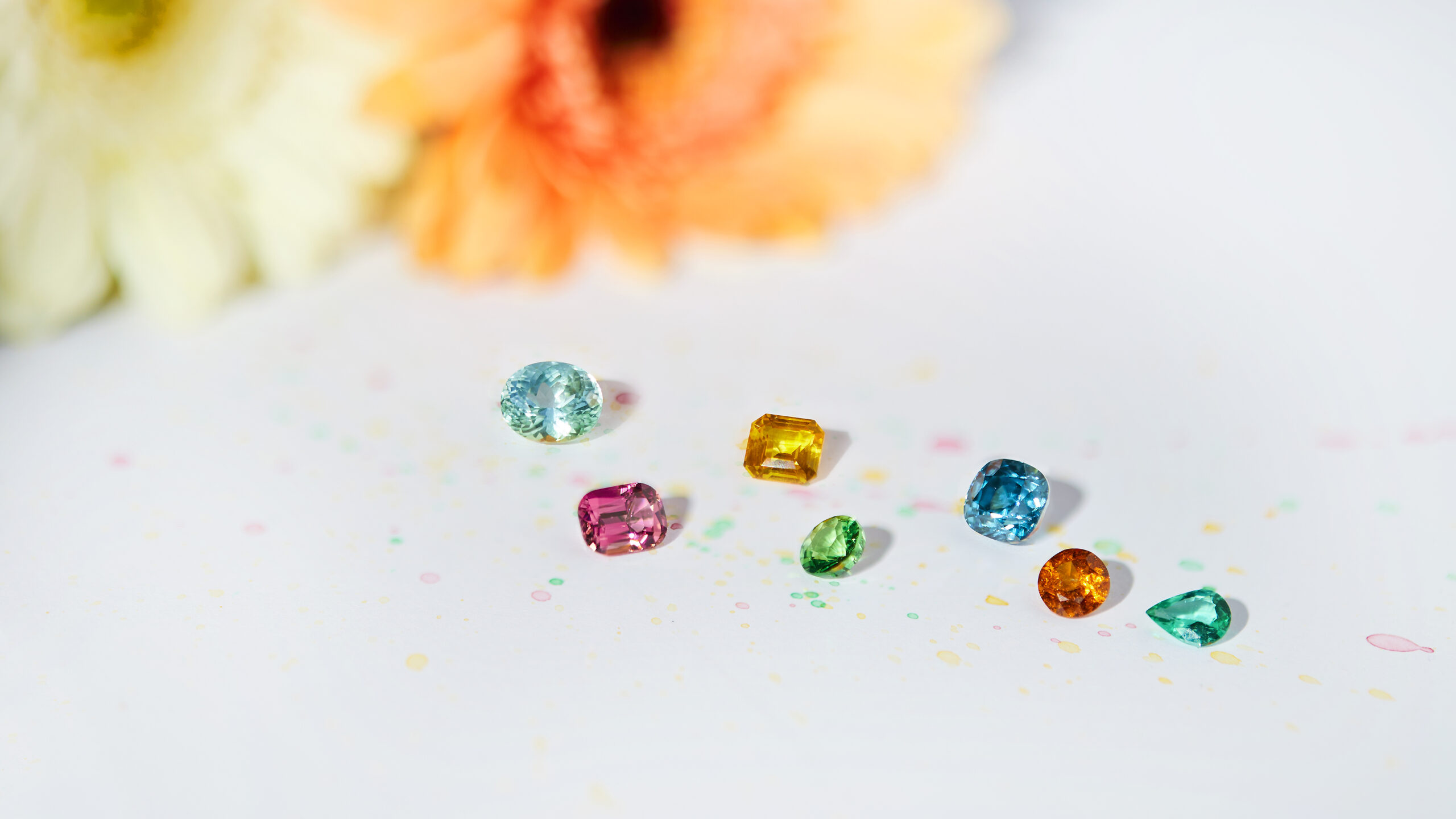
The Mohs scale is a scratch scale, not a measure of toughness: a sapphire at 9 scratches a tourmaline at 7, and diamond scratches them all. A sapphire ring and a tanzanite pendant travelling together in the same pouch will end up marking each other — the metal first, then the softer stone.
When travelling, the same rule applies even more strictly: individual pouches, in the cabin rather than in checked luggage, and the ring on your finger rather than in a bag.
Three procedures should not be carried out at home, and two of them are complimentary with us.
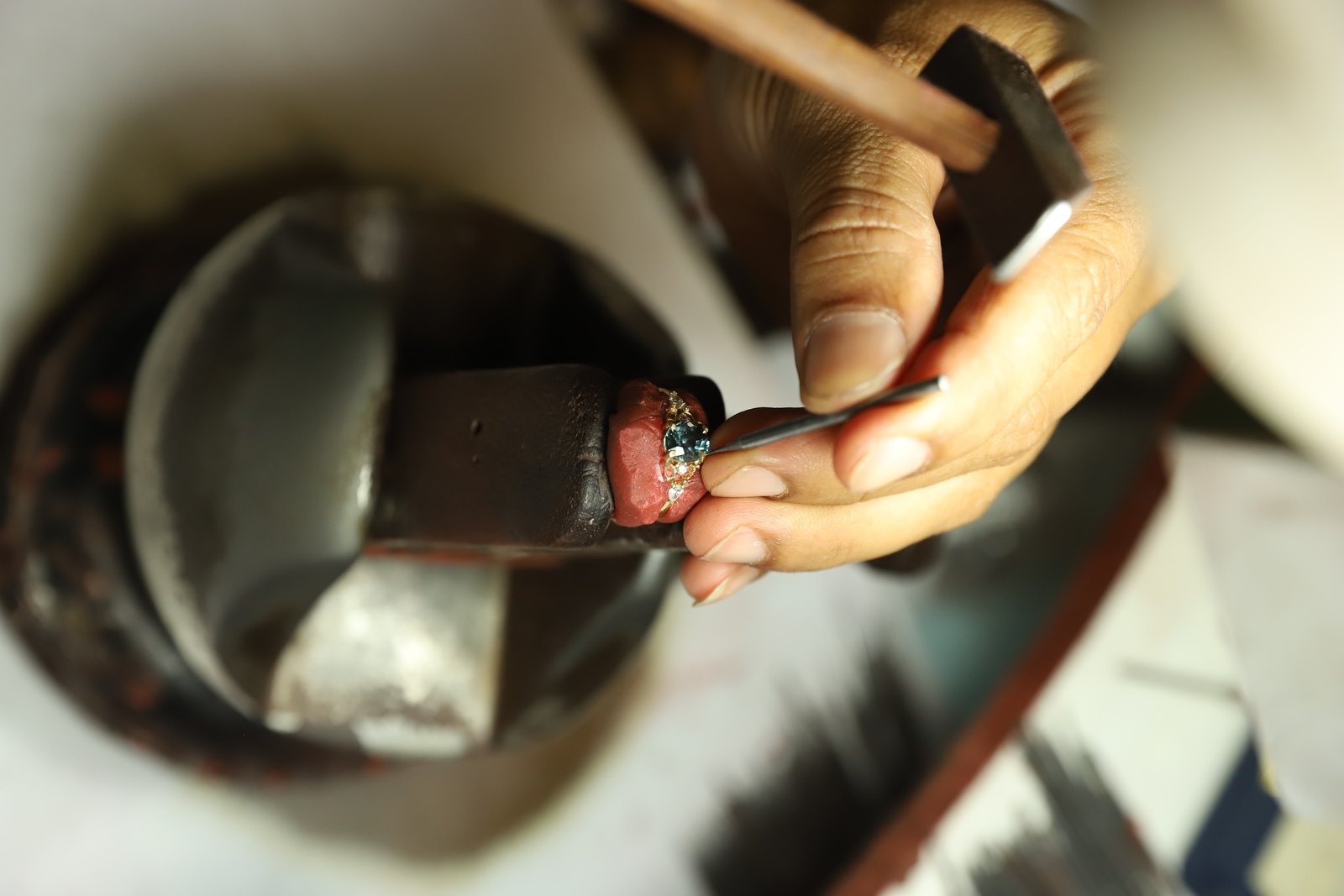
Setting inspection, every two years or after a significant impact. It is the only truly essential procedure, and it is complimentary for life on our creations. We check the play in the prongs, wear on the underside of the shank and the stone’s tension in its setting.
Rhodium plating, for white gold only. Rhodium is a surface layer that wears away within two to three years: when the ring takes on a yellow-grey hue, it is not the stone that has dulled, but the metal reappearing. Platinum, on the other hand, requires nothing — it is naturally white.
Refreshing the oil treatment, for emeralds. Over the years, the colourless oil evaporates and the stone’s garden becomes more visible. The workshop can repeat the process: it is routine care, not a repair.
If you hear or feel the stone move slightly when you tap the ring near your ear, stop wearing the piece and have it inspected. It is the only reliable symptom of a setting that has become loose. Book an appointment →
Lukewarm water, mild soap, a soft brush, once a month. Soak for a few minutes, gently brush beneath the stone where dust accumulates, rinse with clean water and dry on a lint-free cloth. This method is suitable for every family, without exception.
No, never — neither ultrasound nor steam. Almost all emeralds receive a colourless oil that improves the clarity of their green: ultrasound and heat expel it. The workshop can refresh the oiling over the years, but it is better not to have to do so.
Corundums — sapphire and ruby — and spinel, provided the stone is sound, with no surface-reaching inclusions or cracks. We use them in the workshop, where the condition of the gemstone is checked beforehand. An emerald or a tanzanite must never undergo this treatment.
Separately, each in its own pouch or compartment. Hardness varies from one family to another, and corundum scratches all other stones: a sapphire and a tourmaline stored together will eventually damage the softer of the two.
For contact sports, gardening, the gym, household products and the swimming pool. For an emerald, add washing-up, the beach and any manual work. The main risk is not scratching but an impact to a prong, which loosens the setting without you noticing.
Every two years, or immediately after a significant impact. This check is offered for life on our creations. A loose prong can be tightened in a few minutes; a lost stone can never be replaced identically.
In most cases, it is not the stone but the metal: white gold is rhodium-plated, and this layer wears away within two to three years. Rhodium plating restores its whiteness. If the stone itself appears dull after cleaning, look beneath the setting — that is where the film of soap and dust settles.
Loose stones and their full characteristics can be explored from the page precious stones.
Share this post