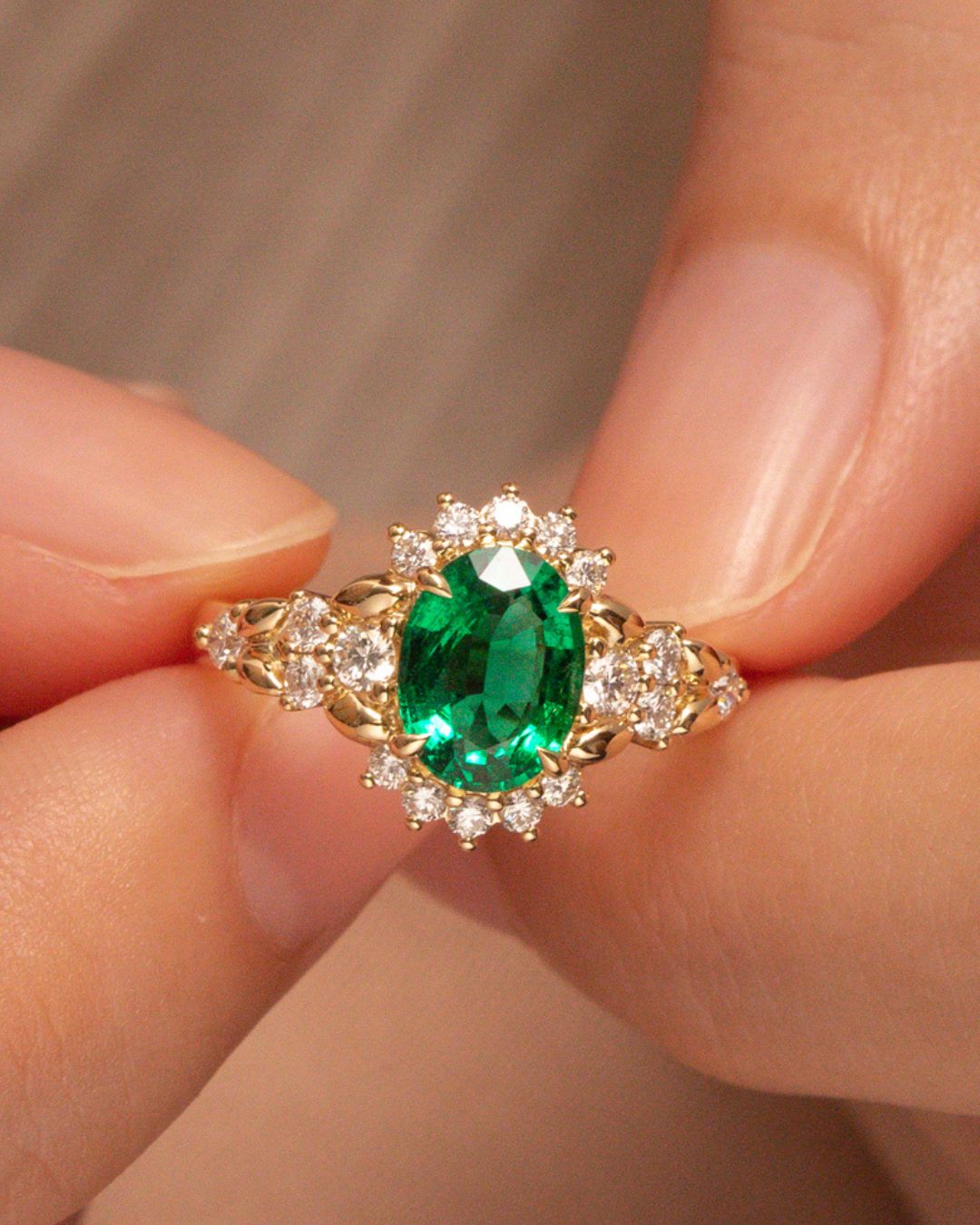
Zambian or Colombian Emerald?
Bonnot Paris22/9/2026
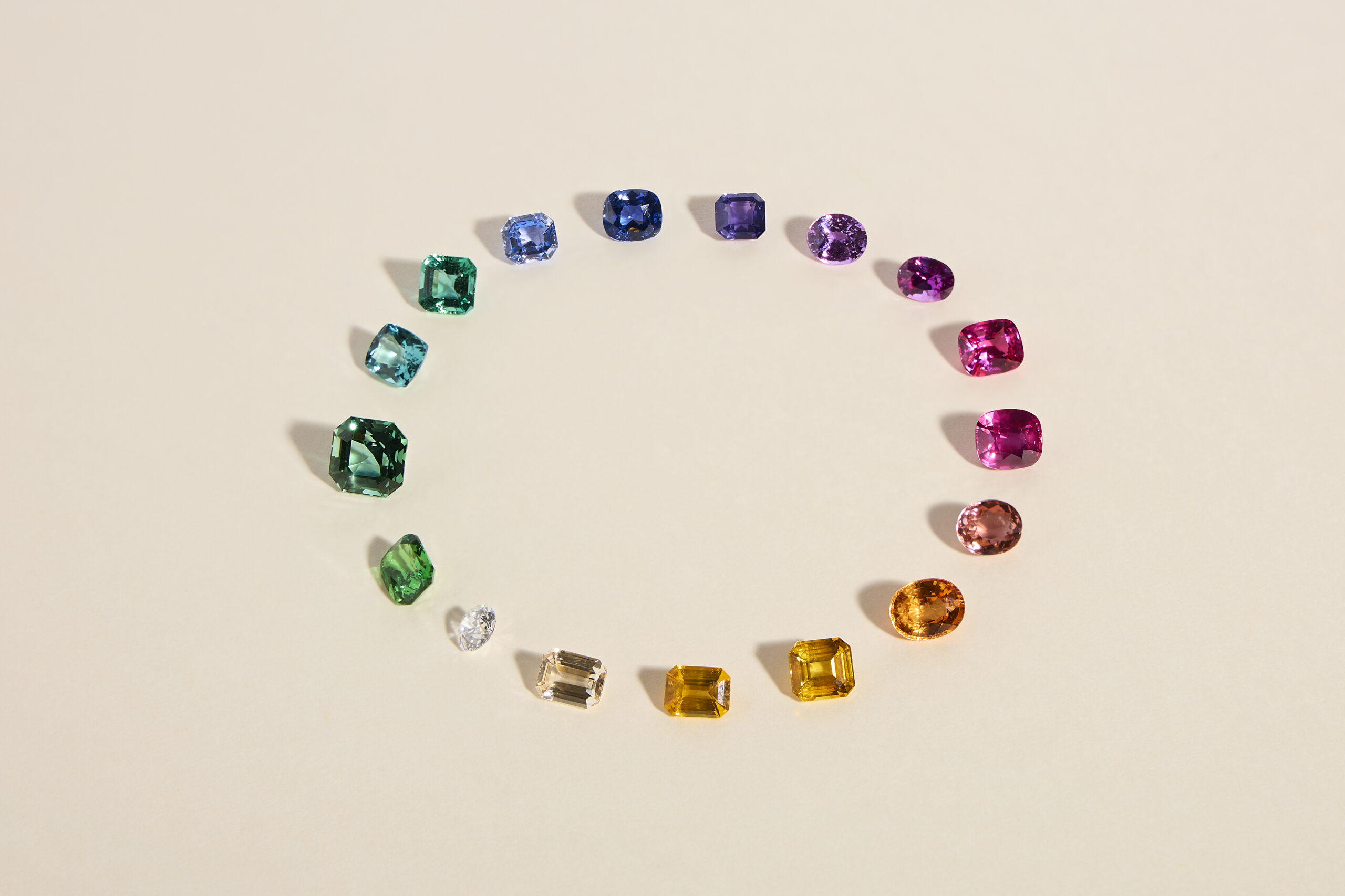



Its origins can be traced back to the twelve stones of Aaron’s breastplate, described in the Book of Exodus and associated much later with the twelve months of the year. The modern list, meanwhile, dates from 1912 : an association of American jewellers then established an official correspondence. It has since been revised — tanzanite joined December in 2002, spinel joined August in 2016. This explains the variations still found from one source to another.
Here is the complete calendar, followed by the only thing truly useful to know before turning one into a piece of jewellery: not all of these stones can withstand being worn in the same way.
| Month | Stone(s) | Symbolism |
|---|---|---|
| January | Garnet | Courage, loyalty, energy |
| February | Amethyst | Serenity, balance, creativity |
| March | Aquamarine, bloodstone | Hope, renewal, peace |
| April | Diamond | Strength, eternal love |
| May | Emerald | Honesty, wisdom, balance |
| June | Pearl, moonstone, alexandrite | Beauty, intuition, transformation |
| July | Ruby | Passion, courage, vitality |
| August | Peridot, spinel, sardonyx | Confidence, luck, serenity |
| September | The most worn Blue sapphire | Loyalty, wisdom, royalty |
| October | Opal, tourmaline | Self-confidence, love, creativity |
| November | Topaz, citrine | Joy, optimism, prosperity |
| December | Turquoise, zircon, tanzanite | Serenity, wisdom, protection |
June, August, October, November and December officially have two or three stones. This is not an approximation: it is the result of successive revisions to the list, often prompted by availability — natural pearl had become impossible to find, and opal too fragile for many uses. If you do not like your birthstone, look at another one: you have every right to.
The zircon of December is a natural, ancient gemstone with remarkable brilliance. It has nothing to do with “zirconia” or cubic zirconium oxide, which is an inexpensive synthetic stone made to imitate diamond. The similarity between the two words perpetuates constant confusion, even among sellers.
This is the only truly decisive information on this page, and no birthstone calendar provides it. Between June’s pearl and April’s diamond, the difference in durability is like that between a fingernail and a steel blade. Anyone giving a ring with their partner’s birthstone should know this beforehand, not afterwards.
| Verdict | Stones | Why |
|---|---|---|
| Worry-free everyday ring |
Diamond, sapphire, ruby, alexandrite, spinel | Hardness 8.5 to 10. And corundums — sapphire and ruby — have no cleavage planes : they withstand impacts. |
| With a little care | Aquamarine, tourmaline, garnet, amethyst, citrine, peridot | Hardness 6.5 to 8. Remove for gardening and housework, but perfectly suitable for everyday wear. |
| Emerald, apart | Emerald | Hardness 7.5 to 8 — therefore hard — but crossed by natural fractures that make it brittle. Never use ultrasound. |
| Real precautions better as a pendant |
Topaz, tanzanite, opal, turquoise, moonstone, zircon, pearl | Either soft (pearl 2.5–4.5 · turquoise 5–6 · opal 5.5–6.5), or possessing perfect cleavage which causes them to shatter upon impact — this is the case with topaz and tanzanite despite their respectable hardness. |
Hardness hardness measures resistance to scratching; toughness measures resistance to impact. Topaz scores 8 out of 10 — more than tourmaline — yet splits cleanly against the corner of a piece of furniture, because it has a perfect cleavage plane. A ring is knocked far more often than it is rubbed. Toughness is what matters, and it is what nobody looks at.
The practical consequence is simple: if the person’s birthstone is in the last row, it will make a magnificent pendant or pair of earrings, and a disappointing everyday ring. It is better to change the jewel than force the stone — or choose the month’s second stone, when there is one.
A bespoke-set birthstone has an advantage few jewels possess: it carries a date without needing an engraving. A garnet for January, an emerald for May, a sapphire for September — the jewel becomes a marker, and that is what makes it heirloom-worthy.
We work exclusively with coloured gemstones, sourced directly from our offices in Sri Lanka, where our team works on the market every day, as well as in Thailand and in Jaipur. Depending on the month, the calendar stone is therefore one of our specialities — September, July, May, January, August, October — or not at all: we offer neither pearls, opals nor turquoises.
If you are giving a birthstone jewel, do not choose the colour on a screen. A photographed garnet always appears more vivid than it really is; a tanzanite, more violet. And this is even truer of ruby, whose fluorescence simply cannot be photographed. Our guide to precious stones explains how to compare them, and bespoke creation details how a project unfolds.
The blue sapphire — it is the colour that tradition specifically associates with September. A symbol of fidelity, and by far the most commonly worn coloured stone in engagement rings: its hardness of 9 out of 10 makes it one of the few coloured gemstones that can withstand daily wear without special care. See blue sapphire engagement rings.
Because the list has been revised. As natural pearls became impossible to find, moonstone and thenalexandritewere added to June. Tanzanite joined December in 2002, and spinel August in 2016. If you do not like your stone, you are entitled to choose another.
No, and the difference is enormous. Diamond, sapphire, ruby, alexandrite and spinel: no problem. Pearl, opal, turquoise, tanzanite and topaz: real precautions — either soft, or with a cleavage plane that makes them shatter when struck. For an everyday ring, you need to know this before buying.
No, and it is a common confusion. Zircon is an ancient natural gemstone with a beautiful brilliance. Cubic zirconia — cubic zirconium oxide — is an inexpensive synthetic stone created to imitate diamond. Two similar words, two unrelated things.
Of the twelve stones of Aaron’s breastplate in the Book of Exodus, associated much later with the twelve months. The modern list dates from 1912 and was established by an association of American jewellers — in other words, it is a commercial convention, not an age-old rule.
Of course, and it is common. Many of our clients arrive with their birthstone and leave with another colour, simply because it suits their complexion or hand better. A birthstone is a good starting point for a conversation, rarely an end point.
Share this post