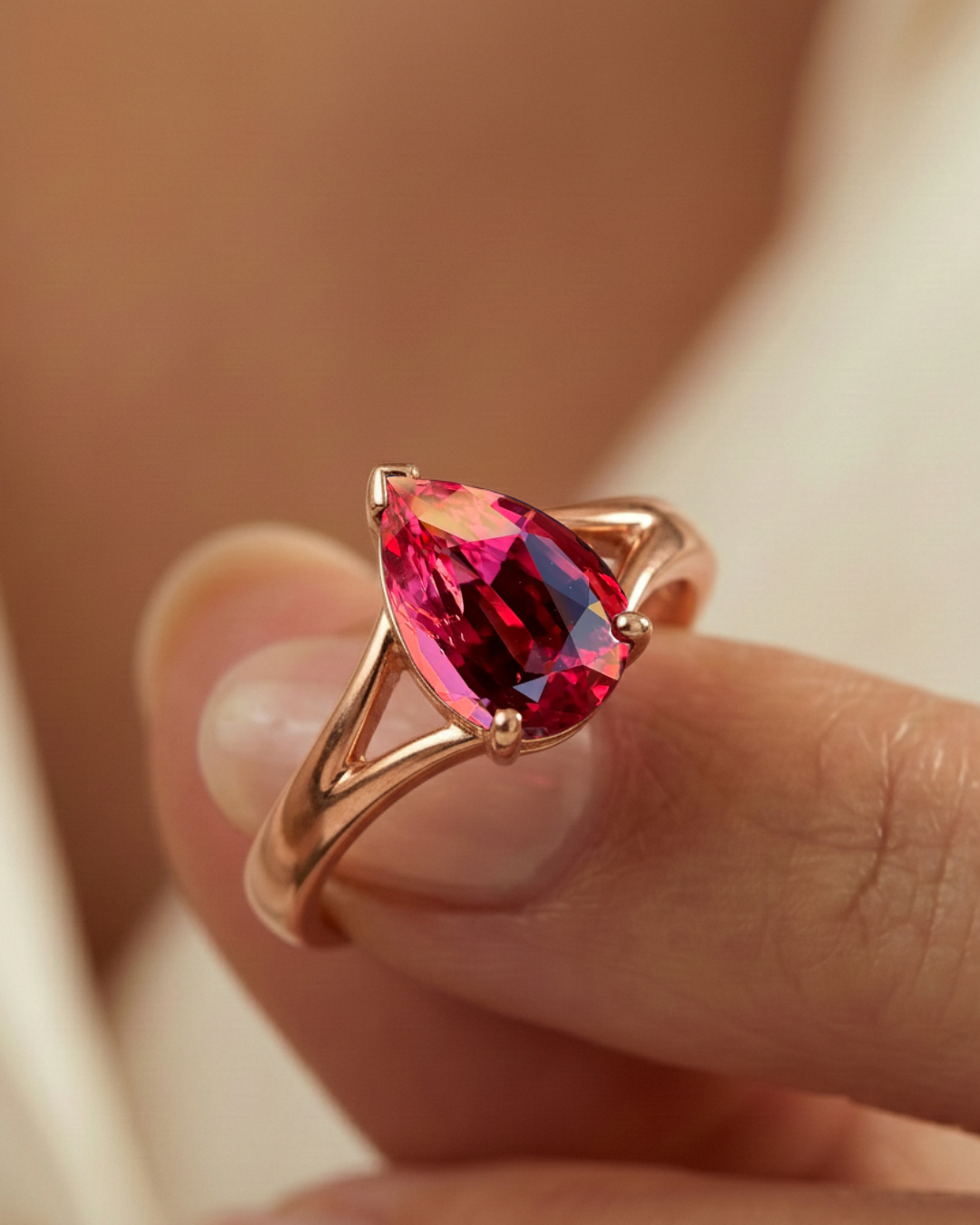
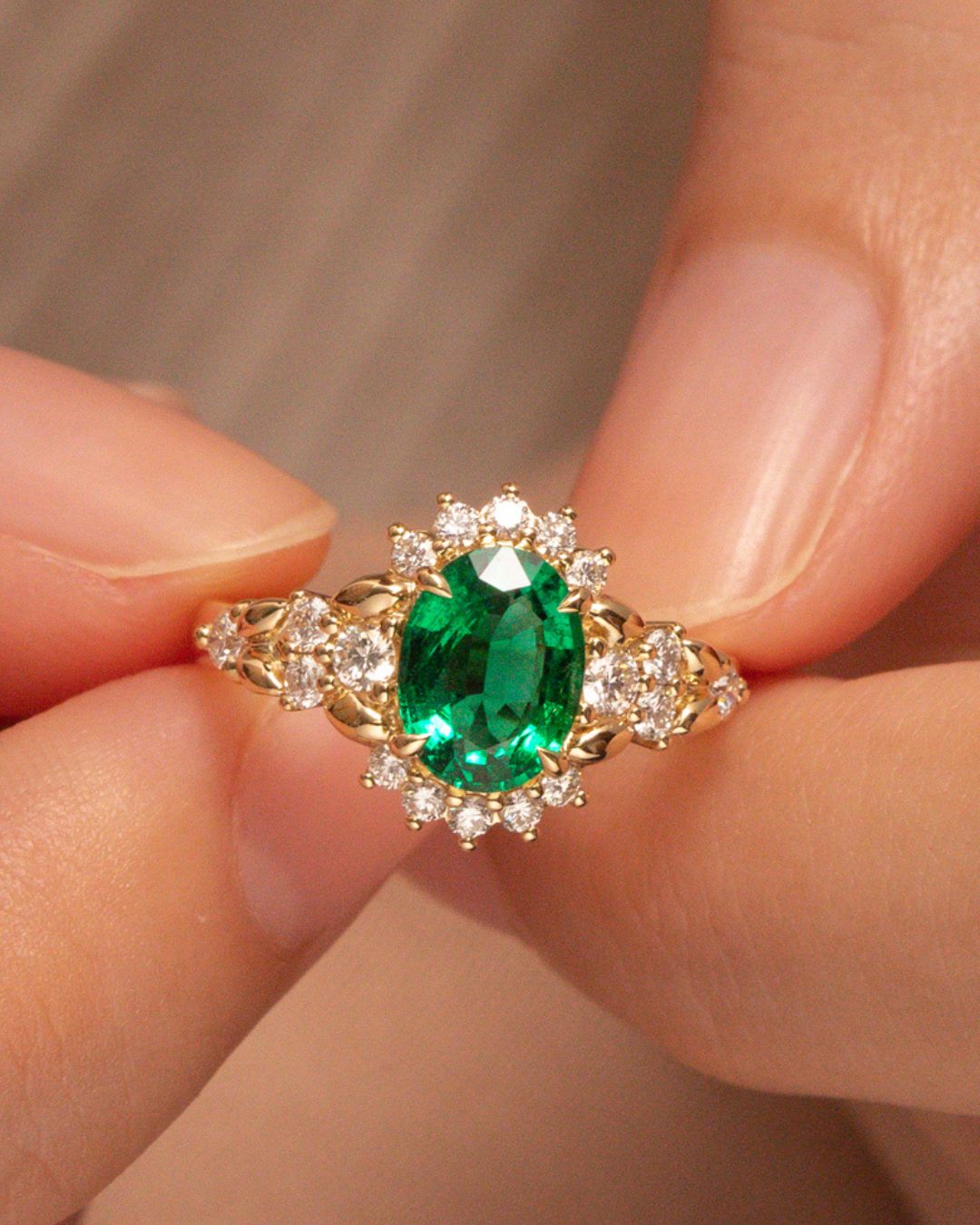
Zambian or Colombian Emerald?
Bonnot Paris22/9/2026
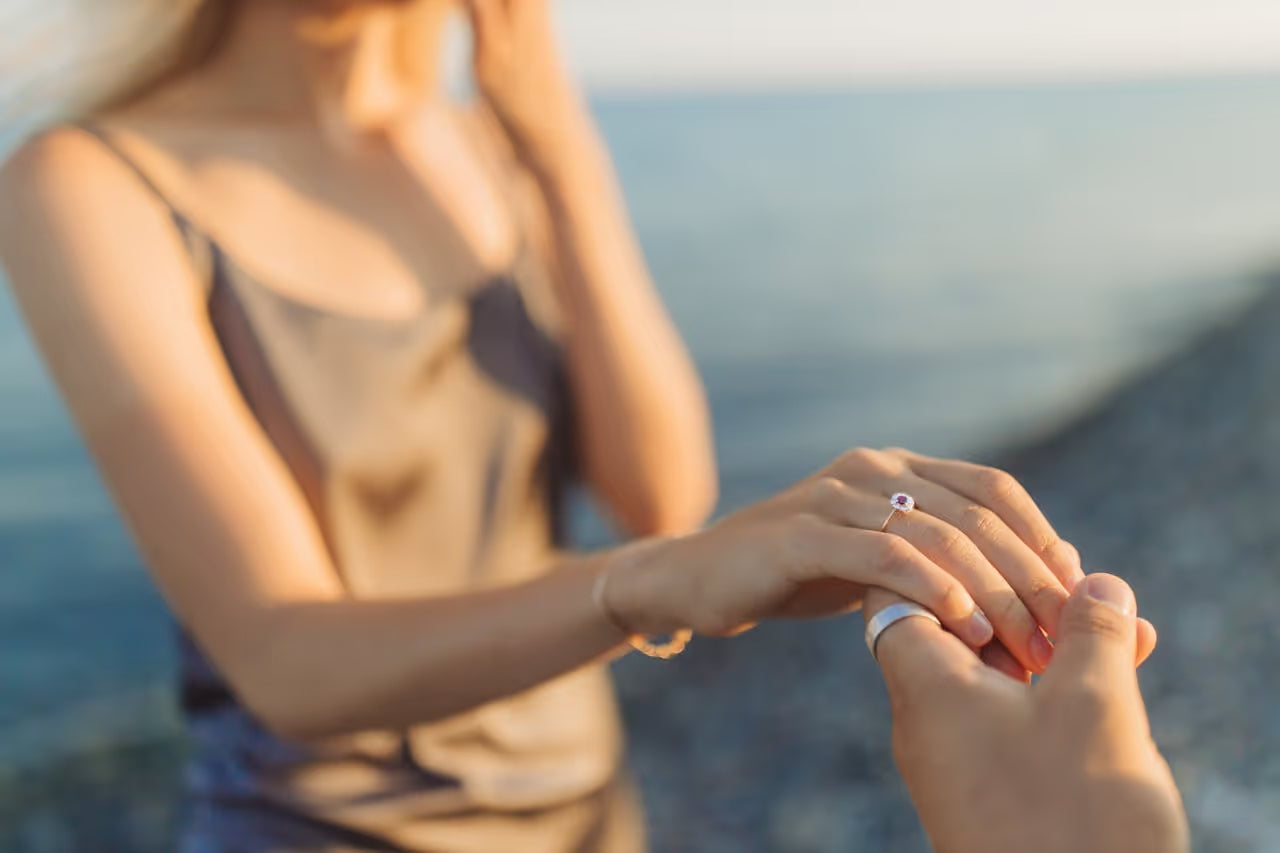



Everything else follows from that. The budget, the stone, the timing, even the risk of getting it wrong: each of the two paths has its own rules, and mixing them leads to the most complicated projects we see.
We receive both in roughly equal measure. This guide explains what each one involves in practical terms — and what we advise when the date is approaching faster than the decision.
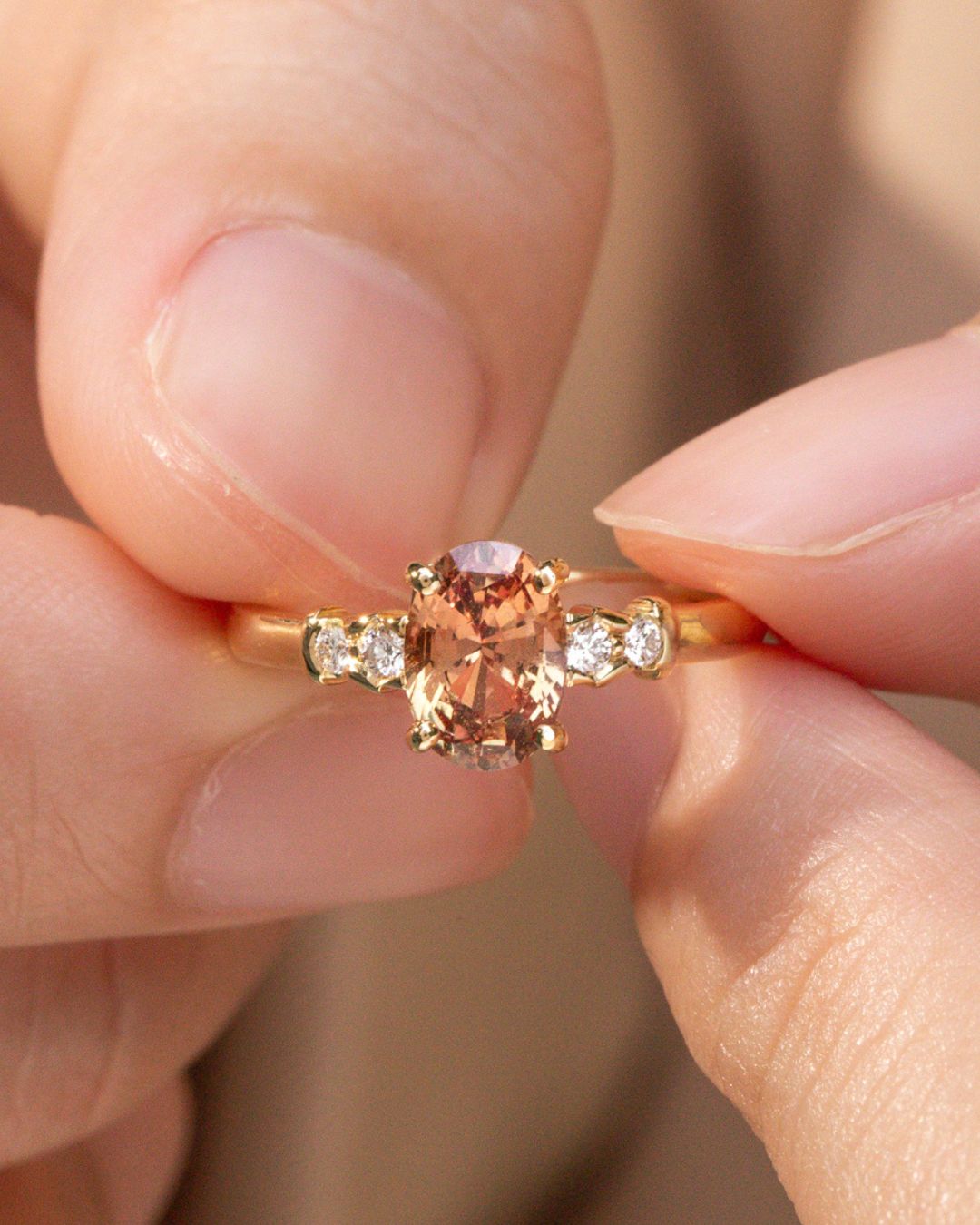
Let us say it from the outset: neither option is more romantic than the other. The first relies on impact, the second on getting it right. The choice depends above all on what you know of her tastes — and your tolerance for risk.
The classic gesture, and the most spectacular. It requires guessing a highly personal taste: the shape of the stone, the colour of the metal, the presence on the finger. The risk is almost never the stone — it is the setting design, far more divisive than one might imagine.
You propose with a loose stone, a temporary ring, or nothing at all — then design it together. This is what we see most often in the workshop for bespoke creations, and the project almost always comes together more quickly.
If you choose alone, look at the metal she already wears, not the stone. Someone who has worn only yellow gold for ten years will not switch to a white gold setting, however beautiful the gem may be. The colour of the metal is the most enduring preference there is.
Let us first dispense with the three-month salary rule. It comes from no tradition: it is an advertising invention of the 1930s, revived and amplified after the war to sell diamonds. It has never corresponded to anything other than a commercial objective.
The useful benchmarks are more prosaic. The stone accounts for the bulk of the price; the setting ranges from €1,250 for a simple design to several thousand for extensive setting work.
| Family | Setting creation from | Why this minimum |
|---|---|---|
| Emerald | 1 700 € | Less dense than corundum: at equal weight, it appears larger. |
| Tourmaline | 2 760 € | The broadest palette among coloured stones, and a family that is still little contested. |
| Sapphire | 2 500 € | Ten colours, deep availability, and the hardness that allows for everyday wear. |
| Padparadscha | 3 720 € | A laboratory-controlled designation: the certificate determines the price as much as the stone itself. |
| Ruby | 8 000 € | The rarest of the four major stones above two carats. |
Prices of available creations, observed in September 2026.
The right budget is the one that does not put you in difficulty the following month. A ring bought on credit at great cost is a poor start to a story. And with a given budget, we always recommend colour over weight: a one-carat stone with a vivid blue-green hue makes a more beautiful ring than two dull carats.
When you choose alone, one simple rule: a soft, luminous colour is more universally appealing than a highly saturated shade, and a restrained setting is easier to alter than a highly distinctive design. Three directions, from the most accessible to the most assertive.
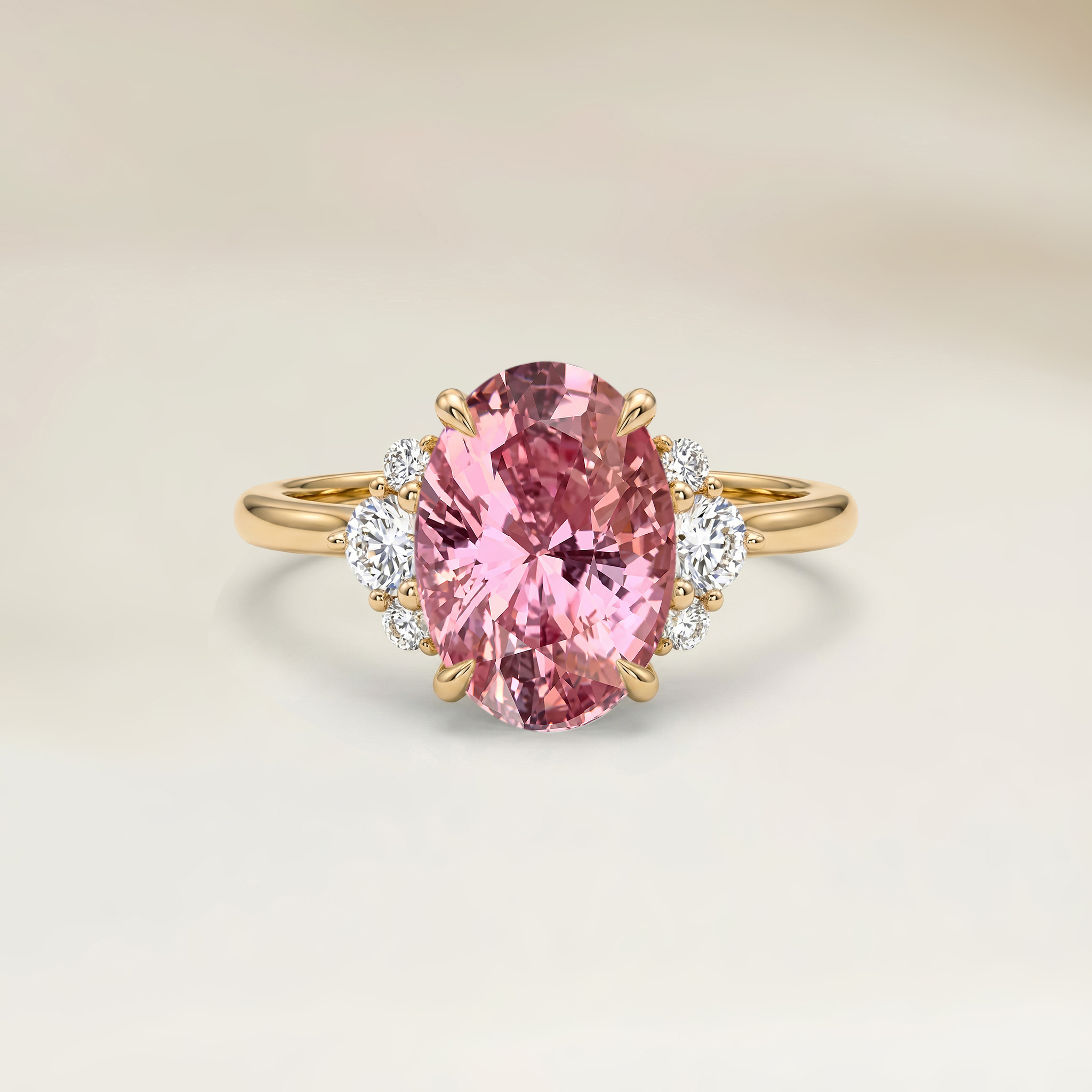
0.99 ct · €3,720
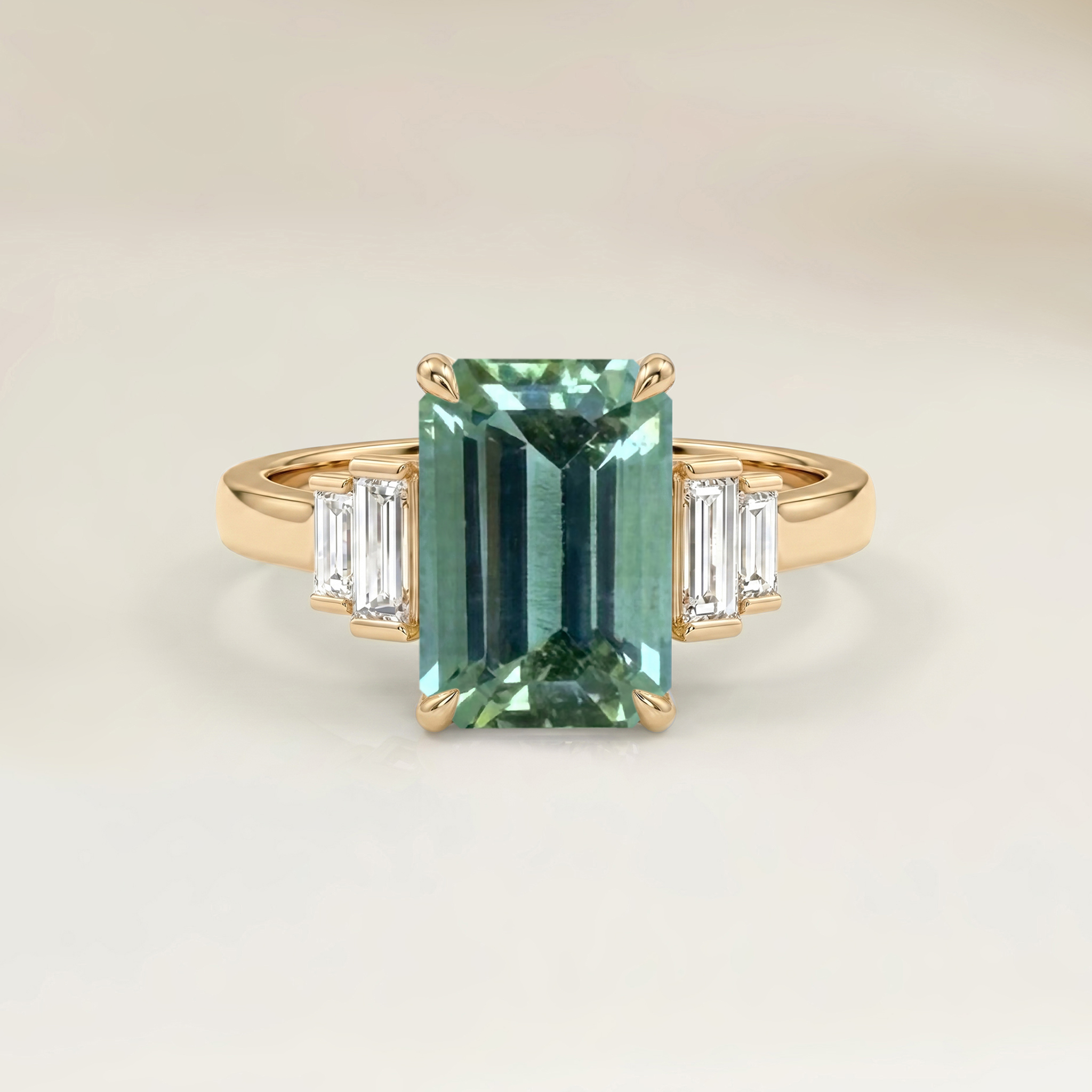
1.24 ct · €3,840
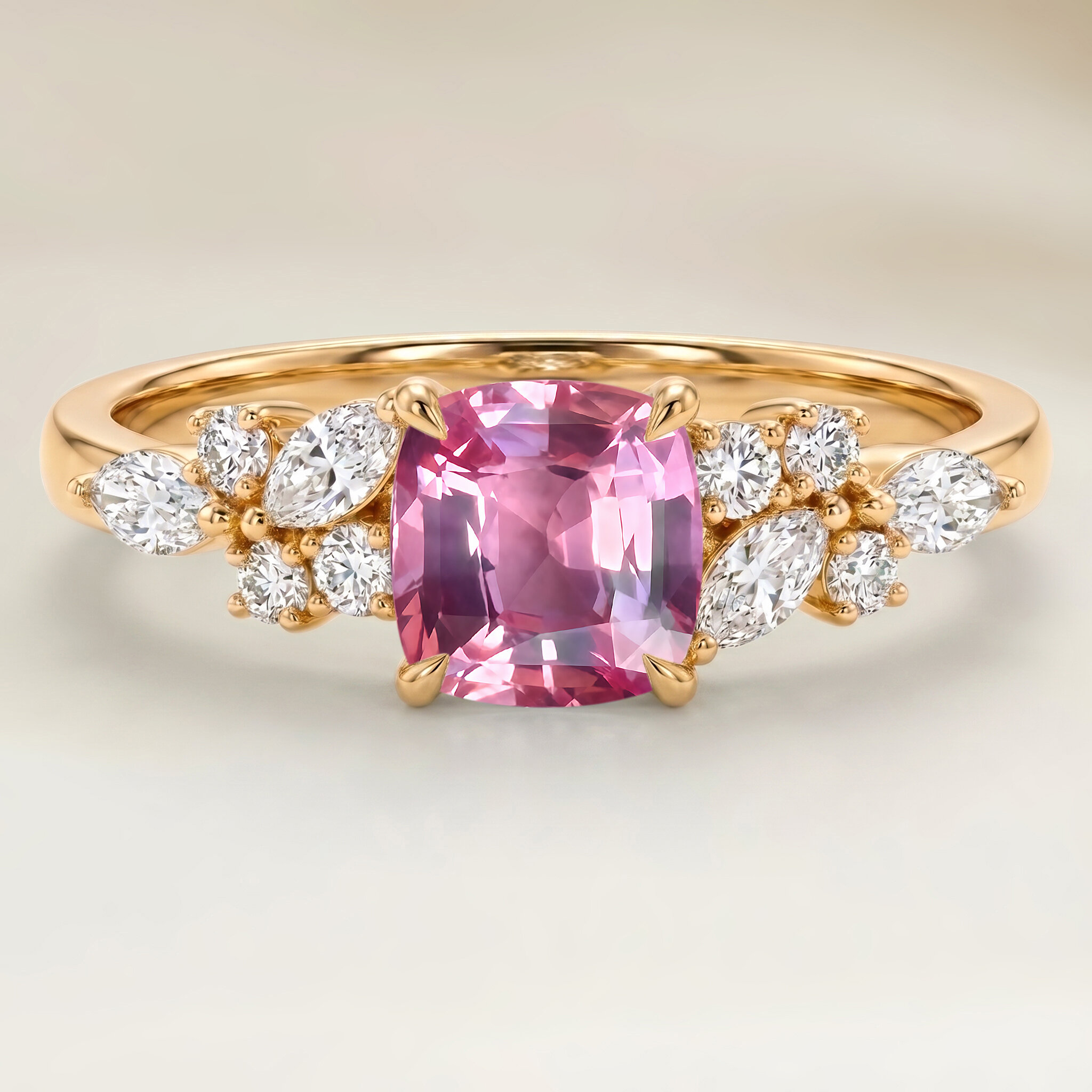
1.53 ct · €15,000
Available creations, prices observed in September 2026.
Padparadscha often comes up in requests, and for a reason that has nothing to do with gemology: it has a name. The only sapphire to bear one, derived from the Sinhalese padmaraga, the lotus flower. A padparadscha sapphire engagement ring tells a story before it is even seen — and its designation is controlled by laboratory, protecting it from approximations.
Conversely, if the budget is tight but you want size and colour, a tourmaline engagement ring is the most underrated option on the market: from green to pink, through to bicolours that layer two shades within the same stone. Its hardness of 7 to 7.5 simply requires a little more care than corundum.
It is the option we recommend most often, and the one nobody talks about. The stone is presented on its own, in its case, with its certificate. The commitment is there, as is the value — and the setting is then designed together.
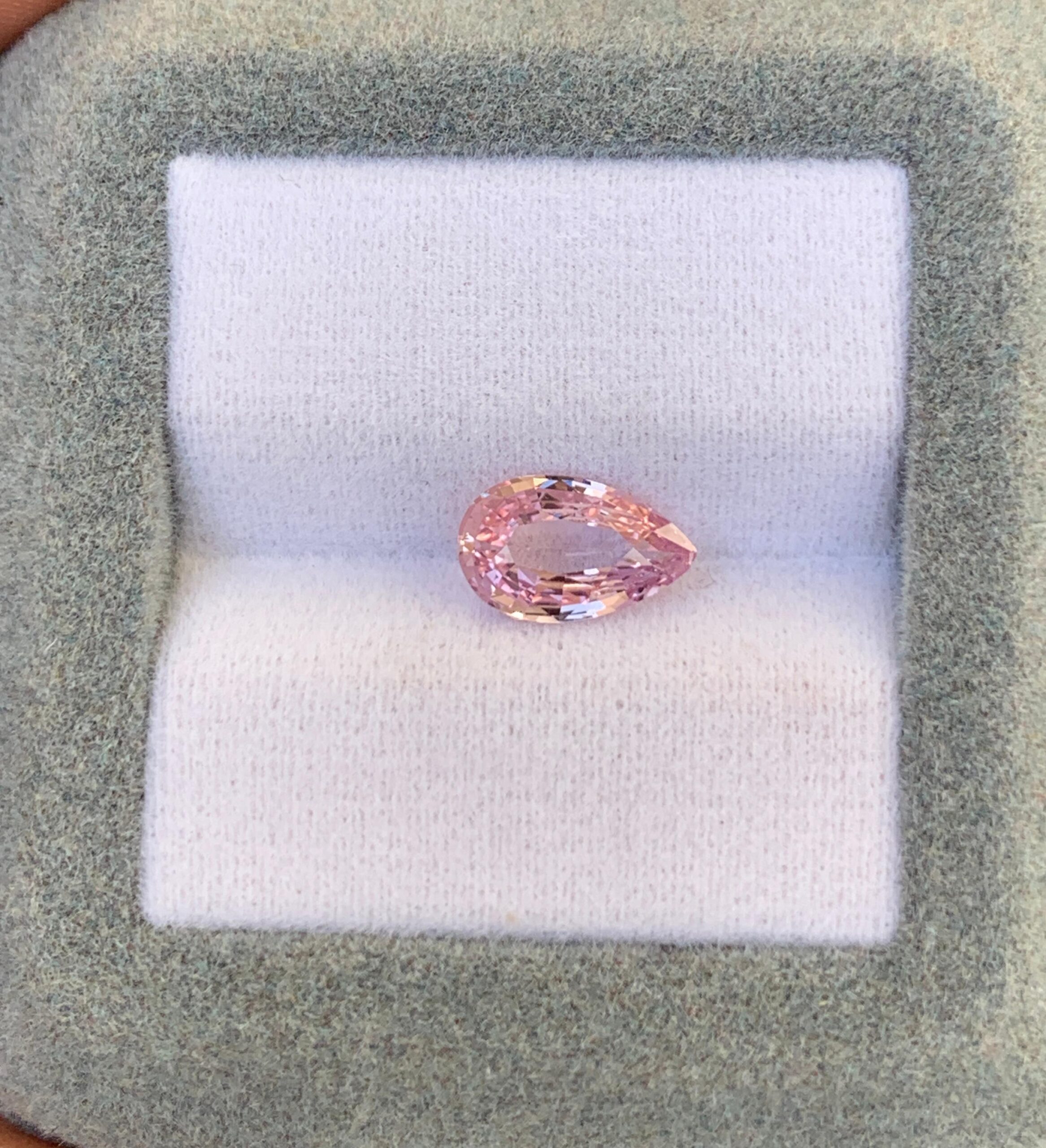
Three concrete advantages, and they are real. The risk falls : getting the design wrong is infinitely more likely than getting the stone wrong, and it is precisely the design that is postponed. The date holds : a stone is available immediately, whereas a ring takes six to eight weeks. The project becomes shared : design appointments as a couple are, by far, the most enjoyable we have.
A beautiful case, and the stone certificate beside it. It is this document that transforms a gem placed on velvet into a serious promise — it states the nature, weight, dimensions, treatment and often the origin. View available stones →
Four methods, from the most reliable to the most uncertain.
A ring she wears on her left ring finger, and no other. Having it measured by a jeweller takes two minutes.
A close friend, a sister, her mother: someone often knows. Provided they can keep a secret.
The inner diameter of an existing ring, multiplied by 3.14, gives the circumference in millimetres. Approximate, but better than nothing.
With someone close to her with a similar build. The riskiest method, best kept as a last resort.
Two pitfalls come up time and again. A ring worn on a different finger will not give the right size : the difference between the ring finger and the middle finger often reaches one and a half sizes. And a finger measured in the morning, after exercise or in hot weather can vary by a full size — measure at the end of the day, at a normal temperature.
The first resizing is complimentary on our creations. A ring that is slightly too large on the day of the proposal is no problem; a ring that does not fit is. Which finger to wear it on →
Allow six to eight weeks between the first appointment and the delivery of the jewel: one to two weeks to choose the stone and finalise the design, then three to five working weeks for production once the stone has arrived at the workshop.
Allow extra time if the date is fixed — a birthday, a trip, Christmas. And bear in mind that a rare stone may require additional sourcing time: in that case, we present several gems as they arrive rather than forcing a default choice.
| You have | What is possible |
|---|---|
| More than 3 months | Anything, including bespoke sourcing for a rare stone. |
| 2 to 3 months | A complete creation from available stock, including a personalised design. |
| 1 to 2 months | A creation using a stock stone, with a design chosen from our existing settings. |
| Less than one month | A ring available in the collection, or the proposal with the loose stone. |
Do not rush the design to meet the date. Propose with the stone, then take the following six weeks: no one will remember the wait, everyone will remember the ring.
It happens, and it is only a problem if no one has anticipated it. Let us be precise about what is possible and what is not.
A bespoke creation cannot be returned. That is the rule, and it applies everywhere: a piece designed and made for one person cannot be put back on sale. It can, however, be reworked — the setting can evolve around the same stone, and the stone itself can be reset in an entirely different design.
The first resizing is complimentary, and remains possible afterwards depending on the type of band. A plain band can be resized easily; a fully pavé band, much less so.
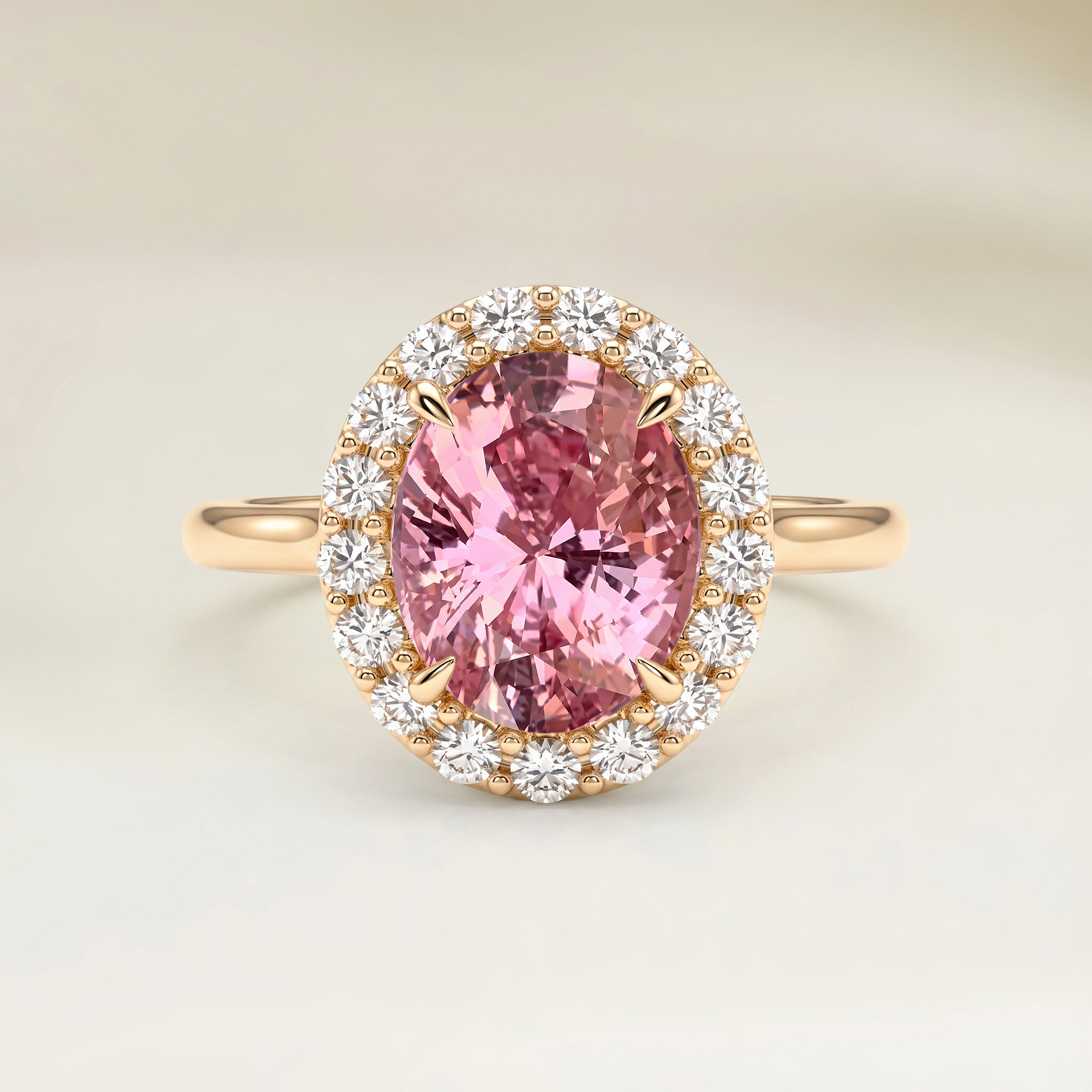
If the ring is a surprise, choose a simple design. A solitaire or a shoulder-set mounting leaves the door open: it can be embellished later, with a halo added or the band changed. A highly distinctive design, no — everything would have to be redone.
Both approaches are common. Arriving with the ring keeps the surprise intact, but requires guessing a very personal taste. Proposing with a loose stone and then designing the ring together has become common — it is what we see most often in the workshop. Neither option is more romantic than the other.
Forget the three months’ salary rule: it is an advertising invention from the 1930s. Our sapphire creations start at €2,500, emerald at around €1,700, and tourmaline at around €2,760. Most projects fall between €5,000 and €8,000. The right budget is one that does not put you in difficulty the following month.
First look at the metal she already wears: it is the most reliable clue, well before the stone. Then, a soft, luminous colour is easier to wear than a highly saturated hue. A padparadscha sapphire engagement ring under one carat or a tourmaline engagement ring are among the most universally appealing choices.
Yes, and we are seeing this more and more. The stone is presented in its case with its certificate: the commitment is there, as is the value, and the setting is then designed together. This eliminates the main risk of a surprise ring — choosing the wrong design rather than the wrong stone.
Borrowing a ring she already wears on her left ring finger and having it measured is the most reliable method. A ring worn on another finger will not provide the correct size. As a last resort, the first resizing is complimentary on our creations — it is better to aim slightly large.
Six to eight weeks between the first appointment and collection of the jewel, plus some leeway if the date is fixed. A rare stone may require additional sourcing time. If you are running late, proposing with a loose stone allows you to keep the date without compromising the project.
A bespoke creation cannot be returned, but it can be reworked: the setting can evolve around the same stone, and the first resizing is complimentary. This is also why we recommend a simple design when the ring is a surprise — it keeps the door open.
To propose with the stone rather than the ring, the entire loose-stone stock can be explored from the precious stones.
Share this post