Émeraude de Zambie ou de Colombie ?
Bonnot Paris22/9/2026



We set both, and the question comes up at every appointment when someone says, “I would like green.” It deserves better than a sales answer: both stones have genuine qualities and genuine limitations, and the right choice depends entirely on what you value.
This comparison considers each criterion one by one. It concludes with a decision guide, and a third option that most people never consider.
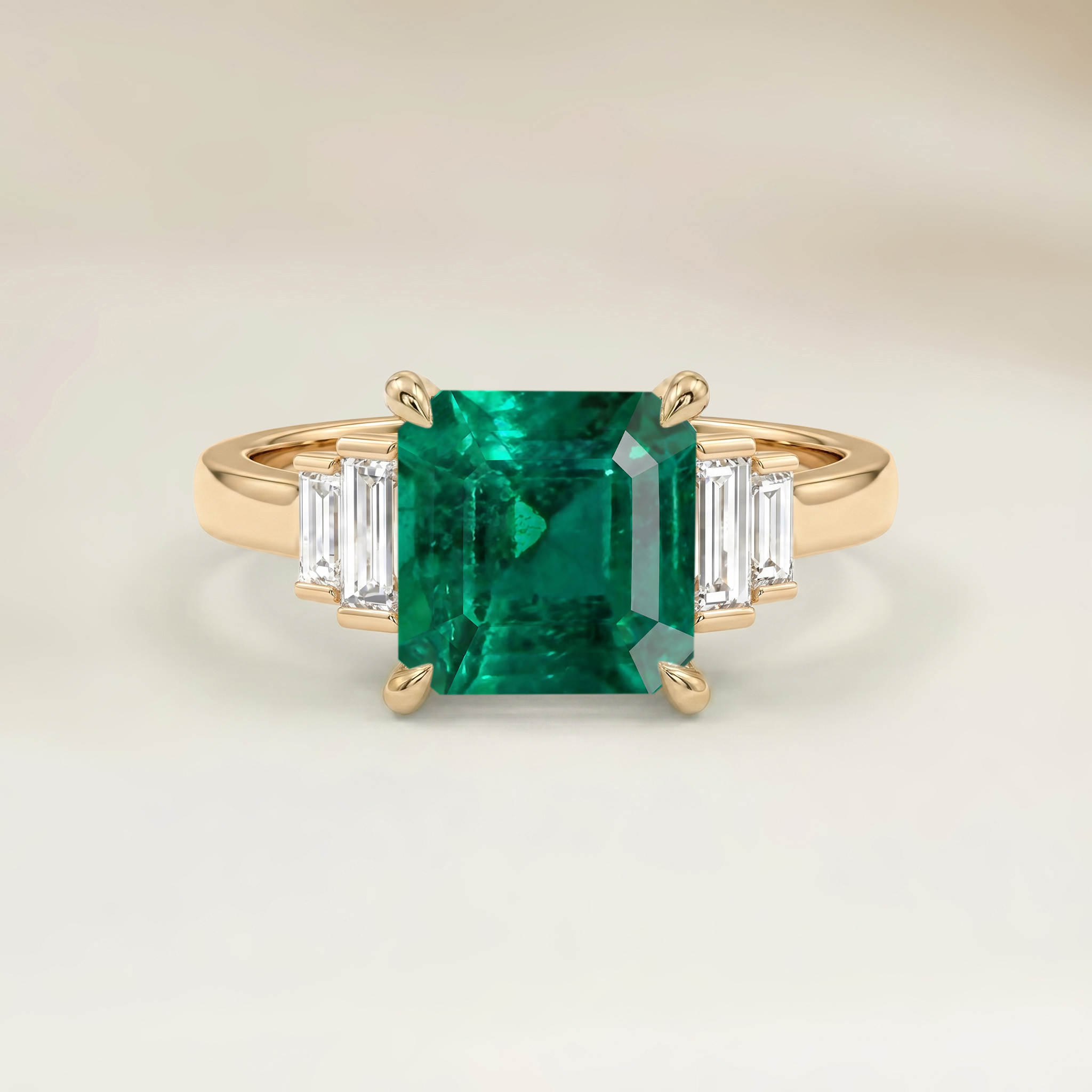
Theemerald is a green variety of beryl — the same species as aquamarine —, coloured by chromium and sometimes vanadium. It forms under turbulent geological conditions that almost always trap inclusions.
The tsavorite is a green grossular garnet, discovered in East Africa around fifty years ago and named after Tsavo National Park in Kenya. On the timescale of gemmology, it is a newcomer — which partly explains why it remains little known.
This difference in age has a commercial consequence worth bearing in mind: the emerald carries five centuries of stories, from Cleopatra to the Mughals. Tsavorite has nothing of the sort to offer. If what draws you to a stone is also its history, the question is settled before the colours are even compared.
| Emerald | Tsavorite | |
|---|---|---|
| Species | Beryl | Grossular garnet |
| Mohs hardness | 7,5 – 8 | 7 – 7,5 |
| Colour | Deep green, often bluish | Vivid green, sometimes more yellow |
| Transparency | Expected garden of inclusions | Generally cleaner |
| Treatment | Colourless oil, almost systematic | None |
| Care | Neither ultrasonic cleaning nor steam | Warm water and mild soap |
| Large sizes | Available | Rare above 2 ct |
| Setting | Protective | Protective |
Two points deserve closer attention, because they almost always determine the choice: treatment and large sizes. The rest comes down to taste.
This is the most visible difference to the naked eye, and the most misunderstood.
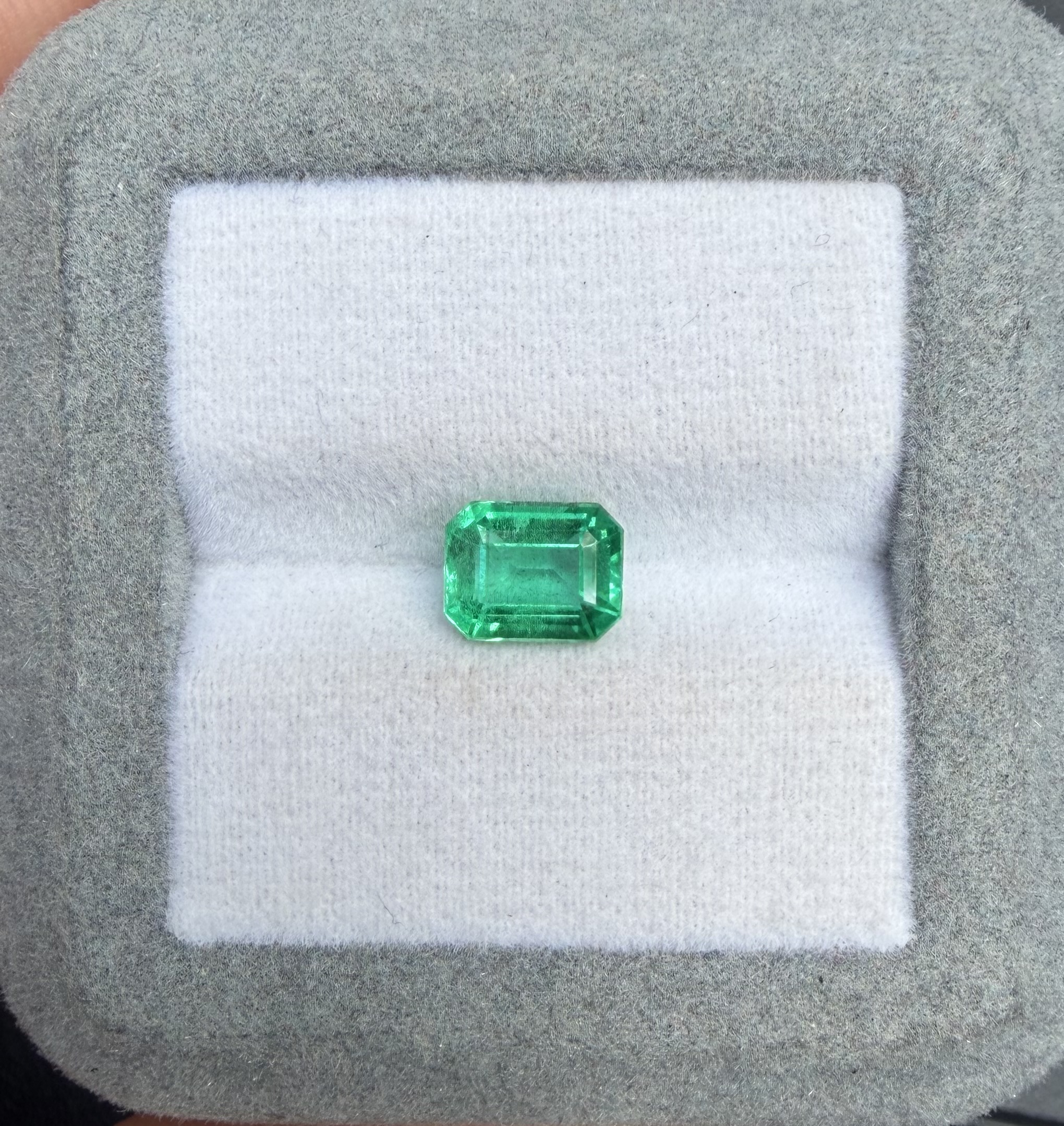
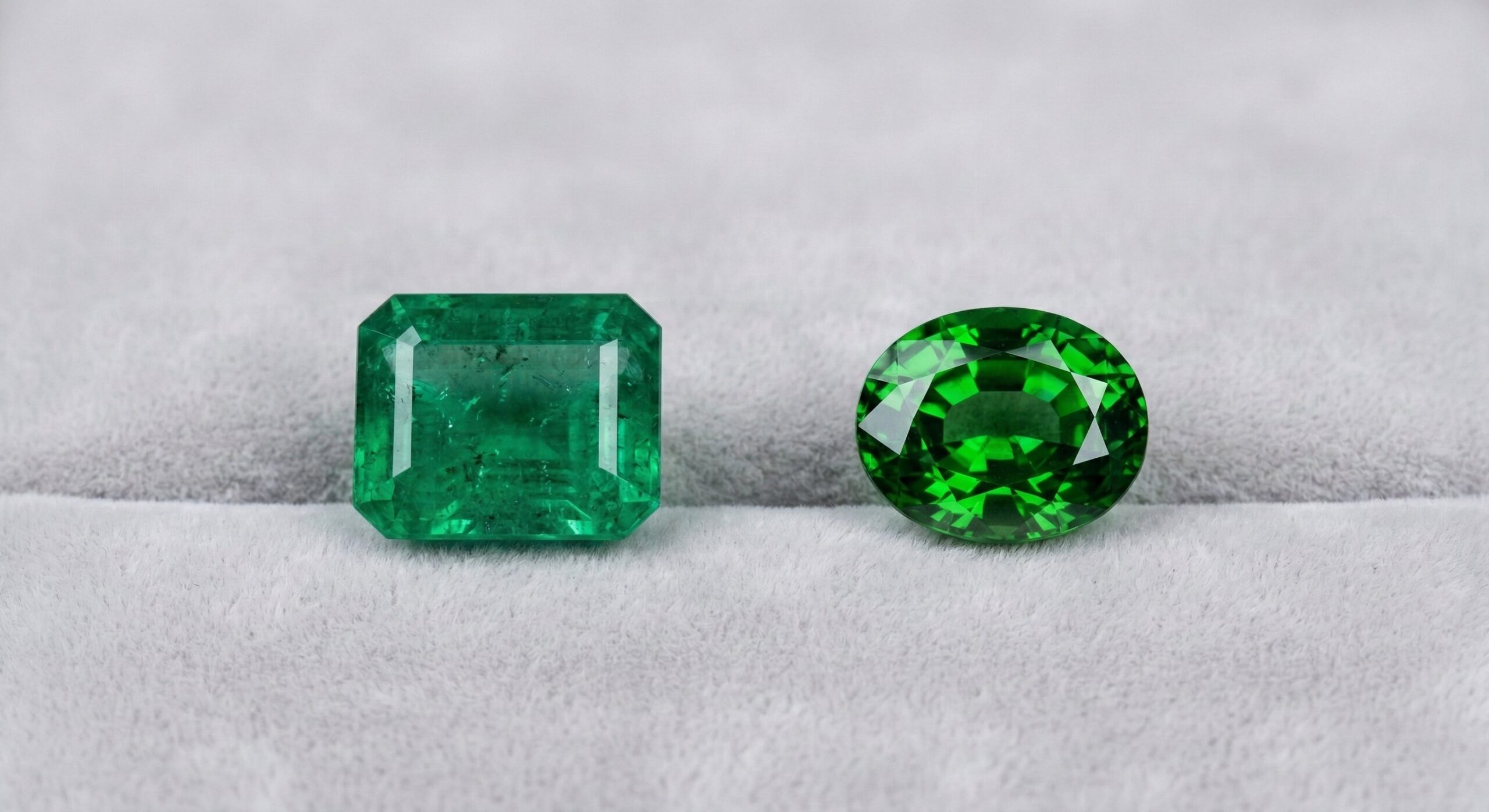
Inclusions are expected, with colourless oil in almost all cases. This is not a flaw: it is the signature of the species, and attests to the stone’s natural origin. Zambia — 3 252 €.
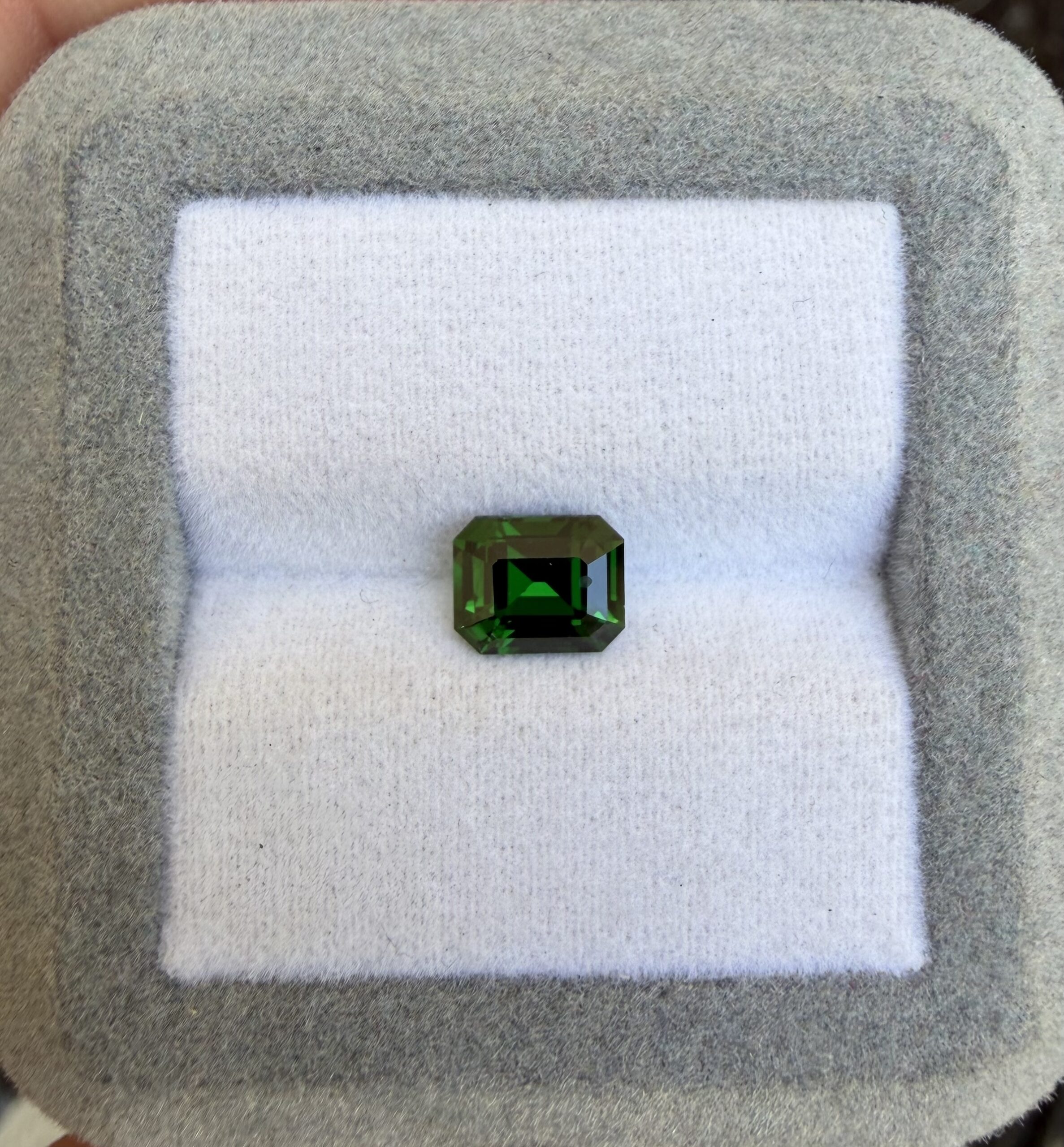
Generally more transparent, without oiling since garnets are not treated. The same weight, the same step cut, a truer green — 3 744 €.
Same weight, same cut, a price difference of a few hundred euros: this is the fairest comparison we can make. At this size, the choice is not budgetary — it is aesthetic.
Be careful, however, not to turn this difference into a hierarchy. An emerald is not “less pure” than a tsavorite: it belongs to a species that includes inclusions, and the world’s most beautiful emeralds have a garden. Looking for a perfectly clean emerald at a low price is looking for a synthetic.
This is where tsavorite wins hands down. Garnets are neither heated nor oiled — no treatment to declare, none to take care of, none to refresh in ten years.
Emeralds, on the other hand, receive a colourless oil in the vast majority of cases. Let us repeat this to avoid any misunderstanding: this is not deception. It is an ancient, accepted practice, stated on the certificate, and graded — none, minor, moderate. A lightly oiled stone is rarer and more highly valued.
But this has three practical consequences. Care permanently excludes ultrasound and steam. The certificate becomes essential, to know the degree and verify the absence of coloured resins. And the oiling needs refreshing after a few years — normal maintenance, comparable to rhodium plating a white-gold ring, but it is one more appointment to make.
If the very principle of enhancement bothers you, the answer is clear: a tsavorite garnet engagement ring, or a spinel. These are the two families in our catalogue that have undergone nothing at all.
This is where emerald regains the advantage, and it becomes decisive as soon as volume is the aim.
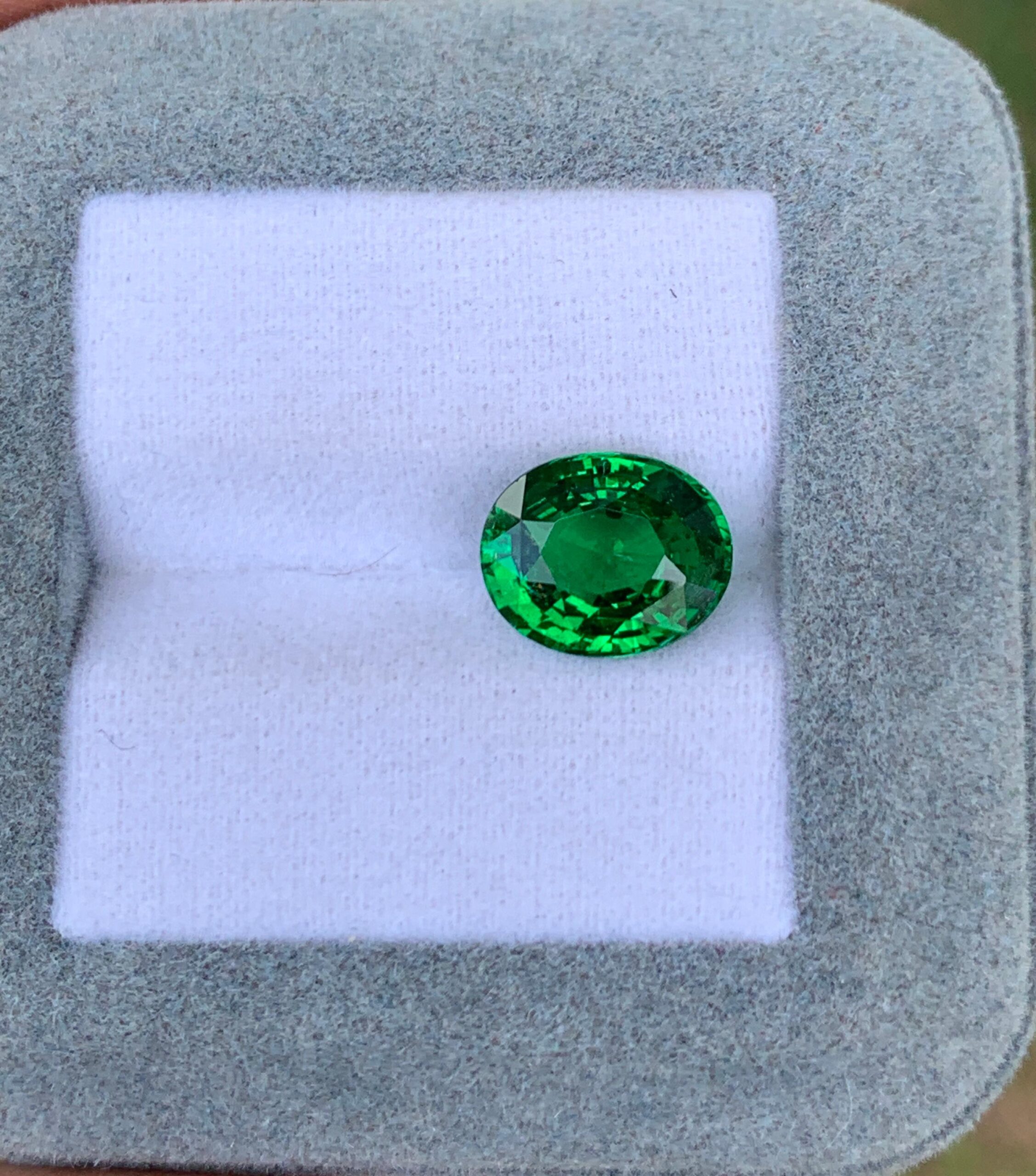
East African deposits mainly produce small crystals. Beyond two carats, a beautiful tsavorite becomes difficult to find, and prices quickly catch up with those of a comparable emerald. Beyond three, one leaves the realm of the ordinary engagement ring.
Emerald, on the other hand, is found in larger sizes — indeed, it is in these formats that it gives its best, with the garden becoming legible and the colour deep. In other words: below 1.5 carats, tsavorite is often the best green-to-budget ratio; above 2.5 carats, emerald takes the lead again.
The two stones compared so far share a common flaw, and no one talks about it: they both require a protective setting. Hardness 7 to 8, edges to protect, ring to remove for gardening.
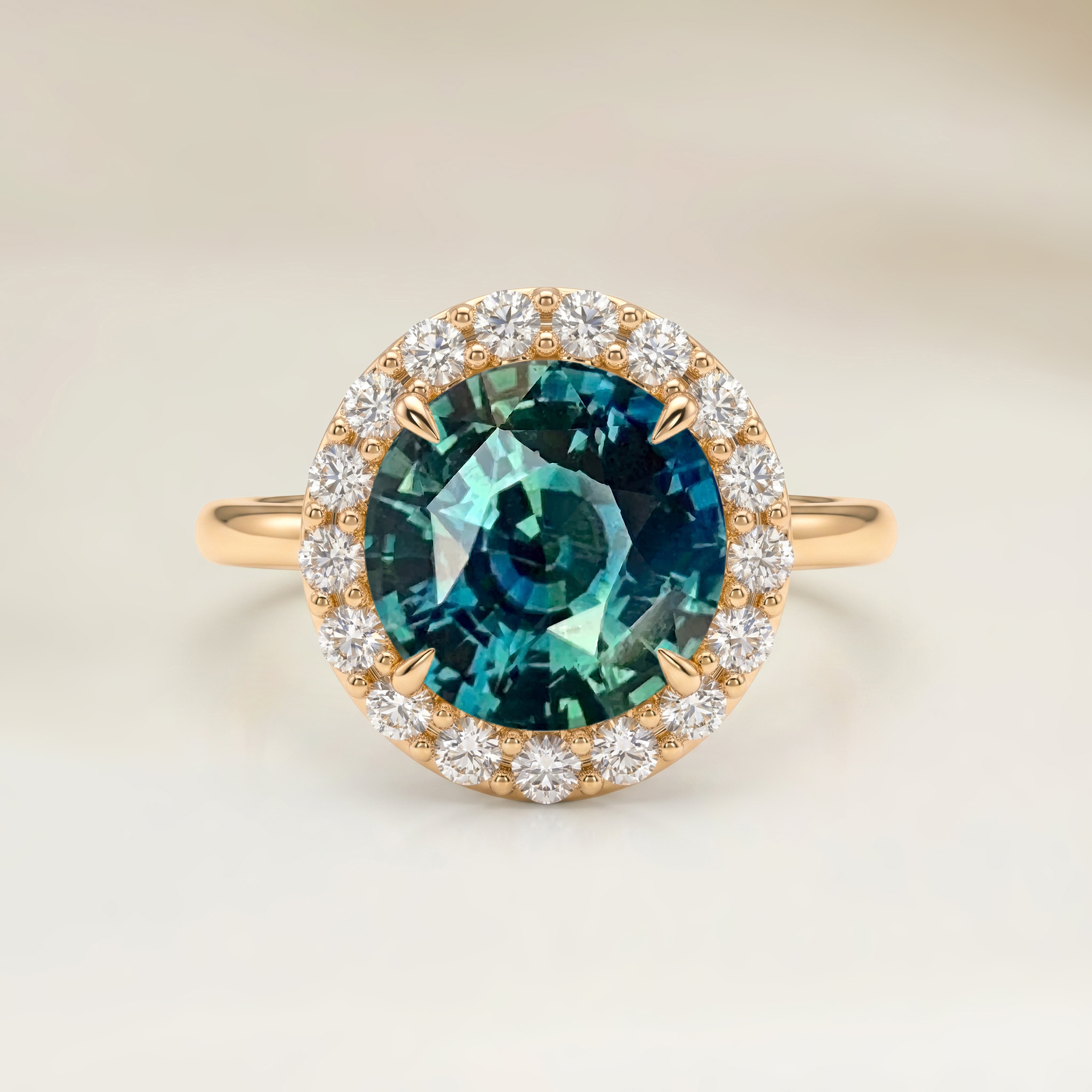
Green corundum solves this problem in one stroke. At 9 on the Mohs scale, with no cleavage plane, it allows any design — openwork surround setting, fine prongs, high setting — and can be worn for thirty years without any particular precaution.
Two families are worth considering here. The green sapphire in its pure form, long overlooked and therefore little sought-after. And above all, a teal sapphire engagement ring, between blue and green: it is the most requested colour in our workshop, and the only one that offers green with the reassurance of corundum.
“Am I willing to remove my ring to do the cleaning?” If the answer is no, neither emerald nor tsavorite is the right choice — and this is not a judgement on these stones, simply on your way of life.
What we have just described is not unique to green. It is a recurring pattern in gemmology : alongside every great historic stone is a lesser-known gem, often cleaner, never treated, and significantly less expensive.
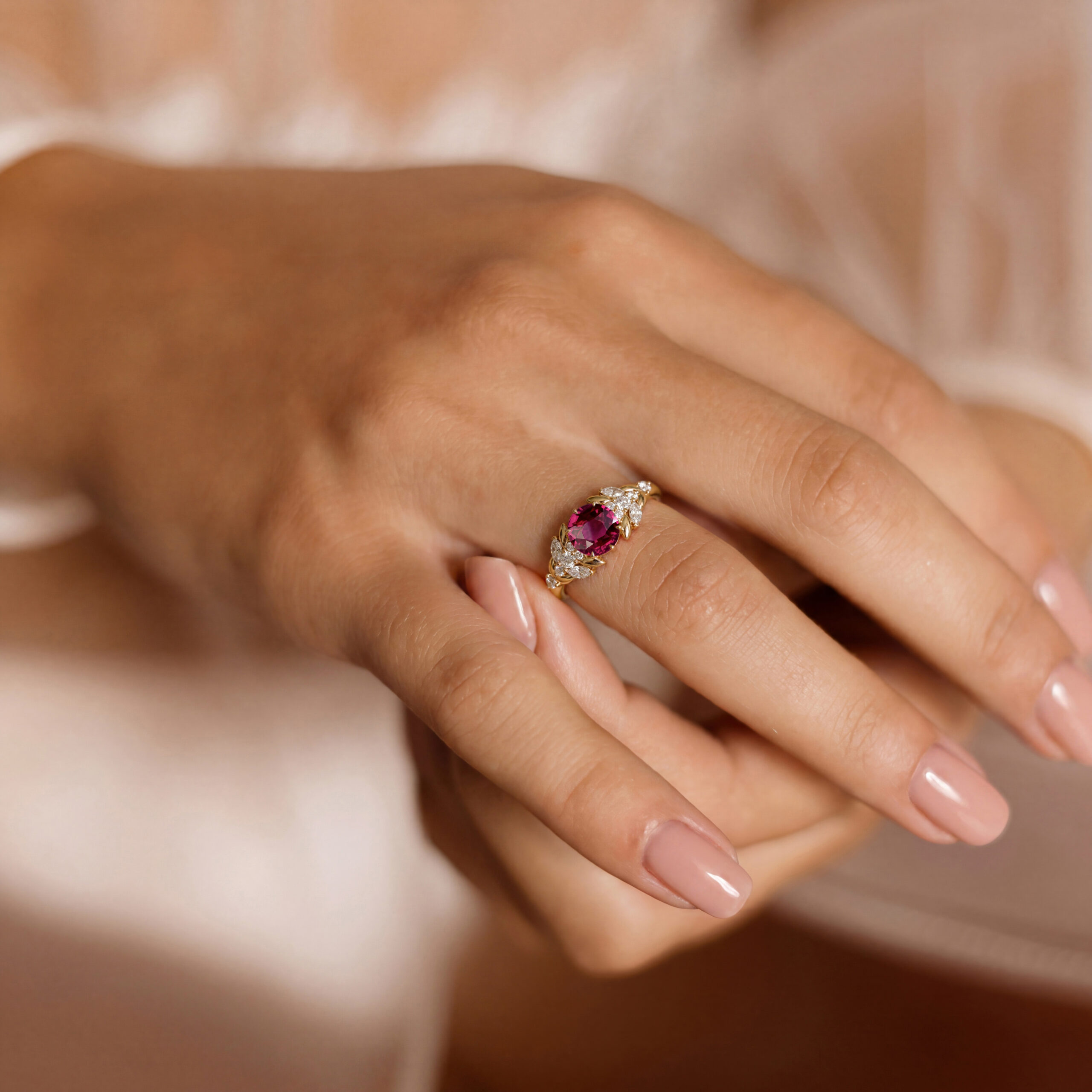
Against ruby, there is spinel — almost never treated, long confused with ruby to the point that several “rubies” in royal crowns are in fact spinels. Against emerald, tsavorite. Against blue sapphire, to a certain extent, teal or violet sapphire.
The difference with green is that red has no equivalent in hardness: a ruby engagement ring is 9 on the Mohs scale, spinel 8 — both can be worn without constraint. This is a luxury green does not have, since neither emerald nor tsavorite reaches this level.
Four situations cover most of the projects we see.
| What you are looking for | Our answer |
|---|---|
| Deep green and the stone’s history | Emerald. Nothing replaces it in this respect, and its depth of colour is unique. |
| A vivid, highly transparent green, with no treatment whatsoever | Tsavorite. The best green-to-budget ratio under 1.5 ct, with no certificate requirement. |
| Volume — above 2.5 carats | Emerald. Large tsavorites are rare and priced accordingly. |
| Everyday wear without a second thought | Neither. Green or teal corundum, at 9 on the Mohs scale. |
We lay out the three greens side by side, under the same light, then compare them again in low light. The decision is made in three minutes, and it almost never matches what the person had planned when they arrived.
Two distinct mineral families. Emerald is a beryl, almost always crossed by inclusions and oiled; tsavorite is a green garnet from East Africa, generally more transparent, often more vivid, and never treated. Similar hardness: 7.5 to 8 versus 7 to 7.5.
For ring sizes, generally yes, at comparable visual quality. The gap narrows with weight: large tsavorites are rare, and above two carats, prices quickly catch up with those of emerald.
No. Garnets are neither heated nor oiled: no treatment to declare, nor to take into account for care. This is its strongest argument against emerald.
Both require the same precautions: a setting that protects the edges, and the ring should be removed for gardening, sport and housework. Emerald is slightly harder, but its inclusions make it more sensitive to sharp impacts. In practice, the difference is negligible.
It is possible, and transparency is the best clue: a very clear, highly vivid green stone with no trace of oiling is more likely to be a tsavorite. A visible garden points towards beryl. Only a laboratory report can determine this with certainty.
Yes, and it has a decisive advantage: green sapphire and teal sapphire have a hardness of 9 with no cleavage plane. They allow every type of setting, whereas emerald and tsavorite require the edges to be protected.
Deep green and history: the emerald. A vivid, transparent, untreated green: tsavorite. Volume beyond 2.5 ct: the emerald. Everyday wear without a second thought: neither one nor the other — green corundum.
All loose stones, with their characteristics and prices, can be explored from the precious stones.
Share this post