Zambian or Colombian Emerald?
Bonnot Paris22/9/2026



This is the honest answer to the question in the title, and it is unwelcome: there is no such thing as an emerald price. There are prices for emeralds, stone by stone, and a considerable gap between them.
Rather than an accommodating range, this article publishes figures from our own catalogue — twenty-three stones recorded in September 2026, with the number of gems in each weight bracket so that you know what each line is worth.
Diamonds are bought according to a standardised scale: based on the four Cs and weight, the price range is known and verifiable. Emeralds have no such scale. Their value rests first and foremost on a visual judgement — the intensity of the green — that no one has managed to grade universally.
Five factors come into play, in this order.
The main source of value. A saturated green that remains vibrant indoors changes everything, for equal dimensions.
Inclusions are normal and expected. They matter when they cloud the stone's transparency face-up.
None, minor, moderate. A lightly oiled stone is rare, and therefore valued significantly more highly.
The price per carat rises in tiers: moving from 1.5 to 2.5 ct costs far more than the additional weight alone.
The fifth is origin. Zambia and Colombia produce different characters — a deep bluish green on one side, a grassier green on the other. But origin explains a character, never quality : a fine Zambian stone surpasses an average Colombian stone, and the reverse is also true.
Twenty-three Zambian emeralds, listed in our catalogue in September 2026. Prices incl. VAT, including 20% VAT.
| Weight | Price per carat | Stone price | Sample |
|---|---|---|---|
| 1 to 1.35 ct | €2,090 to €6,940/ct | €2,620 to €7,700 | 10 stones |
| 1.4 to 1.75 ct | €2,070 to €5,420/ct | €2,980 to €8,660 | 9 stones |
| 2 ct and above | €3,200 to €6,100/ct | €6,340 to €12,800 | 3 stones |
Read the first line carefully, because it contains all the information in this article. Across ten stones of the same size, the price per carat ranges from €2,090 to €6,940 — more than three times as much. Same weight, same country, same showcase.
This demonstrates that carat weight says almost nothing. What you are paying for is a green: its saturation, its vibrancy in the evening, and the clarity with which it reads face-up. An emerald at €2,100/ct is not a bargain — it is a stone with a more subdued green, and it will remain so throughout its life.
A market benchmark. These are our purchases and our selection at a given date, from a single origin. A dealer who buys elsewhere, or selects differently, would publish different figures — and would be right to do so.
Three emeralds genuinely available, from one-carat stones to collector’s sizes. The differences speak more clearly than a paragraph.
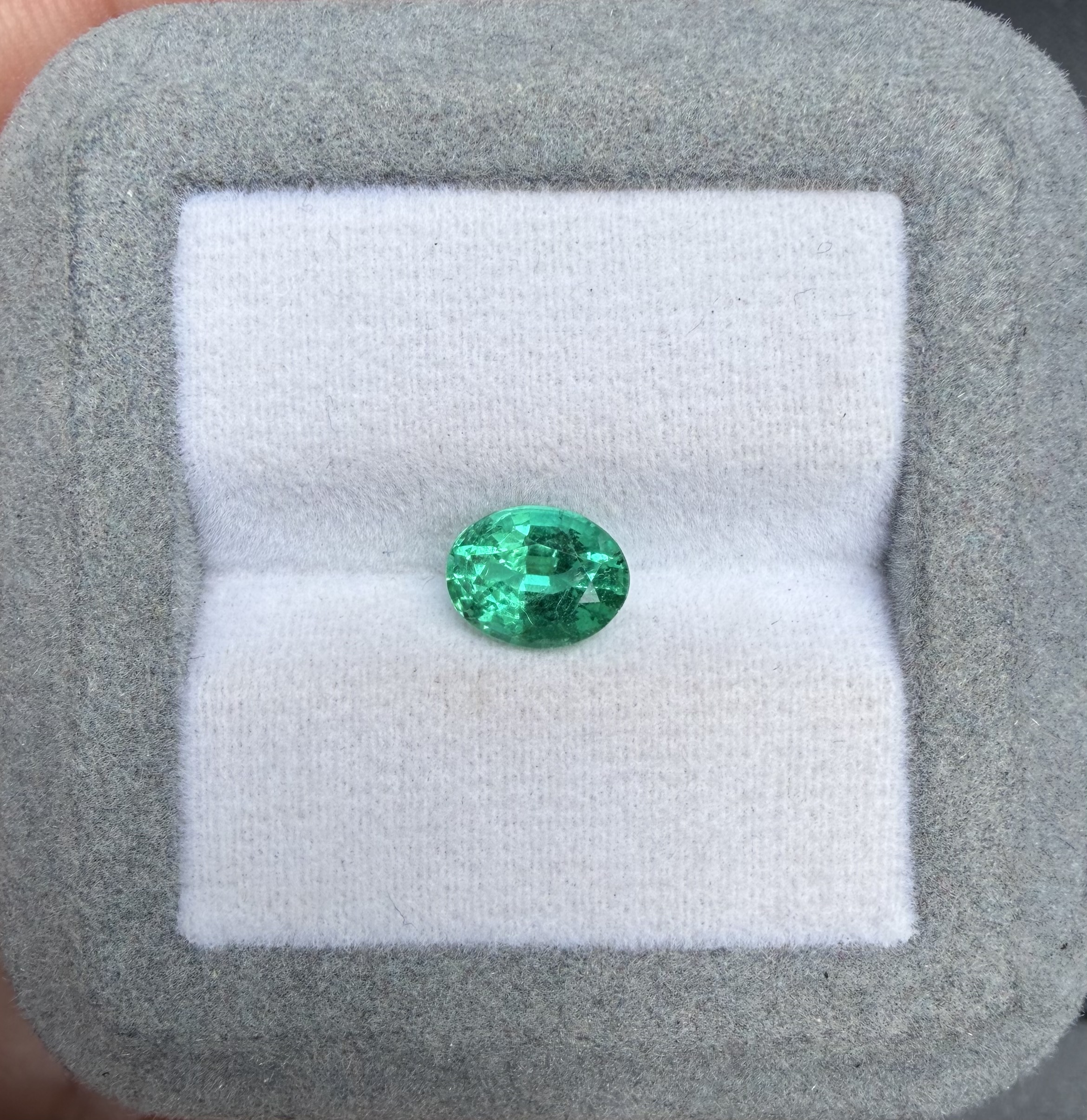
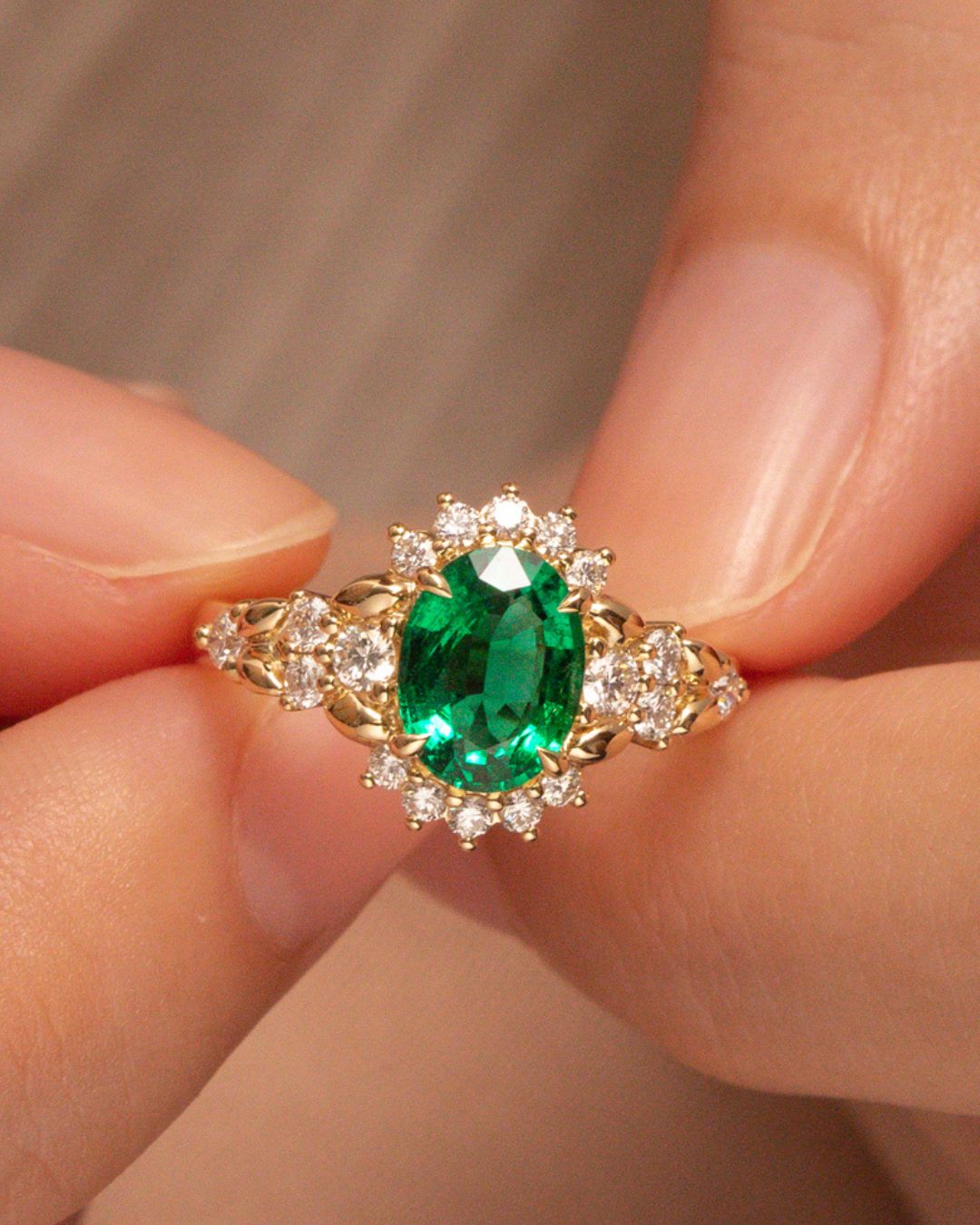
A clear green in a size that already sits beautifully on a ring finger. The oval offers the largest visible surface area for a given weight.
4 260 €
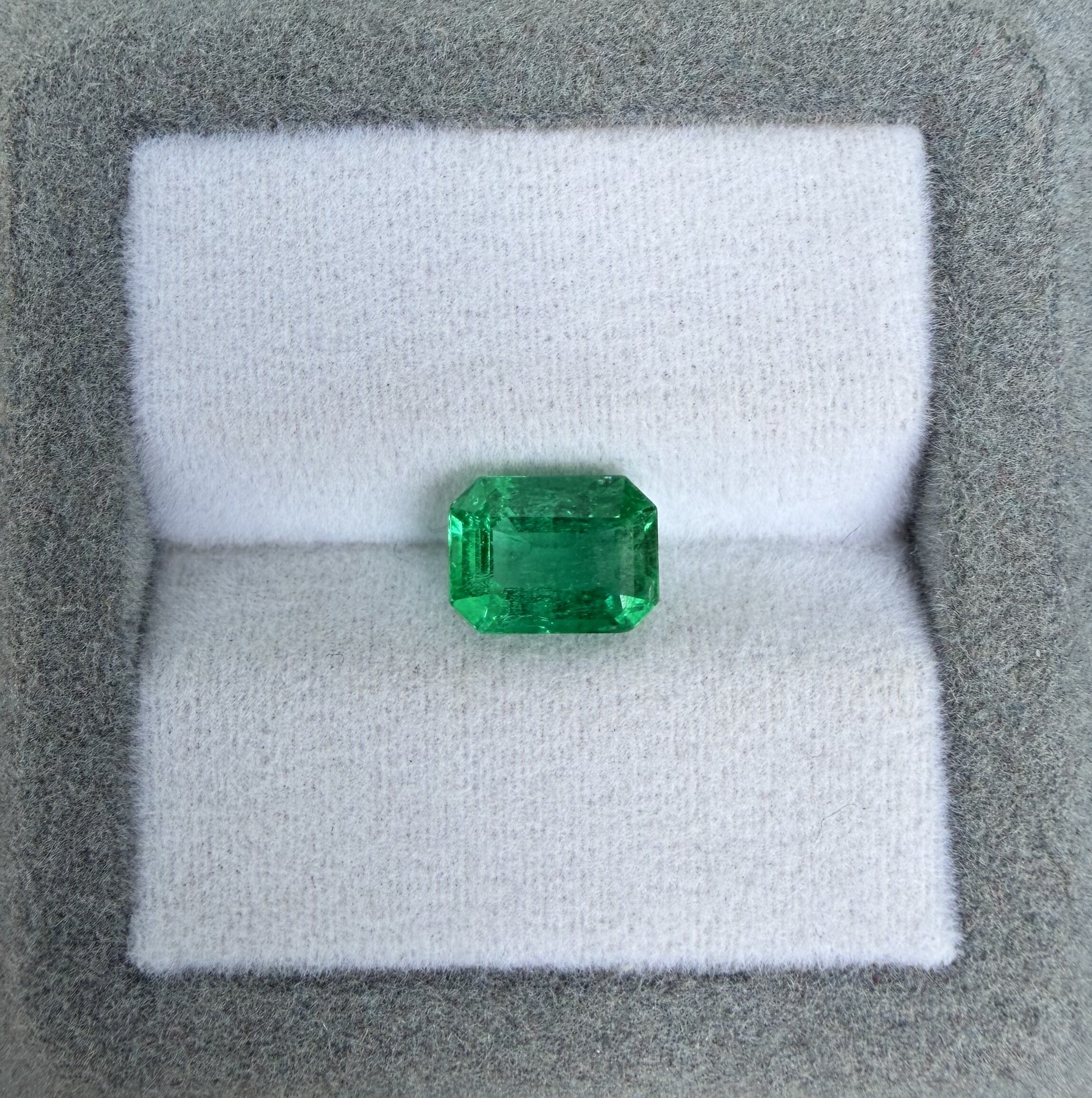
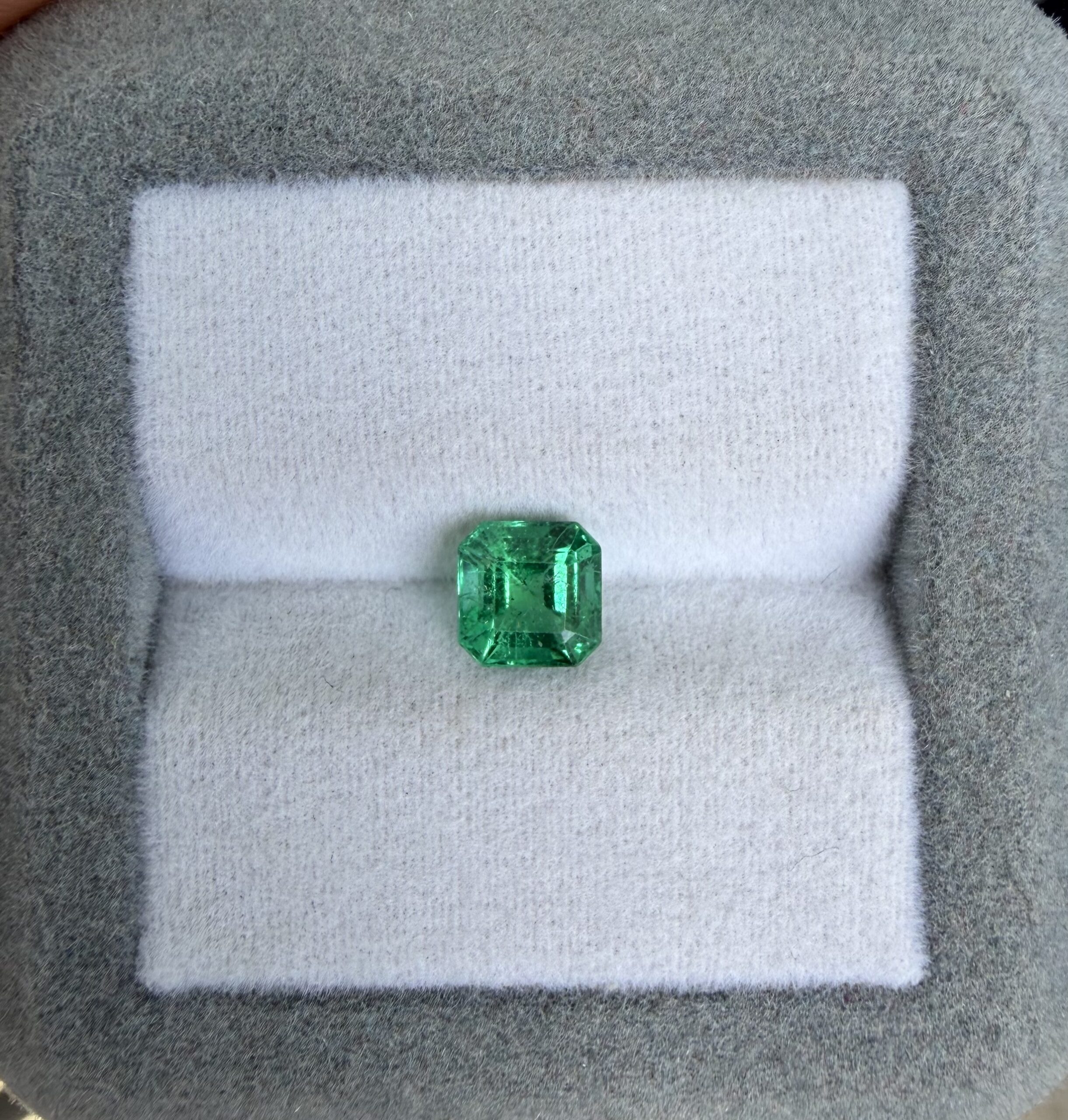
Step cut — the cut invented for the emerald. It protects the corners and unfolds the green like a mirror.
6 648 €
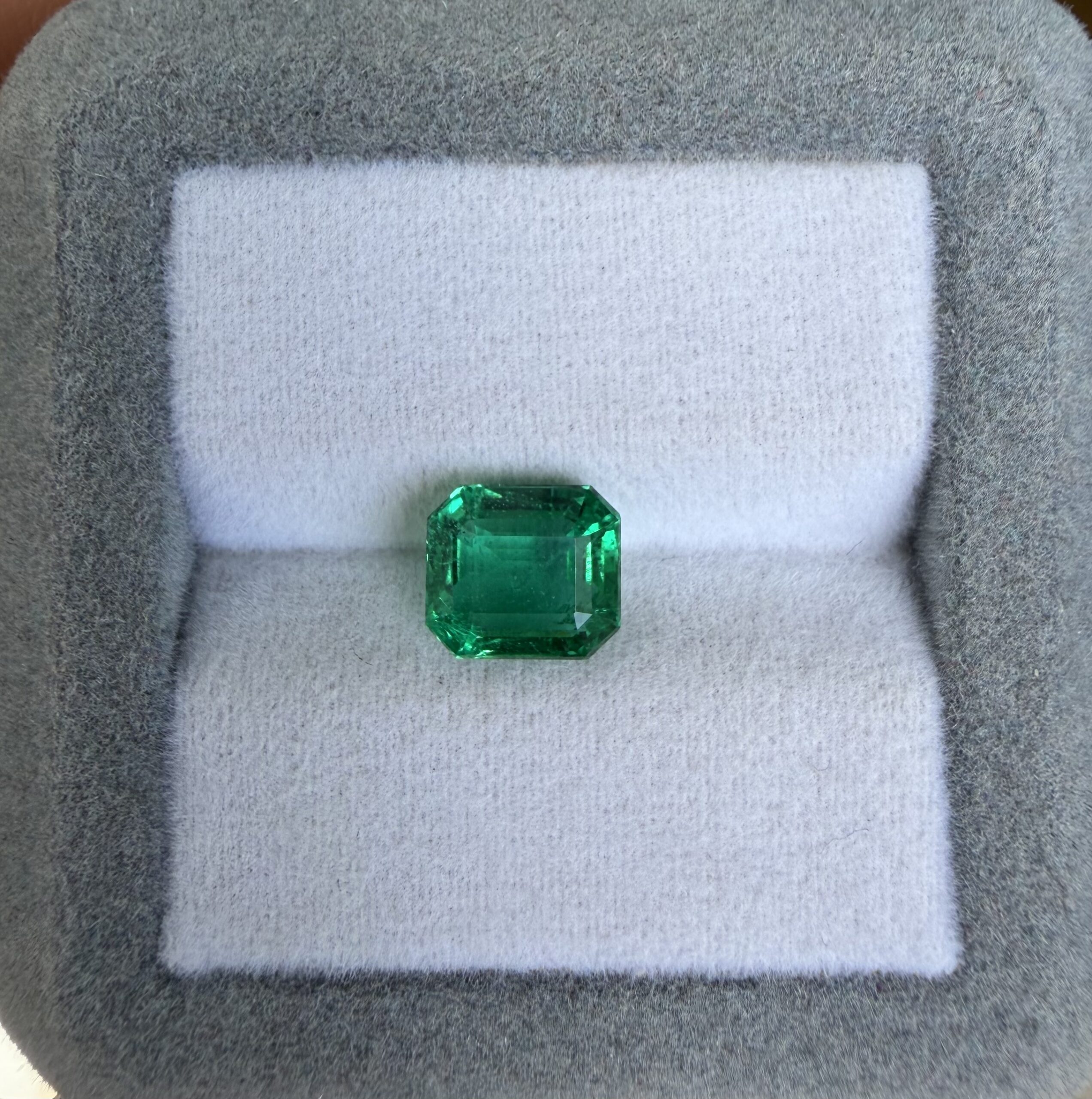
Beyond two carats, rarity enters another realm: the price per carat rises along with the weight.
12 804 €
Loose stones, VAT-inclusive prices observed in September 2026.
This is the point on which one hears the most nonsense, in both directions. Let us set the record straight.
The vast majority of emeralds receive a colourless oil. It is a traditional, longstanding and accepted practice that fills surface fissures and improves the clarity of the green. It is not a flaw, it is not deception, and the laboratory report always mentions it — none, minor, moderate.
What matters is the degree. A stone with minor oiling, and all the more so one without oil, is markedly rarer: it had fewer fissures to treat from the outset. It is therefore valued significantly above an equivalent oiled stone, with equal colour and dimensions.
One red line, however. Coloured resins and polymers are excluded from our selections, without exception. They conceal fractures and age poorly — the certificate always mentions them, and that is the first thing to check.
Oil withstands neither ultrasound nor steam. Care is carried out with lukewarm water and mild soap — and over the years, the workshop can refresh the oiling. This is normal maintenance, not a repair. How to clean your stones →
The question invariably arises during appointments: with an equal budget, how does an emerald compare with a sapphire?

Per carat, a beautifully coloured emerald generally costs more than a comparable sapphire. Our creations show this plainly: a sapphire engagement ring starts at €2,500, and pieces set with around one carat can be found for under €3,000. Difficult with an emerald of equivalent colour.
Two important nuances qualify this reading. First, emerald is less dense than corundum : at equal weight, it offers a larger visible surface area. The comparison should therefore be made in millimetres on the finger, not in carats. Then, the hardness is not the same — 7.5 to 8 versus 9 — which requires a protective setting and a little care in everyday movements.
Our advice when budget is the decisive criterion: do not look for a small emerald, change gemstone family. An emerald with a muted green bought to stay within budget is the worst of both worlds — you are paying for the rarity of a colour you will not have.
This is the option we most often suggest to those who want green in a different way. Tsavorite is a green garnet from East Africa, discovered in Kenya around fifty years ago — a newcomer on the scale of gemmology.
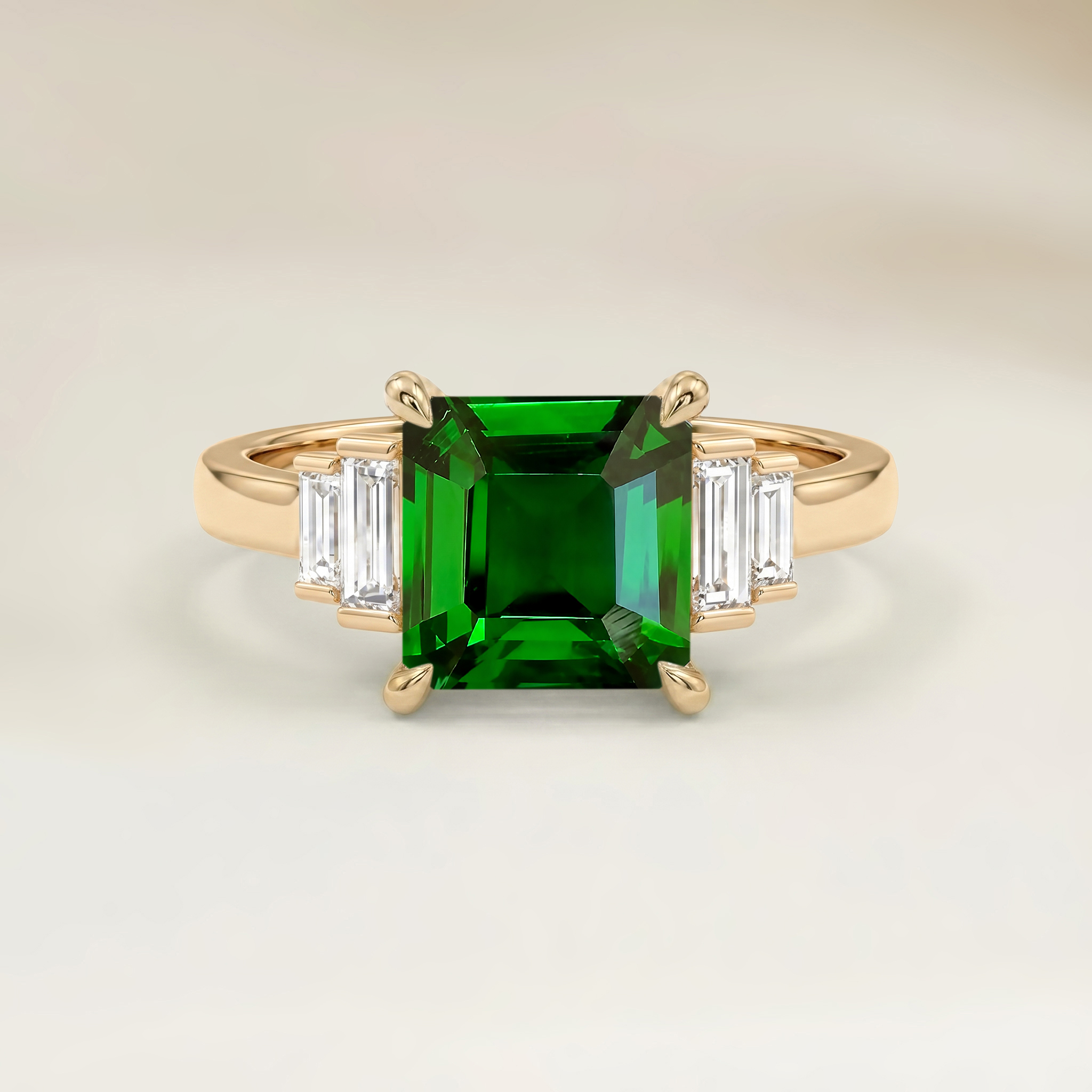
It has three concrete advantages. Its green is often more vivid, sometimes more luminous than that of an emerald in an equivalent range. Its clarity is generally superior: the garden characteristic of emerald is foreign to it. And above all, garnets are never heated or oiled — there is no treatment to disclose, nor any to accommodate in care.
Two reservations, stated frankly. Its hardness of 7 to 7.5 is comparable to that of emerald: the same setting precautions apply. And large tsavorites are rare — beyond two carats, prices quickly catch up with those of emerald. In engagement-ring sizes, however, a tsavorite garnet engagement ring remains a very serious alternative.
So far, we have discussed the stone alone. To this must be added the setting: from €800 to €4,000 depending on the number of diamonds and the complexity of the setting.
| Budget | What this allows |
|---|---|
| From €1,700 | An emerald with a beautiful colour in a small carat weight, on a simple 18-carat gold setting. |
| €4,000 to €10,000 | A 1 to 2 ct stone with a pronounced green, with a fully personalised setting. The heart of our projects. |
| €10,000 to €17,000 | Intense green, minor oiling or a substantial weight, diamond surround or complex mounting. |
| €17,000 and above | Exceptional qualities: intense greens with little oiling, substantial weights, international certificates. |
At €8,000, between 1.5 ct of vivid green and 2 ct of a duller hue, we always recommend the former. The difference in surface area on the finger is measured in tenths of a millimetre; the difference in colour can be seen from three metres away.
In our stock in September 2026: from €2,090 to €6,940/ct around one carat, and from €2,070 to €5,420/ct at around 1.5 carats. The difference within the same range therefore reaches a factor of three — it is colour, not weight, that determines the price.
Because there is no standard price scale for emeralds. Their value lies first in the intensity and vibrancy of their green, then in transparency, degree of oiling, quality of cut and origin.
Colourless oil is a traditional and accepted practice received by almost all emeralds: it is not a flaw. The degree does, however, matter greatly — a stone with minor oiling or no oil is rarer and therefore more highly valued at equal quality. The laboratory report always specifies this.
Per carat, generally yes, for comparable colour. But emerald is less dense than corundum: at equal weight, it offers a larger visible surface area. The comparison should be made in millimetres on the finger and total budget, not price per carat.
The collection of the stone’s natural inclusions, visible like an inner landscape. It forms part of its identity and attests to its natural origin. It becomes a flaw only when it impairs face-up transparency or weakens the gem.
Our set creations start at €1,700, and the heart of the collection lies between €4,000 and €10,000. To the stone is added the setting, from €800 to €4,000 depending on the number of diamonds and the complexity of the setting.
Tsavorite, a green garnet from East Africa: often a brighter green, generally superior transparency, and no treatment, as garnets are neither heated nor oiled. Its hardness is comparable to that of emerald. See the tsavorite garnet engagement rings.
All loose stones, with their characteristics and prices, can be explored from the page emerald.
Share this post