Zambian or Colombian Emerald?
Bonnot Paris22/9/2026



We are often asked what a sapphire “means”, in the hope of a simple answer. The honest answer is a little longer: these meanings have a history, a geography, and sometimes a very recent commercial birth date.
This article sorts it out. What is documented, what belongs to tradition, what was constructed by the market twenty years ago — and what we refuse to let be said.
Three words recur in all Western sources, and they belong together.
Fidelity, first. It is the most firmly established and oldest meaning, and the one that explains sapphire’s presence on engagement rings long before diamond. It comes from a simple idea: deep blue does not change. It does not fade, turn yellow, or go out of fashion.
Truth, next — associated with the transparency and the light that passes through the stone without being altered. Wisdom finally, by association with the first two: what is constant and true is considered wise.
These three meanings form a coherent whole, and that is precisely what has made them endure. Symbolism that holds together survives the centuries better than a list of disparate attributes.
In Mediterranean antiquity, deep blue was the colour of the sky, and therefore of the divine. Sapphire inherited this association even before it was properly identified as a mineral — for a long time, the word referred to several different blue stones, including lapis lazuli.
The European Middle Ages did the rest. The clergy adopted the blue sapphire, which became a bishop’s stone: constancy, elevation, rejection of earthly passions. From there to the garments of sovereigns, it was a short step — royal blue is not an expression born by chance.
This precedence explains something that is often forgotten: the diamond is a late arrival in engagement rings. It only truly became established in the 20th century, propelled by an advertising campaign that became legendary. Before then, coloured stones — led by sapphire — dominated the field.
The renewed prominence of blue sapphire in contemporary engagements owes much to a few highly publicised royal rings. This is not gemmology, but sociology — and its effect on demand is perfectly measurable. View blue sapphire rings →
The symbolism of sapphire is better understood by contrast. Here is what the other two great coloured stones represent — one of which is, mineralogically, exactly the same as sapphire.
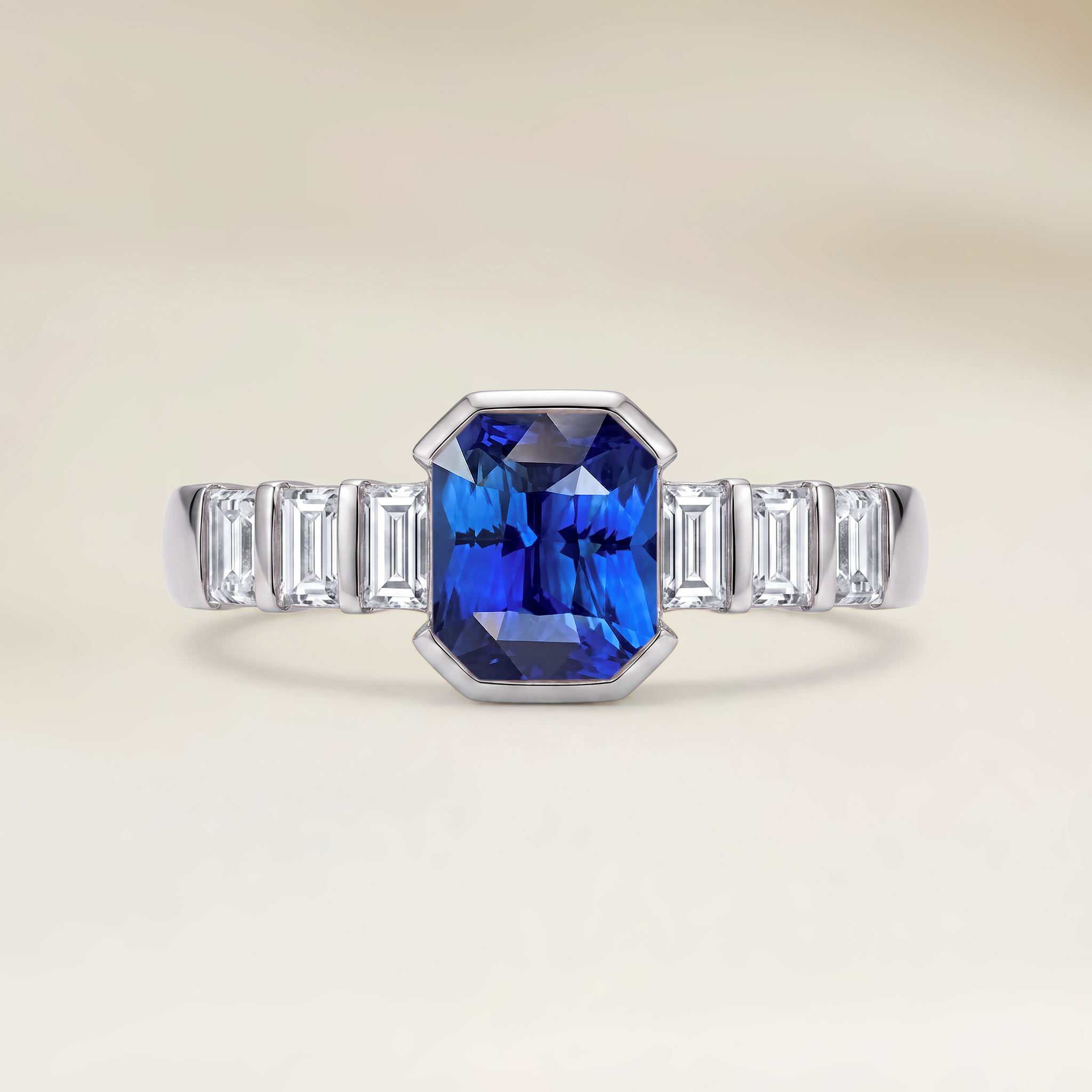
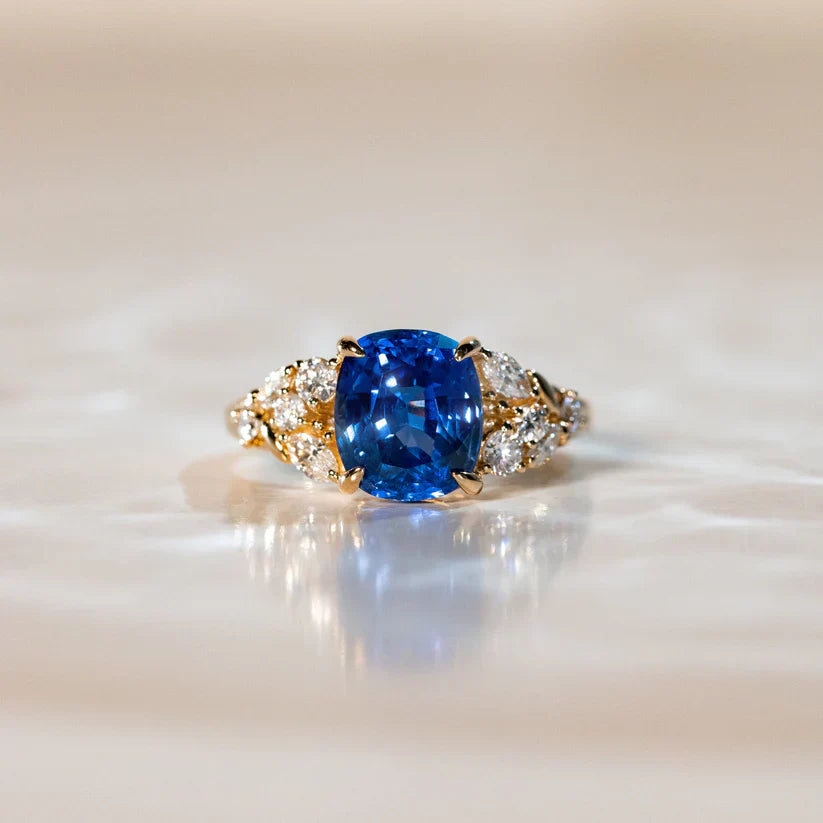
Blue
Blue sapphire 2.55 ct · €14,400
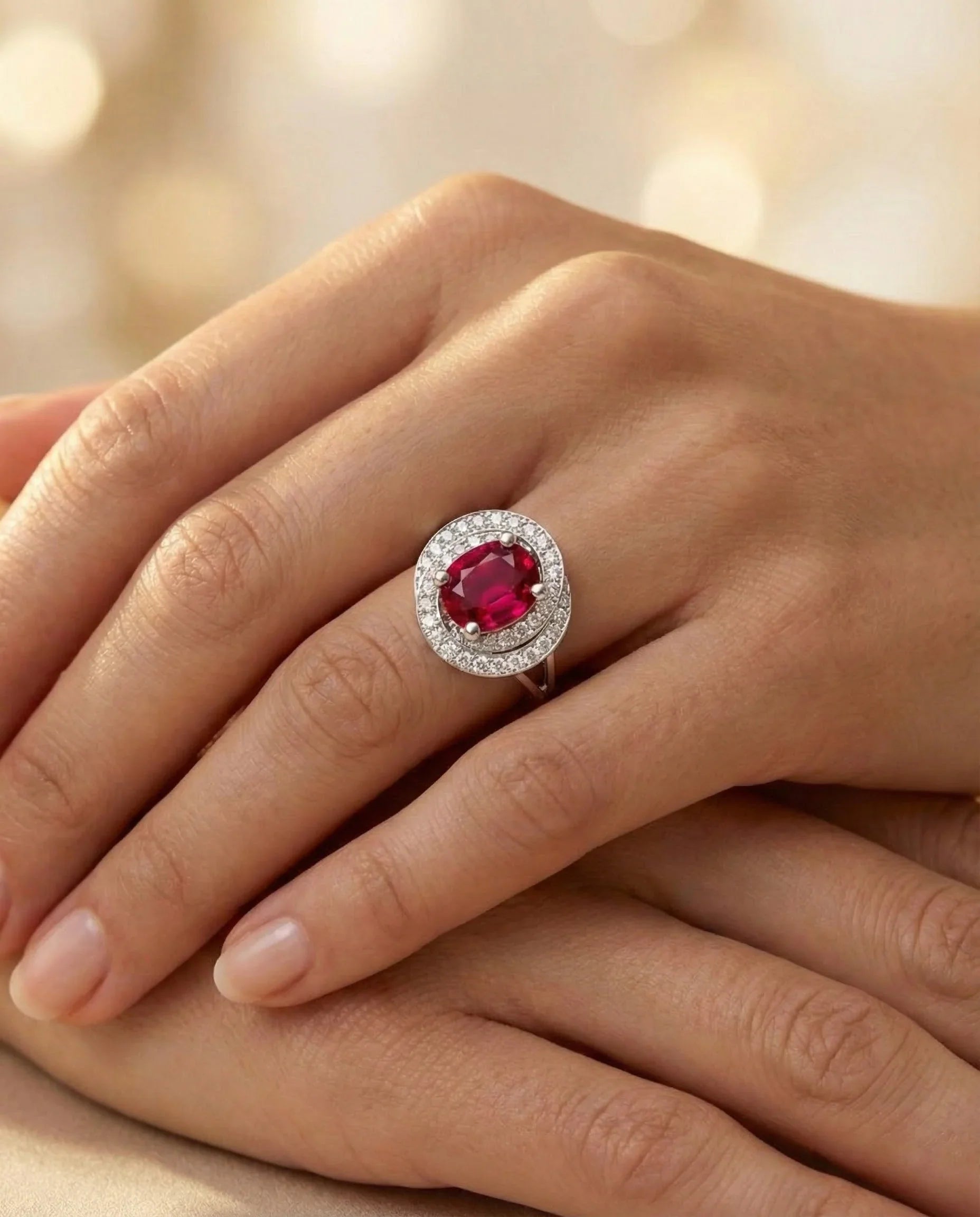
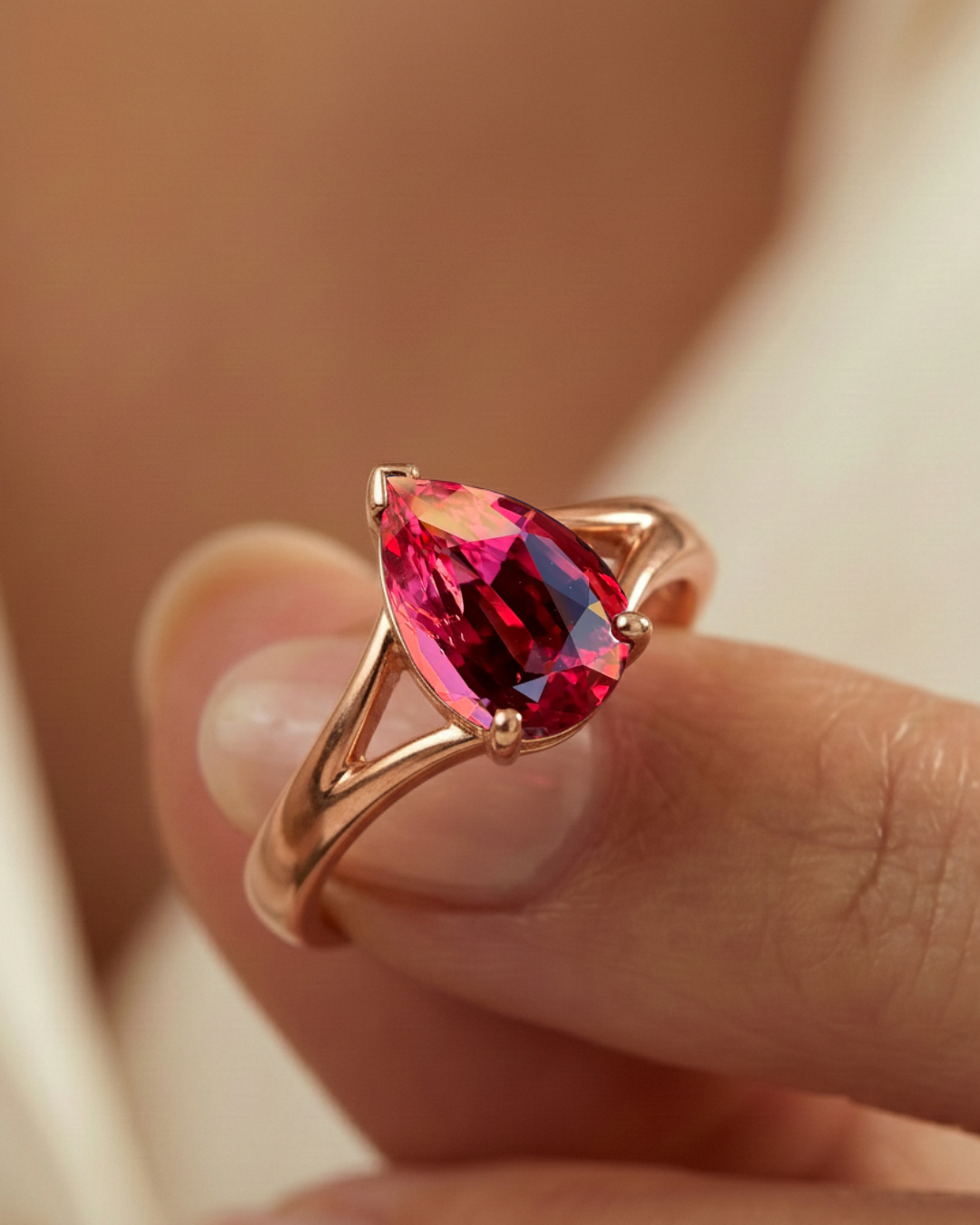
Red
View the collection →
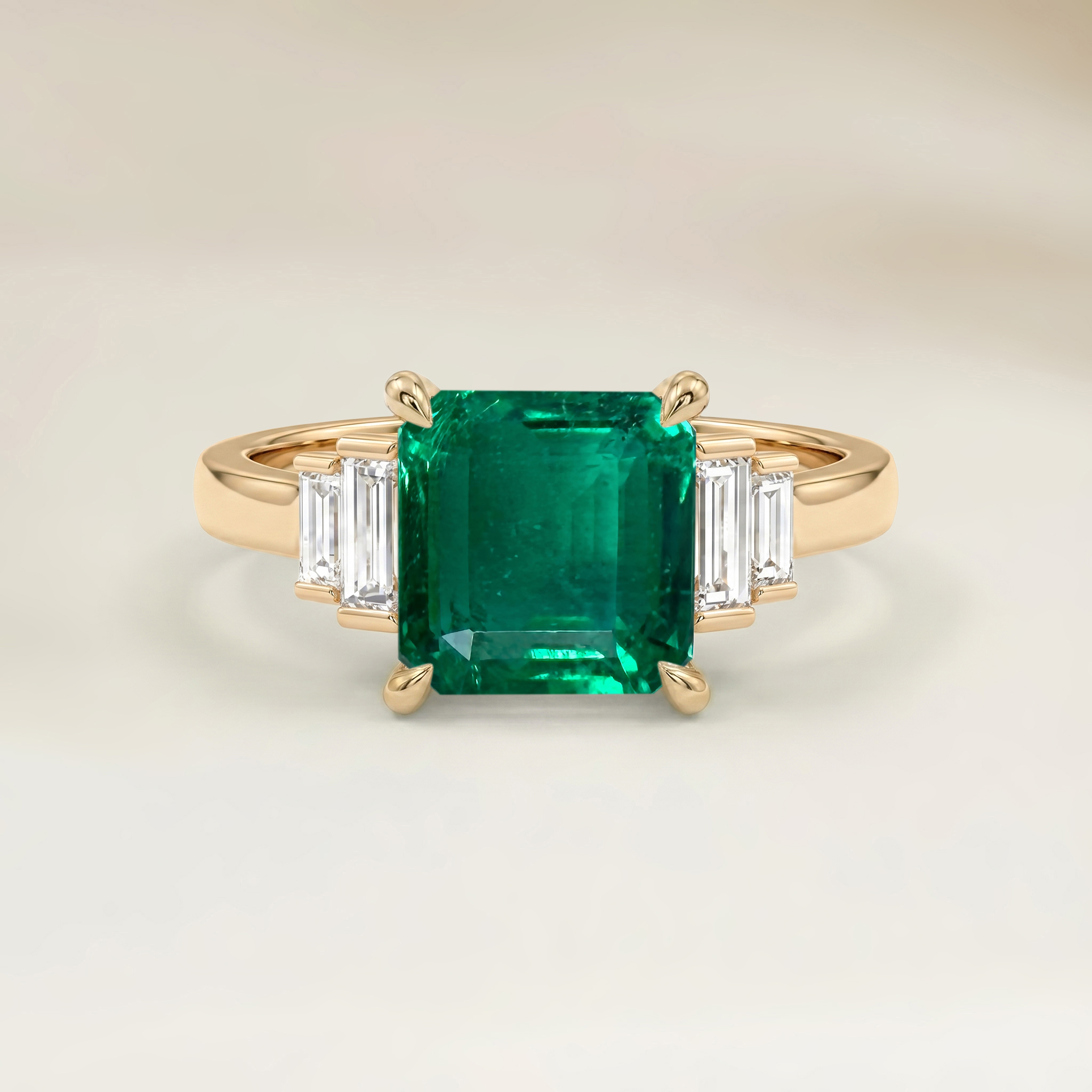
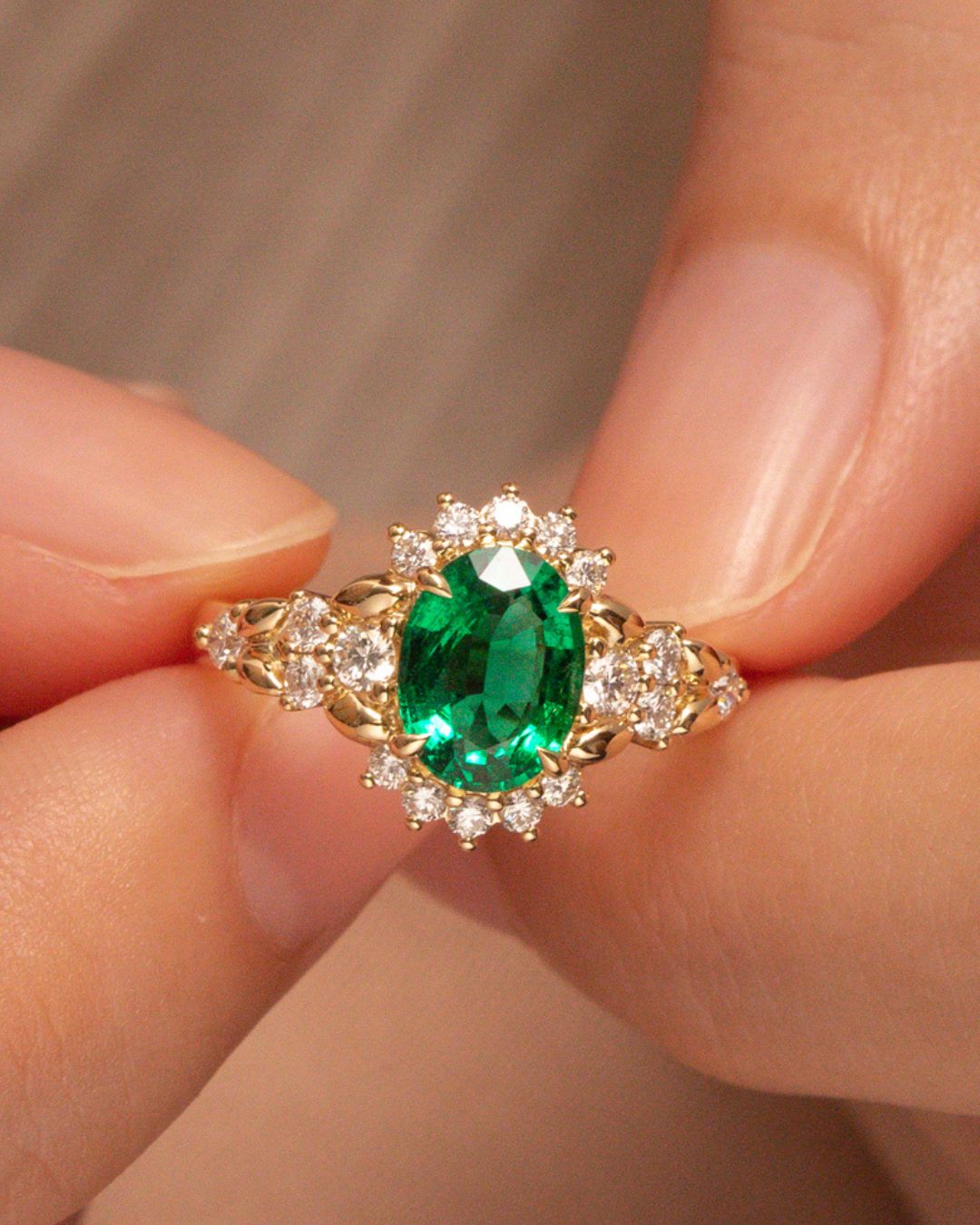
Green
Emerald 2.10 ct · €20,400
Available creations, prices observed in September 2026.
The case of ruby is worth pausing over, because it is instructive. Sapphire and ruby are the same mineral — corundum — and sometimes come from the same deposit. Only their chromium concentration distinguishes them. Yet a ruby engagement ring and a sapphire ring do not tell the same story at all: on one side, passion; on the other, constancy. It is the colour that carries the meaning, never the material.
Emerald, meanwhile, belongs to another family — beryl — and its symbolism of renewal is almost as old as that of sapphire. An emerald engagement ring was, in the Middle Ages, reputed to protect those in love: a promise of beginning again rather than permanence.
Here, a clarification is needed. Only blue sapphire has historical symbolism. The other colours of corundum acquired their meanings much later, and often through the market itself: they are real in the sense that people share them, but they are not a thousand years old.
| Colour | What it is associated with | Age |
|---|---|---|
| Blue | Fidelity, truth, wisdom. | Historical |
| Padparadscha | The lotus flower, rarity, exceptionality. | Ancient name, recent meaning |
| Pink | Tenderness, softness, affection. | Contemporary |
| Teal | Independence, individuality, non-conformity. | Very recent |
| Yellow | Optimism, energy, prosperity. | Contemporary |
Pink sapphire illustrates the phenomenon well. Its symbolism of tenderness has no medieval precedent: it comes from the modern association between pink and affection, which itself dates from the 20thth century. That does not make it illegitimate — a pink sapphire engagement ring perfectly conveys what it wishes to say to the person receiving it today. But it would be dishonest to present it as an ancient inheritance.
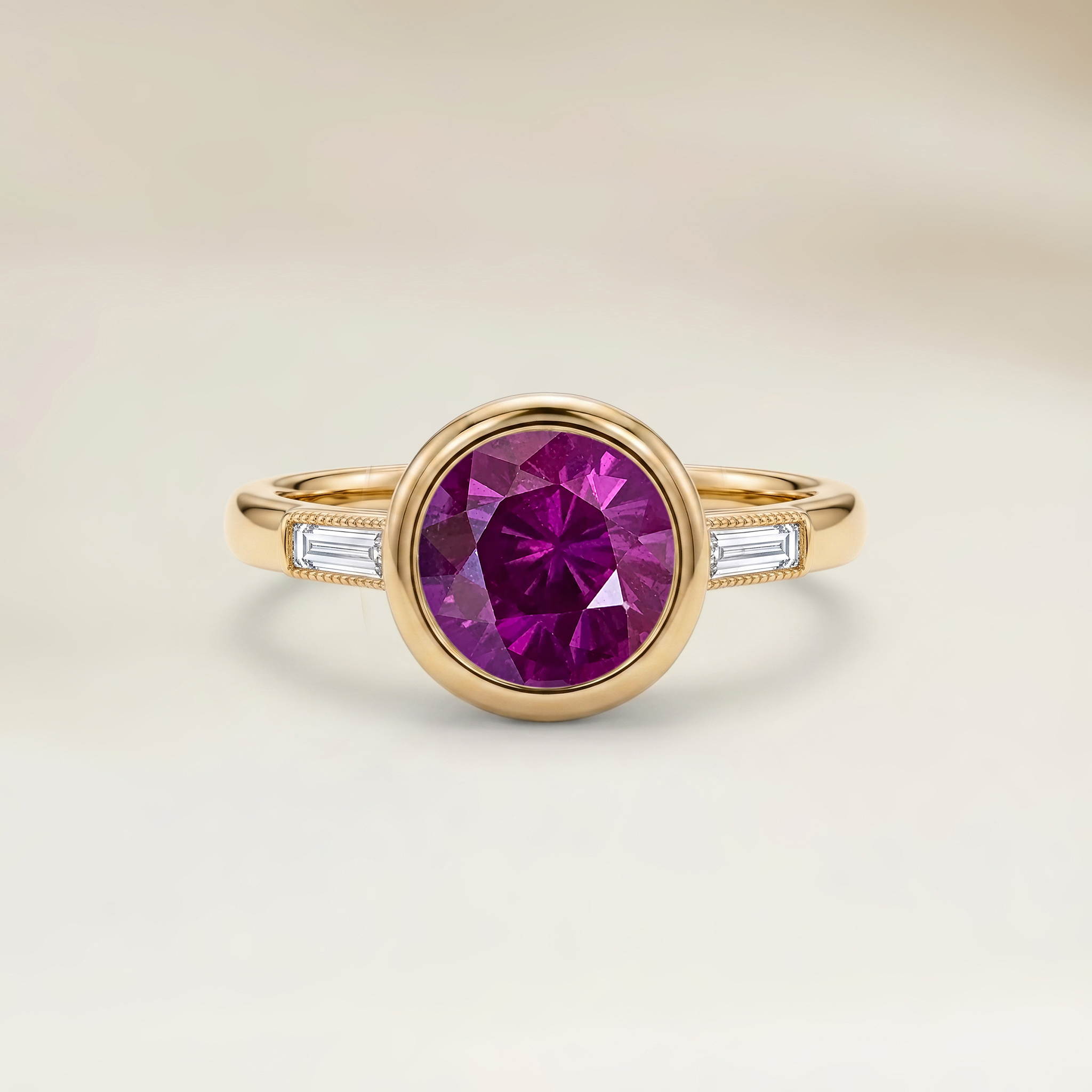
Increase the chromium concentration in a pink sapphire and the stone becomes a ruby — and shifts from tenderness to passion without a single atom in its structure changing its nature. The tipping point is, moreover, debated among laboratories. View the full colour chart →
Two occasions link sapphire to a specific date, and both deserve some clarification as to their origins.
September’s birthstone. It is indeed sapphire in the modern list, widely circulated since the beginning of the 20thth century. But this list is a convention established by the trade, not an ancient legacy: earlier classifications varied according to the period, author and region. This takes nothing away from the pleasure of giving a birthstone — one simply needs to know that it is a recent tradition.
Sapphire anniversaries. They mark sixteen years of marriage in the French classification of anniversaries. For once, the consistency is real: celebrating sixteen years together with the stone of fidelity makes sense.
Engagements, sixteen years of marriage, a September birth — but also, increasingly, the birth of a child. We set many rings for this occasion, often featuring the baby’s birthstone. Sapphire anniversaries: our gift ideas →
Many traditions attribute soothing, protective or clarifying properties to sapphire. These beliefs exist, they are ancient, and they form part of the stone’s cultural history: as such, they deserve to be told.
This is where we stop. We are coloured-stone dealers, not therapists. We attribute no gemstone with any effect on health, sleep, mood or luck, and we will never sell a stone on that promise. A gemstone heals nothing.
What a beautiful stone truly does is already considerable, and more than enough: it passes through generations without changing, it is handed down, it recalls a specific moment each time one looks at it. That is symbolic weight, not power — and it is precisely why jewellery has been given for five thousand years.
Do not choose a stone for what it is supposed to mean. Choose the one you will want to look at every day — its meaning will naturally become attached to the memories you associate with it.
Faithfulness, truth and wisdom, in the Western tradition. These meanings stem from two sources: the colour of the sky, associated with the divine in Mediterranean antiquity, and the stone’s use by the medieval clergy, who made it an emblem of constancy. This symbolism explains its presence in engagement rings.
Yes, in the modern list of birthstones, in circulation since the beginning of the 20thth century. It is a convention that became tradition, not an ancient legacy: earlier lists varied according to period and author.
Sixteen years of marriage, in the French nomenclature of anniversaries. Celebrating sixteen years together with the stone of faithfulness is one of the few truly coherent correspondences in this list.
Only blue carries historical symbolism. The other colours acquired their meanings much later, often shaped by the market: pink for tenderness, teal for independence, padparadscha for rarity. They are real in the sense that people share them — they are simply not ancient.
Many traditions attribute calming or protective properties to it. We convey these beliefs as a cultural fact, without attributing any real effect to them: we are gemstone dealers, not therapists. A stone does not heal.
Because it was long the stone of sovereigns and the clergy in Europe, before diamond became established in the 20thth century. Its presence in highly publicised royal rings has greatly helped restore it to prominence in the engagement ring market.
The same mineral, corundum: only colour separates them. Their symbolism, however, is opposed — blue conveys constancy and reason, red passion and ardour. Two different promises made with the same stone.
Loose stones, with their full characteristics, can be browsed from the sapphire.
Share this post