Zambian or Colombian Emerald?
Bonnot Paris22/9/2026
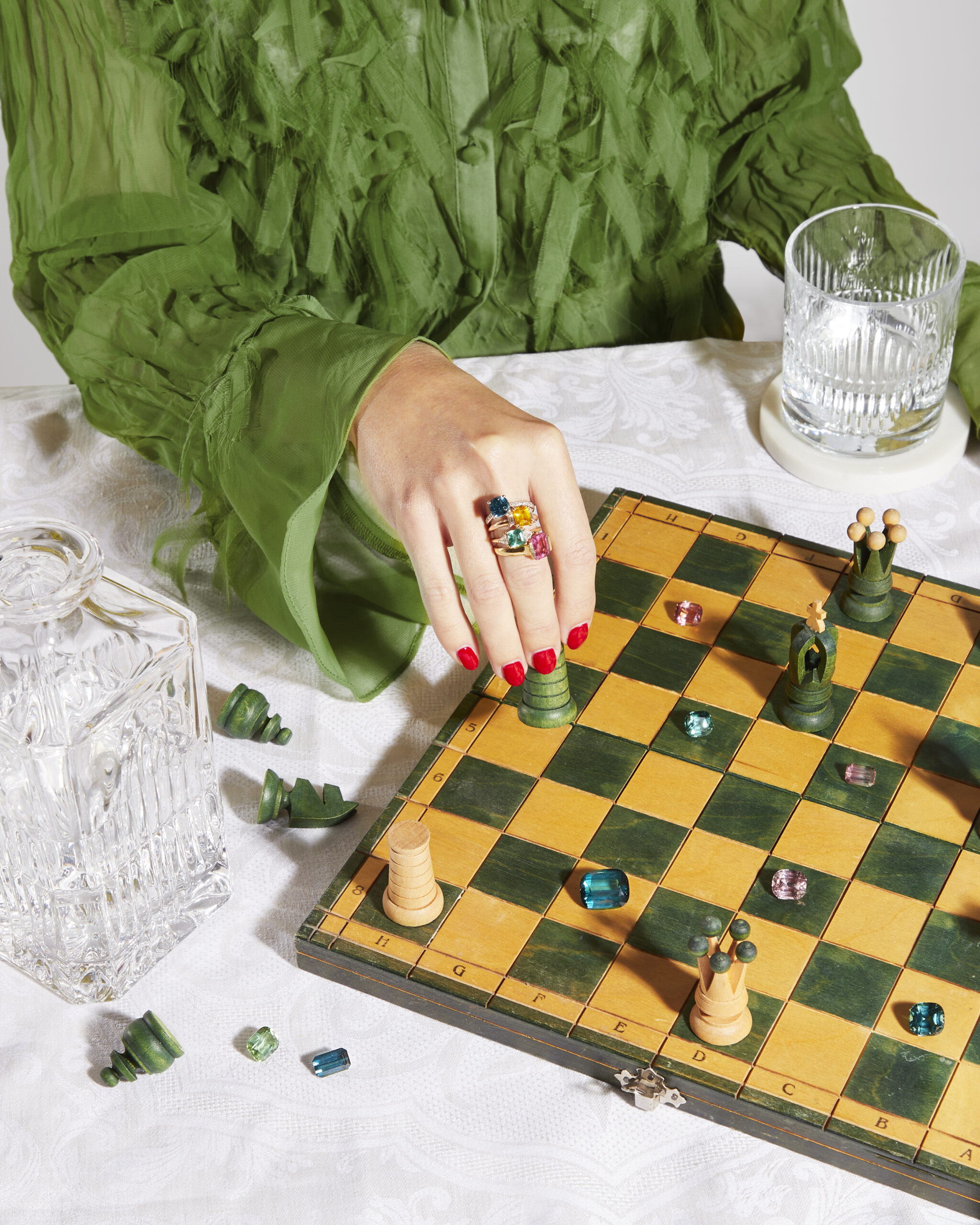



Sapphire is by far the most widely set coloured gemstone in the world. This guide does not recount its history: it explains what needs to be decided, in what order, and what each choice entails — including the constraints discovered too late.
Two subjects are deliberately covered elsewhere, because they deserve more than a paragraph: what produces sapphire’s colour, and the price per carat measured across our stock, colour by colour.
Three concrete arguments, none of them symbolic.
Durability. Hardness of 9 on the Mohs scale, excellent toughness, no cleavage planes. Only diamond performs better — yet diamond has cleavage planes that corundum does not. A sapphire ring can be worn for thirty years without particular precautions.
Uniqueness. Two diamonds with the same 4Cs are interchangeable; two sapphires of the same weight and origin never look quite alike. No grading scale standardises a sapphire’s colour, which is a disadvantage when buying and an advantage when wearing it.
Dimensions. With a comparable budget, sapphire often makes it possible to consider a more generous centre stone. The difference depends greatly on the quality, weight and treatment of the two stones being compared — it is not automatic, but it is common.
It does not sparkle like a diamond. Corundum has a lower refractive index: it reflects colour rather than fire. If it is white brilliance you seek, no coloured stone will give it to you — that is the role of accent diamonds.
Sapphire comes in every colour except red — which then bears another name. We offer ten families, from classic blue to bi-colour. Three reference points are enough to avoid mistakes.
This is what determines the price, well before weight. A vivid colour is worth more than an extra half-carat.
Too dark, the stone goes dull in the evening. Too light, it loses its character. “The darker, the more expensive” is false.
A stone should be judged in daylight then in the evening. If the colour collapses, it will not leave the drawer.
None is calibrated like yours. Always ask for a video under several lighting conditions, never a photograph.
For details on each family — thirty real stones, their shade codes and the corresponding ring —, our complete sapphire colour chart takes over from this guide.
Shape determines the ring’s overall look; millimetres, its true presence. Carat weight, on the other hand, says almost nothing — corundum is denser than diamond, so at equal weight it appears smaller.
| Shape | Visual effect | Point to note |
|---|---|---|
| Oval | The largest visible surface area for a given weight, and it elongates the finger. | Check symmetry and the butterfly effect. |
| Cushion | Generous presence, softened corners, beautiful colour return. | Appears more compact than an oval of the same weight. |
| Rectangle | Step facets, a mirror-like rather than sparkling effect. | Requires impeccable transparency: nothing can be hidden in it. |
| Round | The most even brilliance, a perfectly balanced appearance. | Greater loss of material during cutting: a premium for comparable quality. |
| Pear | Highly graphic, it greatly elongates the hand. | The point requires a dedicated prong. |
A few measurements taken from our stock rather than a theoretical table: a round of approximately 1 ct measures 5.6 to 6.7 mm in diameter; an 1.5 ct oval, from 6.7 × 5.1 to 8.4 × 6.6 mm; a 2 ct cushion, from 6.6 × 5.6 to 8.1 × 6.5 mm. The variation within the same weight comes from cutting depth — many stones are cut deep to retain carat weight.
Ask for the dimensions in millimetres, not just the carat weight, and a video of the stone on a hand. A seller who does not provide them is selling you a number, not a gemstone.
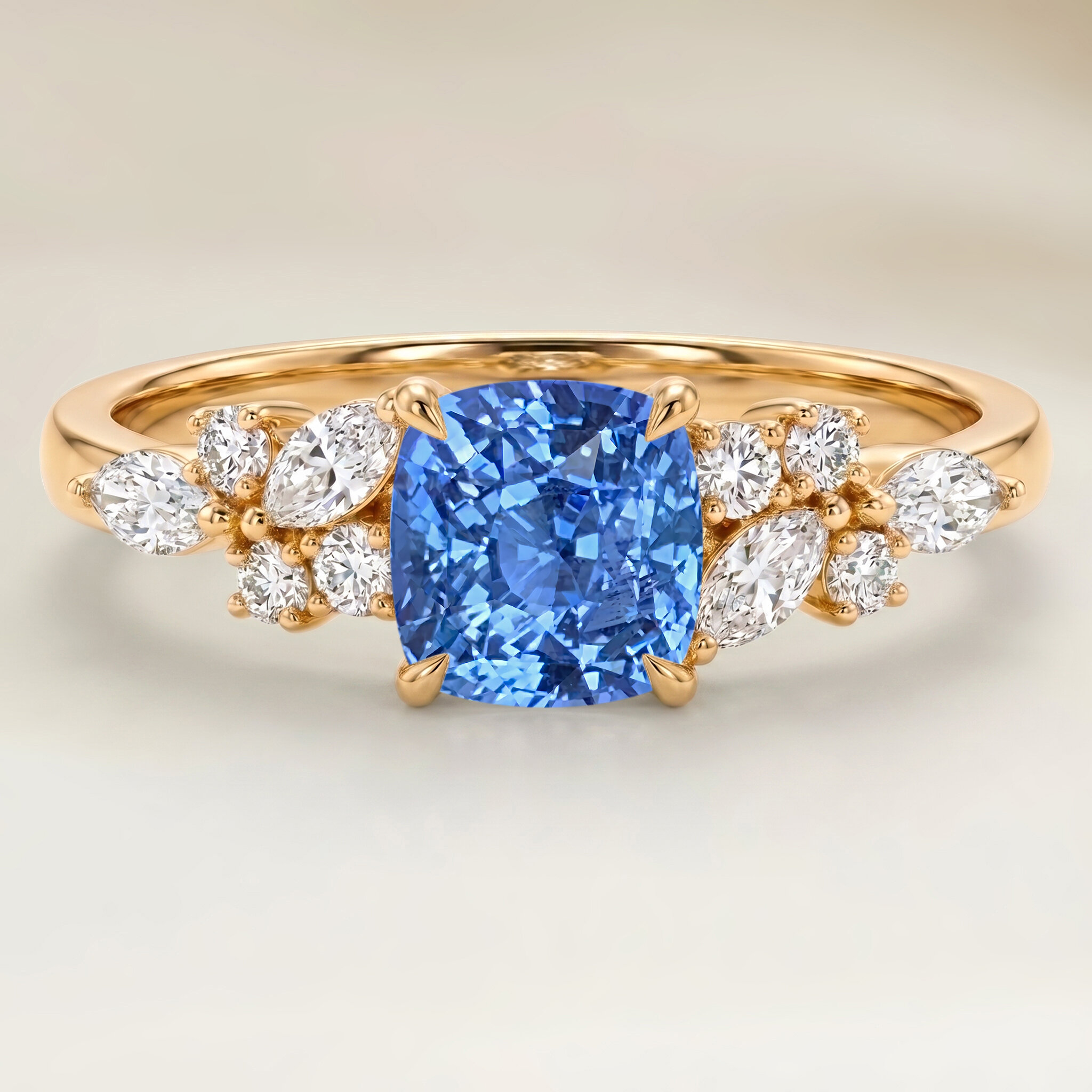
One question takes precedence over all others: do you prefer a discreet, spectacular or decidedly graphic ring? Here are the three families we most often design around a sapphire.
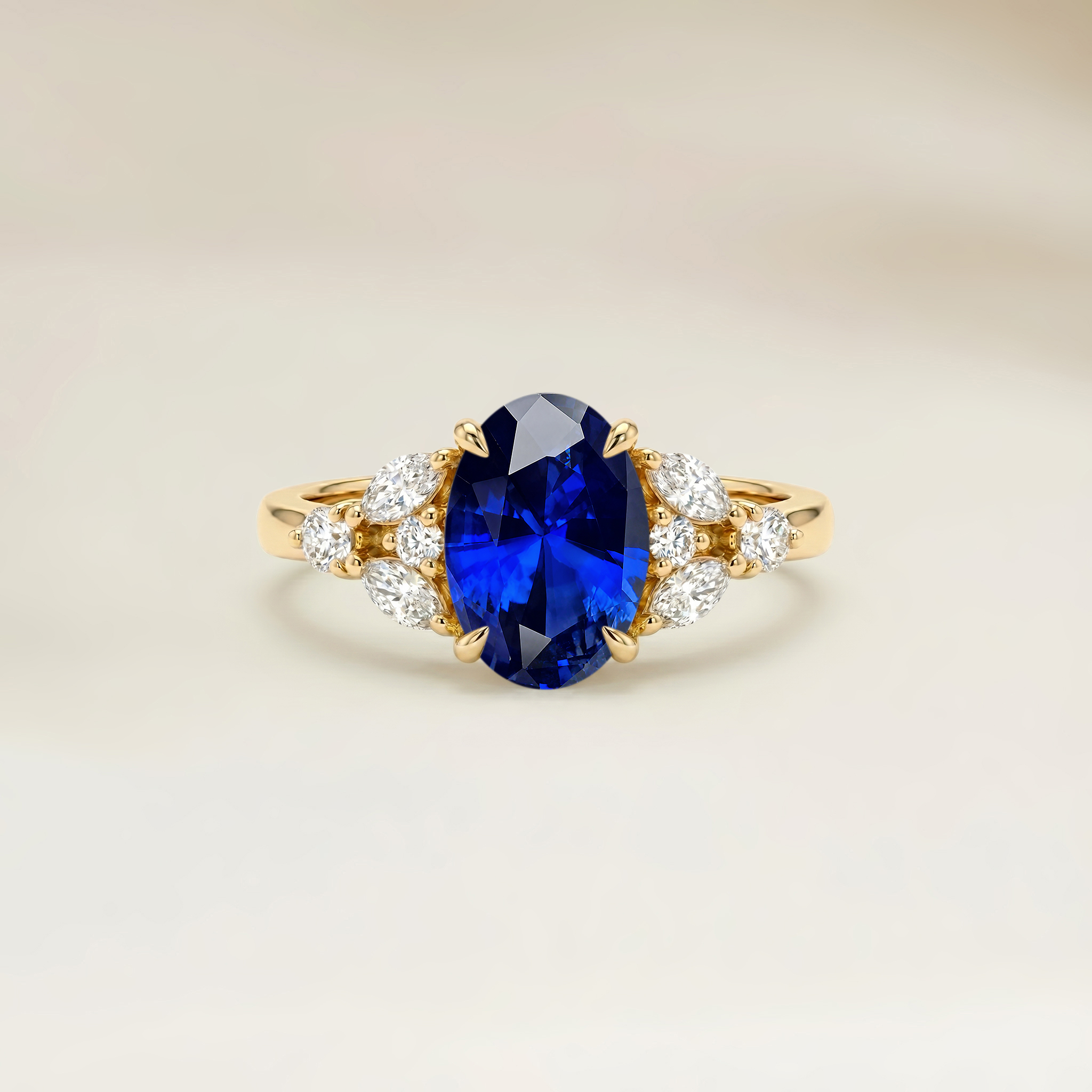
1.01 ct · €4,800
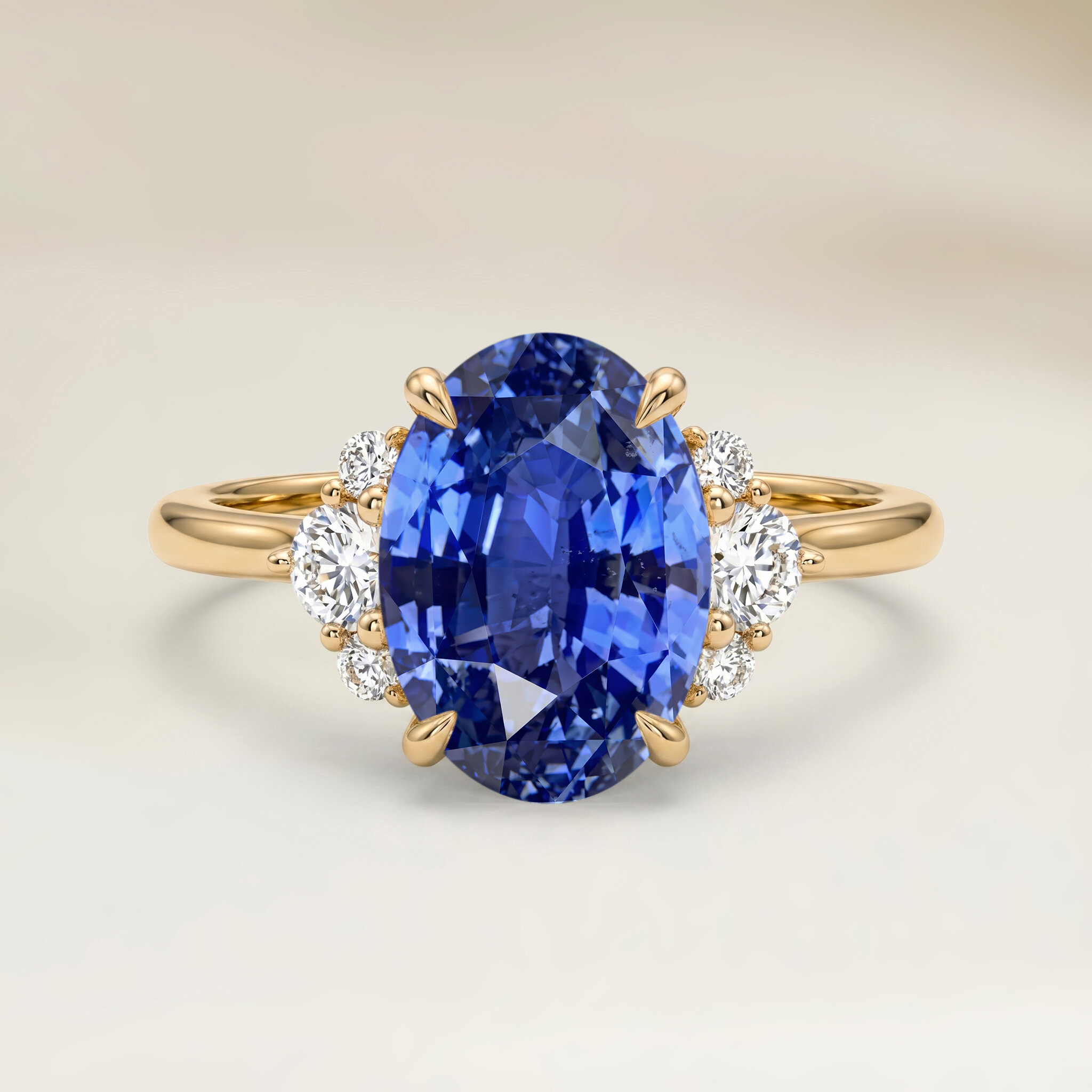
2.17 ct · €8,880
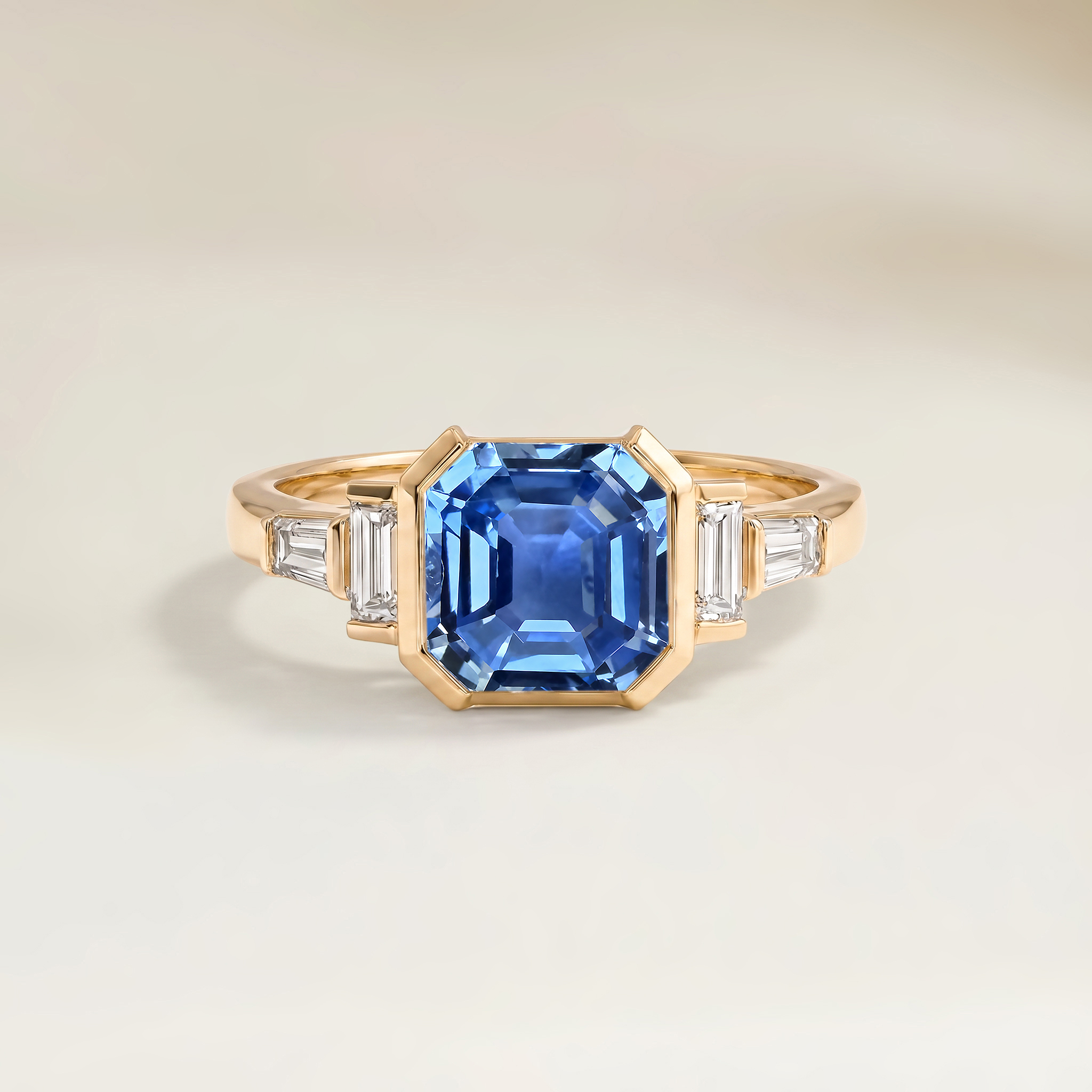
1.65 ct · €4,680
Available creations, prices noted in September 2026.
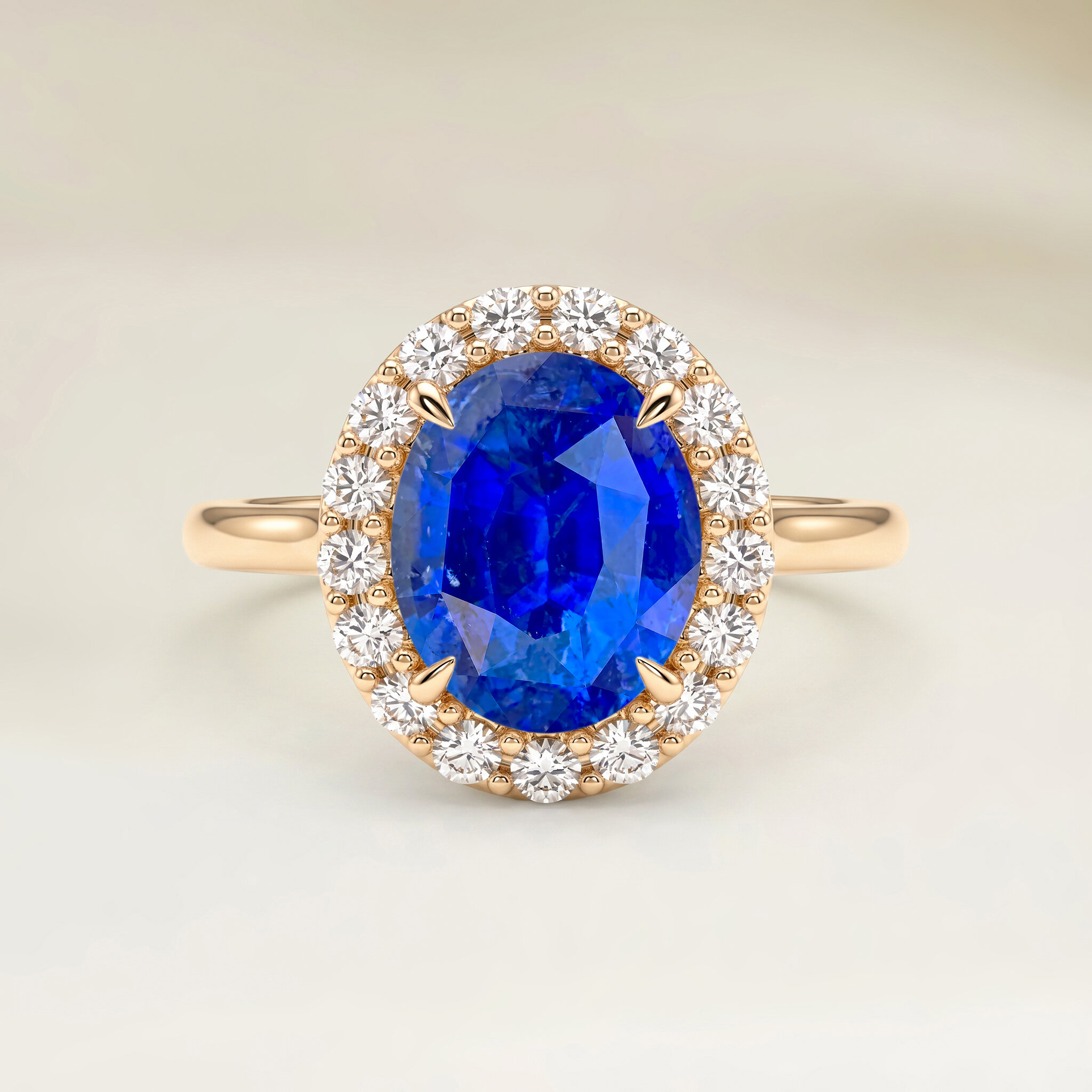
Two other designs recur frequently. The solitaire, one stone and a band, the most timeless setting — the one that leaves all the space to colour. And the daisy surround, a halo of diamonds that visually enlarges the stone and intensifies its colour through contrast: the most spectacular, and the one that requires a notched wedding band.
“Will a wedding band sit alongside this ring?” If so, say so at the first appointment. A high setting leaves an unsightly gap beneath the band; a lower setting or a gentle curve resolves it from the outset. How to choose your wedding band →
| Metal | Its effect on colour | Care |
|---|---|---|
| White gold | Neutral: it allows pure blues to shine and maximises contrast with diamonds. | Rhodium plating every 2 to 3 years. |
| Platinum | Cool, natural whiteness. Denser, it holds important stones more securely. | Nothing to redo. |
| Yellow gold | Warms the stone and shifts the perception towards green in a teal. The metal of vintage settings. | No surface treatment. |
| Rose gold | Extends and softens warm tones — pink, padparadscha, peach. | No surface treatment. |
A point rarely mentioned in boutiques: white gold is rhodium-plated. Rhodium is a surface layer that wears away in two to three years — when the ring turns yellowish grey, it is not the stone that has dulled, but the metal reappearing. Platinum settles the question permanently: more expensive to buy, worry-free for life.
| Budget | What it allows |
|---|---|
| From €2,500 | A 0.7 to 1 ct stone in a beautiful colour, in a simple 18-carat gold setting. |
| €5,000 to €8,000 | A 1 to 2 ct stone, with a pronounced colour, in a fully bespoke setting. The heart of our projects. |
| €8,000 to €15,000 | A rarer or unheated stone, diamond surround or complex setting. |
| €15,000 and above | Exceptional origin, treatment or quality: unheated padparadscha or royal blue of 2.5 ct and above. |
The setting accounts for 1 250 € for a simple design at 10 000 € and more for substantial pavé or calibrated-stone work. The remainder is the stone — and that is where the trade-off lies.
Our consistent advice: colour before weight. An unheated 1.5 ct teal sapphire with a vivid blue-green hue makes a far more beautiful ring than an unremarkable 2 ct blue. The figures, colour by colour, can be found in our sapphire price guide, based on 262 stones from our stock.
The three great coloured gemstones, placed side by side without complacency.
| Sapphire | Ruby | Emerald | |
|---|---|---|---|
| Hardness | 9 | 9 | 7,5 – 8 |
| Daily wear | Without reservation | Without reservation | Protective setting |
| Common treatment | Heating, disclosed | Heating, disclosed | Colourless oil |
| Creation from | 2 500 € | 8 000 € | 1 700 € |
| Choice of colours | Ten families | Red only | Green only |
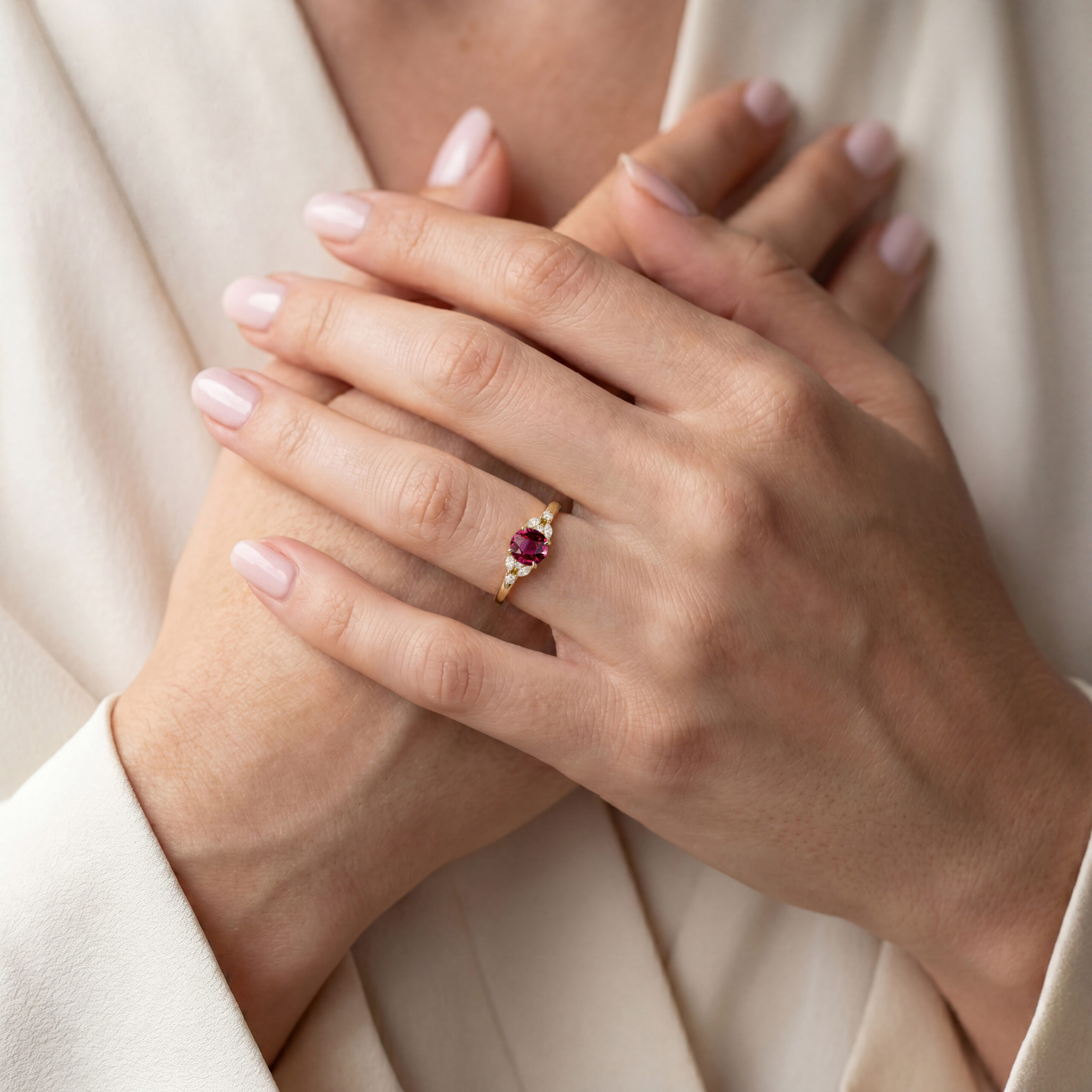
Ruby and sapphire are the same mineral — corundum — and sometimes come from the same deposit. Only the concentration of chromium separates them, and the tipping point is debated among laboratories. Everything said here about sapphire’s durability therefore applies word for word to a ruby engagement ring.
The difference lies elsewhere: ruby is the rarest of the great gemstones above two carats, which explains the difference in starting price. As for an emerald engagement ring, it starts at a lower price but imposes a constraint the other two do not — a setting that protects the stone’s edges.
A stone almost never gets dirty: it is the underside of the setting that becomes clogged, and this is where the loss of brilliance attributed to the gemstone comes from.
Once a month, warm water, mild soap, a soft brush — paying particular attention beneath the setting and between the prongs. Rinse with clean water and dry on a lint-free cloth. Plug the sink before you begin.
Remove the ring for sport, gardening, household cleaning and swimming. The main risk is not scratching — at 9 on the Mohs scale, nothing commonly encountered can scratch a sapphire — but impact on a prong, which can loosen the setting without any visible sign.
Have the setting checked every two years, or after a significant impact. It is the only truly essential intervention, and it is offered for life on our creations.
If you hear the stone move slightly when tapping the ring near your ear, stop wearing it and have it examined. This is the only reliable symptom of a setting that has become loose. Caring for your stones →
For three concrete reasons: a hardness of 9 out of 10 that allows unrestricted daily wear, a palette of ten colours that makes each ring unique, and often more generous dimensions than a diamond at a comparable budget. Since Antiquity, it has also been the stone of fidelity.
The oval offers the greatest visible surface area for a given weight and elongates the finger: it is the best-selling shape. The cushion gives a generous presence. Step cuts produce a mirror effect rather than sparkle and require impeccable transparency.
The solitaire leaves full room for colour; the floral setting and halo visually enlarge the stone; the Art Deco setting frames it and requires a step cut; the low bezel setting is the safest for a very active hand. The decisive question remains whether a wedding band will sit against the ring.
White gold and platinum allow pure blues to shine. Yellow gold warms the stone and suits teals and yellows. Rose gold extends warm tones. Platinum remains naturally white, whereas white gold requires rhodium plating every two to three years.
Our creations start at €2,500 for a 0.7 to 1 ct stone in a simple setting. Most projects fall between €5,000 and €8,000, for a 1 to 2 ct stone and a bespoke setting. The setting costs from €1,250 to €10,000 depending on its complexity.
The same mineral, corundum: the same hardness, the same absence of cleavage planes, sometimes from the same deposit. Only the concentration of chromium distinguishes them. Ruby is, however, significantly rarer above two carats — our ruby creations start at around €8,000, compared with €2,500 for sapphire.
Warm water, mild soap and a soft brush once a month, paying particular attention beneath the setting. Remove the ring for sport, gardening, housework and swimming. A check of the setting every two years is sufficient — it is complimentary for life on our creations.
To start with the loose stone rather than the ring, the entire stock can be explored from the sapphire.
Share this post