Zambian or Colombian Emerald?
Bonnot Paris22/9/2026



French anniversary nomenclature assigns a material to each year. Some designate a gem — sapphire at sixteen years, emerald at forty. The tenth, however, designates a saucepan metal.
The image is not so bad: tin is supple, it does not rust, it can be worked without breaking. But it tells you nothing about what to give. The good news is that this is precisely what makes this anniversary interesting.
Tin symbolises a flexible, enduring union: a metal that does not corrode, bends without breaking, and has accompanied domestic life since Antiquity. For ten years together, the metaphor holds true.
It does, however, have one practical flaw: one does not give a tin ring. The metal is too soft for jewellery worn every day; it scratches, deforms and cannot withstand any serious setting. Tradition therefore leaves you with a blank page.
Our advice, the same as for twenty years: these lists are useful when you do not know what to give, and perfectly ignorable when you do. After ten years together, you know their tastes better than a 20th -century nomenclature.
To place the tenth year among anniversaries that do designate a gem.
| Year | Anniversary | What it opens up |
|---|---|---|
| 10 years | Tin | No stone is required: the choice is entirely free. |
| 16 years | Sapphire | Ten colours, hardness 9 out of 10, deep stock. |
| 20 years | Porcelain | Not a gemstone either — the same freedom as at ten years. |
| 26 years | Jade | A stone we do not work with. |
| 40 years | Emerald | The green of beryl, with a protective setting to consider. |
Two anniversaries out of five designate a gemstone. The others leave the field open — and that is probably for the best, because a list does not know the person you are giving to.
A workshop observation, since we see these projects every month. Ten-year rings do not resemble twenty-year rings, still less engagement rings.
Budgets are often more modest : after ten years of marriage, one often has a mortgage and young children. Tastes, meanwhile, are more defined — ten years are enough to know what one likes to wear, and what one never wears.
Hence a consequence we find rather pleasing: it is the anniversary when one dares the most. Bright colours, stones one did not know, designs that would not have suited an engagement ring. That is precisely why the following two families are so often chosen for this occasion.
“What does she wear every day, and what lies sleeping in the box?” The answer says more about the right gift than any anniversary list. A ten-year ring should be worn, not added to what lies sleeping.
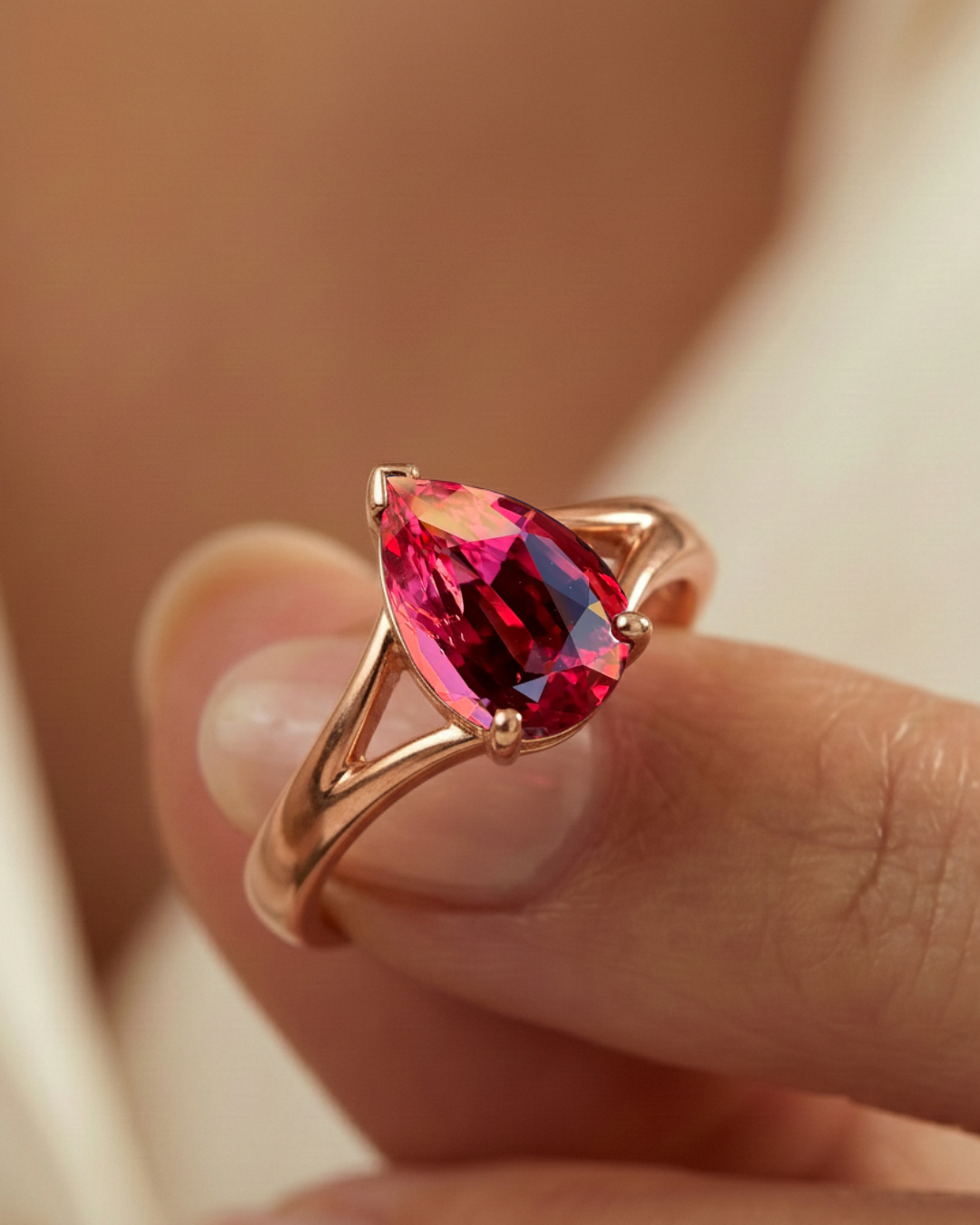
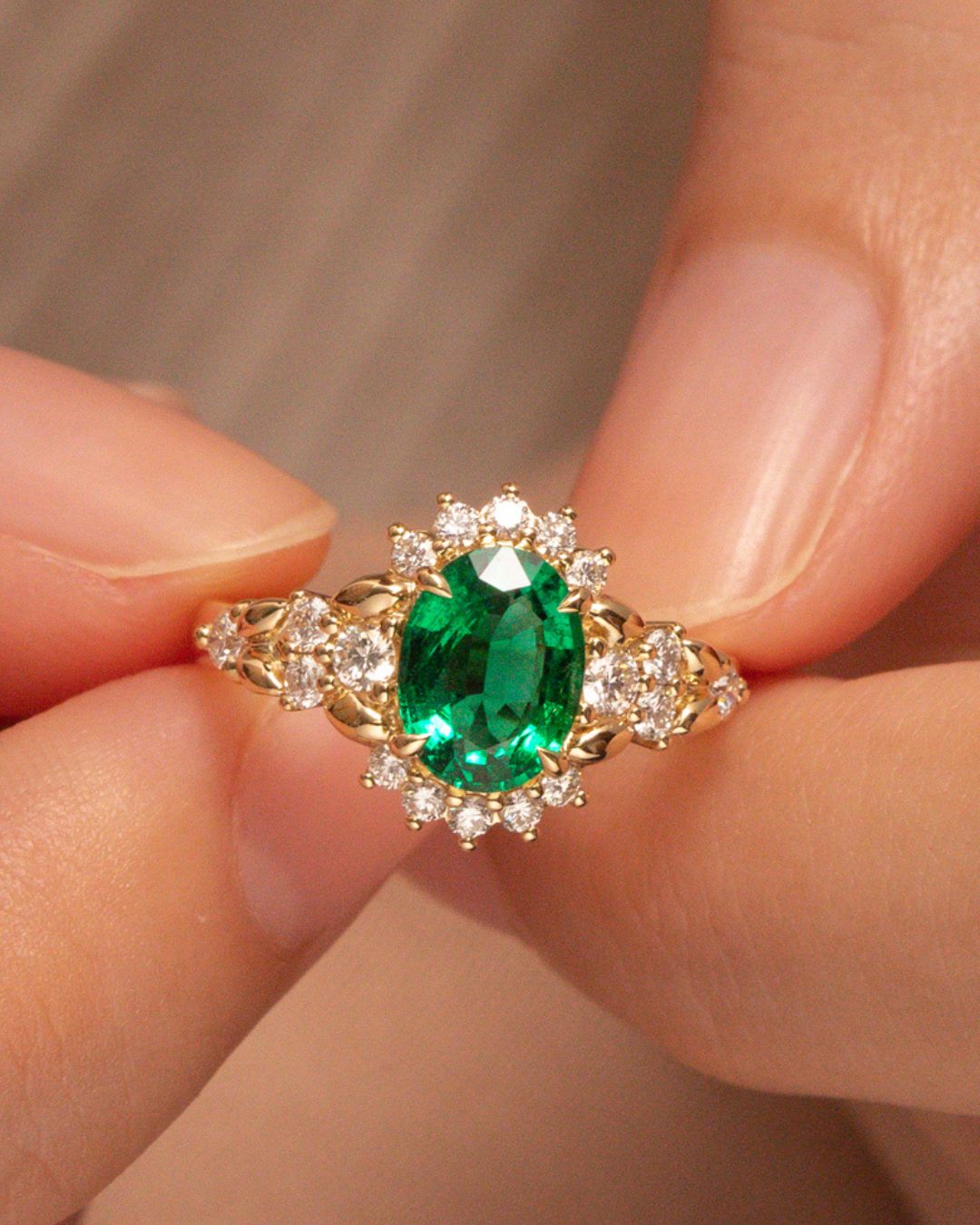
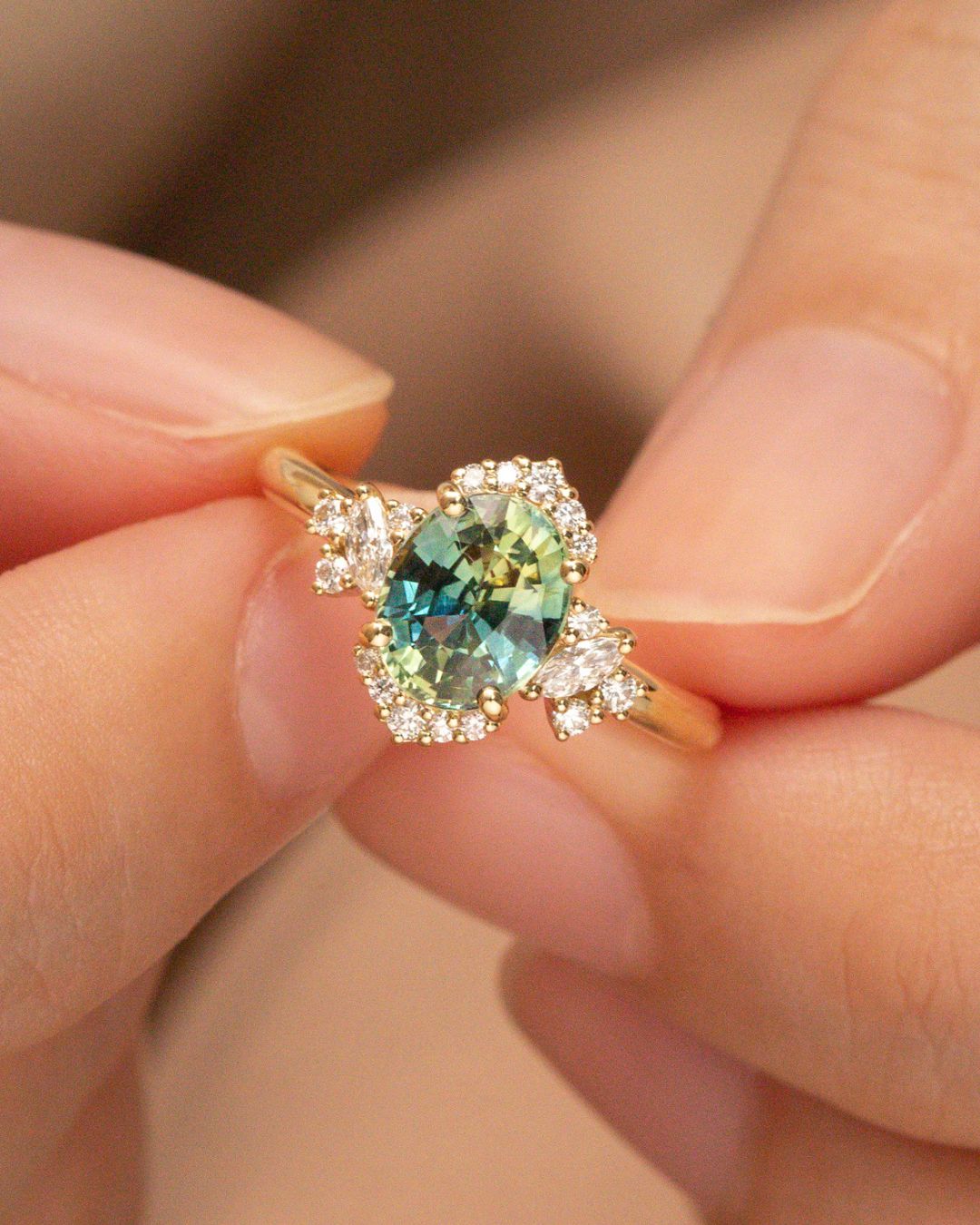
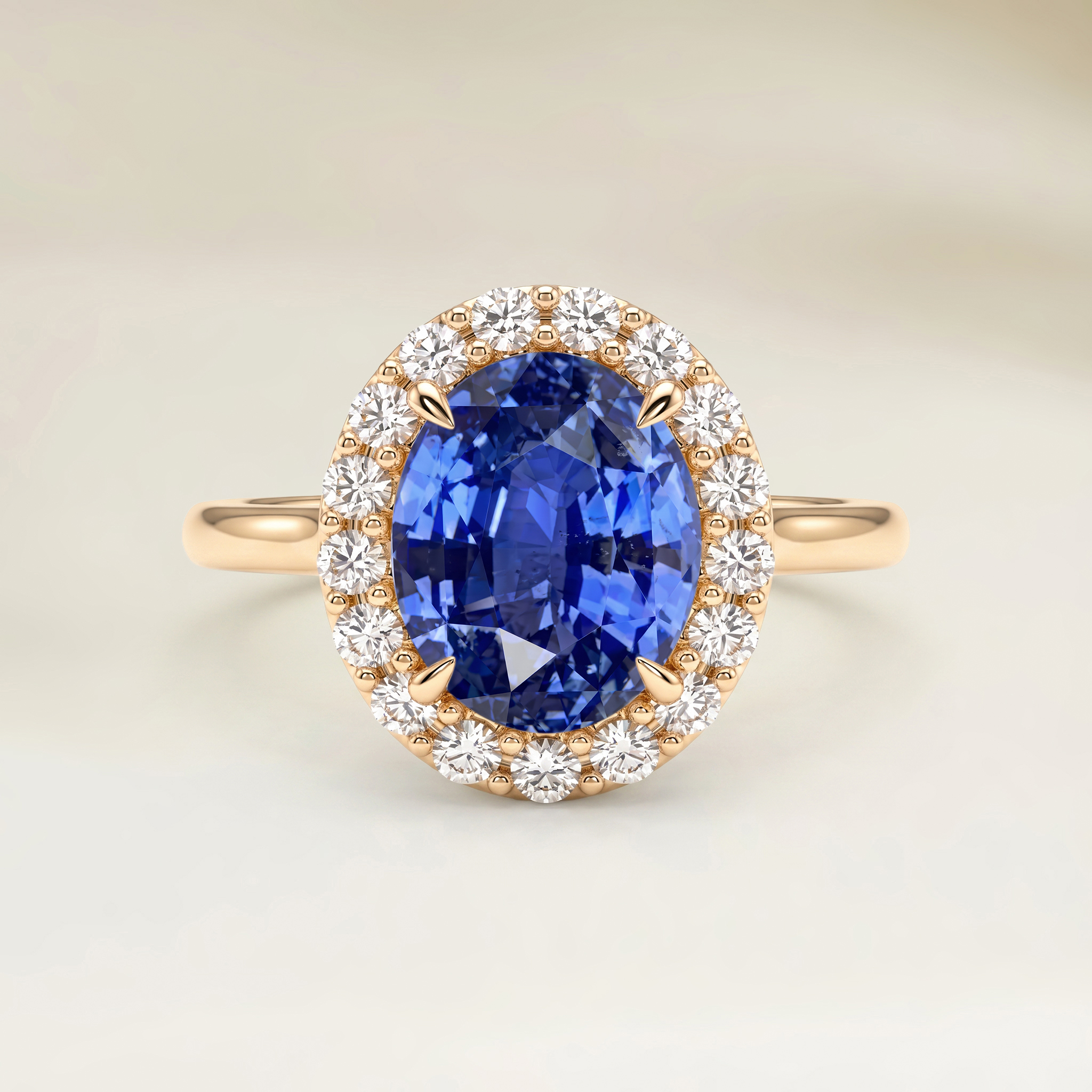
Let us begin with what works, because after ten years of marriage, one no longer wants to get it wrong. The three great coloured stones cover the majority of the projects we create for this anniversary — and each answers a different intention.
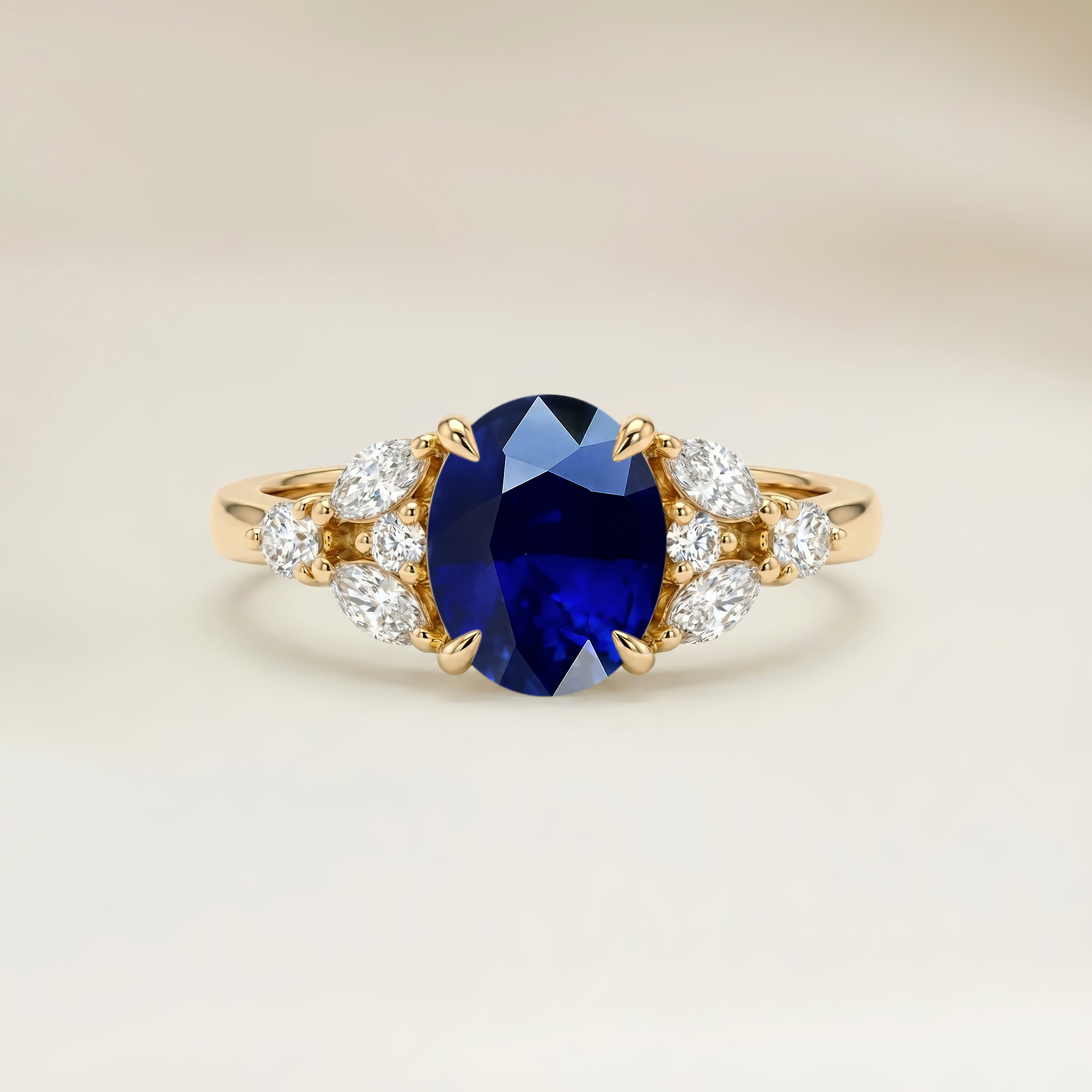
Blue 1.26 ct · €5,160
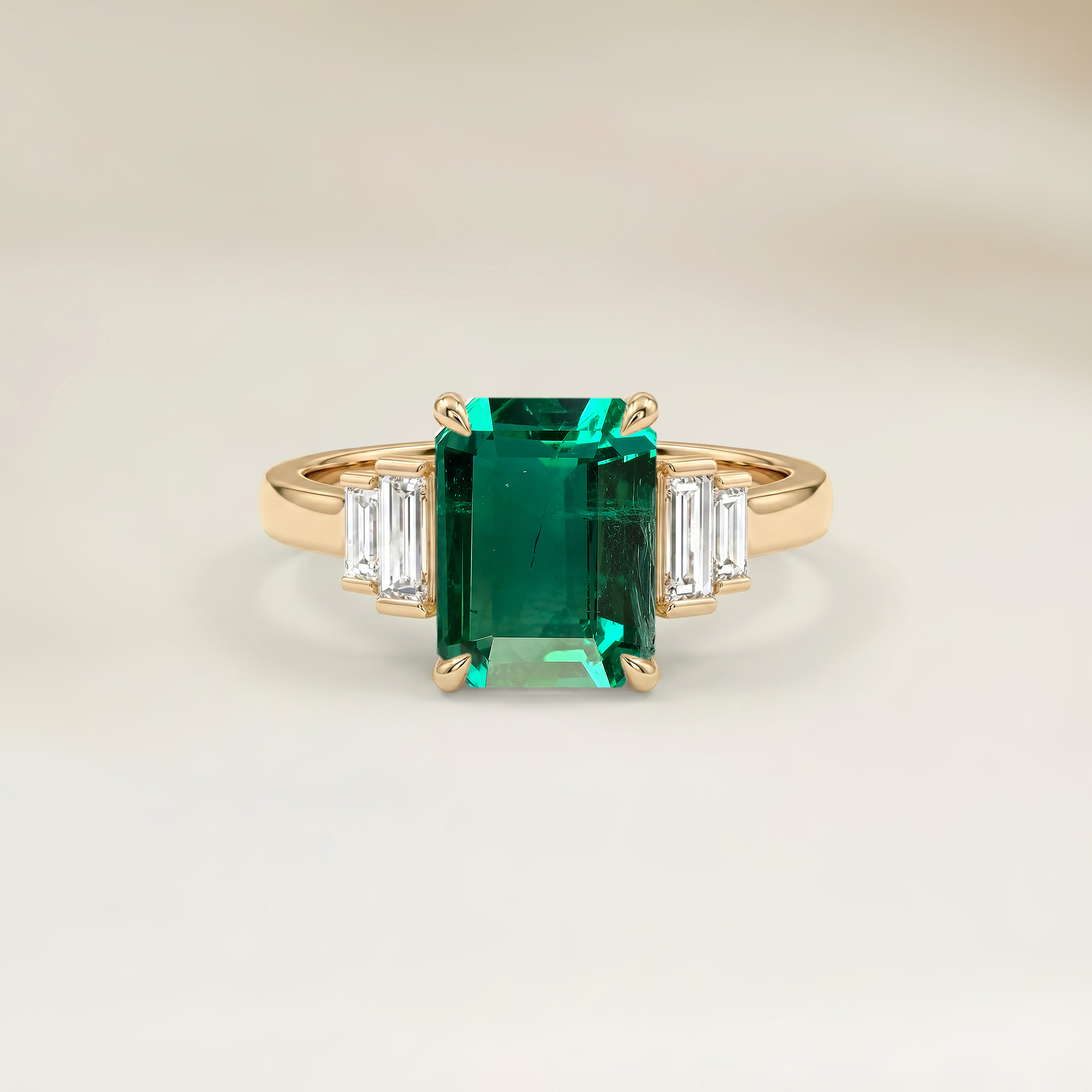
1.46 ct · €8,760
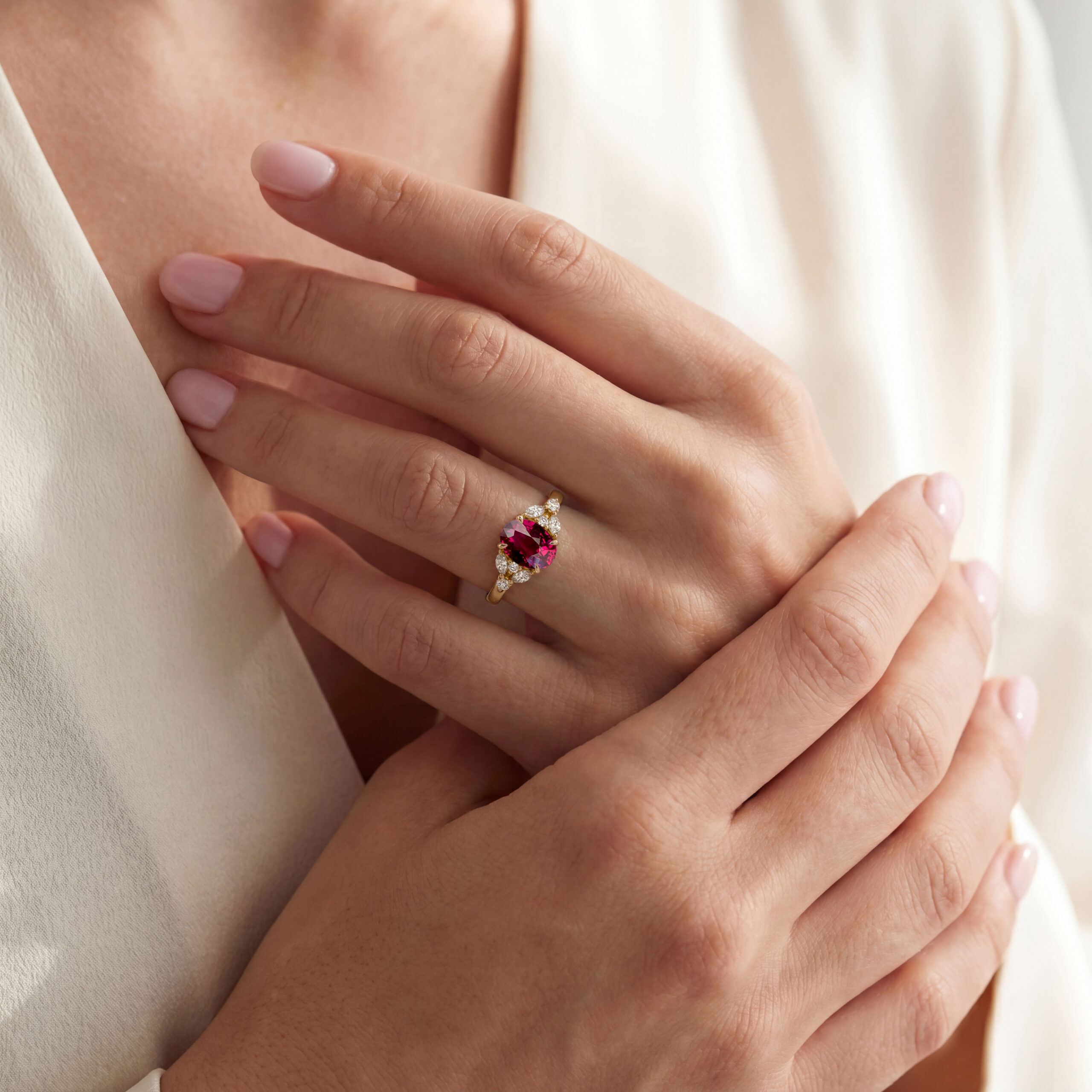
View the collection →
Available creations, prices observed in September 2026.
If there is only one thing to remember: after ten years, the stone should be chosen above all for everyday wear. An anniversary ring that sleeps in a box is a failed gift, whatever its value. Sapphire and ruby, at 9 on the Mohs scale, raise no questions. Emerald, between 7.5 and 8, raises just one — that of the setting — and it is resolved through design.
| Stone | Hardness | Everyday wear | Creations from |
|---|---|---|---|
| Sapphire | 9 | Without reservation | 2 500 € |
| Ruby | 9 | Without reservation | 8 000 € |
| Emerald | 7,5 – 8 | Protective setting | 1 700 € |
If she already wears a blue sapphire, change colour rather than recreating the same thing on a larger scale. A difference in colour marks a milestone; a difference in size suggests catching up. See the ten colours of sapphire →
If the big three do not speak to you — or if she already has all the sapphire she needs —, two more discreet families are worth exploring. They share three qualities: colours that corundum does not produce, generous sizes within a modest budget, and the fact that no one will recognise them.
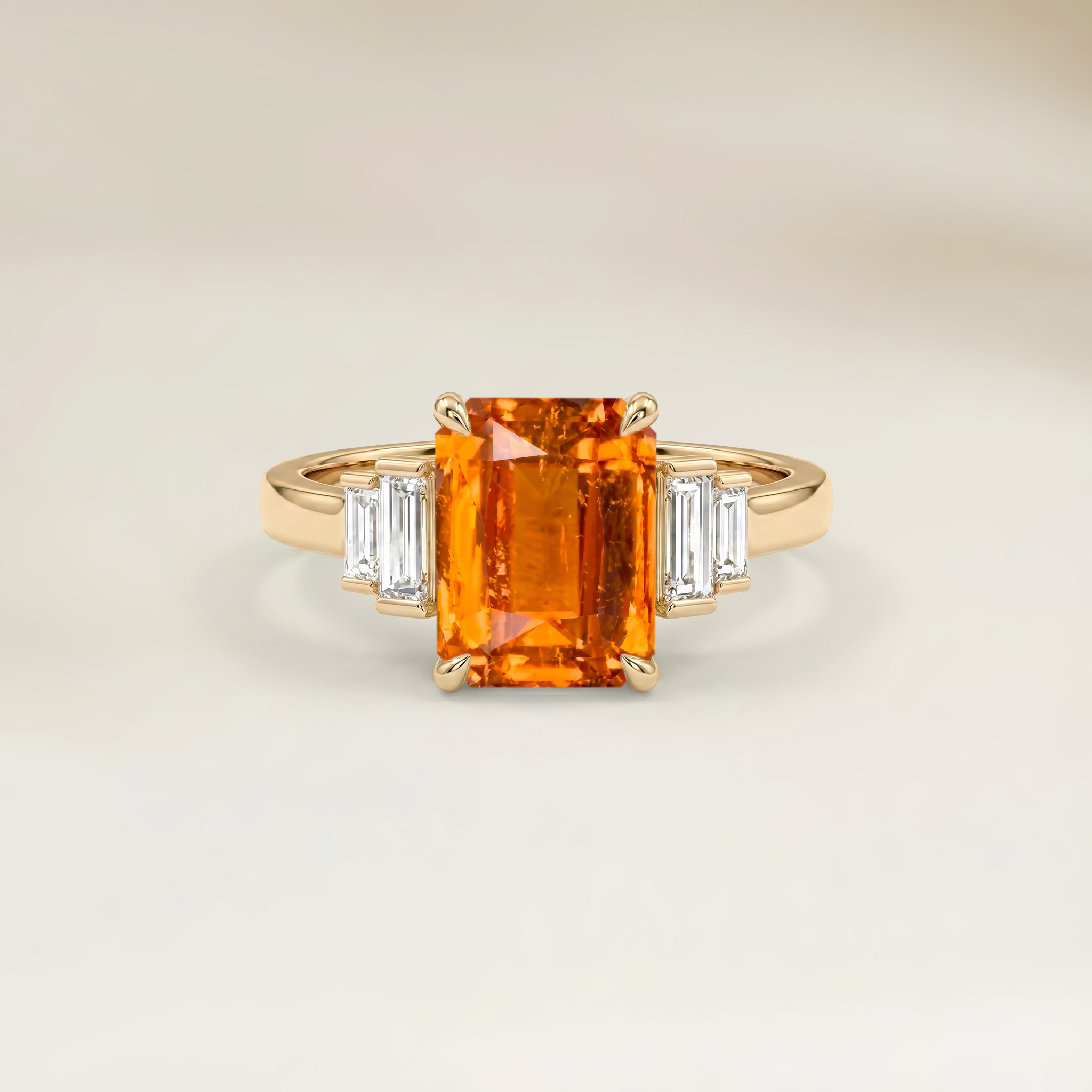
An orange to orange-red with a saturation no other gemstone achieves in this hue. Like all garnets, it is neither heated nor oiled : no treatment to declare. A spessartite garnet engagement ring starts at around €3,960.
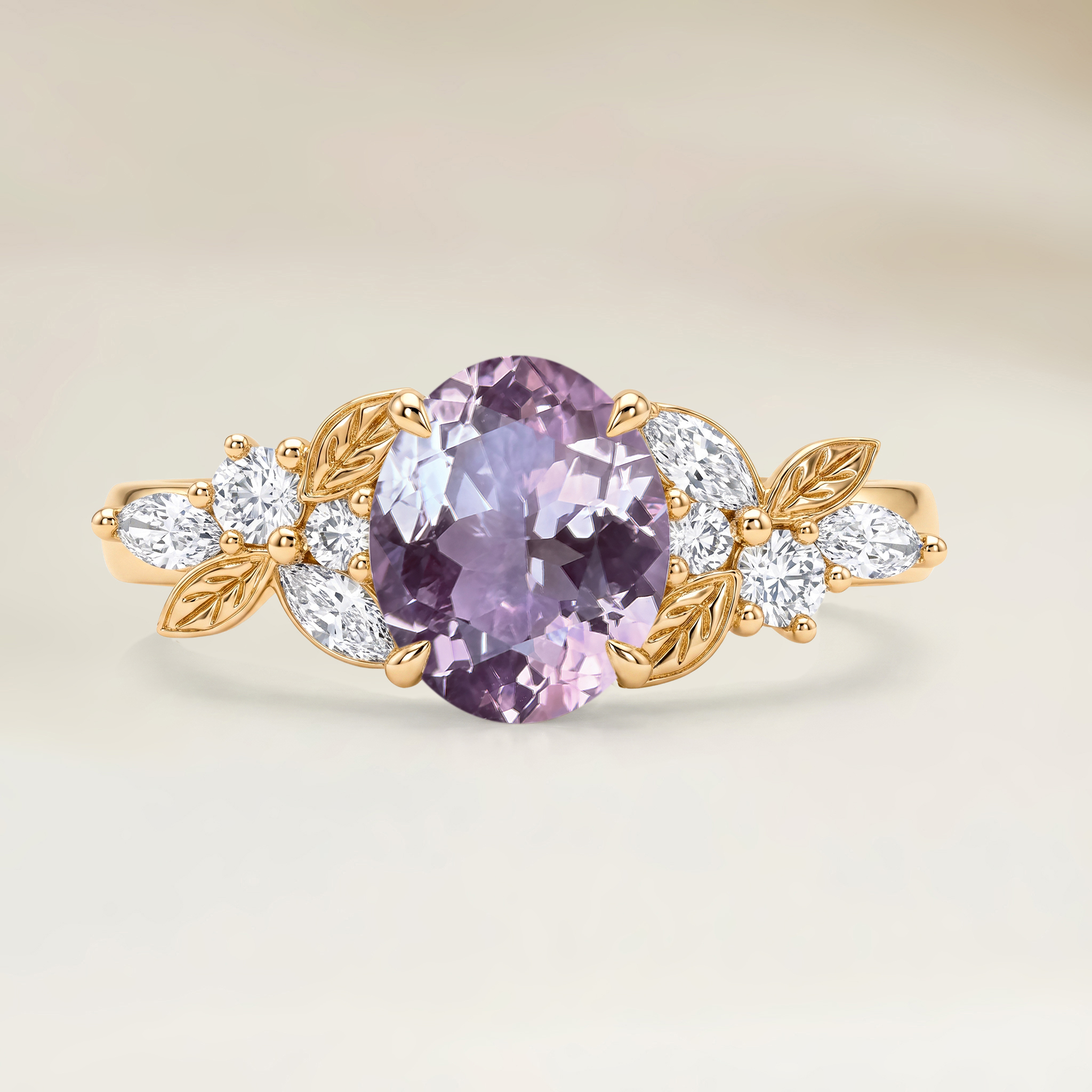
From green to pink, via lilac and bi-coloured stones, no other family covers as many shades — and it is the one that offers the greatest surface area on the finger for a given budget. A tourmaline engagement ring starts at around €2,760.
These two families rank between 7 and 7.5 on the Mohs scale, compared with 9 for sapphire and ruby. They require the same care as an emerald: a setting that protects the edges, and the ring should be removed for gardening, sport and housework. It is important to know this beforehand, not afterwards.
At the ten-year mark, this is the option we recommend most often — and the one least often considered.
Ten years of daily wear is precisely when the setting begins to show its age while the stone remains intact. The underside of the band flattens against neighbouring fingers, the prongs loosen, and the white gold has lost its rhodium plating. The gemstone, meanwhile, has not moved a millimetre.
The process is simple: we examine the stone — its nature, actual dimensions measured with callipers, and the condition of the setting — then design a new setting around it. The cost covers the setting alone, from €1,250 for a simple design, since the main component is already there. And the gold from the old ring can be melted down and reused.
This is the right time to engrave two dates inside the band: the wedding date and the anniversary date. The ring then tells of an interval rather than a moment. Discover bespoke →
The tin anniversary — a metal that is supple and resistant to corrosion, symbolising a union that adapts without deteriorating. It is not a gemstone: no stone is therefore prescribed, unlike sapphire at sixteen years or emerald at forty.
None is prescribed, leaving the field open. Sapphire, emerald and ruby cover the majority of the projects we create for this occasion — sapphire and ruby for unrestricted daily wear, emerald for its symbolism of renewal. For something off the beaten track, spessartite garnet and tourmaline offer colours that corundum does not produce.
Tenth-anniversary budgets are often more modest than engagement budgets. Our tourmaline creations start at around €2,760 and spessartite garnets at around €3,960, setting included. Resetting an existing stone costs the price of the setting alone, from €1,250.
An orange to reddish-orange garnet, with a saturation no other gemstone achieves in this hue. Its hardness is between 7 and 7.5 and, like all garnets, it is neither heated nor oiled: no treatments to disclose, none to accommodate in its care.
Yes, with the same precautions as an emerald: a setting that protects the edges, and remove the ring for gardening, sports and housework. Its hardness of 7 to 7.5 is lower than that of corundum, without being problematic for everyday wear.
Yes, and ten years is often the right time: the setting begins to wear beneath the shank while the stone remains intact. We examine the gemstone, take its actual measurements and design a new setting around it. The cost corresponds to the setting alone.
Six to eight weeks between the first appointment and the handover of the jewel. For a transformation using an existing stone, the lead time is generally shorter as no sourcing is required.
To start with a loose stone rather than a set ring, the entire stock can be browsed from the precious stones.
Share this post