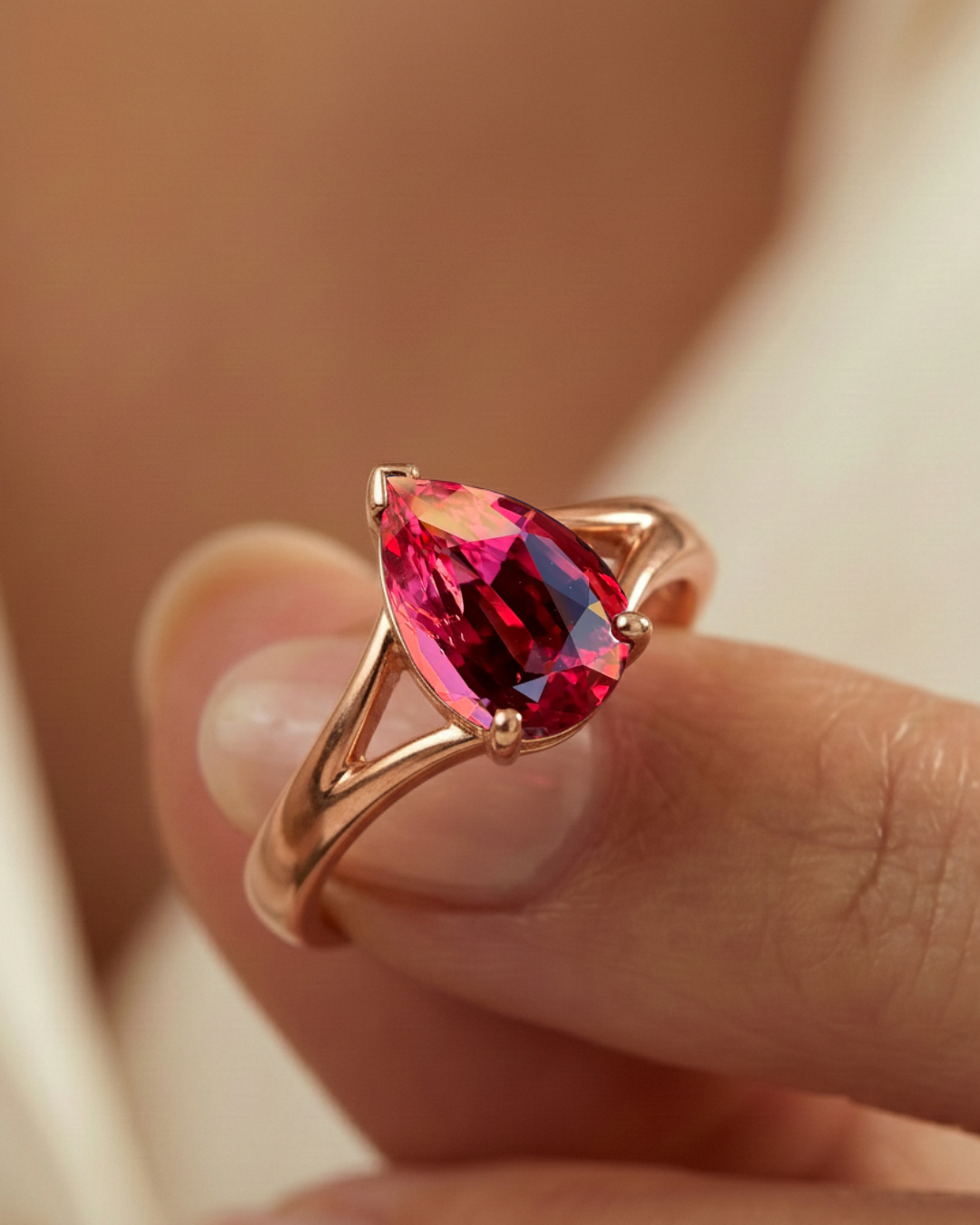
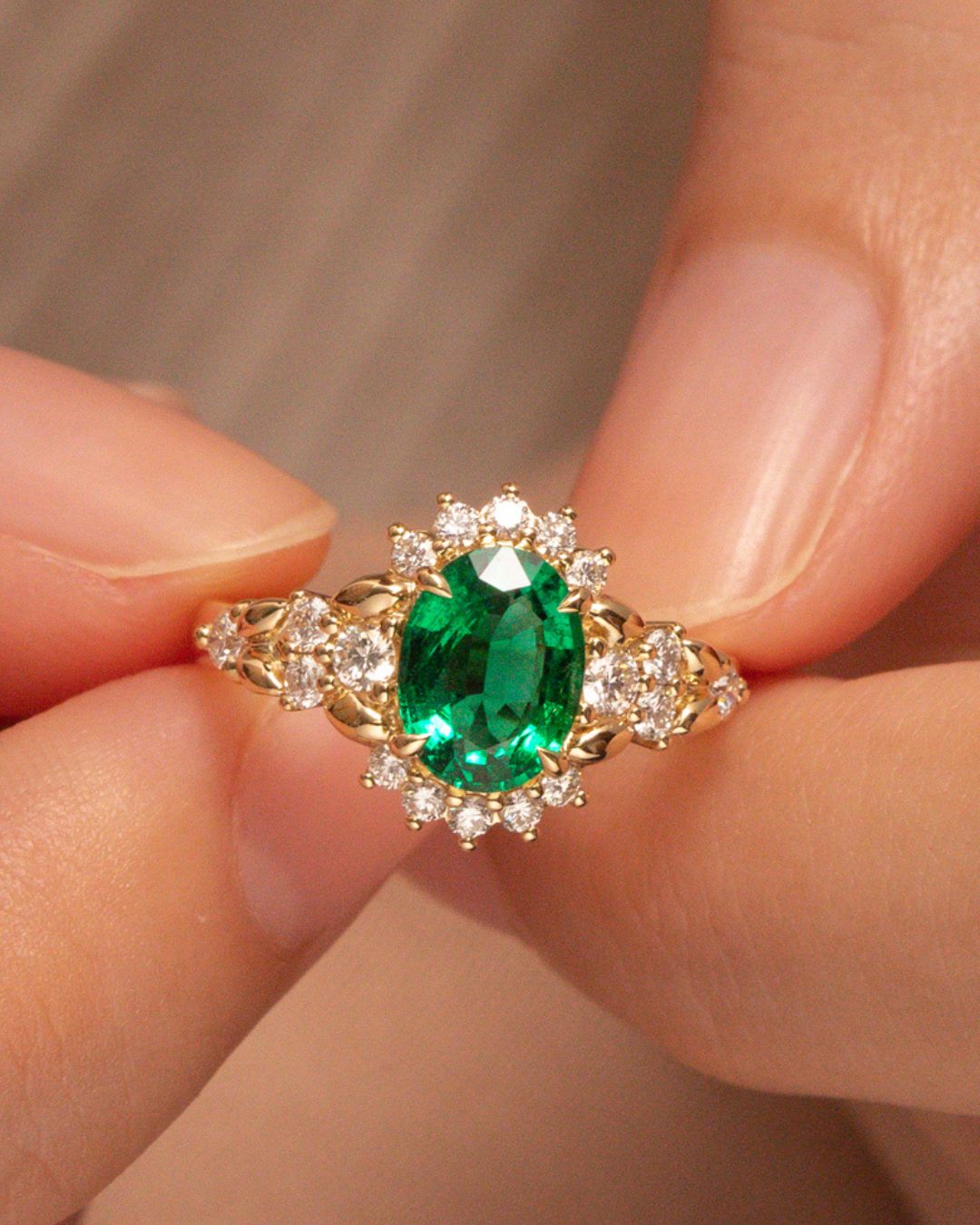
Zambian or Colombian Emerald?
Bonnot Paris22/9/2026



The French anniversary nomenclature assigns a material to each year. Sapphire marks sixteen years, jade twenty-six, emerald forty. At twenty years, it is china — and china is not a gemstone.
Many see this as an inconvenience. We see the opposite: nothing requires you to follow a calendar invented in the 20th century. After twenty years together, one knows the other’s tastes well enough to do without a rule.
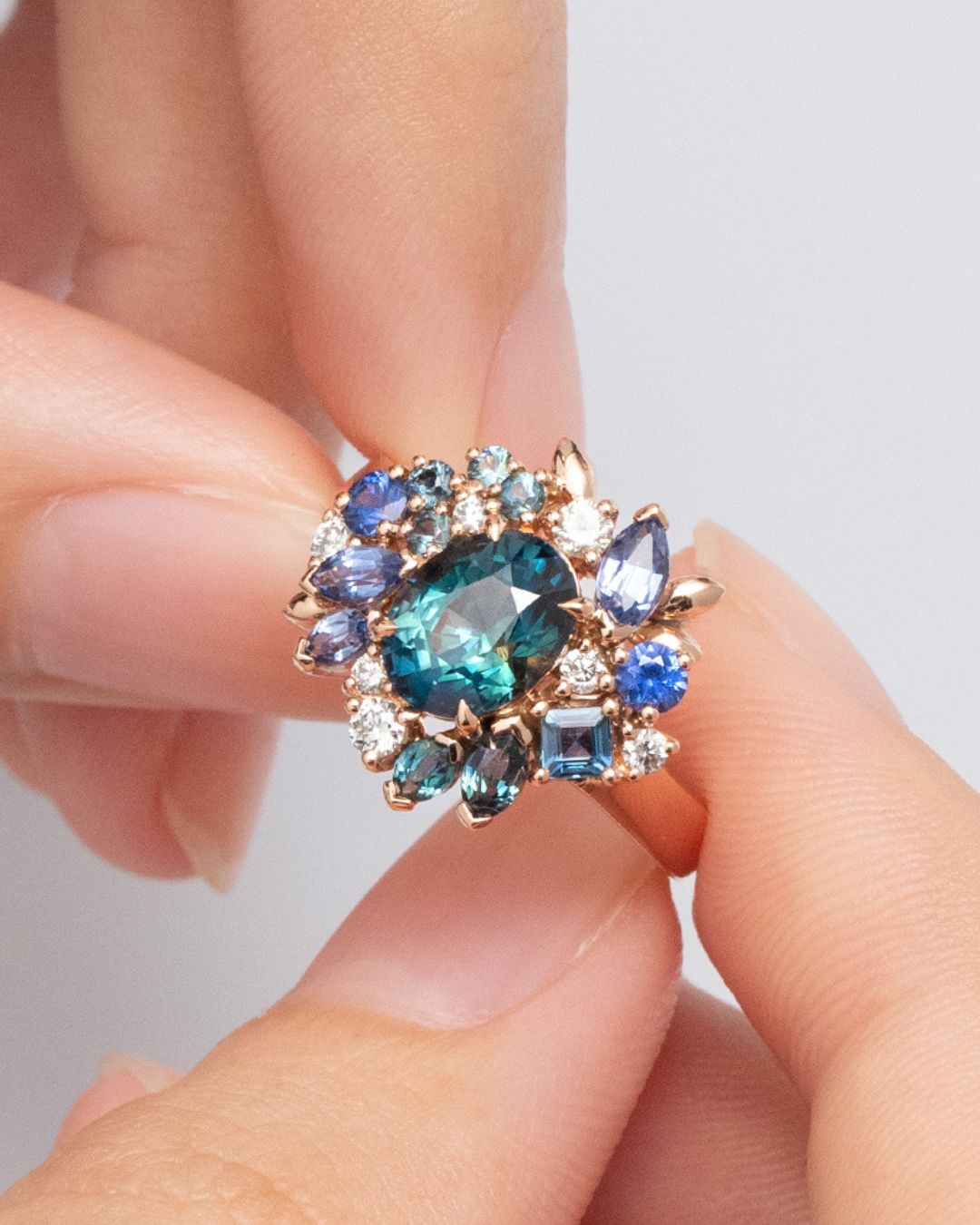
China symbolises a union that is both precious and refined, strengthened over two decades. The image is apt: china is hard, it withstands time, and it breaks if mistreated.
Here is where this twentieth year stands among anniversaries that do have a stone.
| Year | Anniversary | What it opens up |
|---|---|---|
| 16 years | Sapphire | The stone of fidelity, in its ten colours. |
| 20 years | China | No gemstone prescribed: the choice is entirely free. |
| 26 years | Jade | A stone we do not work with — an opportunity to move away from it. |
| 40 years | Emerald | The green of beryl, and a protective setting to consider. |
These lists are commercial conventions that have become traditions, not ancient legacies. They are useful when one does not know what to give — and perfectly easy to ignore when one does. At twenty years, you know.
What we see for this occasion falls into three very different intentions. None is better — they simply do not say the same thing.
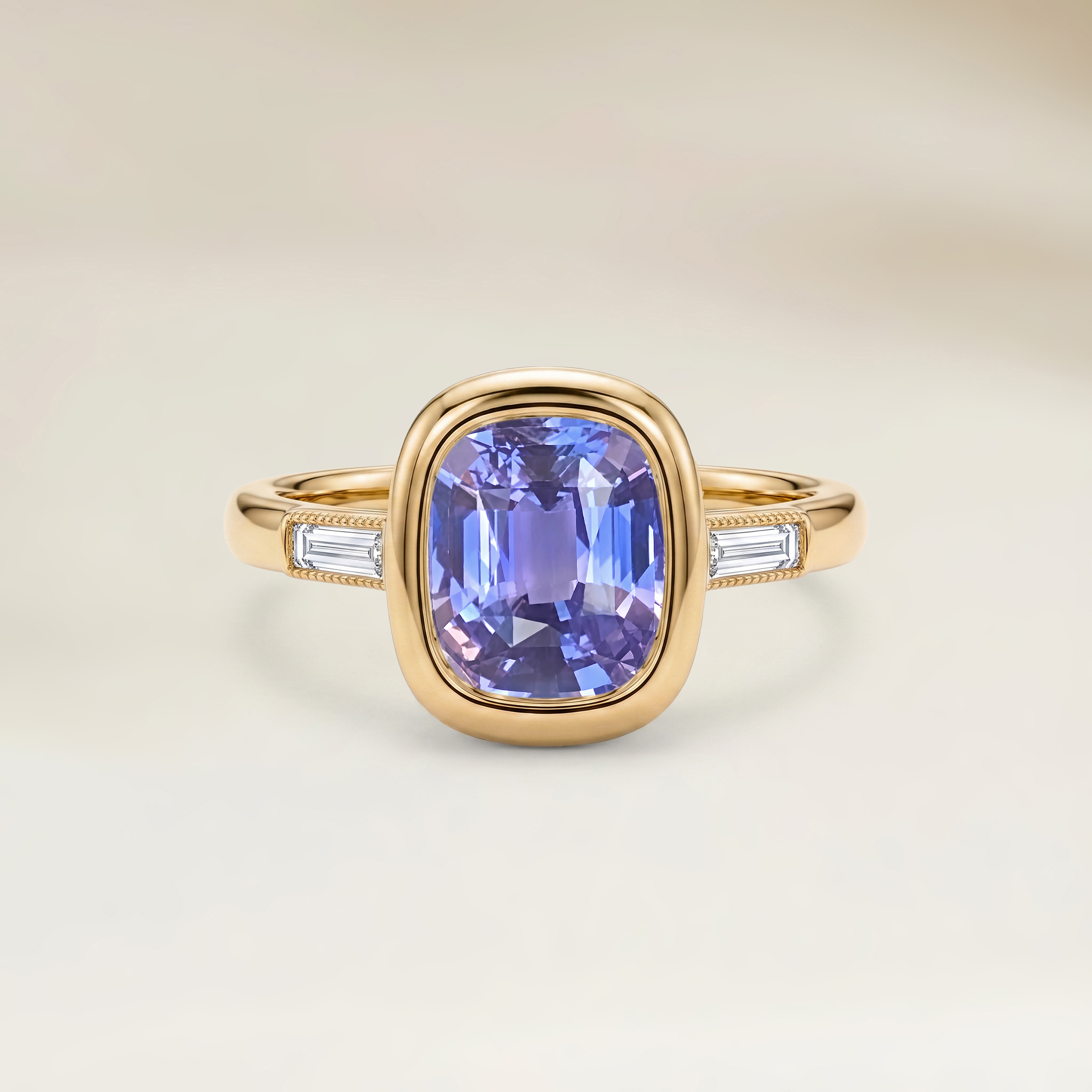
Purple 1.02 ct · €4,200
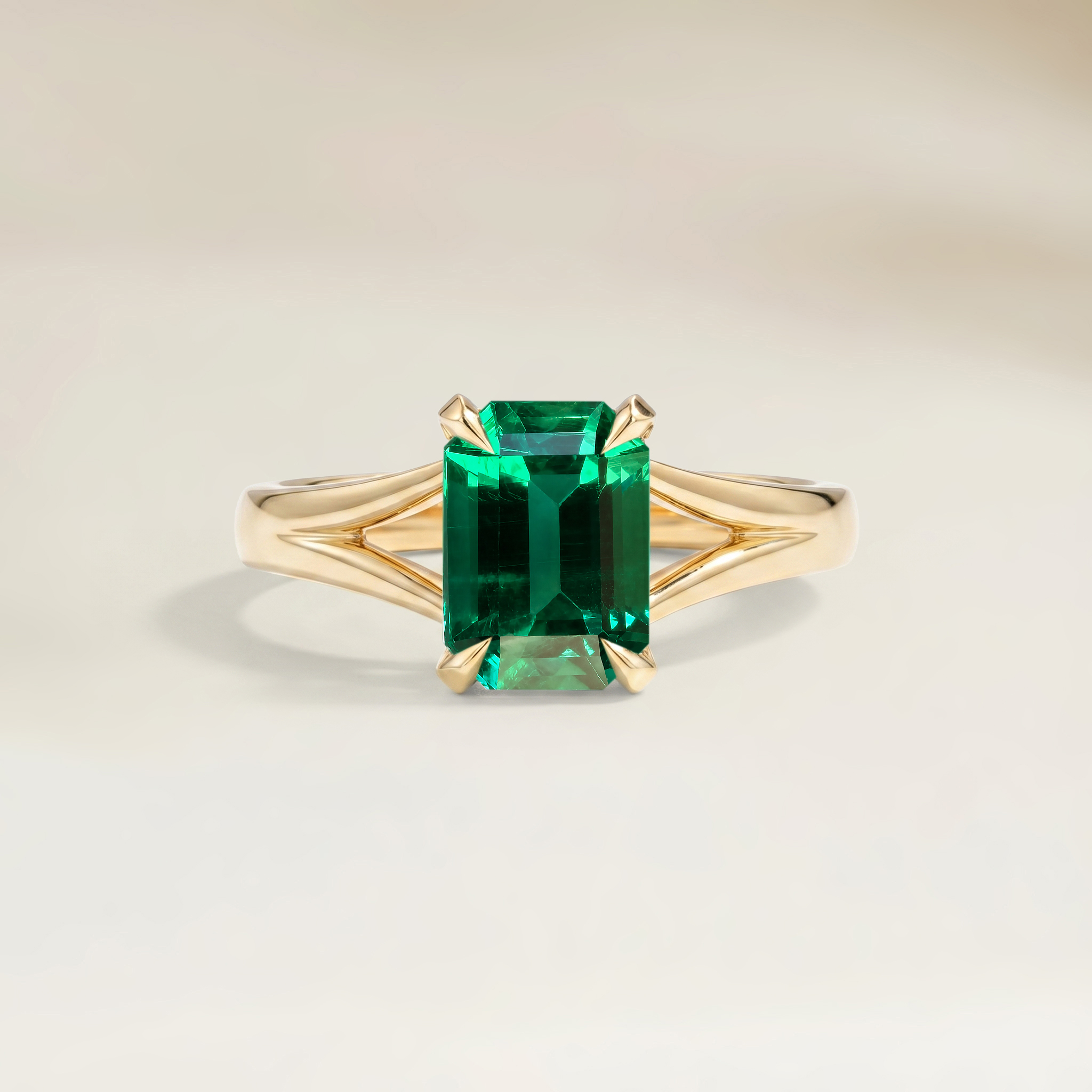
1.71 ct · €8,880
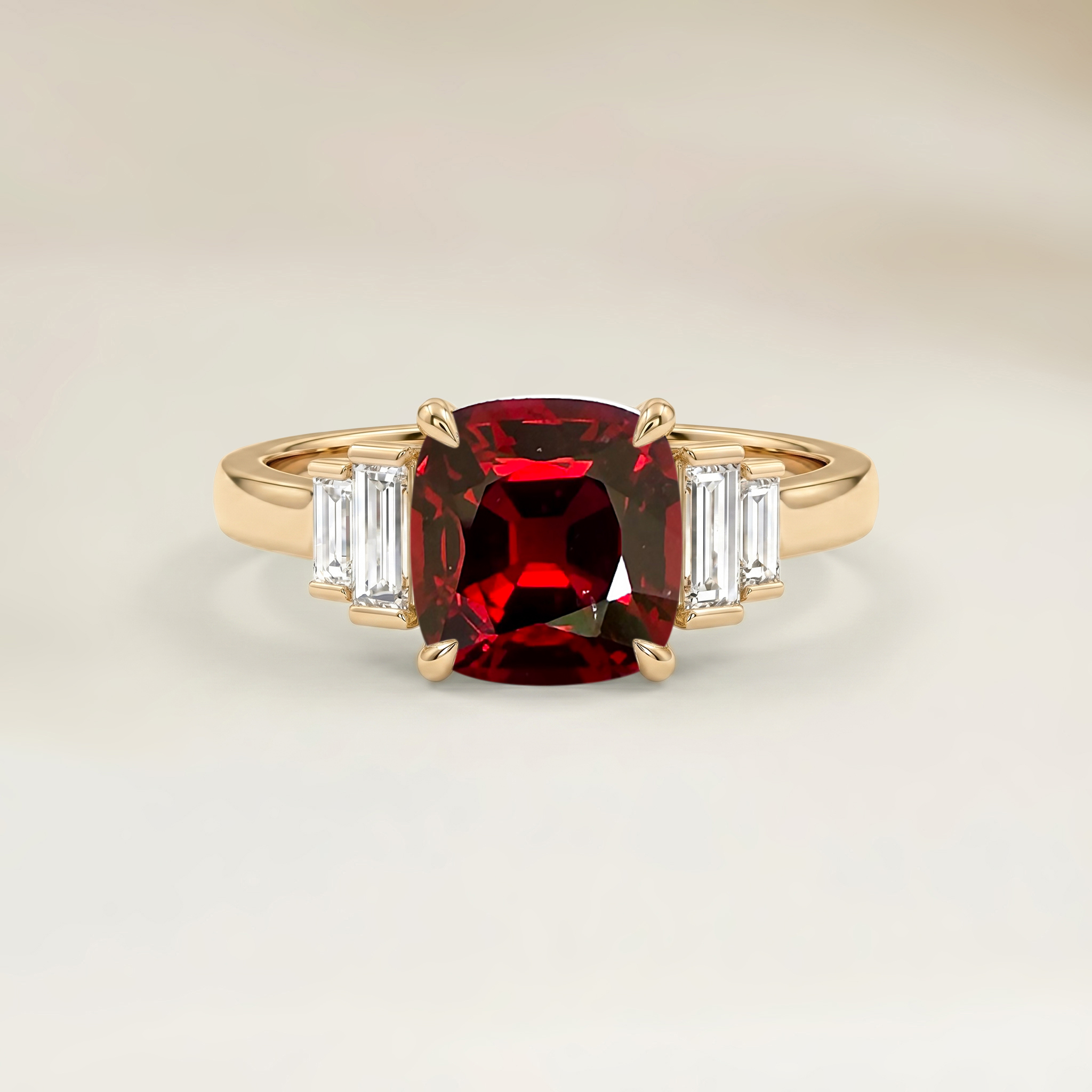
Red 2.39 ct · €16,800
Creations available, prices observed in September 2026.
Two of them require clarification. A sapphire engagement ring — for it is indeed from this collection that we draw, as settings do not change according to the occasion — offers the advantage of hardness: 9 out of 10, no cleavage plane, and unrestricted daily wear for the decades to come.
An emerald engagement ring on the other hand requires a little attention: between 7.5 and 8, almost always crossed by inclusions, it calls for a setting that protects its corners. This does not rule it out — it is anticipated in the design. As for a spinel engagement ring, it offers an argument few gemstones can make: the near-systematic absence of any treatment.
There is one family we offer almost exclusively for wedding anniversaries, never for engagements: bicolour tourmaline.
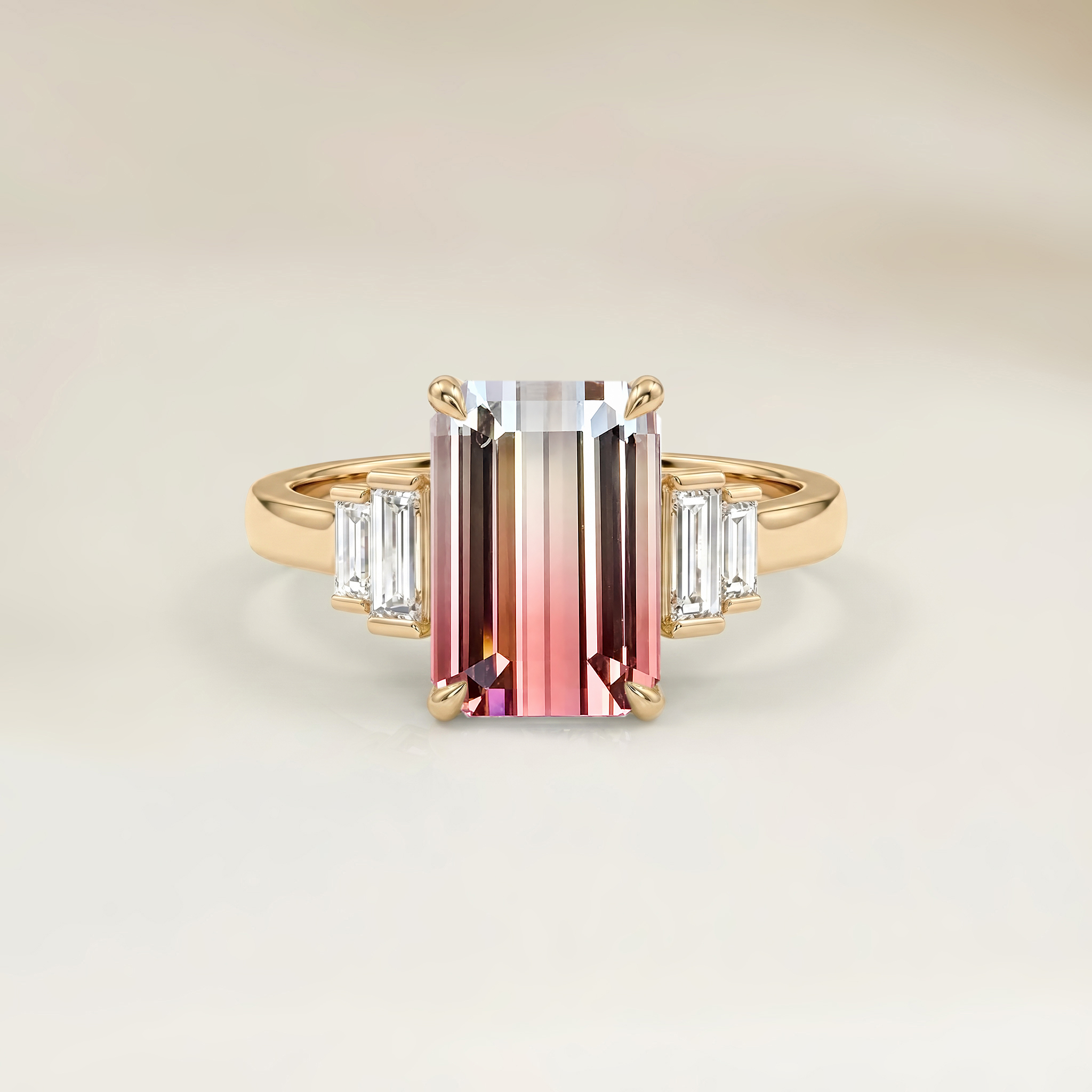
The metaphor is a little obvious, and that is precisely why it works: two colours that grew within the same crystal, inseparable, and which the lapidary could have cut apart. He chose to keep them together.
Beyond the symbol, a tourmaline engagement ring offers the most generous dimensions on a modest budget in our entire catalogue — the family remains relatively uncontested. With a hardness of 7 to 7.5, it simply requires the same care as an emerald: a protective setting, and remove it for gardening.
It is the project we receive most often for a twentieth anniversary, and rarely the one that first comes to mind. The engagement stone is still there; it is the setting that has aged — worn beneath the band, out of fashion, or simply no longer suited to a hand that has changed.
The process is simple. We examine the stone : its exact nature, condition, any fractures reaching the surface, the condition of the prongs. We then take its actual measurements — often different from those stated by the original seller — and design a suitable setting.
Exact nature, dimensions measured with callipers, condition of the setting. With no obligation, and often full of surprises.
Hand-painted in gouache, then rendered in 3D, based on the gemstone’s actual measurements — never on a standard model.
The gold from the former setting can be melted down and reused. For many, this continuity of material is meaningful.
Adding two side stones, a halo, pavé: the ring grows with the years rather than being replaced.
Reproduce a model identically. If a creation has made an impression on you, we draw on its codes — the shape of the basket, the type of setting — to transpose them into a piece that is uniquely yours. View our creations →
An anniversary does not follow the same rules as an engagement: there is no social convention regarding the amount, and that is a relief. The benchmarks remain the same as for any creation.
| Project | From | What determines the price |
|---|---|---|
| Emerald | 1 700 € | Colour before weight. Less dense than corundum, it appears larger at the same carat weight. |
| Sapphire | 2 500 € | Ten colours, a deep stock, and the hardness to allow daily wear. |
| Tourmaline | 2 760 € | The most generous dimensions on a modest budget. |
| Resetting a stone | The cost of the setting alone | From €1,250 for a simple design to several thousand for extensive pavé setting. |
The latter case deserves to be highlighted: resetting an existing stone costs significantly less than a complete creation, since the main component — the gemstone — is already there. It is often the most emotionally meaningful and financially sensible project, which does not happen all that often.
On an anniversary ring, engraving takes on a meaning it does not have on an engagement ring: there is a date to inscribe, and it has already passed.
It is done inside the band, never touching the stone: initials, wedding date, short message. On an existing ring, it remains possible as long as the band is smooth and sufficiently thick — a fully pavé-set band, no.
Two practical points to finish. The finger : many people wear their anniversary ring on the right ring finger, leaving the wedding band and engagement ring on the left. Keep the size in mind — for right-handed people, the right ring finger is often half a size to one size larger. The timeframe : six to eight weeks for a creation, generally less for a transformation, since there is no sourcing to be done.
Have engraved both dates — that of the wedding and that of the twentieth anniversary. The ring then tells the story of an interval, not a moment. This is also what makes it difficult to resell and easy to pass on.
The porcelain anniversary — a precious and refined union, strengthened over the course of two decades. Other anniversaries have their stone: sapphire at 16 years, jade at 26 years, emerald at 40 years.
No standard dictates a gemstone at twenty years, since porcelain is not one. This is a freedom: the choice is based on the person’s taste rather than a calendar. Sapphire, emerald, spinel and tourmaline are our four most requested directions for this occasion.
Yes, and this is one of our most frequent projects for this occasion. We examine the stone, check the condition of the setting and the band, then design a mounting suited to its actual dimensions. The original stone remains at the centre: it is the mounting that enters a new era.
Our sapphire creations start at €2,500, emerald at around €1,700, and tourmaline at around €2,760. Resetting an existing stone costs only the price of the mounting — from €1,250 to several thousand, depending on the setting work.
Yes: initials, wedding date or a short message, on the inside of the band and never touching the stone. On an existing ring, this is possible as long as the band is smooth and sufficiently thick.
Wherever it will be worn with pleasure. Many wear it on the right ring finger, leaving the wedding band and engagement ring on the left. Take care with sizing: for right-handed people, the right ring finger is often half a size to one size larger than the left.
Six to eight weeks between the first appointment and the handover of the jewel. For a transformation using an existing stone, the timeframe is generally shorter — there is no sourcing involved — but examining the stone and creating the design take the same amount of time.
To begin with a loose stone rather than a set ring, browse the entire stock from the precious stones.
Share this post