Zambian or Colombian Emerald?
Bonnot Paris22/9/2026
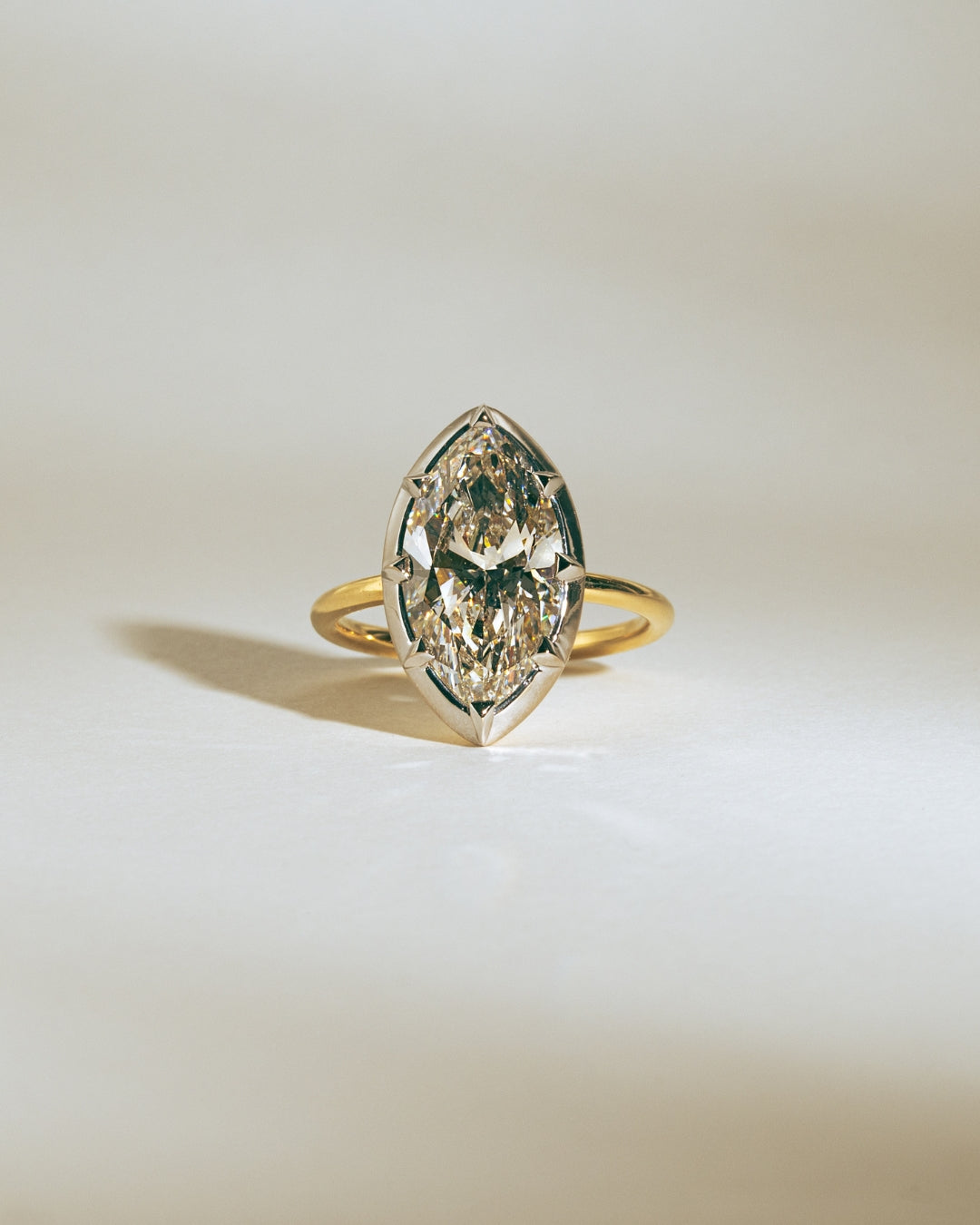



The internet is full of methods for “identifying a diamond at home”. Most date from a time when glass was the only common imitation — and they do not stand up to today’s synthetic stones.
This article separates what works from what does not, without compromise. You will find two genuinely useful observations that you can make with a loupe, and a list of what unquestionably requires a laboratory.
Let us begin by dismantling what you have probably already read elsewhere.
| Test | What is said about it | What it is worth |
|---|---|---|
| Fog | A diamond disperses fog instantly. | Not very reliable Moissanite does the same. |
| The glass of water | A genuine diamond sinks to the bottom. | Worthless Most imitations sink too. |
| Scratching | A diamond scratches glass. | Not recommended Destructive, and several imitations scratch glass. |
| The point / the journal | You cannot read through a cut diamond. | Partially useful Only useful on an unmounted stone, and only with a brilliant cut. |
| The thermal tester | It detects diamonds. | Useful but insufficient Moissanite also conducts heat. |
The case of the thermal tester deserves a word, because inexpensive ones can be found almost everywhere. It measures thermal conductivity, which is very high in diamonds — but moissanite also conducts heat well. A thermal tester alone will therefore identify it as a diamond. A combined thermal and electrical device is needed to distinguish between the two.
Scratch a stone to test it. It is irreversible, it can chip both the gemstone and the setting, and it proves nothing: several imitations are harder than glass. No professional uses this method.
With a ten-power loupe — the gemmologist’s basic tool, which costs a few dozen euros — two observations are genuinely informative.
Facet doubling. This is the most effective test for moissanite, the leading imitation today. Moissanite is birefringent : it splits the rays of light that pass through it. Looking through the table at a slight angle, one can see the edges of the lower facets appear doubled, like a ghost image. A diamond never produces this effect.
The condition of the edges. Diamond is the hardest natural material: its edges remain sharp and crisp even after decades of wear. Cubic zirconia, which is much softer, becomes worn and chipped along the girdle and corners. On an antique ring, this is often the first clue.
A natural stone almost always contains something: tiny crystals, feathers, clouds. A stone perfectly clean under a loupe on an entry-level ring should raise questions — not because a pure diamond does not exist, but because it is expensive. Perfection at a low price is an anomaly.
Let us distinguish between two categories that are often confused. An imitation is another material that resembles a diamond. A synthetic diamond is a genuine diamond, produced in a laboratory — we will come to that shortly.
| Material | What gives it away | Mohs hardness |
|---|---|---|
| Moissanite | Facet doubling under a loupe, more colourful fire than a diamond. | 9,25 |
| Cubic zirconia | Edges become blunt over time, heavier at equal dimensions. | 8 – 8,5 |
| Glass | Internal bubbles, worn edges, warm to the touch. | 5 – 6 |
| White topaz | A duller brilliance, with no comparable fire. | 8 |
| White sapphire | A genuine corundum, but without dispersion: it appears milky beside a diamond. | 9 |
A word about white sapphire, since it is our trade: it is not a counterfeit. It is a colourless corundum, a genuine gemstone, which we readily use as an accompanying stone. It simply does not have the dispersion of a diamond — that ability to break light down into coloured flashes. Placed beside a diamond, it appears softer and milkier. Sold as a diamond, however, it is deceptive.
Here is what no home-testing article states clearly: no at-home method can distinguish a laboratory diamond from a natural diamond. None. Not condensation, not a tester, not a loupe.
The reason is simple: a laboratory diamond is a diamond. Same composition, same crystalline structure, same hardness, same dispersion. It is not fake — it simply has no geological origin.
Only an analysis in a gemmological laboratory can determine this, by observing the characteristic inclusions and growth structures, sometimes using spectroscopic equipment. This is beyond the reach of a private individual, and even of a jeweller without specialised equipment.
We sell only natural stones — no laboratory diamonds, no synthetic corundum, no hydrothermal emeralds. This is not a moral judgement on these products: it is the trade we have chosen, that of geological rarity. Sapphire or diamond? →
The reliable answer lies in a document and a number. An independent laboratory report — GIA, IGI, HRD for diamonds — describes the stone, its dimensions, colour, clarity and cut, and states whether it is natural or laboratory-grown.
Two checks anyone can carry out. First, the report number can be verified online on the laboratory’s website: if the report exists, its details will appear. Secondly, many certified diamonds bear a laser inscription on the girdle — the edge of the stone —, invisible to the naked eye but legible under a loupe, displaying the report number.
This is the most direct link between a document and a gemstone. Without it, a certificate proves thata stone has been analysed, not that it is this one. Checking the dimensions with callipers usefully completes the verification.
In practice, a thorough identification takes a few minutes and bears no resemblance to any at-home test.
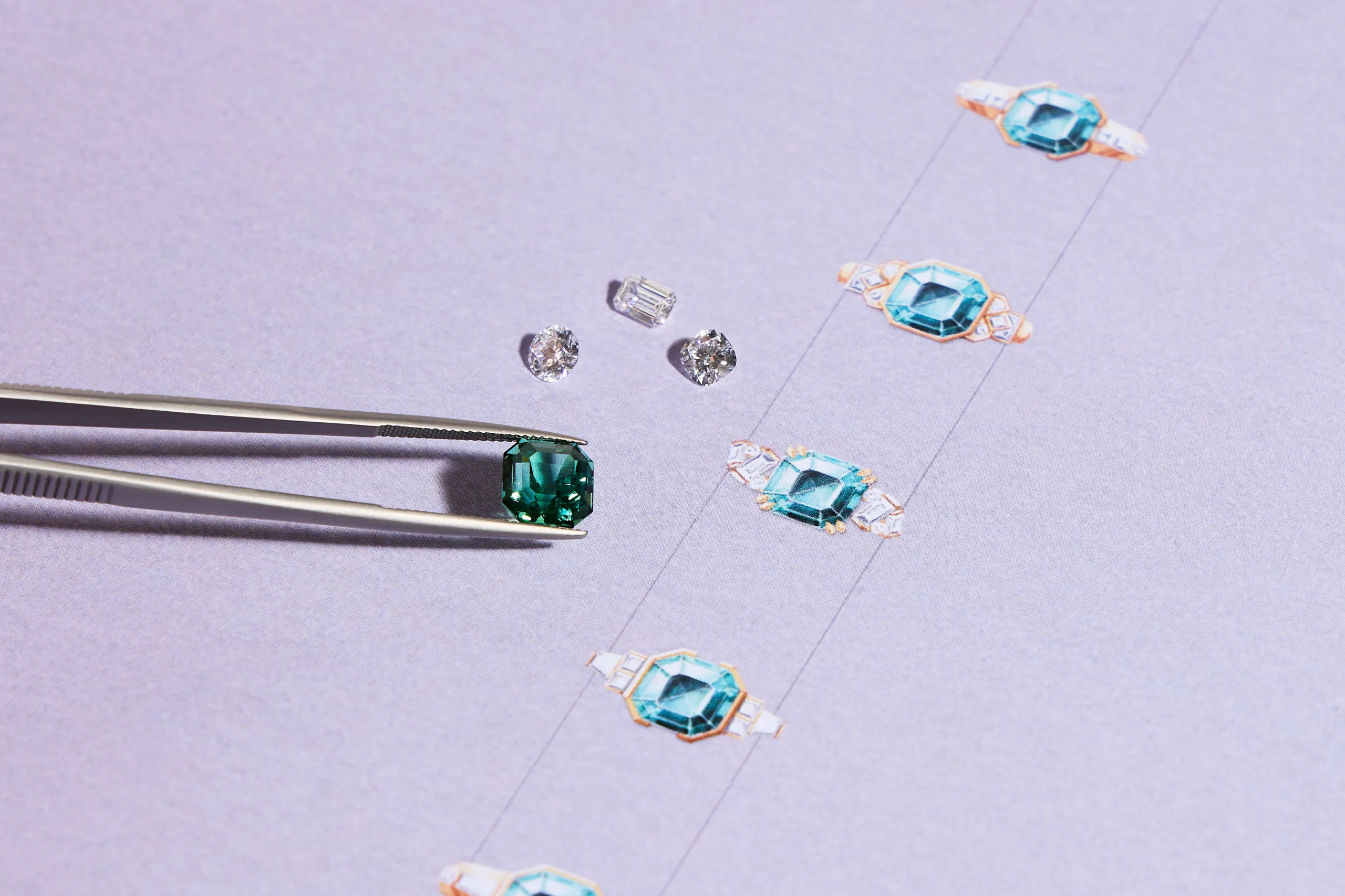
The stone is first observed with the naked eye from twenty centimetres away, then under a 10x loupe, looking for facet doubling, the nature of inclusions and the condition of the edges. The stone is then compared with reference gems under the same light — often the most decisive step. Finally, it is measured with callipers and weighed, to compare its dimensions with the expected density.
If any doubt remains, or if the stakes warrant it, the stone is sent to a laboratory. This is the only way to determine whether it is of natural or synthetic origin, and no honest jeweller will claim otherwise.
Have it identified before any aggressive cleaning, repolishing or alteration — by a gemmologist or an independent laboratory. Repolishing without prior identification can remove the colour from a surface-diffused stone. Where to have a stone appraised →
One final observation, which goes beyond the question of authenticity. Many people seek to identify a diamond because they assume that a serious ring contains one. This is a recent and largely constructed idea: the diamond only became established in engagement rings in the 20thth century. Before it, coloured stones held the field.
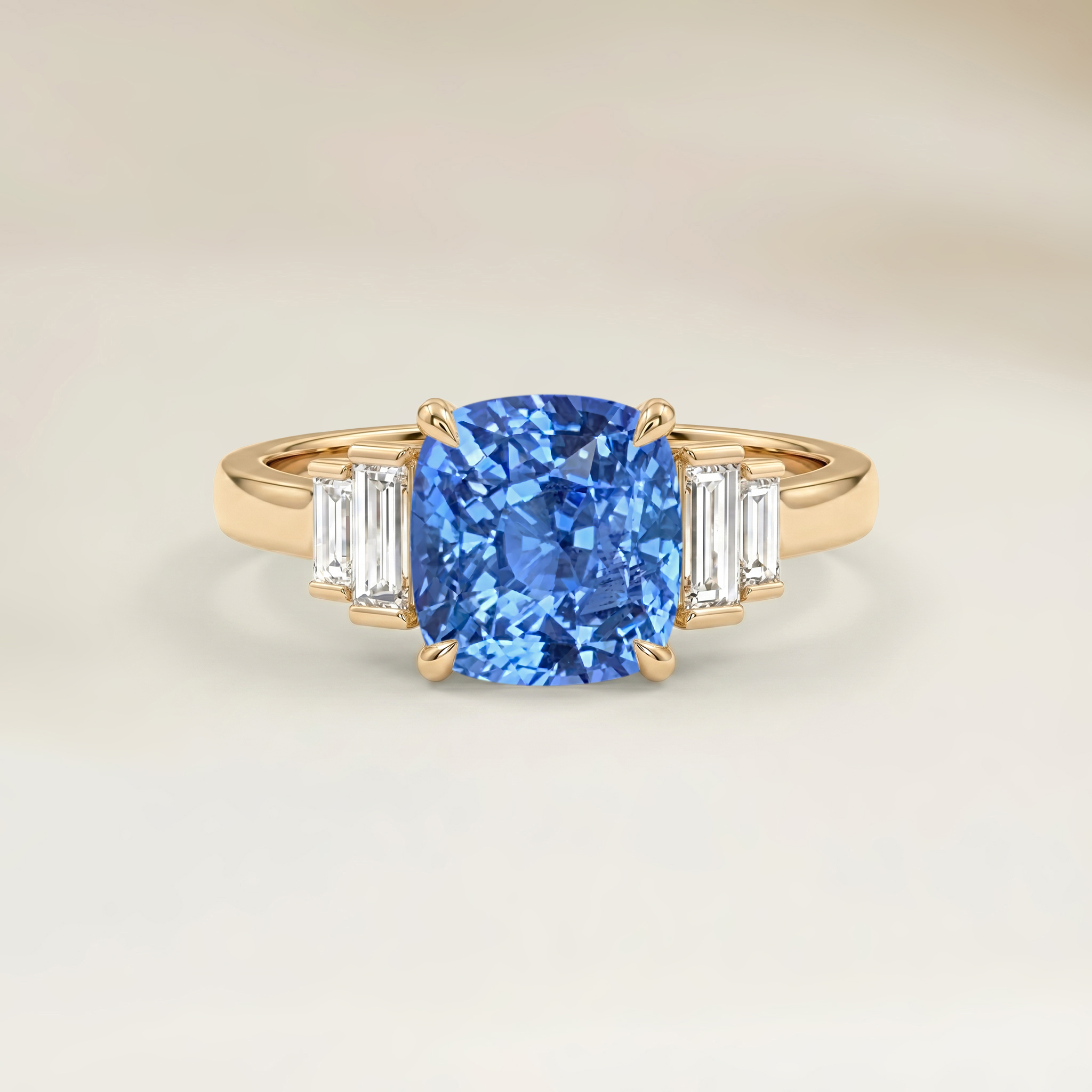
11 040 €
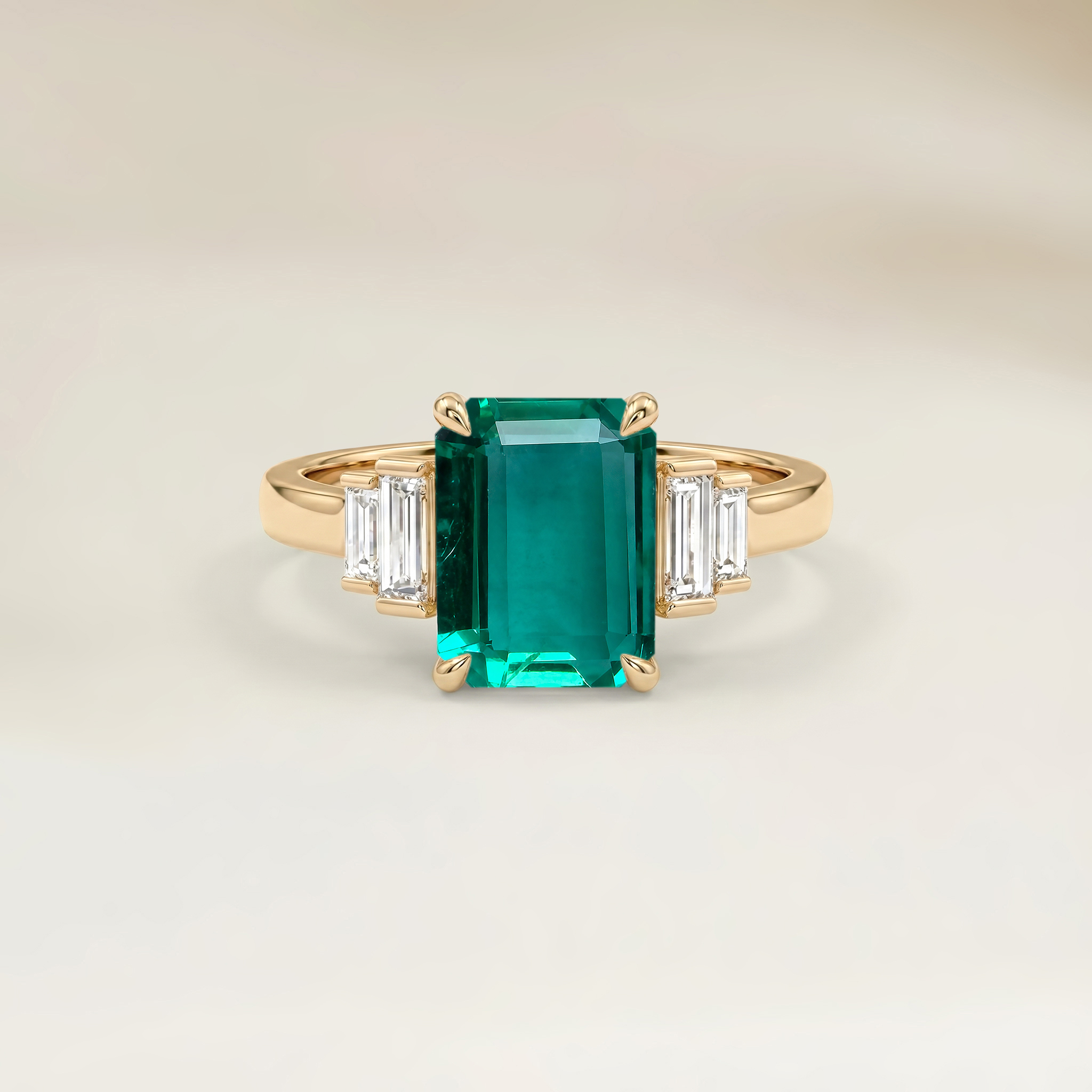
8 400 €
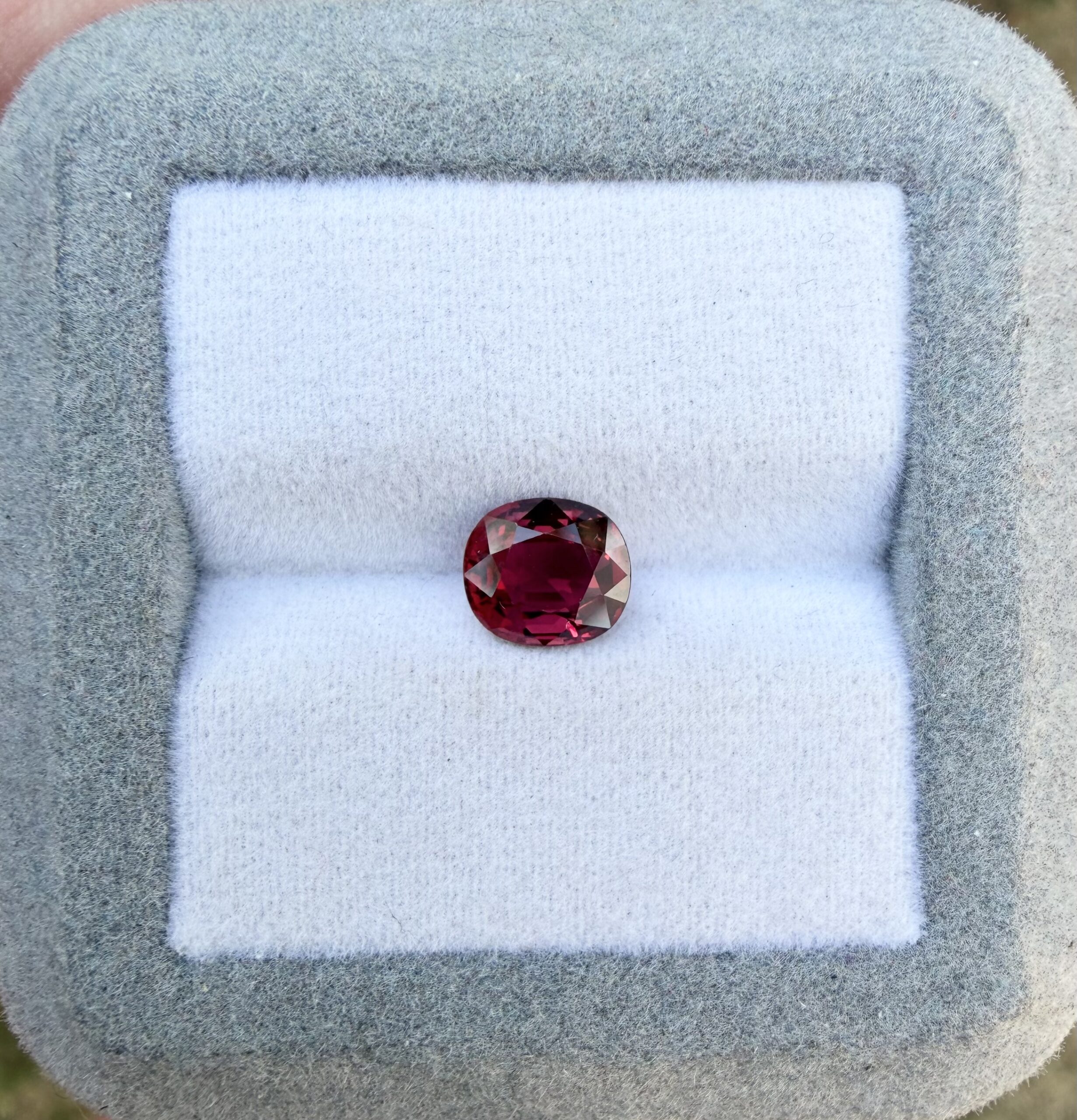
30 060 €
Availability and prices including VAT observed in September 2026.
Coloured gemstones also have an advantage in this particular respect: their inclusions are their identity card. Where a laboratory-grown diamond perfectly imitates a natural diamond, synthetic corundums and beryls leave signatures that gemmology can read. A ruby engagement ring with certification raises fewer questions of authenticity today than a white diamond without papers.
This does not mean giving up diamonds — we set them in almost all our creations, as marquise cuts, baguettes and pavé. Simply that the question “is it real?” arises less acutely when one moves from white to colour.
Not reliably. Diamond conducts heat very well, so fog dissipates quickly on it — but moissanite, the leading imitation today, behaves in the same way. The test rules out glass, not a good imitation.
Never. It is destructive, can chip both the gem and the setting, and proves nothing: several imitations can scratch glass without being diamonds. No professional uses this method.
With a loupe: moissanite is doubly refractive, so when viewed through the table at a slight angle, the edges of the lower facets appear doubled. Diamond never produces this effect. A thermal tester alone is not enough — moissanite also conducts heat.
No, and this must be stated clearly: a laboratory-grown diamond is chemically and physically a diamond. No at-home test can distinguish it from a natural diamond. Only laboratory analysis, based on inclusions and growth structures, can reach a conclusion.
A number laser-engraved on the edge of the stone, invisible to the naked eye but legible under magnification, which corresponds to the laboratory report number. It is the most direct link between a stone and its certificate.
An independent laboratory report, verifiable online using its number, is the best available proof. However, it is still necessary to ensure that it does indeed correspond to the stone presented: this is the role of the laser inscription and a check of the dimensions.
Have it identified by a gemmologist or an independent laboratory before any aggressive cleaning, repolishing or alteration.
Every stone we sell comes with its laboratory report. Our stock can be explored from the precious stones.
Share this post