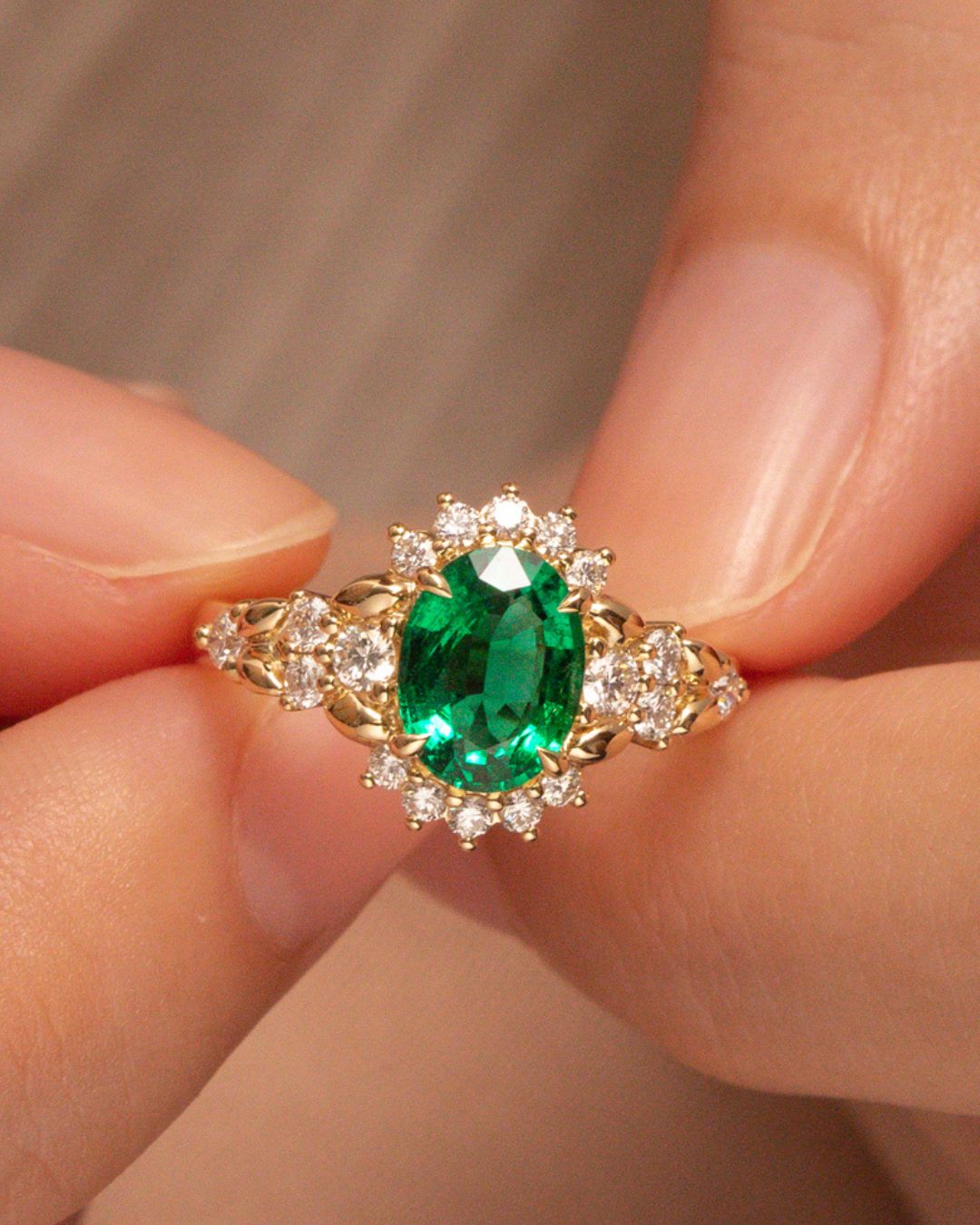
Zambian or Colombian Emerald?
Bonnot Paris22/9/2026
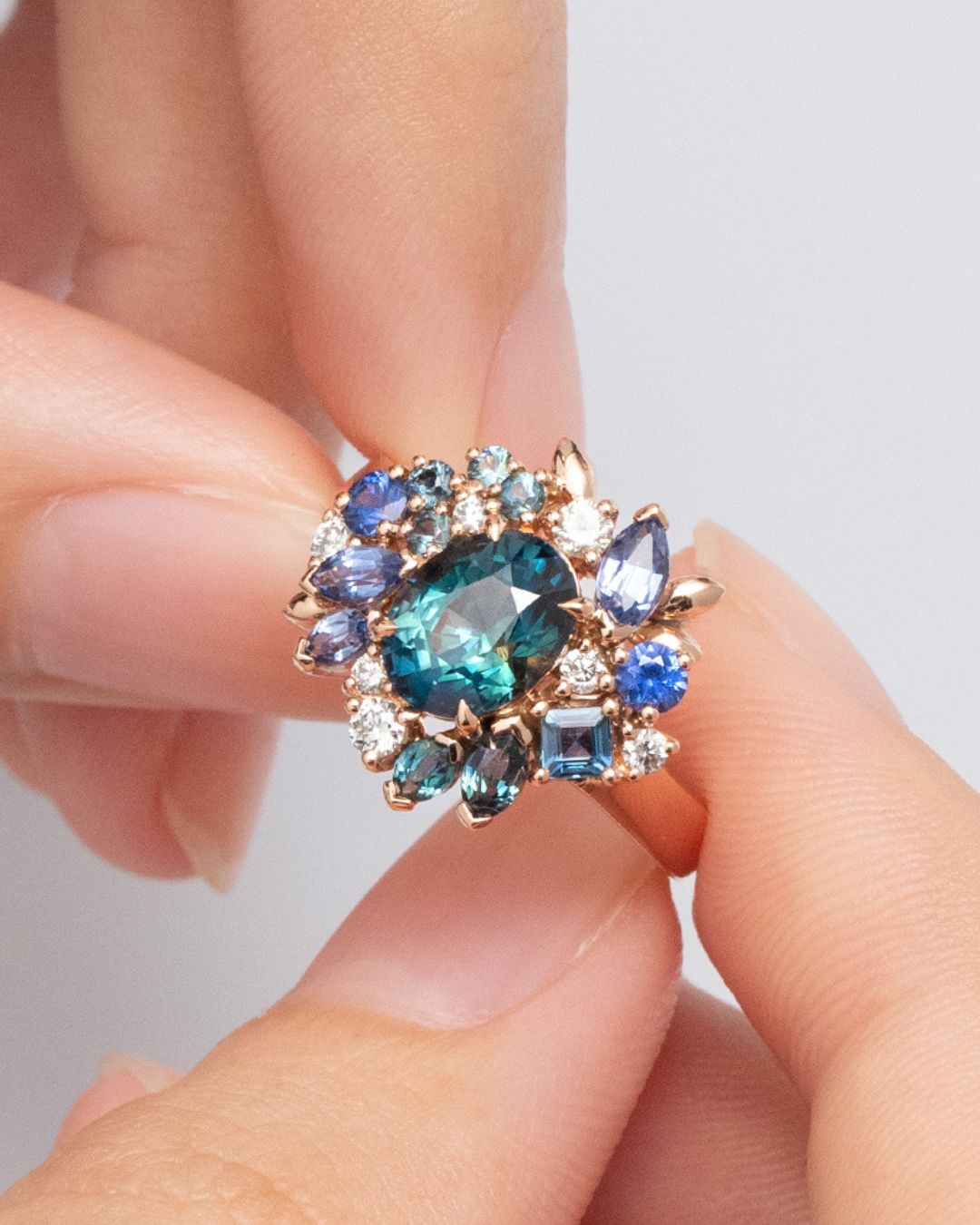



In five years, the teal sapphire has gone from being a dealer’s curiosity to the most requested stone in our workshop. Yet it has neither a proper name, nor a controlled designation, nor a price scale: “teal” is a market term, not a gemmological term. Two stones sold under this label may have almost nothing in common.
This guide sets out what we know first-hand: what produces this colour, what we see coming through our buying markets, and above all what these stones actually cost — using figures from our own inventory rather than a convenient range.
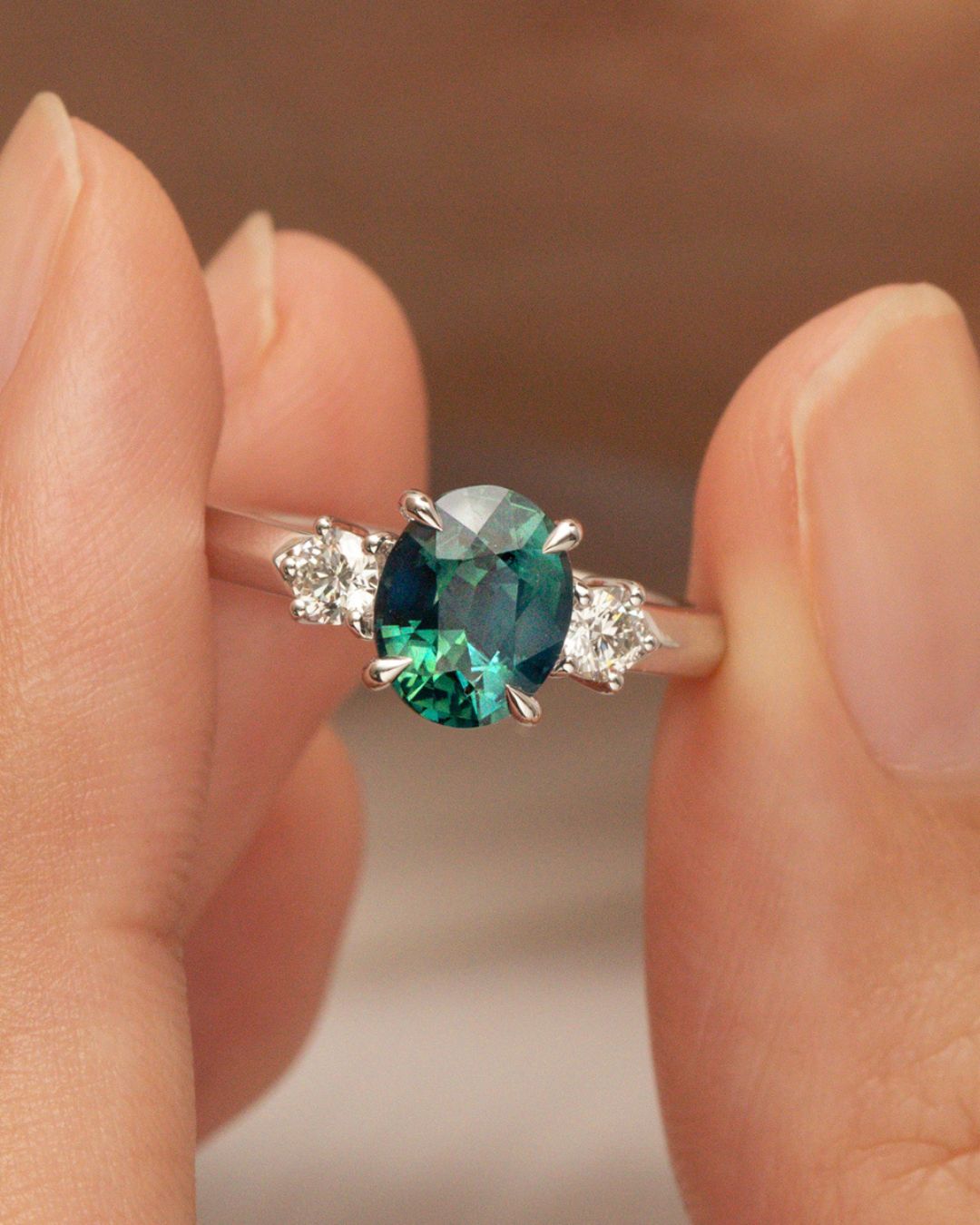
Pure corundum is colourless. Its colour comes from trace impurities — a few atoms per million. In the case of teal, two mechanisms compete within the stone.
Iron alone makes it green. The iron-titanium pairing makes it blue, through a charge transfer between the two atoms, particularly effective at absorbing light. Depending on the natural balance of the two, the same designation may encompass forest green, deep teal blue or a lagoon hue.
Two practical consequences matter more than theory. The first: the colour is almost never uniform. Many teals display zoning — growth areas that are bluer or greener — which the cutter balances when cutting the stone. The second: perception changes with the lighting. A stone that appears distinctly blue in a display case may turn green in daylight.
We view every teal in daylight, then in a room lit in the evening. If the colour falls flat, the stone does not make it into the catalogue. It is the only test that matters — and no screen can replace it, neither yours nor ours.
Six stones from our display cases, arranged from the green side to the blue side. Each is a teal, and none resembles its neighbour: that is precisely the point.
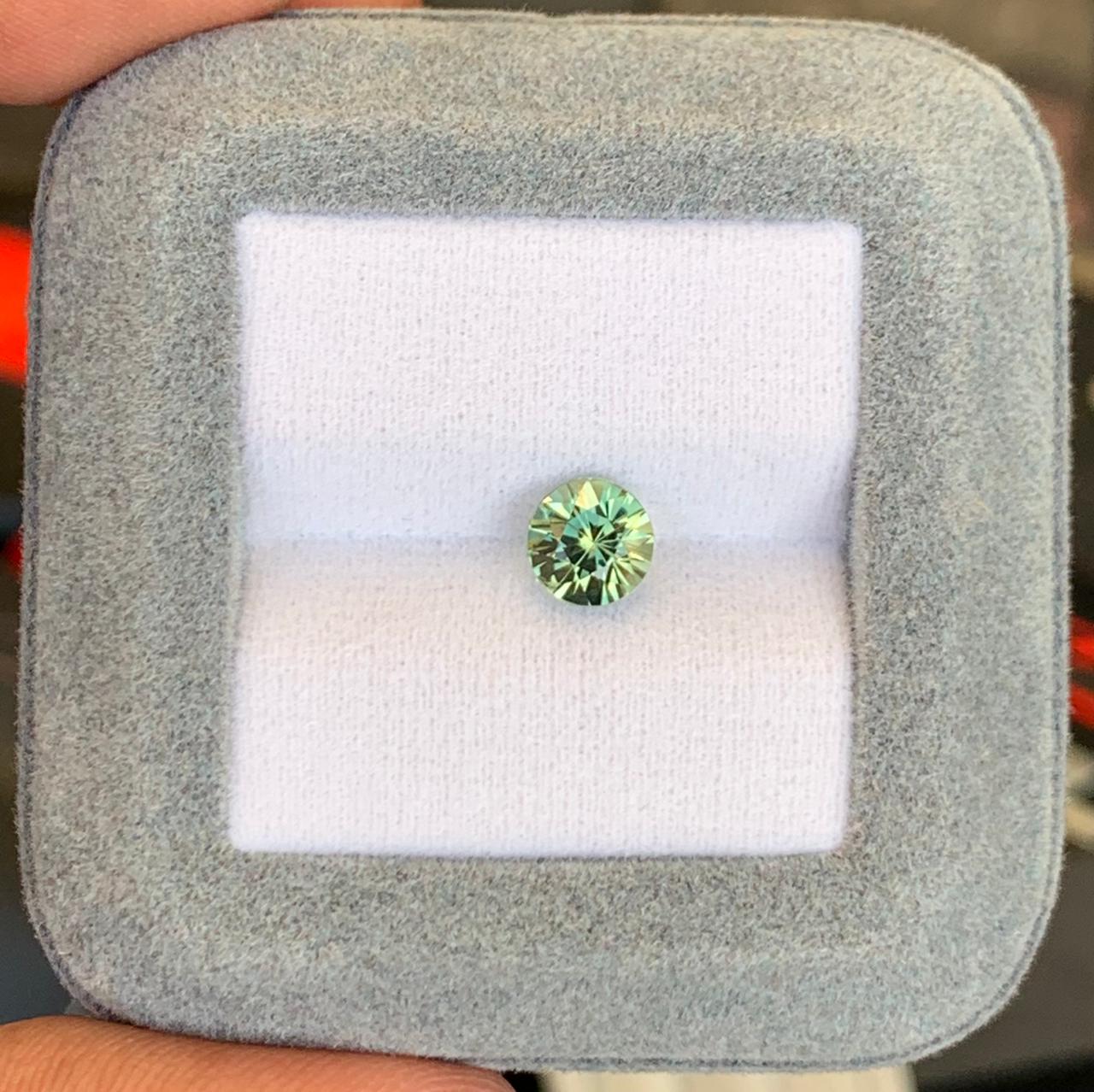
#99C091Green teal
Decidedly green, with just the right amount of blue. A woodland teal rather than an ocean teal.
2 112 €
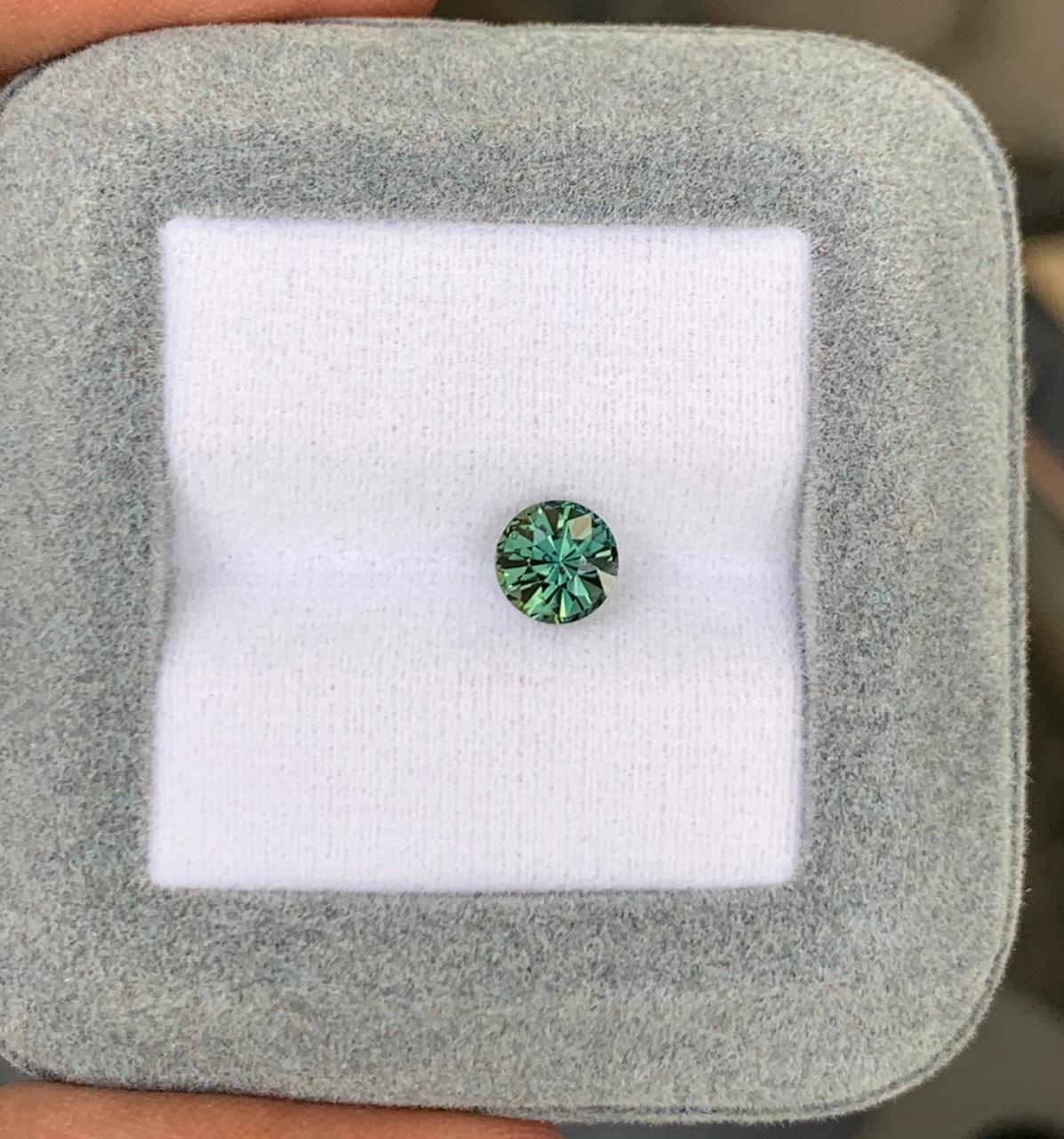
#448870Green-blue
Deep water green, tending towards fir green. A shade found almost nowhere but Madagascar.
948 €
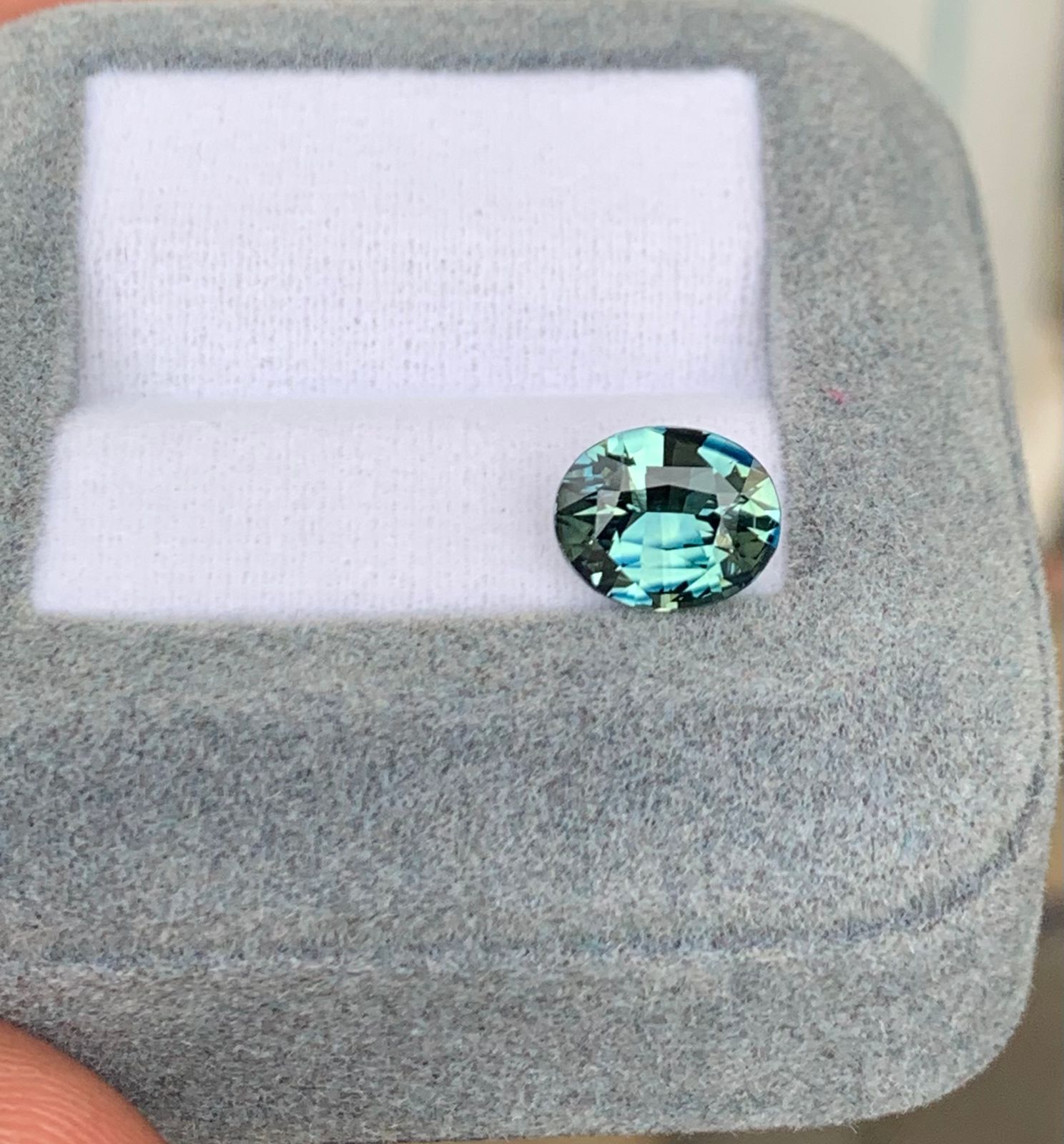
#86D7D2Light teal
Three carats of lagoon: the largest and brightest of this selection.
6 396 €
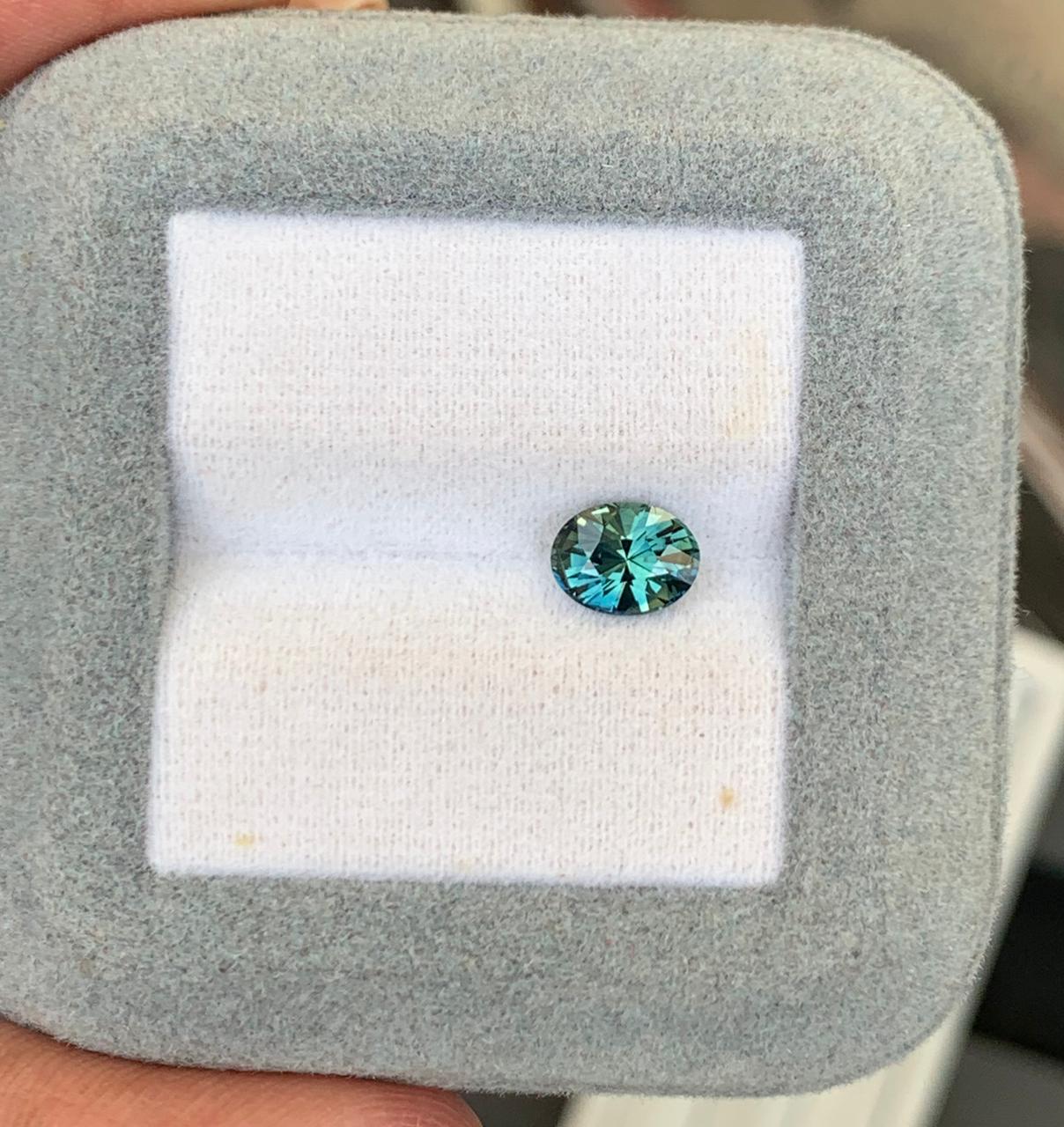
#37A0ABBalanced teal
The sought-after balance between blue and green, in a size that is easy to set as a solitaire.
1 200 €
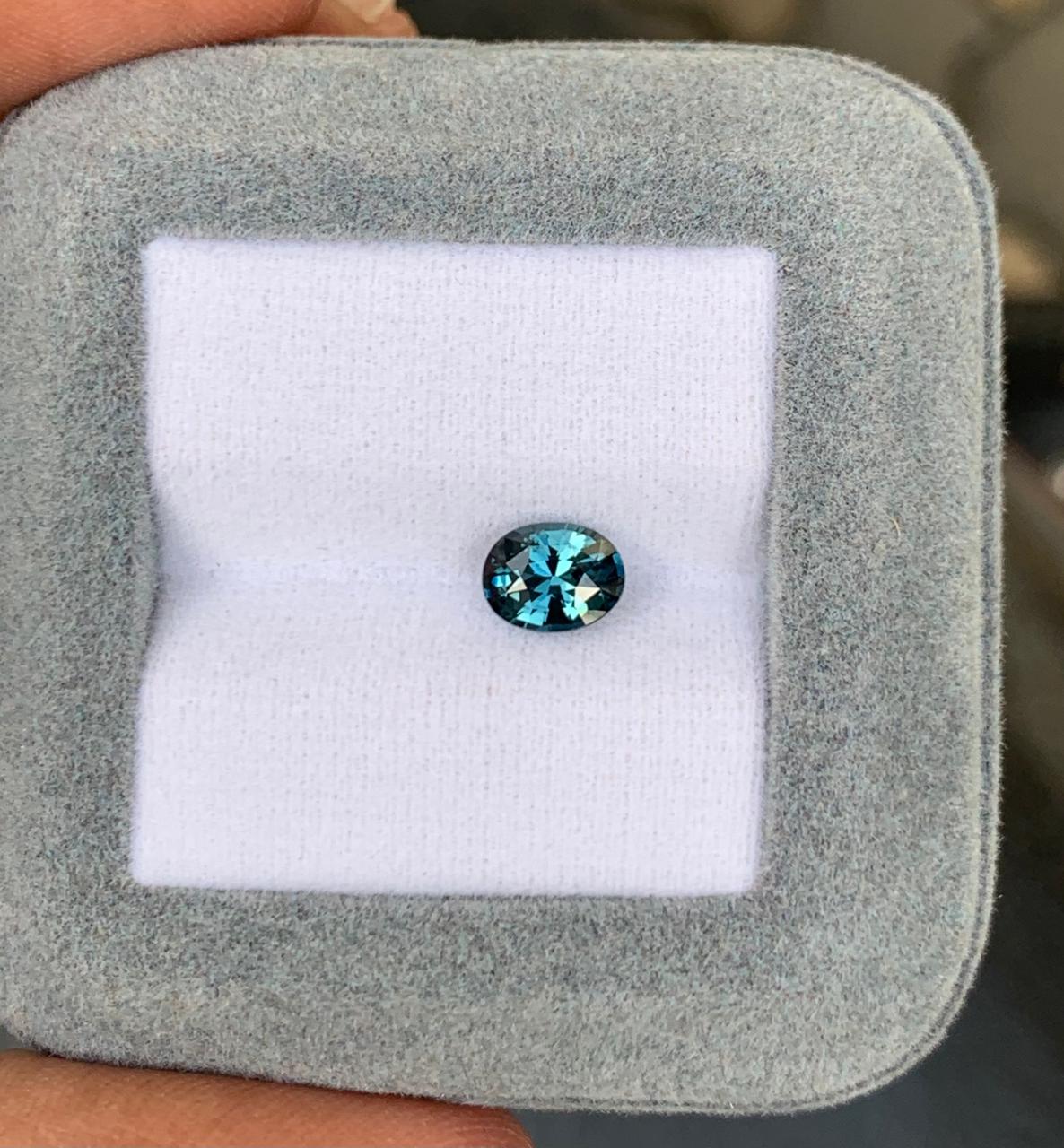
#42A0B5Blue teal
Balanced blue-green and unheated: the stone as it emerged from the earth, without any intervention.
744 €
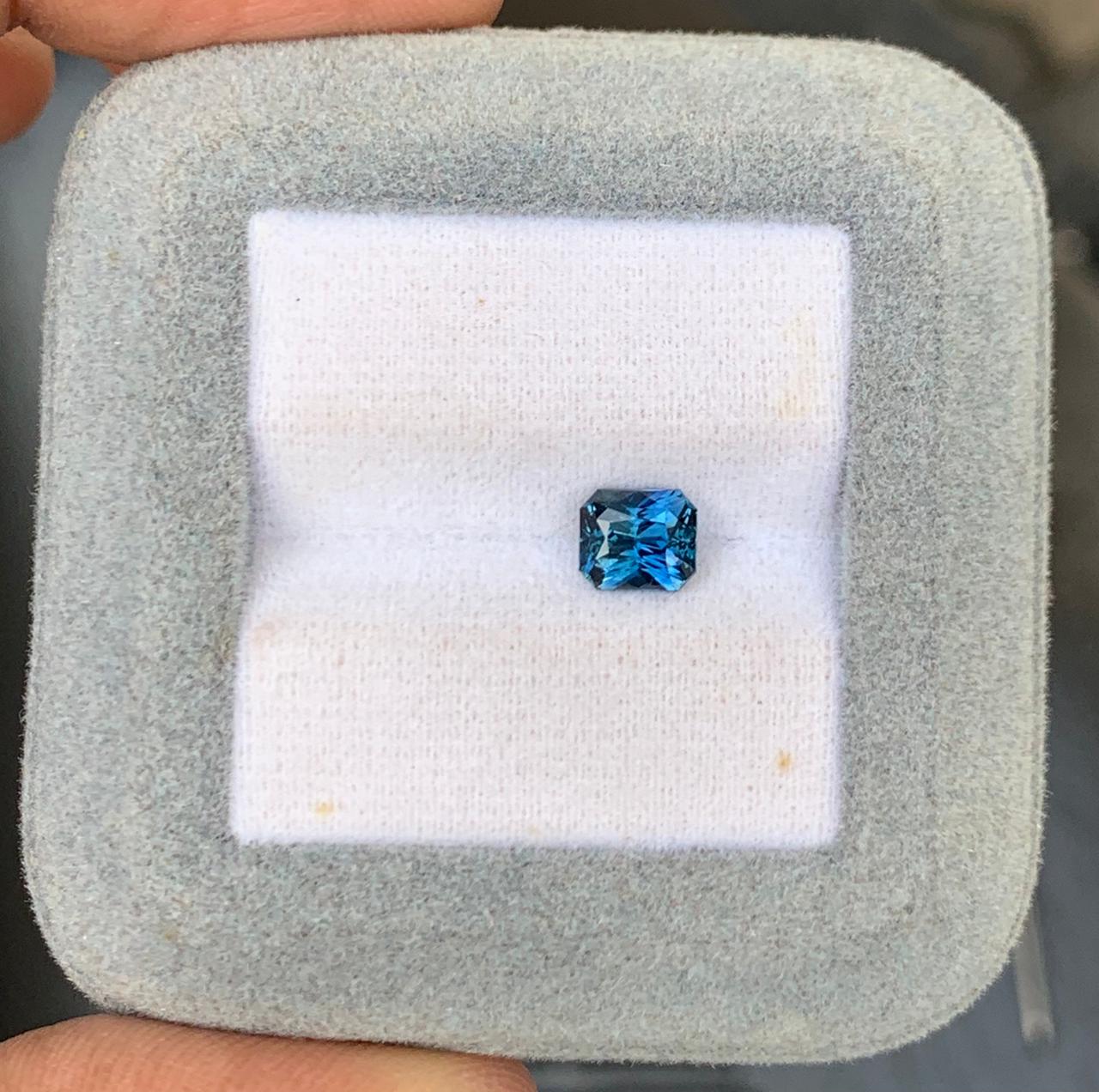
#186696Blue teal
The blue side of teal, saturated and crisp. A shade away, one would call it a blue sapphire.
1 248 €
Loose stones, prices recorded in September 2026. The colour blocks are indicative: no screen is calibrated like yours.
Matching two teals is one of the most delicate exercises in jewellery: the same name can cover two very different stones. It is the work our workshop does for a pavé ring, and it is also why a matched pair of teals costs more than the sum of the two stones. See all teal sapphires →
Almost everything we buy in teal comes from Madagascar. It is the deposit that made the colour: without it, teal would have remained an occasional anomaly in the mines of Ceylon. A smaller proportion of our selection comes from Sri Lanka, generally in lighter shades.
This concentration explains the price better than any argument of rarity. Madagascar is an active deposit, volumes are available, and above all teal carries no prestige premium — the kind the market grants to Ceylon blue or Burmese ruby, and which sometimes has nothing to do with the beauty of the stone.
A word on origin in general: it is determined by a laboratory only when the inclusions allow it. “Origin undetermined” is not a flaw in the stone; it is a limitation of the analysis. And a beautiful Madagascan stone surpasses an average Ceylon stone — in that order, always.
The ranges below are not a market quotation: they are our own stones, recorded from the catalogue in September 2026. The number of stones in each bracket is indicated, so that you know what each line is worth.
| Weight | Price per carat | Price of the stone | Sample |
|---|---|---|---|
| 1 to 1.3 ct | €660 to €1,150/ct | €740 to €1,500 | 8 stones |
| 1.4 to 1.7 ct | €1,210 to €1,730/ct | €2,030 to €2,660 | 9 stones |
| 2 to 2.6 ct | €1,140 to €1,510/ct | €2,710 to €3,070 | 3 stones |
| 3 ct | €2,120 to €2,230/ct | €6,400 to €6,720 | 2 stones |
| 4 ct and above | €2,430 to €6,110/ct | €9,780 to €62,340 | 2 stones |
Three things to read in this table, one of them unsettling.
The acceleration is real, but late. Between 1 and 2.5 carats, the price per carat rises gently. It is from 3 carats onwards that it enters another league — doubling compared with the one-carat size. Beyond 4, one leaves the engagement ring behind for the collector’s stone.
The 2 to 2.6 ct range is an apparent anomaly : its price per carat falls below that of the preceding range. Only three stones, and more restrained colours: that is the explanation. It says exactly what should be remembered — at these weights, the individual colour matters more than the carat weight.
The two extremes are not comparable. The stone at €6,110/ct is a 10.20 ct cushion: a collector’s gem, beyond the scope of an ordinary engagement-ring setting. We left it in the table for the sake of honesty, not as a benchmark.
Teal’s best presence-to-budget ratio lies between 1.4 and 1.8 carats : the stone sits beautifully on a ring finger, the colour has enough substance to express itself, and one remains below the threshold at which the price per carat takes off. Then allow for the setting, from €1,250 for a simple design to several thousand for extensive setting work. Sapphire prices in detail →
Teal has a privilege that few colours share: unheated stones remain accessible. In Ceylon blue, the absence of heating multiplies the price — by around two at 1.5 carats, by three at 2.5 on our buying markets. In teal, the difference is far more restrained, and a significant proportion of our stock has never seen a furnace.
That said, a word of caution. Heating is a traditional, stable and accepted treatment, declared on the certificate: it reveals colour already present in the stone. The vast majority of sapphires on the market are heated, including very beautiful stones. What we refuse are beryllium, lead-glass and irradiation — processes that artificially alter the gem.
Never let the words “unheated” take precedence over colour. An unheated but dull teal will remain a dull teal all its life; a heated and lively teal will delight you every morning. Colour first, certificate second — and always the certificate. Heated or unheated sapphire →
Teal has two immediate neighbours, and confusing them is costly — in either direction. No boundary is standardised: these are market conventions, which two dealers may apply differently to the same stone.
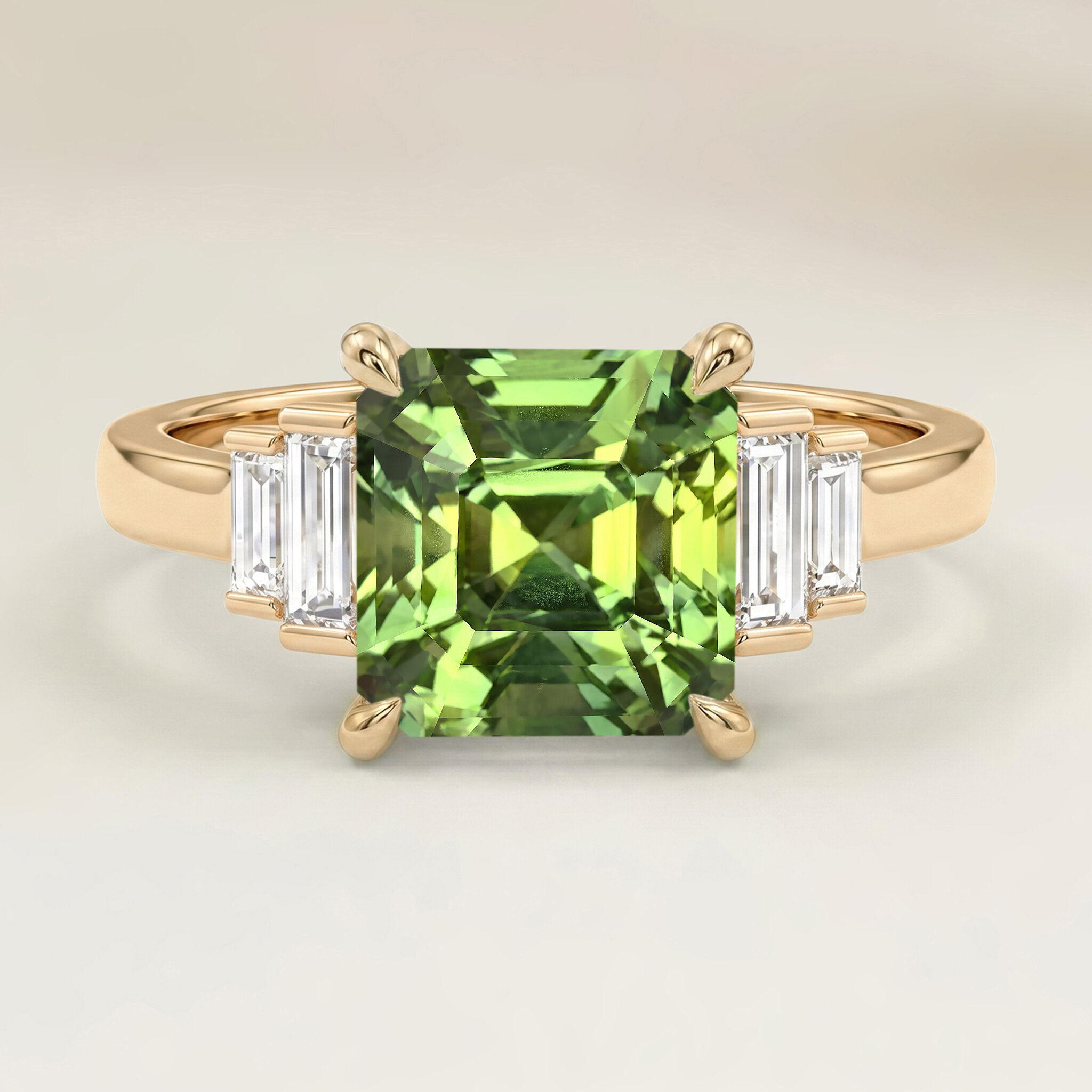
Iron without titanium, in a different proportion. As soon as the eye no longer perceives any blue component, the stone leaves teal for pure green. Long overlooked, this family is returning in teal’s wake — and remains considerably less sought-after.
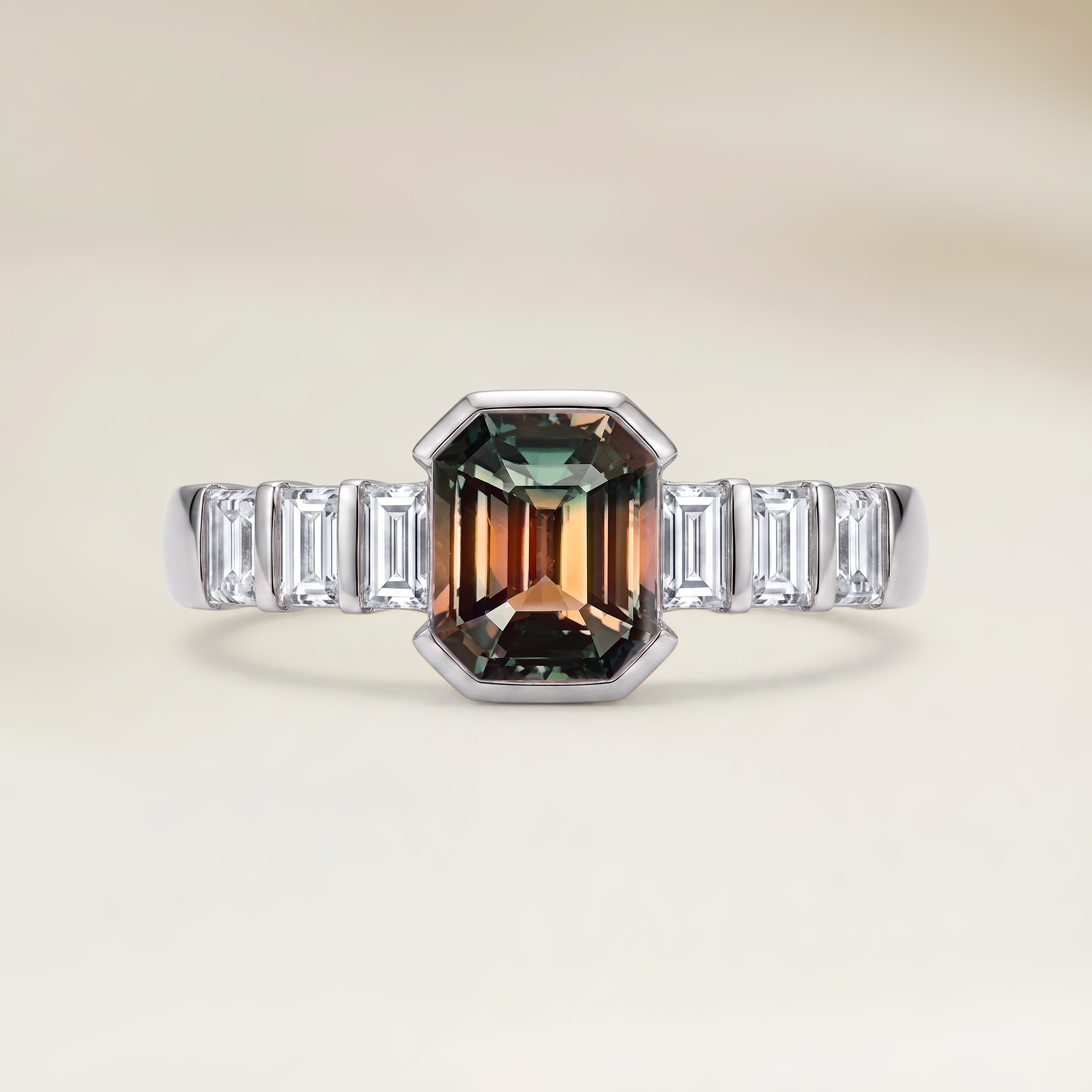
The same chemical origin, the opposite aesthetic: two clearly distinct colour zones within the same gem, which the lapidary chose to preserve rather than cut around. Where teal blends hues, bicolour displays them.
In practical terms: if you like the green side of this palette, look at the green sapphire engagement rings before deciding — this is often where the stone you were looking for can be found, at a gentler price. And if it was a teal’s zoning that appealed to you rather than its colour, then it is the bicolour sapphire engagement rings that you should look at: they embrace what teal seeks to blend.
Once the stone has been chosen, two decisions remain: the metal, which changes the way the colour is perceived, and the setting, which determines its presence on the finger.
| Metal | What it does to teal | For which side |
|---|---|---|
| Yellow gold | Warms the stone and shifts its appearance towards green. The metal for floral and vintage settings. | Green teals |
| White gold | A sharp contrast that brings out the saturation and blue component. | Blue teals |
| Platinum | Cool, natural whiteness, with no rhodium plating to renew. Secures important stones. | Balanced teals |
| Rose gold | Complementary to green: it creates a strong contrast, sometimes too strong. To be tried with the stone in hand. | To be considered case by case |
The question we are asked most often remains: does it hold up? Yes, without reservation. Teal is a corundum, exactly like blue sapphire and ruby: 9 on the Mohs scale, excellent toughness, no cleavage planes. A ruby engagement ring and a teal sapphire ring withstand everyday wear in the same way — only diamond performs better.
The useful point of comparison lies elsewhere. An emerald engagement ring, between 7.5 and 8 and almost always threaded with inclusions, requires a setting that protects the stone’s corners and a little care in daily movements. Teal requires nothing of the sort: it is one of its least discussed advantages, and one of its strongest.
Only diamond and another corundum can scratch it. Ideal for everyday wear.
Good toughness, no fracture planes. A violent impact on the points should still be avoided.
Warm water, mild soap, and a soft brush once a month. Ultrasonic cleaning is possible in the workshop.
Setting checked every two years, or after an impact. Complimentary for life with us.
A sapphire whose colour falls between blue and green, in a uniform hue. Iron alone gives corundum a green tint, while iron and titanium together give it a blue tint: depending on the natural proportion of the two, the same designation can encompass forest green, deep teal blue or a lagoon hue. “Teal” is not a standardised colour; it is a range.
In our stock in September 2026: from €660 to €1,150/ct at around one carat, from €1,210 to €1,730/ct at around 1.5 carats, and around €2,120 to €2,230/ct at 3 carats. The price per carat is not linear — it rises markedly beyond 2.5 carats — and the individual colour matters more than the weight range.
Overwhelmingly from Madagascar, with a smaller share from Sri Lanka. This also explains the price: these are active deposits, and teal has not yet acquired the prestige premium of Ceylon blue.
Teal is one of the rare families in which unheated stones remain accessible: many of these stones have undergone no treatment, and the additional cost remains modest below 2 carats. It is a collector’s criterion, not an obligation — and it should never take precedence over colour.
A matter of proportion and perception. Teal retains a visible blue component; green sapphire clearly leans towards green. The boundary is not standardised: two dealers may classify the same stone differently. If you are drawn to the green side, compare with green sapphire engagement rings before deciding.
Teal blends blue and green into a single, uniform hue. A bicolour sapphire visibly separates two areas of colour within the same gemstone — zoned growth that the lapidary has chosen to preserve. Two opposing aesthetics from the same mineral family, and two distinct collections: bicolour sapphire engagement rings on one side, teal sapphire rings on the other.
Yes, without reservation: hardness of 9 on the Mohs scale, excellent toughness, no cleavage plane. It offers the same resistance as a blue sapphire or a ruby engagement ring, and considerably more than an emerald engagement ring, which requires a protective setting.
Yes, and this is particularly true for teal, where video reveals what a photograph conceals. We film each stone under several lighting conditions, on a neutral hand and without colour retouching, then provide follow-up via WhatsApp or email until the jewellery is handed over. Book a video appointment →
Each family has its own collection of engagement rings. For loose stones — those in this guide, to be set as you wish — everything can be explored from the sapphire.
Share this post