Zambian or Colombian Emerald?
Bonnot Paris22/9/2026
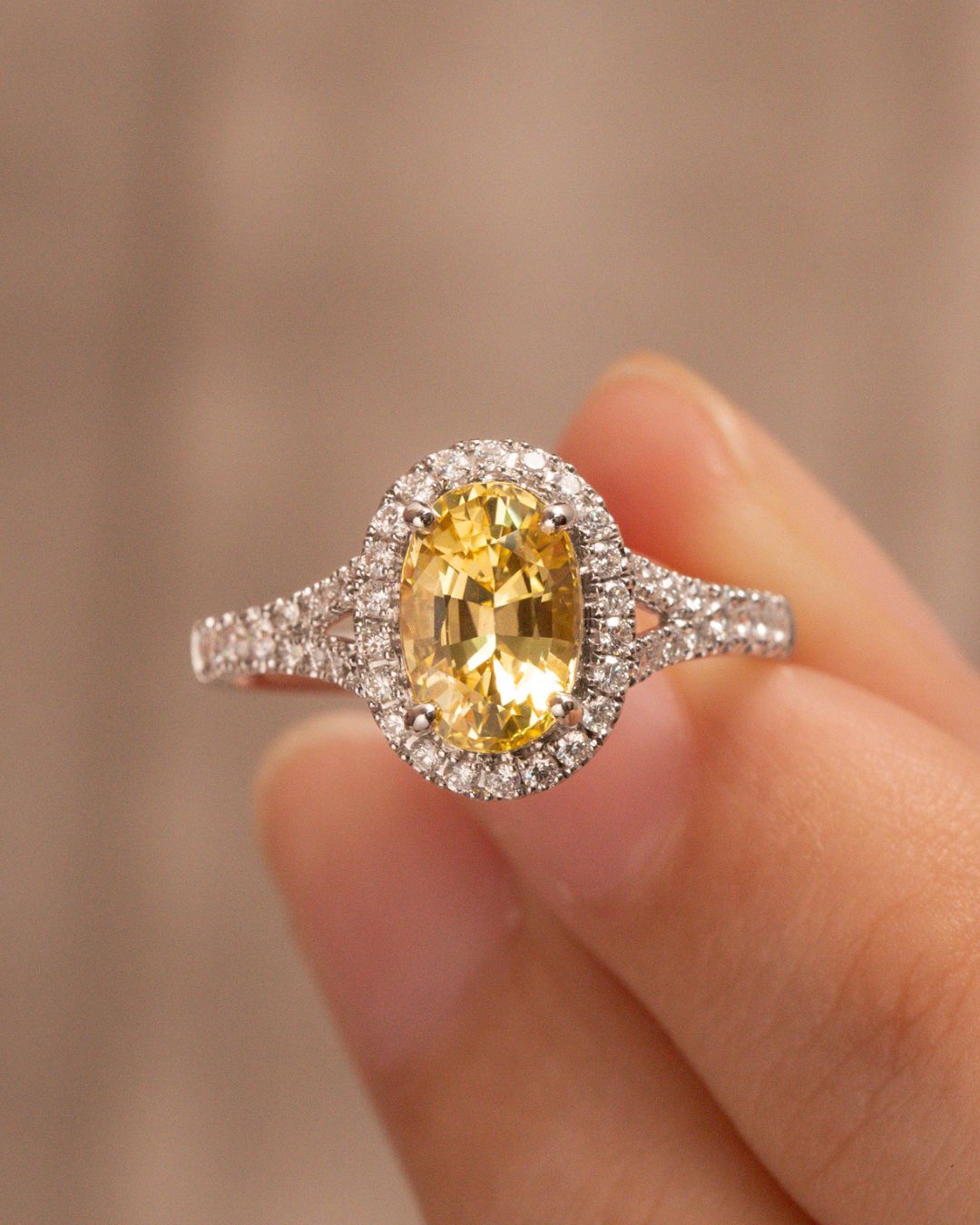



As a gemstone dealer and jeweller specialising in coloured stones — and an ICA member —, we select hundreds of certified sapphires each year from our offices in Sri Lanka, where our team sources every day, as well as in Thailand and Jaipur. This guide shares our professional instincts.
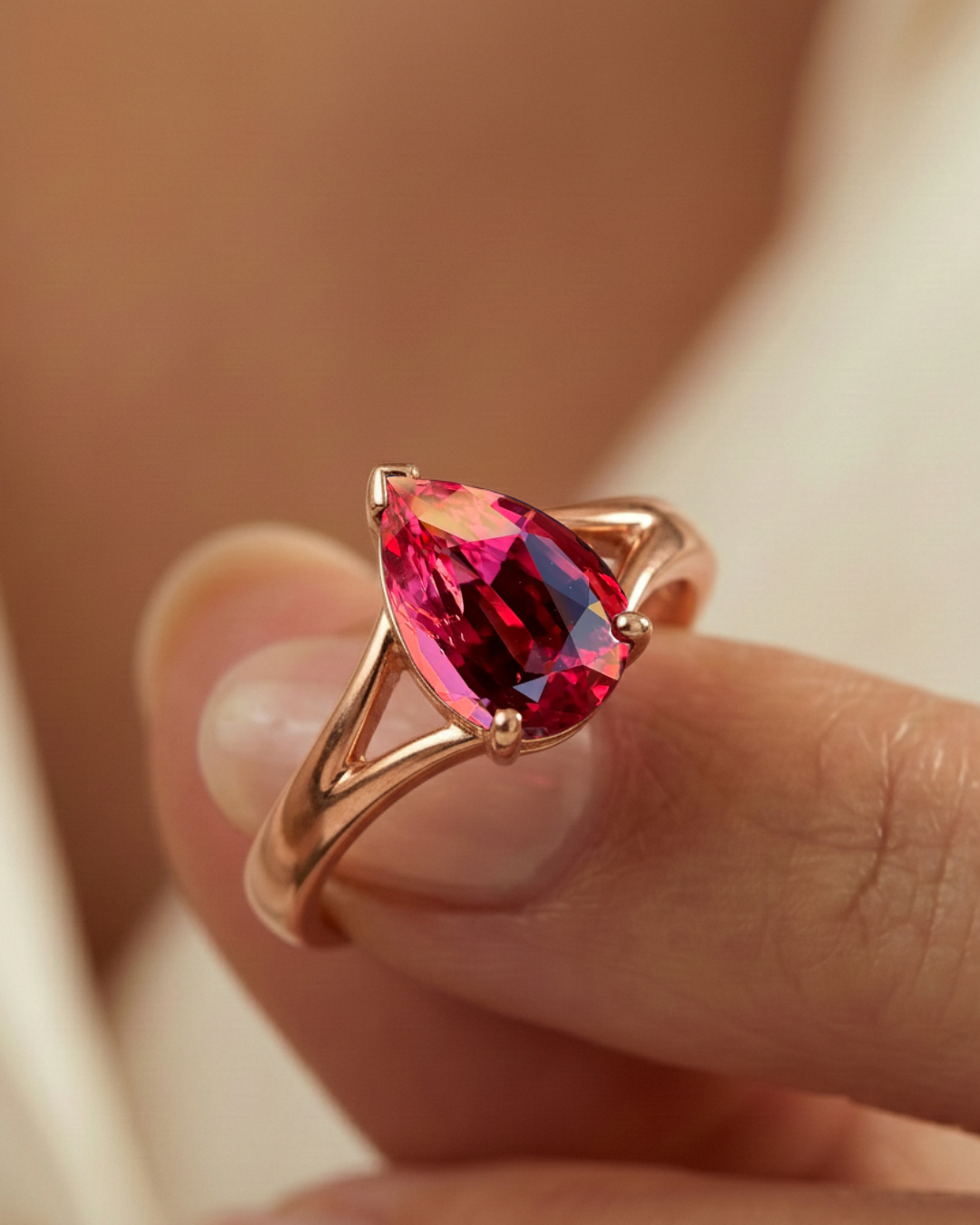
A genuine sapphire can be confused with two families of lookalikes. First, treated sapphires : stones whose appearance has been artificially transformed — beryllium or titanium diffusion, lead-glass filling — to make them appear more beautiful than they are, undetectable to the naked eye. Then other stones : a blue sapphire may resemble a blue spinel or a tanzanite, although their compositions are very different. And the confusion applies to all colours: distinguishing a pink sapphire from a spinel pink, with similar clarity and brilliance, is difficult to distinguish even for a trained eye.
| Stone | What gives it away | Hardness |
|---|---|---|
| Natural sapphire | The benchmark Natural corundum, almost always with a few natural inclusions — the signature of the earth. | 9 / 10 |
| Treated sapphire | A natural stone “enhanced” by diffusion (beryllium, titanium) or lead-glass filling. Colour too uniform, price too low for its apparent quality — only the certificate reveals it. | Variable |
| Blue / pink spinel | A beautiful natural stone in its own right, but a different mineral species — laboratory analysis makes the difference. | 8 / 10 |
| Tanzanite | An alluring blue-violet, but distinctly more fragile — unsuitable for rings worn every day. | 6,5 – 7 / 10 |
The stakes are not trivial: sapphire is one of the most popular gemstones, particularly for engagement rings — and it is precisely among the most sought-after stones that imitations proliferate.
Let us be direct: at-home methods for identifying a sapphire are unreliable. They may rule out crude imitations, but never authenticate a stone. Here they are, for what they are worth:
None of these tests replaces a microscope and spectroscopy. An at-home test may make you doubt a stone, but never reassure you. For any stone of a certain value, move on to the next step: the certificate.
The most reliable way to identify a sapphire is to have it analysed by an independent laboratory — we explain who to turn to — and to request its report (SSEF, GRS, GIA, Gübelin, etc.). The report identifies the mineral species, probable geographical origin and any treatments — including heating, which must be distinguished from treatments that alter the nature of the stone: our guide to heated sapphires sets out this essential distinction.
This is our rule without exception: every sapphire sold by Bonnot Paris comes with its independent laboratory certificate — you have nothing to verify; proof is provided as standard. To find out more: our Angers showroom, and our guides to identifying a precious stone and identifying a ruby.
Authentic does not mean exceptional: quality must also be assessed. As with diamonds, it is measured through the 4Cs :
The foremost criterion: intense and even, neither too pale nor too dark. Shades vary according to origin — Burmese royal blue is highly sought after, but each region produces several hues.
The finest jewellery sapphires have no inclusions visible to the naked eye — such as Ceylon sapphires, renowned for their purity. Subtle inclusions remain normal and authenticate the stone.
A well-proportioned cut enhances colour and brilliance. A poorly cut stone “leaks” light, even if the rough was superb.
Weight should never be considered alone: a small sapphire of exceptional quality often costs more than a large sapphire of lesser quality.
A good-quality sapphire may be a heated sapphire — heating is an accepted traditional process, declared on the certificate — but not a “treated” sapphire in the sense of processes that alter the nature of the stone (diffusion, filling), which we refuse.
And to see authenticated stones set in jewellery, explore our blue sapphire engagement rings — or the entire sapphire collection : each creation specifies the origin, treatment and certificate of its stone.
Once you have chosen your stone, take care of it: our guide to caring for a sapphire is with you every day.
The only reliable proof is a certificate from an independent laboratory (SSEF, GRS, GIA, ICA, etc.). To the naked eye, even a professional may mistake a sapphire for a spinel, a tanzanite, a glass imitation or a heavily treated stone. At-home tests provide clues, never certainty.
A treated sapphire is a natural stone artificially “enhanced” — through diffusion (beryllium, titanium) or lead-glass filling. It cannot be detected with the naked eye; clues include colour that is too uniform and a price that is too low for the apparent quality. Only laboratory examination can determine this, and the certificate must state any treatment — French law requires it. See our guide to heated sapphire for the difference between permitted heating and rejected treatments.
Blue spinel and tanzanite for blue, pink spinel for pink sapphire — along with glass imitations and heavily treated stones. Their compositions and hardnesses differ: the laboratory distinguishes them without ambiguity.
The 4Cs : intense, even colour; clarity (no visible inclusions in the finest stones); well-proportioned cut; carat weight. An excellent small sapphire is often worth more than a large, mediocre one. Declared heating is not a flaw — see our guide to heated sapphire.
Not reliably. At best, it can rule out crude glass imitations — fog lingers on them, whereas it evaporates quickly on a genuine stone. It detects neither treatment nor distinguishes a sapphire from a spinel. For a valuable stone, only the certificate is authoritative.
Share this post