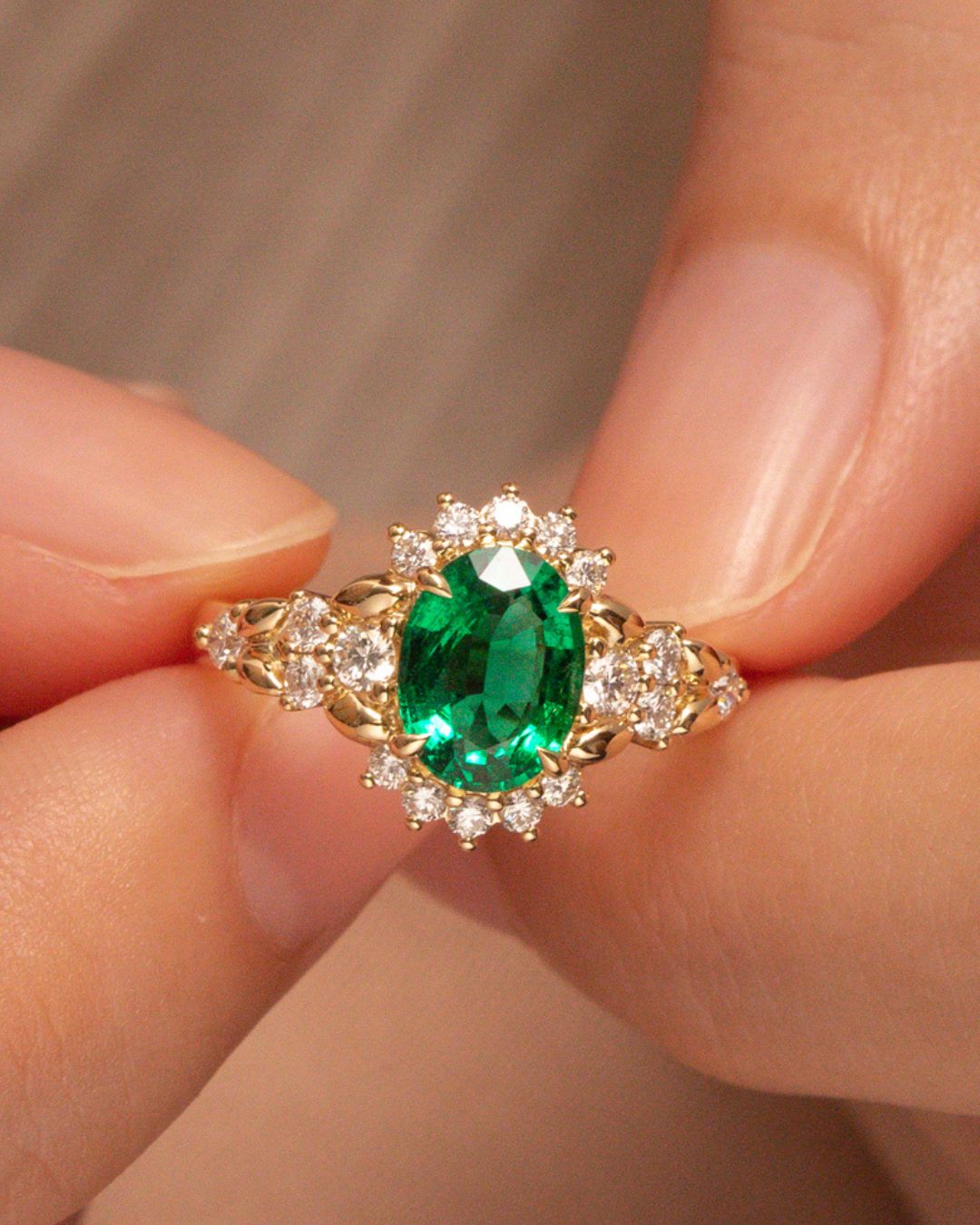
Zambian or Colombian Emerald?
Bonnot Paris22/9/2026



Light enters through the top of the stone, reflects off the pavilion facets and exits through the table. If a film of soap, cream and dust forms beneath the setting, some of that light no longer emerges. The gem appears lifeless even though it is intact.
Hence the principle that governs this entire guide: a ring is cleaned from underneath. The rest explains with what, how often, and above all what should never be attempted — because real damage almost always comes from excessive zeal.
Three culprits, in this order of frequency.
Creams and body oils. They form a greasy film beneath the setting that traps everything else — dust, soap, clothing fibres. A ring removed before applying hand cream stays clean three times longer.
Poorly rinsed soap. Washing your hands while wearing the ring deposits soap in the setting every time. It is not serious, but it builds up.
The metal, not the stone. On a white gold ring, what has changed is almost never the gem: it is the rhodium plating wearing away and revealing the alloy’s natural, slightly yellow-grey hue. We return to this at the end of the article.
Once a month for a ring worn every day. It takes five minutes.
For a few minutes in lukewarm — never hot — water with a drop of mild soap.
Soft-bristled brush, beneath the setting and between the prongs. Do not press: it is the metal that should be treated gently, not the stone.
With lukewarm clean water. Plug the sink before you begin — it is the most useful advice on this page.
With a lint-free cloth, without rubbing. Allow to dry completely before storing.
Pre-moistened jewellery wipes, commercial chemical baths and polishing cloths: on a sapphire, they do nothing that soapy water does not already do, and some can damage the rhodium plating. A polishing cloth is, however, useful on the metal of a yellow-gold ring.
Corundum withstands ultrasound very well — far better than most gemstones. This is one of sapphire’s practical advantages, and it is rarely mentioned.
On one condition, and it is non-negotiable: the stone must be sound. In other words, free from surface-reaching inclusions or cracks. Ultrasound causes the liquid in which the jewel is immersed to vibrate; on an already weakened gemstone, this vibration widens what is already there.
This is precisely what we check before putting a ring through the machine in the workshop: examining it under ten-power magnification, immersed in water, looking for anything that reaches the surface. A two-minute inspection that prevents an irreversible accident.
Not because they are harmful, but because nothing tells you what condition your stone is in. An inherited sapphire, set forty years ago, may have sustained an impact that no one remembers. Ultrasonic cleaning is offered when you visit the showroom — you might as well take advantage of it.
This is the most important paragraph in this guide, and the one no one writes. Not all sapphires require the same care, and the difference is not visible to the naked eye.
| Treatment | What it is | Care implications |
|---|---|---|
| None | Unheated stone, as it came out of the ground. | No restrictions |
| Heating | Traditional heat treatment, stable and permanent. | No restrictions |
| Lead glass | Fracture filling with lead glass. | No ultrasound, heat or acids |
| Surface diffusion | Colour added to the surface, to a shallow depth. | Rep polishing can remove the colour |
The main thing to remember is this: heating changes nothing. It is a permanent heat treatment that cannot be reversed, and a heated sapphire is cared for in exactly the same way as an unheated one. Many people worry unnecessarily about this.
The last two lines, however, refer to processes that we exclude from our selections. If you inherit an antique ring without a certificate, exercise caution: before any aggressive cleaning or repolishing, have the stone identified. Repolishing a surface-diffused stone can literally remove its colour.
Good news: colour makes no difference to care. Blue, teal or padparadscha, it is the same mineral, with the same hardness and the same absence of cleavage planes. What varies is the setting—and therefore where dust settles.
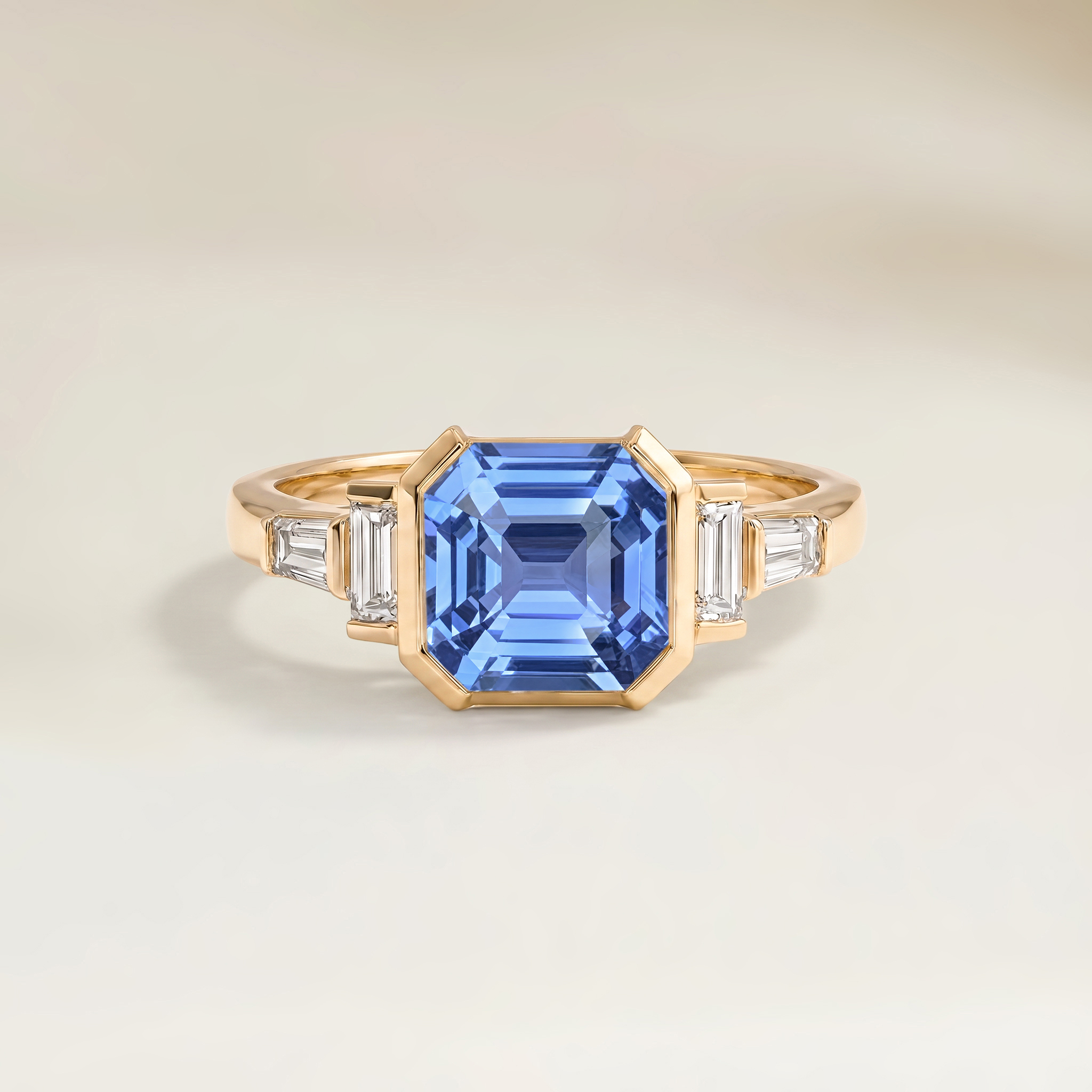
2.05 ct · €6,480
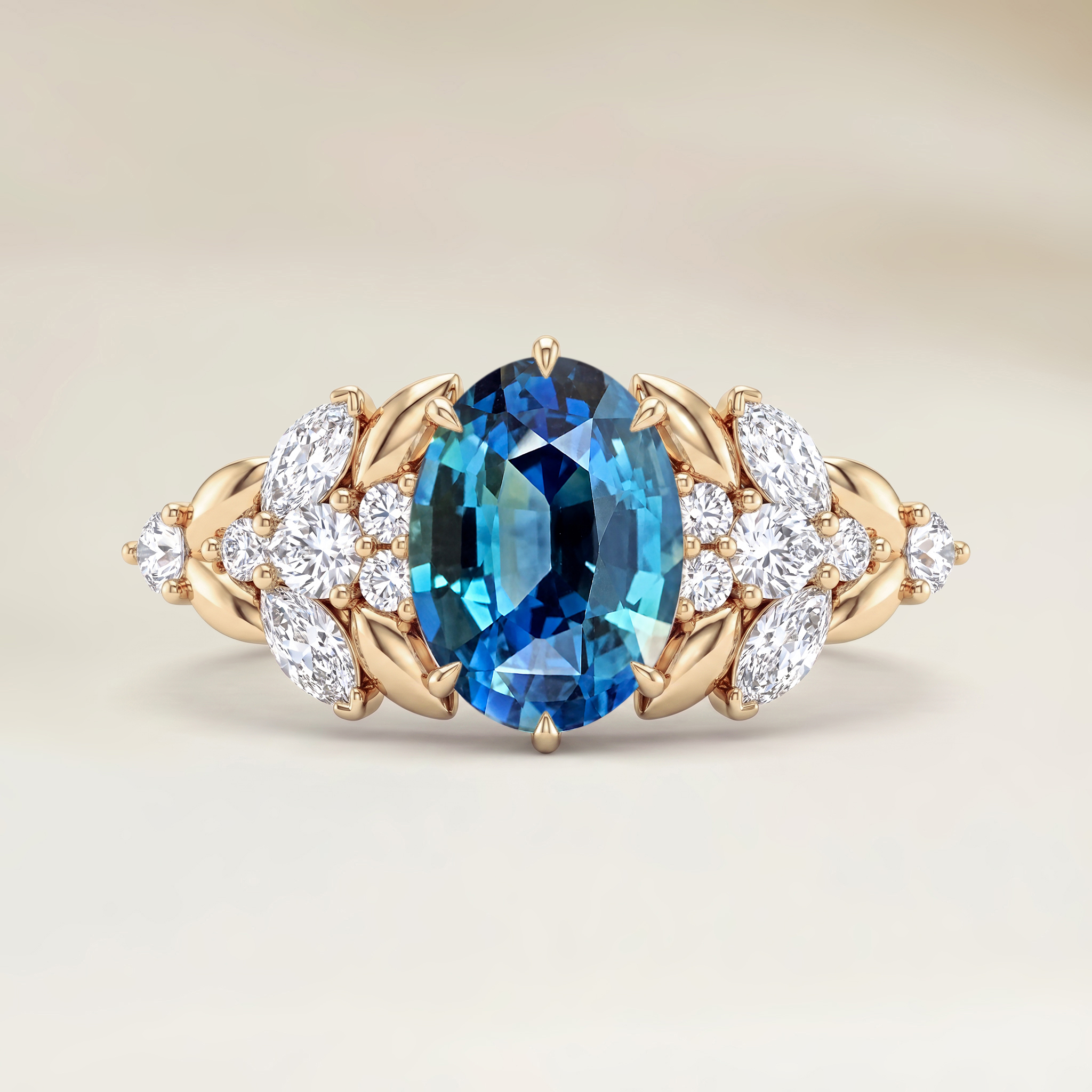
2.04 ct · €8,880
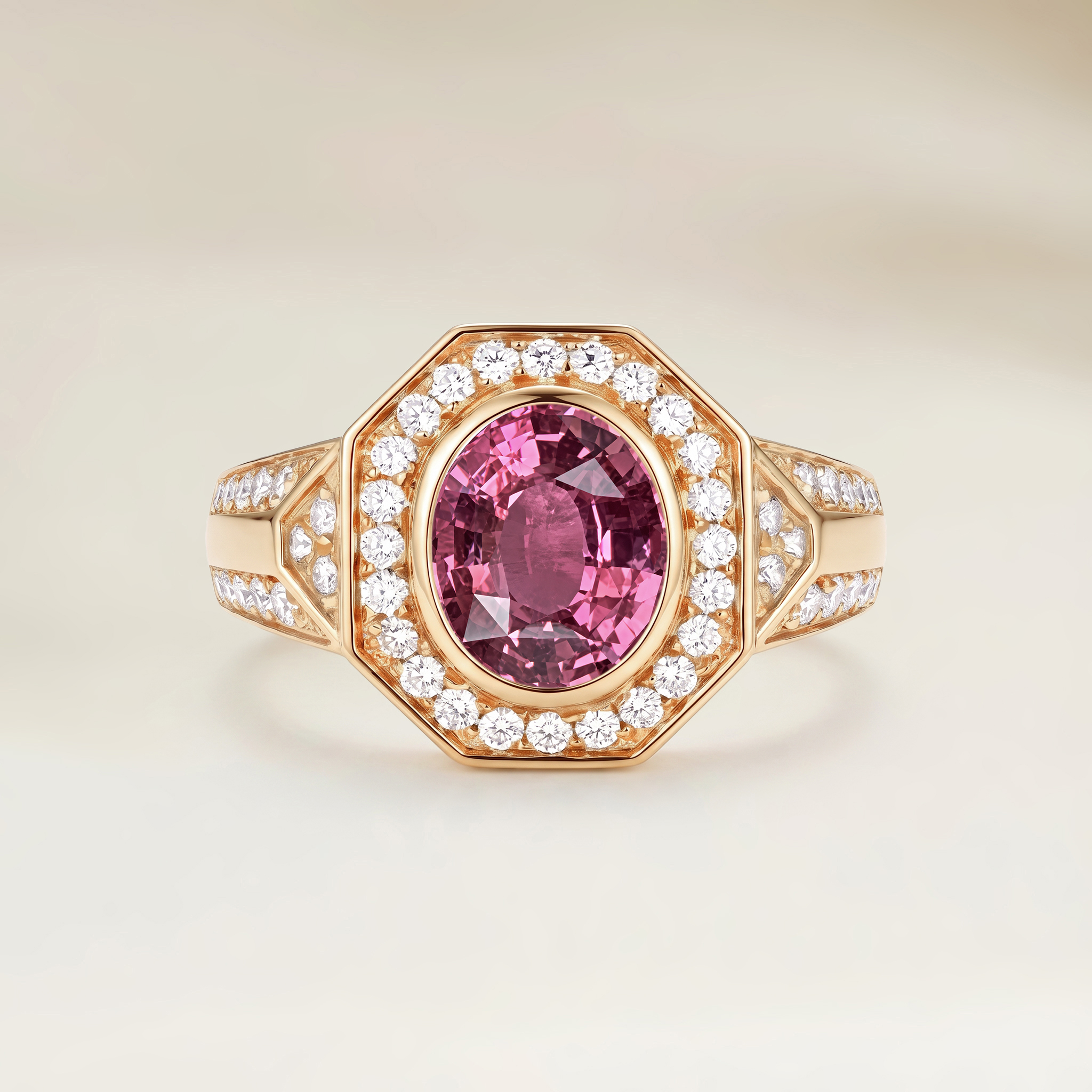
1.02 ct · €4,080
Available creations, prices observed in September 2026.
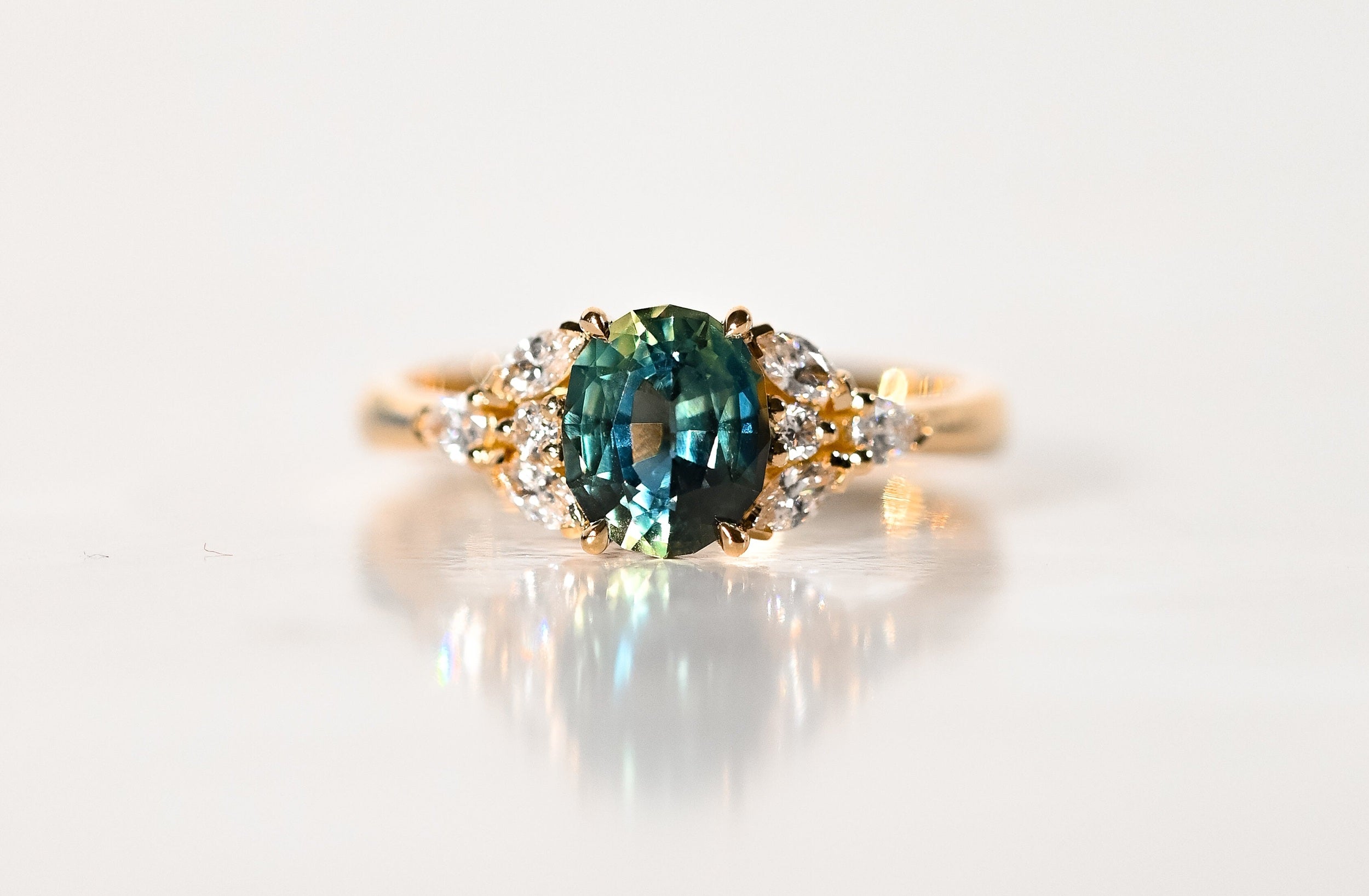
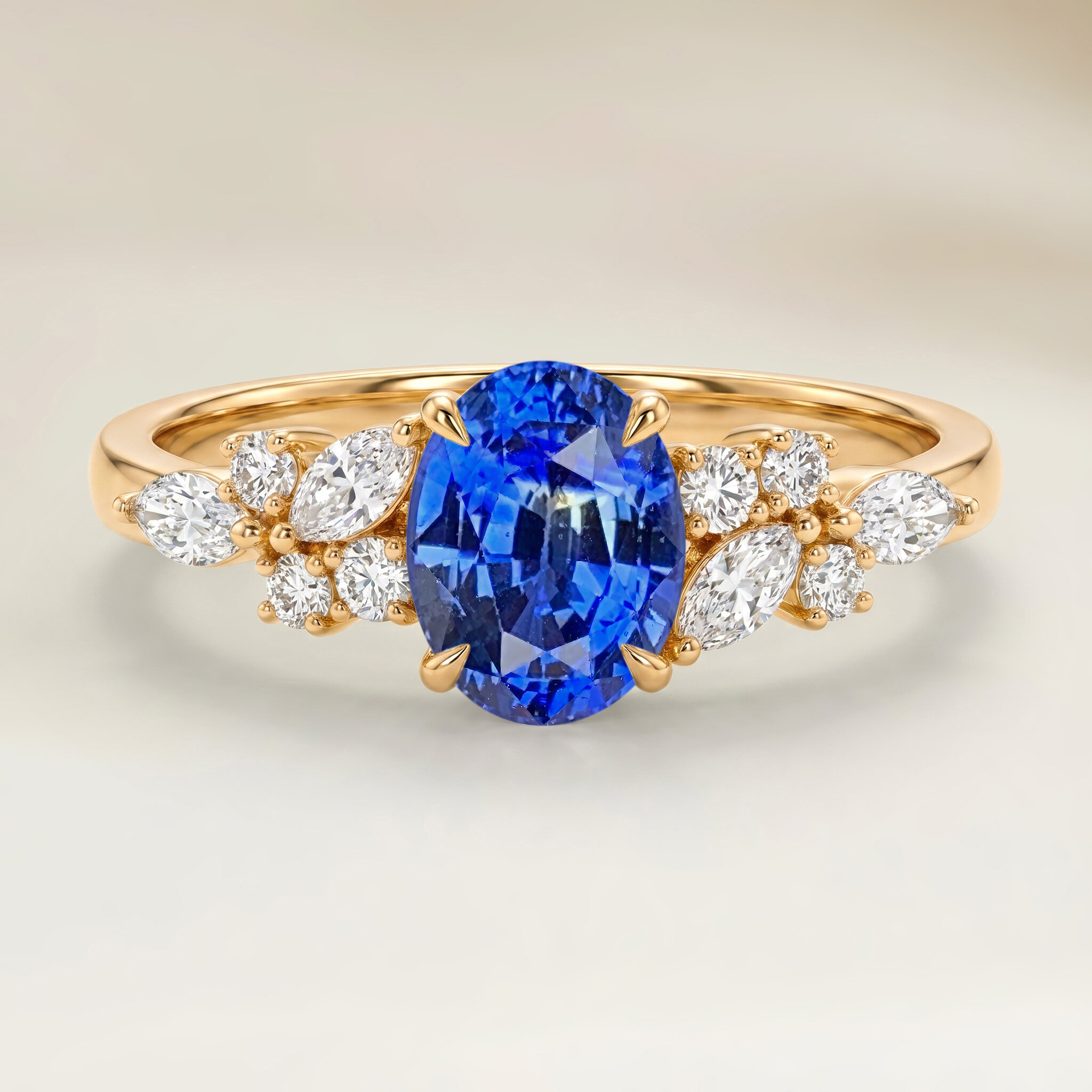
In practical terms, a blue sapphire engagement ring set in a bezel setting mainly requires brushing at the junction between the metal and the stone. A teal sapphire engagement ring in a floral setting, meanwhile, retains dust in the recesses between the marquise diamonds—it is the most demanding design to clean.
And a padparadscha sapphire engagement ring on a pavé band combines the difficulties: dozens of crevices, impossible to reach properly with a brush. This is exactly the type of ring that should be ultrasonically cleaned once or twice a year.
Everything above applies to corundum. Simply change gemstone family and half the rules are reversed — and that is useful to know if you own both.
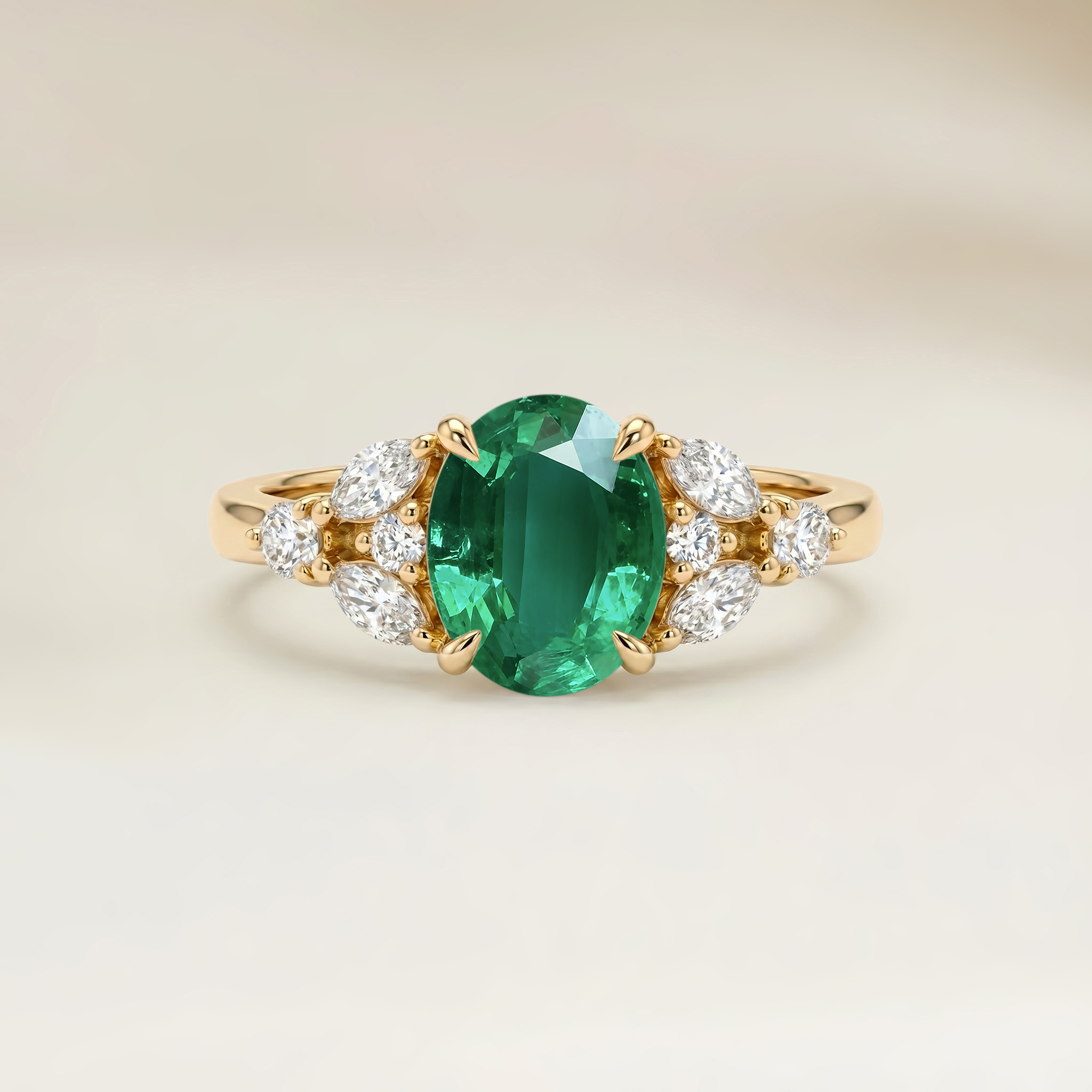
Almost all emeralds receive a colourless oil which fills surface fissures and improves the clarity of the green. It is a traditional, long-established and accepted practice — but this oil cannot withstand ultrasound, steam or hot water. An emerald engagement ring should therefore be cared for using lukewarm water and mild soap only.
The good news, in return: over the years, the workshop can refresh the oiling. This is normal maintenance, not a repair — much like having a white gold ring rhodium plated.
Store. Keep each piece of jewellery in its own pouch. Corundum scratches all softer stones — and, a detail few people know, two sapphires stored together scratch each other, since they have exactly the same hardness. This is the least known and most useful care rule.
Rhodium plate. Only white gold. Rhodium is a surface coating that wears away within two to three years: when the ring turns yellowish grey, it is not the stone that has dulled. Platinum, by contrast, is naturally white and requires nothing.
Check. The setting, every two years or after a significant impact. It is the only truly essential intervention, and it is offered for life on our creations. A loose prong can be tightened in just a few minutes.
If you hear or feel the stone move slightly when tapping the ring near your ear, stop wearing it and have it inspected. This is the only reliable symptom of a setting that has loosened — and it always precedes the loss of the stone by several weeks. Book an appointment →
Warm water, mild soap and a soft-bristled brush, once a month. Soak for a few minutes, brush beneath the setting and between the prongs, rinse with clean water and dry on a lint-free cloth. At 9 on the Mohs scale, no everyday action can scratch a sapphire.
On a sound stone, yes: corundum tolerates it very well. “Sound” means without any inclusion reaching the surface or any crack. We carry out these cleanings in the workshop after checking the condition of the gemstone, and we advise against domestic devices — there is no way of knowing the condition of your stone.
No. Heating is a stable, permanent heat treatment that does not reverse. Lead-glass- or beryllium-treated sapphires, on the other hand — which we exclude from our selections — tolerate neither ultrasound, heat nor acidic products.
For sport, gardening, housework and swimming. The main risk is not scratching but impact to a prong, which loosens the setting without anything being visible. Chlorine also attacks gold alloys.
Separately, in its own pouch. Corundum scratches all softer stones, and two sapphires stored together will scratch each other because they have the same hardness.
In most cases, it is not the stone but the metal: white gold is rhodium-plated, and this layer wears away after two to three years. Rhodium plating restores its whiteness. If the stone appears dull after cleaning, look beneath the setting.
Every two years, or immediately after a significant impact. This check is offered for life on our creations. A loose prong can be tightened in a few minutes; a lost stone can never be replaced identically.
Sapphire and ruby require the same care — they are the same mineral. Emerald does not. The entire stock can be browsed from the page sapphire.
Share this post