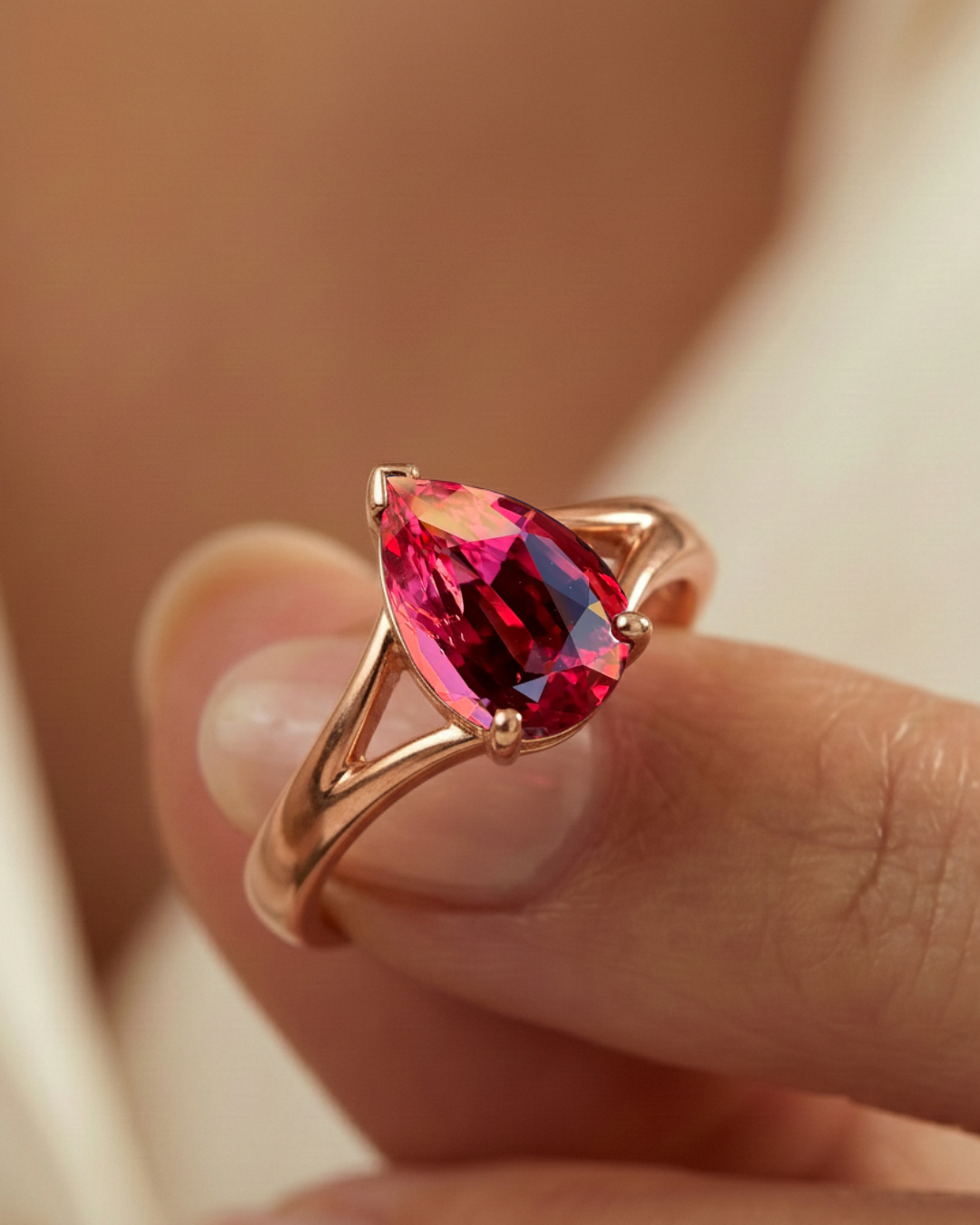
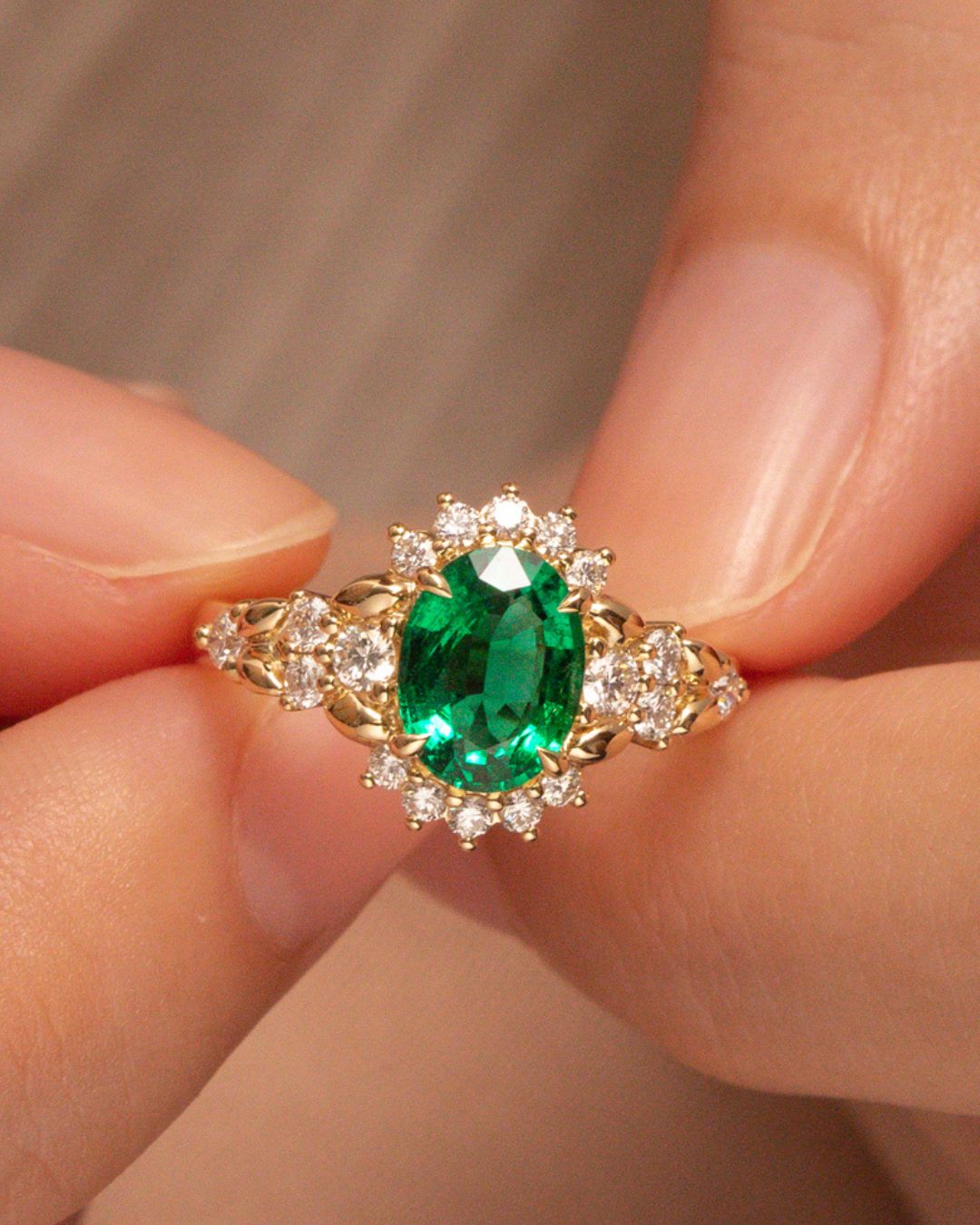
Zambian or Colombian Emerald?
Bonnot Paris22/9/2026
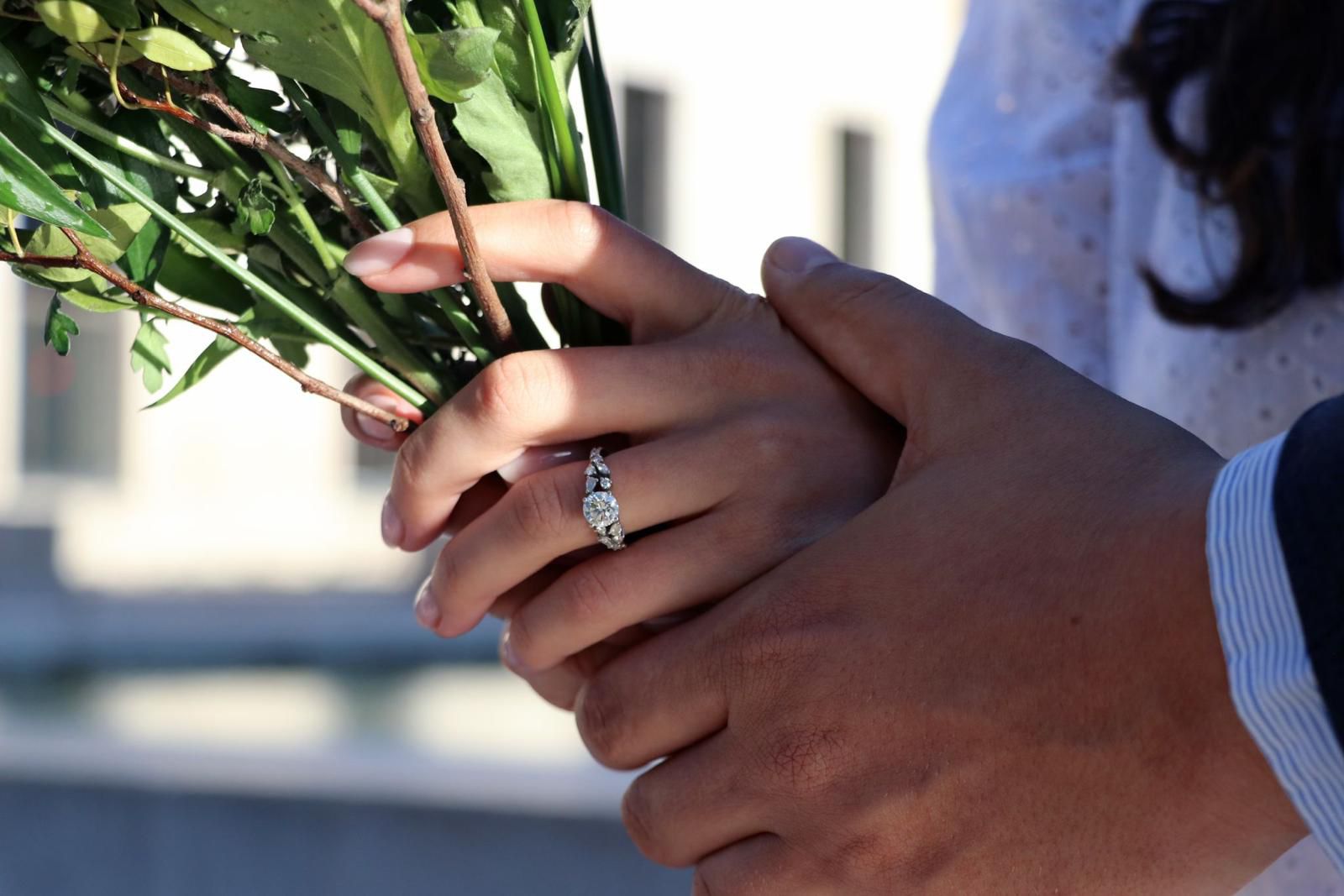



Ten years ago, an engagement appointment began with a diamond, with colour coming later — as a bold choice, sometimes as a budget concession. Today, most projects that enter our workshop begin with a hue. Diamond has not disappeared: it has shifted from centre stone to accent stone, in marquise cuts, baguettes and pavé.
What follows is not a showroom prediction. It is what we observe in our own commissions and in our sourcing in Beruwala and Bangkok: the colours that sell quickly, the cuts we are asked for, the settings our designers draw most often. With one honest caveat : an engagement ring is worn for thirty years, and no trend lasts thirty years.
Three factors explain this shift, and none is a matter of fashion.
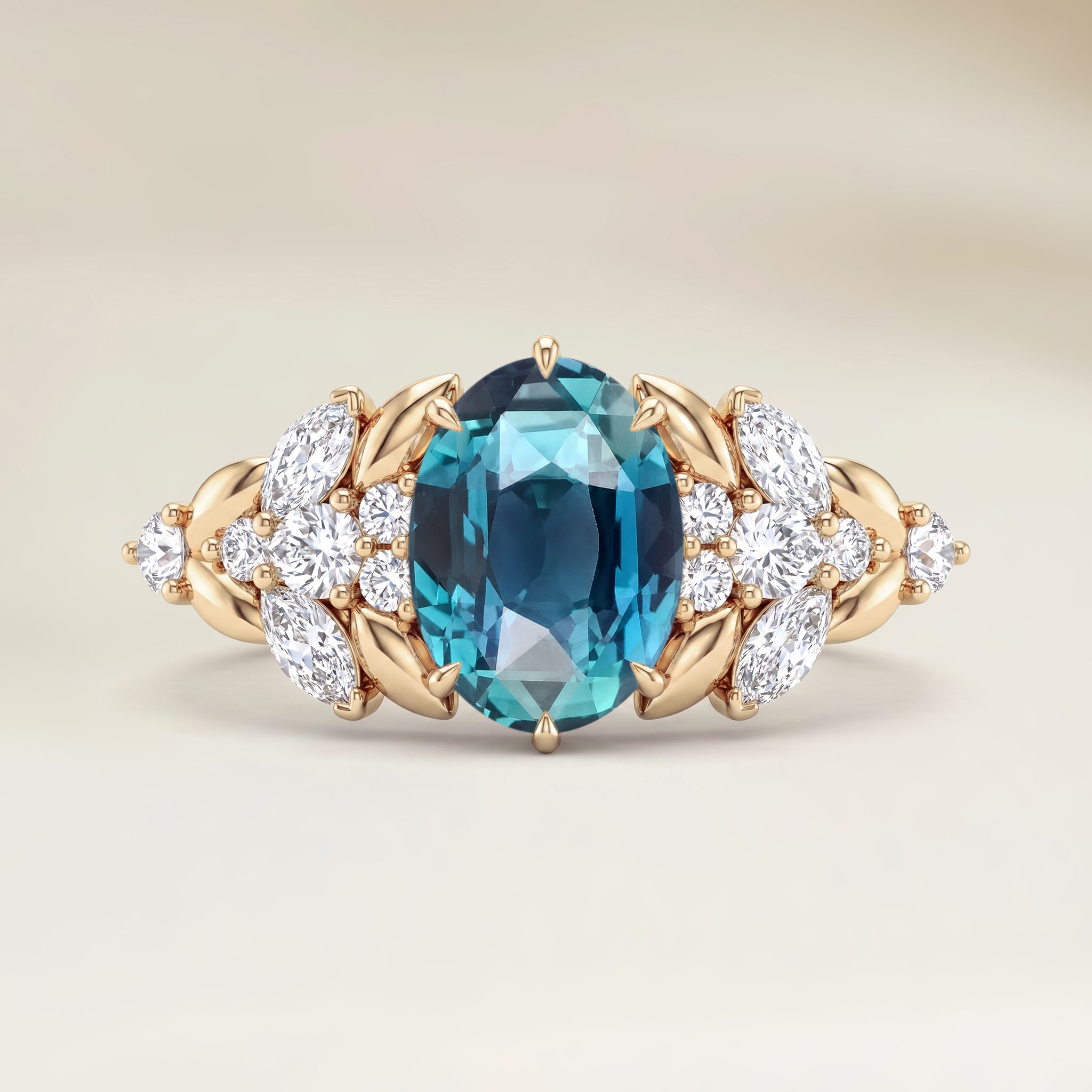
The first is uniqueness. Two diamonds with the same 4Cs are interchangeable; two teal sapphires of the same weight and origin never look alike. For a ring that claims to tell a singular story, the argument holds.
The second is size for a given budget. For a comparable budget, a coloured stone often makes it possible to consider a more generous visible surface on the finger — with significant variations depending on the quality, weight and treatment of the two stones compared.
The third is traceability. Buyers in 2026 want to know where the stone comes from, who cut it, and what it has undergone. A short supply chain answers this question; it is more difficult with a long supply chain.
Diamond is making a major return around the stone: petal-shaped marquises, baguettes on the shoulders, calibrated stones in a channel setting. It is no longer the subject; it is the light. This is undoubtedly the clearest shift of the past three years. View all engagement rings →
Ranked by what they truly represent in our orders, not by what is being said elsewhere. Each has its own collection.
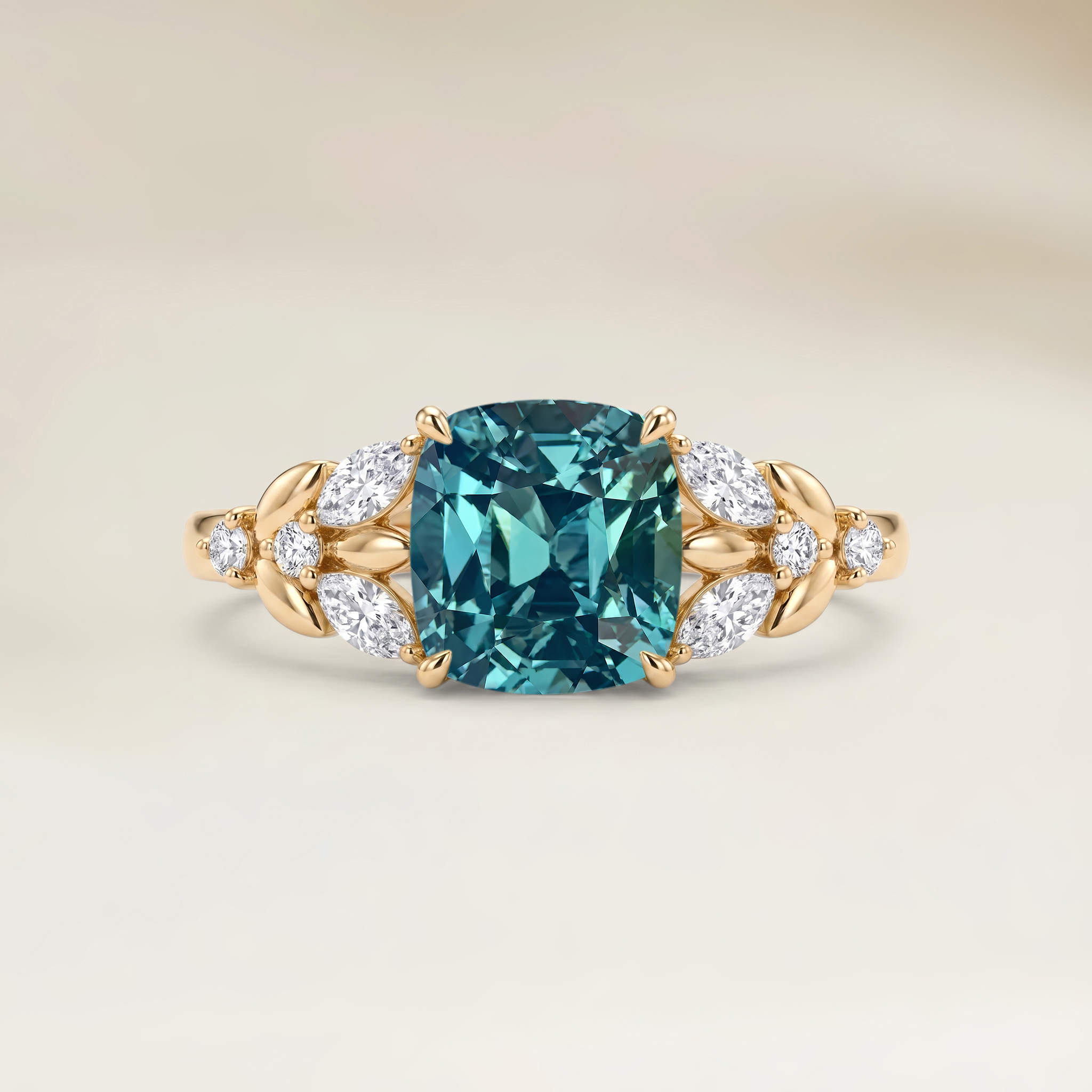
Cushion 1.31 ct · €5,040
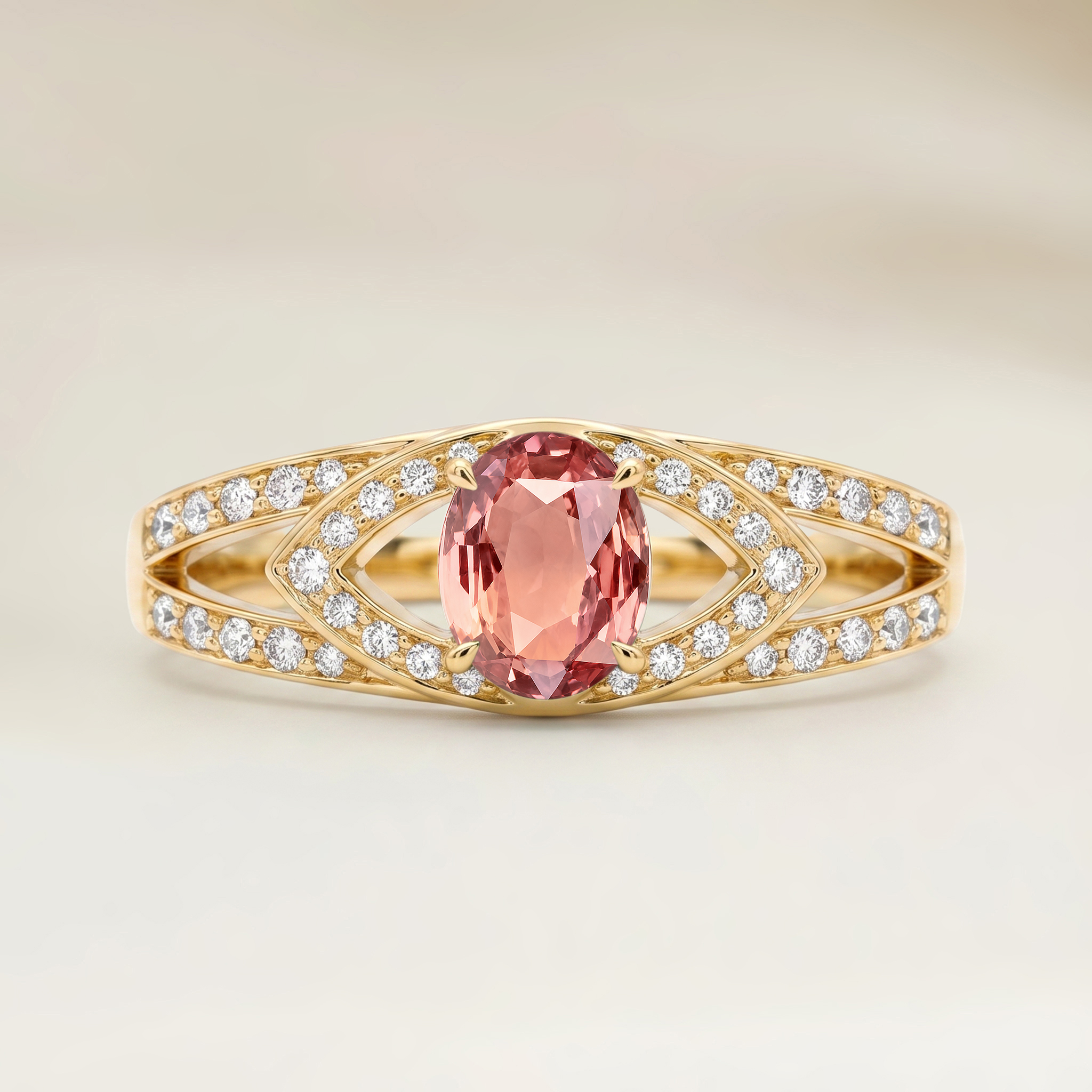
Oval 1.55 ct · €7,800
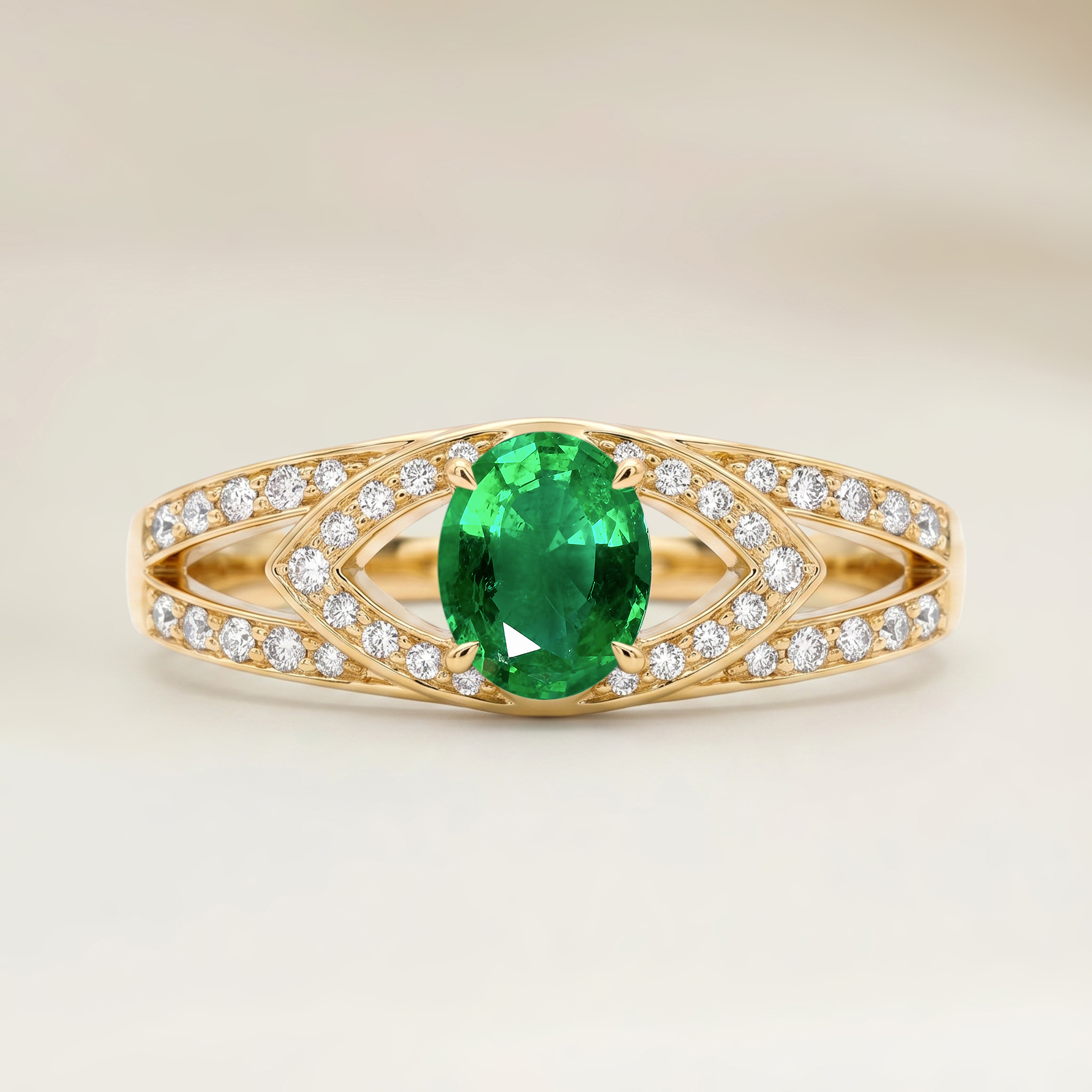
Oval 1.60 ct · €10,080
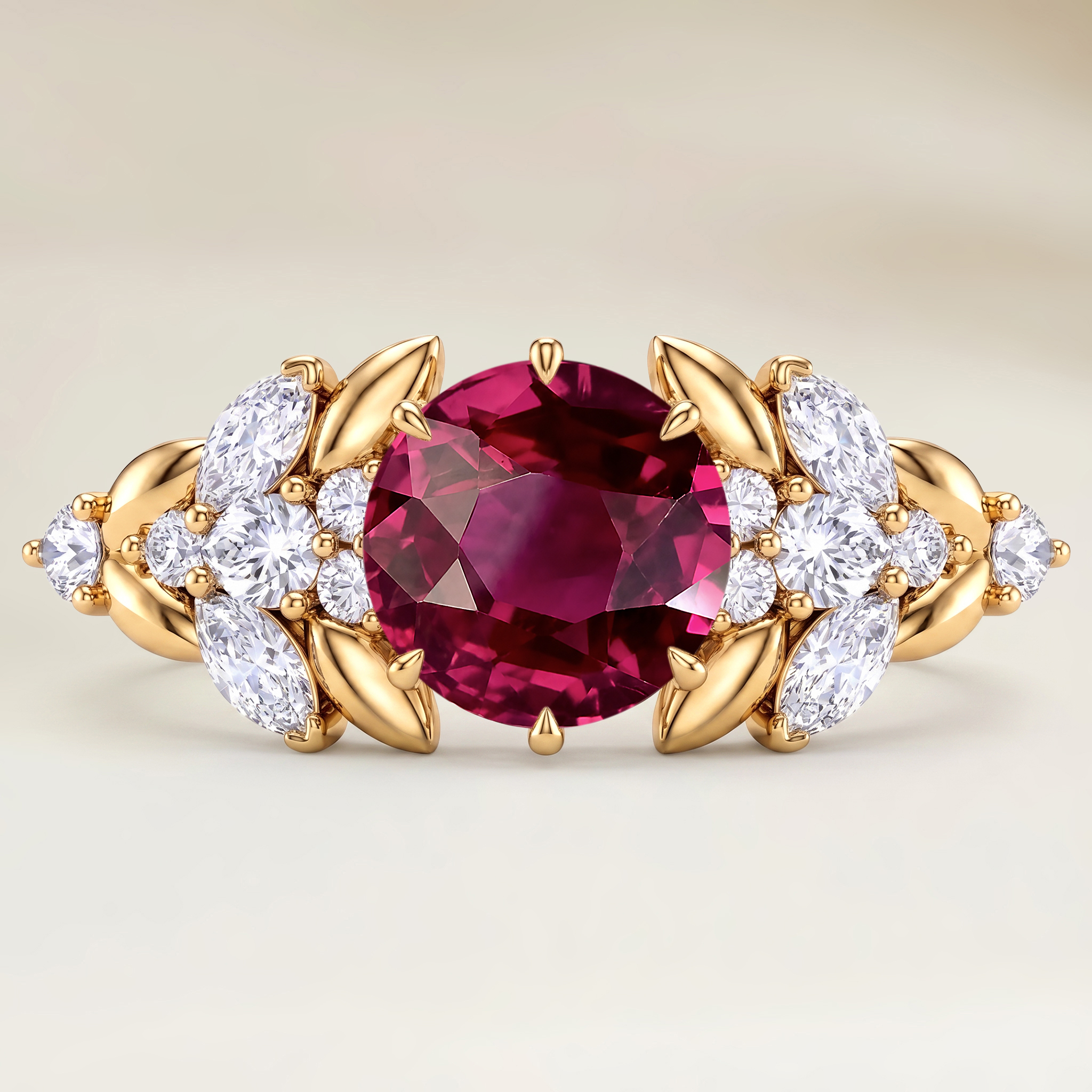
Round 1.02 ct · €11,520
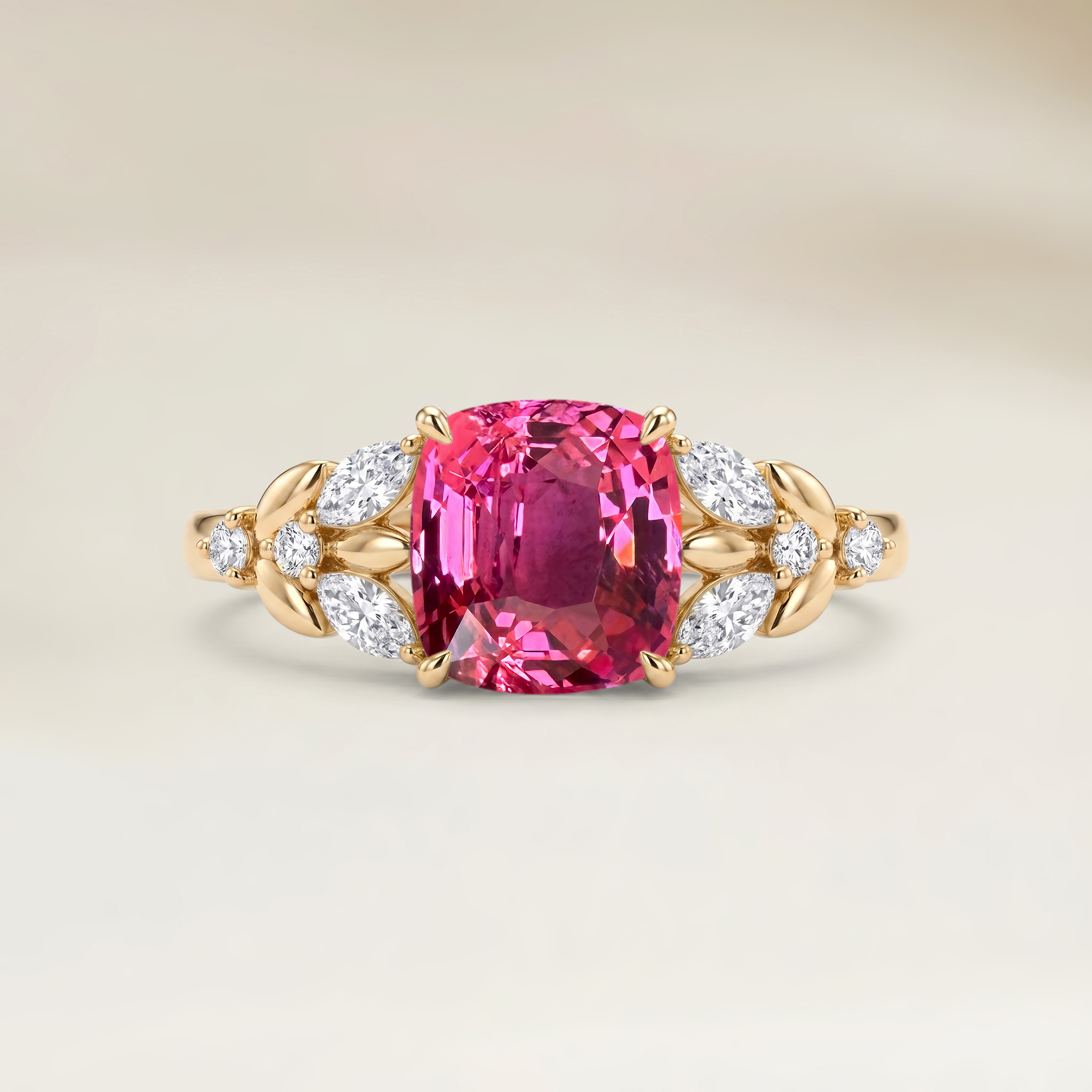
Cushion 1.22 ct · €6,360
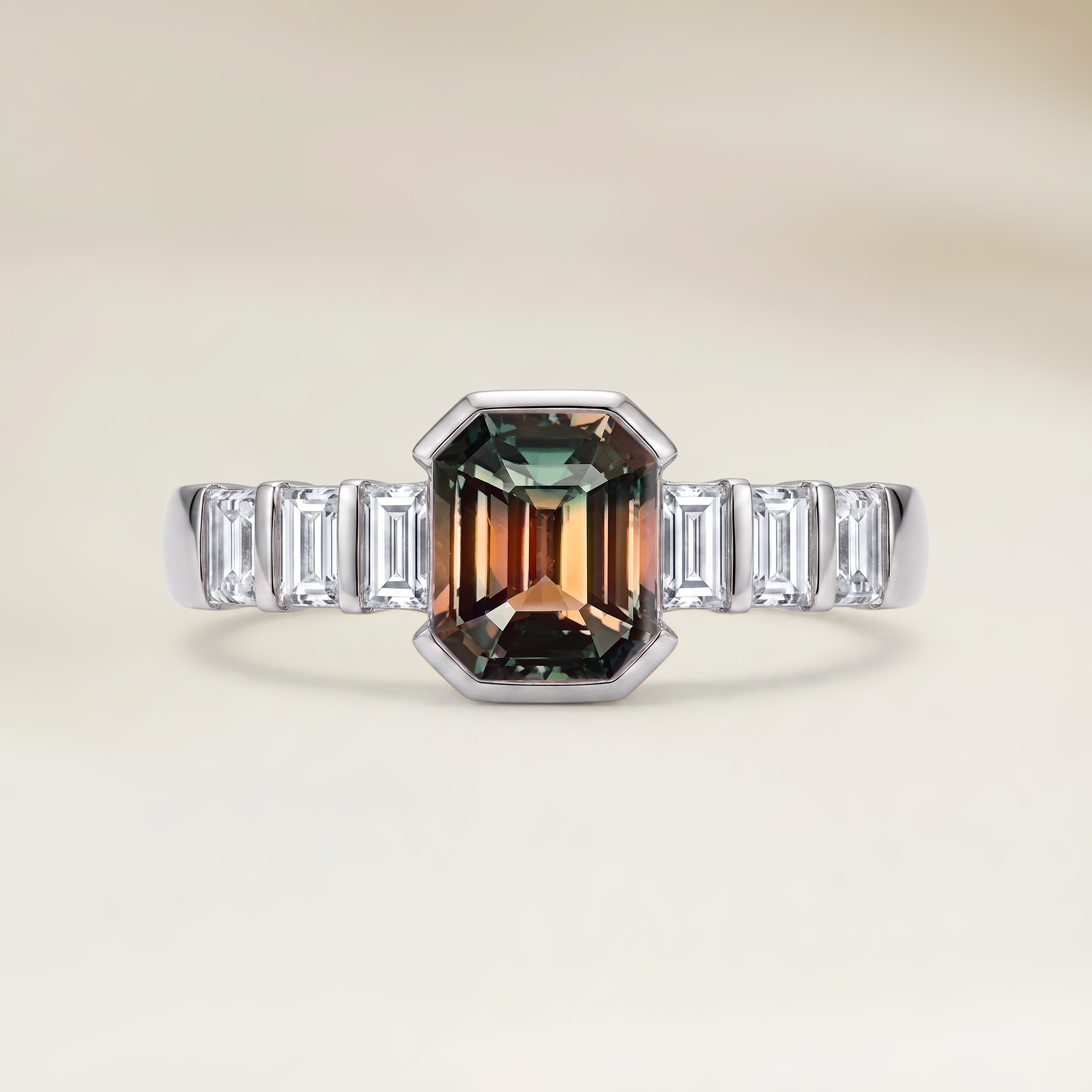
Rectangle 3.05 ct · €22,200
Creations available, prices observed in September 2026. As each stone is unique, the collection evolves continuously.
Three of them deserve a little more discussion. emerald engagement rings have returned by an unexpected route: it is contemporary settings, with low-set mountings and clean lines, that have freed the emerald from its image as a family jewel. ruby engagement rings are rising more in value than in volume — the stone is rare, and budgets struggle to follow beyond two carats. And padparadscha sapphire engagement rings have become the most frequent request after teal, driven by one very simple thing: the name.
Spinel. Long confused with ruby — the Black Prince’s Ruby in the British Crown is one — it has an argument few gems can make: it is almost never treated. For those who reject all treatment as a matter of principle, spinel engagement rings are the most straightforward answer in the catalogue. See available spinels →
The shape of the stone determines the look of the ring long before the setting does. Two trends intersect this year: a clear surge in step cuts, and the quiet dominance of the oval, which remains unchanged.
| Shape | Where it stands | What you need to know |
|---|---|---|
| Oval | Stable, No. 1 | The largest visible surface area at equal weight, and it elongates the finger. Check the symmetry and the bow-tie effect. |
| Rectangle | Strongly rising | Step-like facets, a mirror effect rather than sparkle. It demands impeccable clarity: nothing can be hidden in it. |
| Cushion | Stable | Softened corners, deep colour. It appears more compact than an oval of the same weight. |
| Pear | Rising | Highly graphic, it greatly elongates the hand. The point requires a dedicated prong. |
| Round | Declining | The most even brilliance, but with greater material loss during cutting — and therefore a premium at comparable quality. |
A word on carat weight, since it is the figure everyone cites. It tells you almost nothing. Two two-carat stones can differ by one and a half millimetres in diameter depending on their depth, and corundum is denser than diamond: at equal weight, it appears smaller. We think in millimetres, and we assess the stone on the finger.
Two families account for most of our designs this year, and they express two opposing ideas. One is organic and softens the stone; the other is geometric and frames it. There is no right answer, only two temperaments.
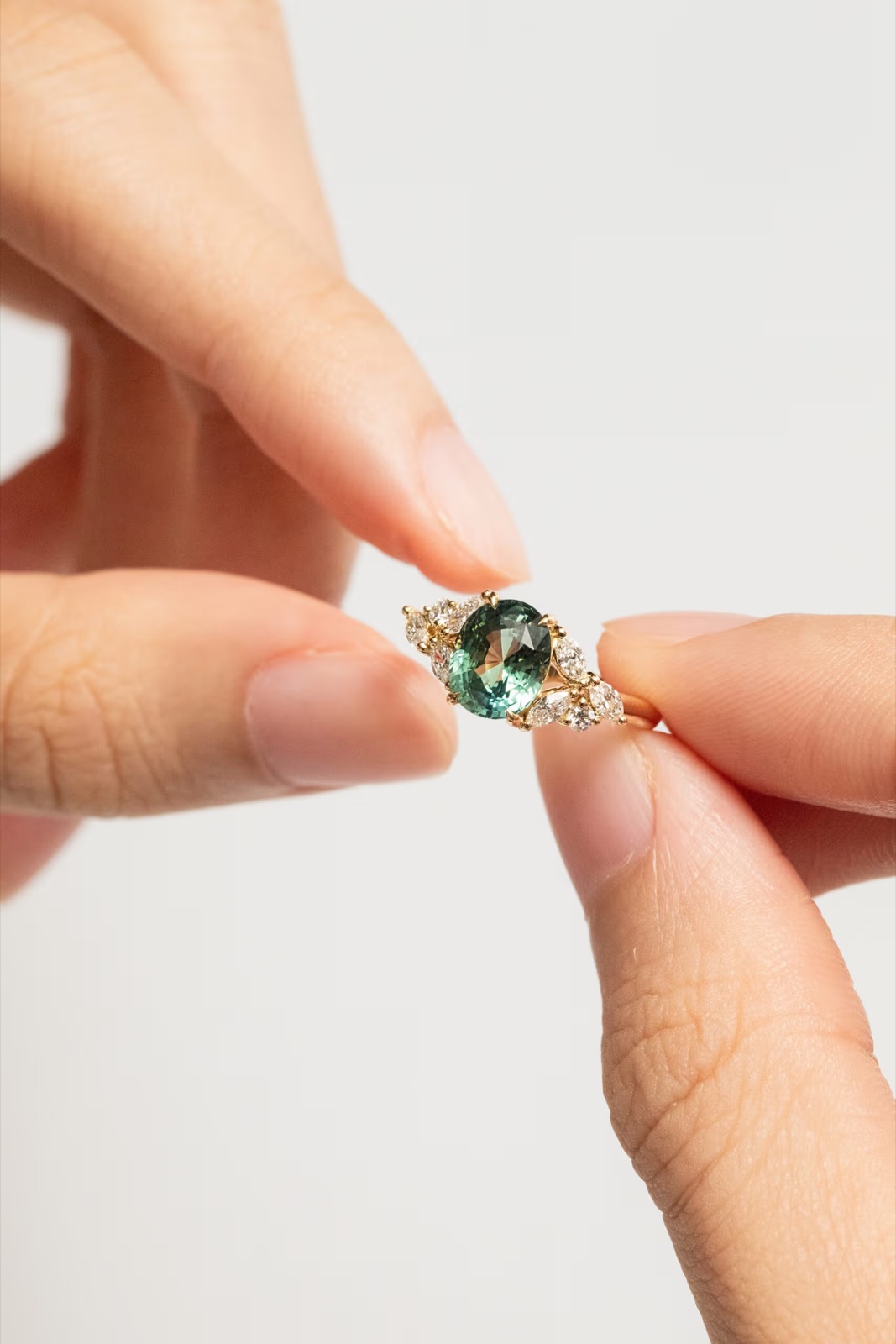
A coloured centre stone surrounded by marquise diamonds arranged as petals. The house’s most organic design: it visually enlarges the stone without enclosing it. It is our most requested setting, across all gemstones.

Aligned baguettes, calibré-cut stones, milgrain, sculpted volumes. The setting follows the step-cut stone and turns it into architecture. It calls for a rectangular or square cut: on an oval, the effect falls flat.
Two other designs are gaining ground, more discreetly. The toi-et-moi, two stones answering one another—often a coloured stone and a diamond—asymmetrical and deeply personal. And the low bezel setting, chosen by those who work with their hands: the stone is encircled by metal, the edges protected, nothing catches.
Enlarges the stone, softens the angles. Requires exacting matching of the marquise diamonds.
Frames the stone and gives it a graphic quality. Reserved for step cuts.
Two stones in dialogue. The most personal design, and the hardest to balance.
The safest choice for an active hand. Loses a little light, gains thirty years of peace of mind.
It is the most visible change between a 2016 photograph and a 2026 photograph. White gold dominated; yellow gold has taken the lead again for coloured stones, because it warms them and carries the vintage codes embraced by the current generation.
| Metal | What it does to colour | Where things stand |
|---|---|---|
| Yellow gold | Warms the stone, defining vintage and Art Deco-inspired settings. | Leading |
| Platinum | Cool, natural whiteness, with no rhodium plating to renew. Secures significant stones. | Rising |
| White gold | Sharp contrast, maximises the brilliance of diamonds. To be rhodium-plated every two to three years. | Falling behind |
| Rose gold | Extends and softens warm hues — pink, padparadscha, peach. | Stable |
Wearing yellow gold alongside white gold is perfectly acceptable, and increasingly common for engagement ring-wedding band pairs. Just one technical precaution: two metals of very different hardness wear against one another. This is something to decide at the design stage, not afterwards. How to choose your wedding band →
The least photogenic trend may be the most enduring: we are no longer asked only what a stone looks like, but what it has undergone and where it comes from. The certificate has gone from being an attachment to being a requirement.
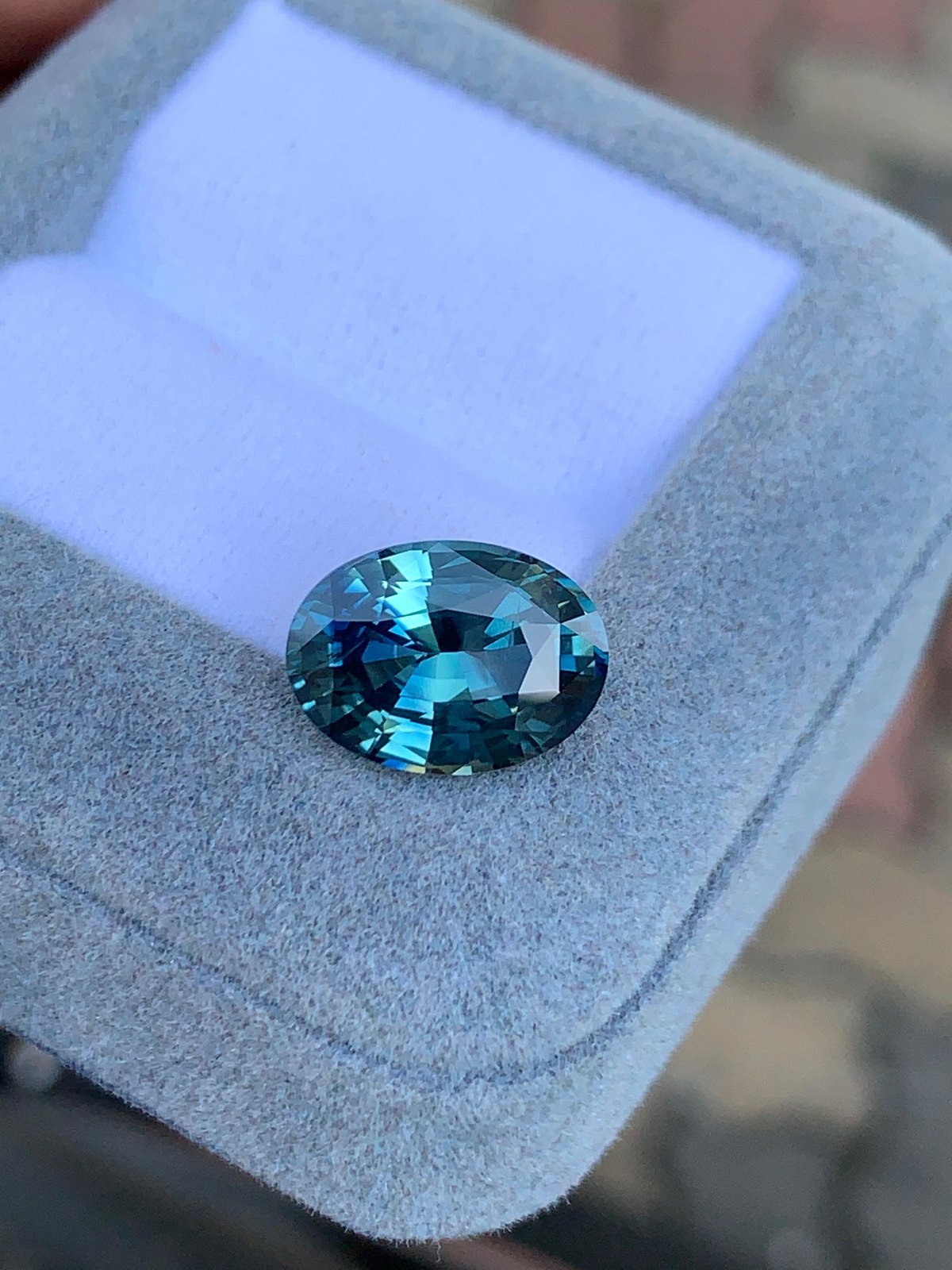
Three reference points, to avoid being intimidated by the terminology:
Heating is accepted. It is an ancient, stable and declared heat treatment that reveals a colour already present. The vast majority of sapphires on the market are heated, including very beautiful stones. What we refuse are beryllium, lead glass and irradiation.
Unheated comes at a price, and has a threshold. Its premium increases with weight: in our buying markets, it is around double at 1.5 carats and triple at 2.5 carats, for comparable visual quality. Below €5,000, a beautiful heated stone remains the best choice.
Origin is a laboratory opinion. It can only be concluded when the inclusions allow it. “Origin undetermined” is not a flaw in the stone — it is a limitation of the analysis.
Beware of one thing in 2026: the word “rare” has become more of a sales argument than a market reality. Rarity is read in a laboratory report and a buying ledger, not on a product sheet. See our direct sourcing →
A trend article that only tells you what is rising is of no use. Here is what we see declining — knowing that a decline is never a condemnation.
The tightly pavé-set halo. The daisy-style surround is holding up very well; it is its overloaded version, where the metal overwhelms the stone, that is going out of fashion. The trend is towards fewer diamonds, better placed.
Very high settings. A high-set stone catches on clothing, wears more quickly and sits poorly alongside a wedding band. Settings are becoming lower, and that is good news for the longevity of rings.
“Catalogue” teal. The success of teal has brought many dull or greyish stones onto the market, sold under this name. The shade cannot be judged on a screen: two stones labelled teal may have nothing in common. Today, this is the year’s main pitfall.
If only one line from this article were to remain: do not choose a stone because it is on trend. Trends are useful for discovering gems one might have overlooked — spinel, bicolour stones, padparadscha. They are worth nothing as a decision-making criterion for a piece of jewellery to be worn for thirty years.
The teal sapphire remains the most sought-after colour from our workshop, ahead of padparadscha. But the real trend is not a colour: it is the fact that colour has become the default choice rather than an alternative to diamond. Emerald, ruby, pink spinel and bicolour sapphire are all gaining ground.
No, and it would be absurd to claim otherwise: it remains the world’s best-selling stone for engagements. What has changed is that it is no longer the automatic starting point. Many projects now begin with a colour, and diamond returns as an accompanying stone — marquises, baguettes, pavé setting.
Step cuts — rectangle, square, emerald cut — are gaining significant ground, driven by a taste for geometric design and Art Deco settings. The oval remains the best-selling shape across all years: at equal weight, it offers the largest visible surface area and elongates the finger.
Yellow gold overwhelmingly dominates colourful designs: it warms the stone and carries vintage codes. Platinum returns for significant stones and graphic settings, where its natural whiteness without rhodium plating makes all the difference. Mixing two golds is acceptable, provided they have similar hardness.
It depends on the budget. Below €5,000, a beautiful heated stone is better than a dull unheated one. Unheated stones truly come into their own from 1.5 carats in a beautiful colour: their premium increases with weight, roughly double at around 1.5 ct and triple at around 2.5 ct in our purchasing markets. All about heated sapphire →
Our sapphire creations start at €2,500, with the core of our projects falling between €5,000 and €8,000. An emerald engagement ring starts lower, at around €1,700. A ruby engagement ring starts considerably higher, at around €8,000, because it is the rarest of the four major gemstones. Prices observed in September 2026.
An engagement ring is worn for thirty years: it will span several fashion cycles. Trends help us discover stones we had overlooked: almost no one considers a spinel engagement ring or a padparadscha sapphire engagement ring before seeing the stone in person. They are worth nothing as a decision-making criterion. Choose the stone you will want to look at every day.
Each colour has its own collection of engagement rings. For loose stones, to set as you wish, everything can be explored from the precious stones.
Share this post